Using a Cutco knife sharpener is designed to be foolproof for anyone. Its fixed 15-degree angle takes the guesswork out of sharpening, ensuring a consistent, factory-quality edge every time. Simply pull the knife through the slots with moderate pressure, alternating sides, and you’ll restore sharpness and safety to your Cutco knives quickly and easily at home.
Key Takeaways
- Fixed 15-Degree Angle: The sharpener’s design maintains the perfect angle for Cutco knives, eliminating user error and guesswork.
- Two-Stage Process: Use the coarse (black) slot for dull or damaged edges, then the fine (ceramic) slot to hone and polish for ultimate sharpness.
- Simple Pull-Through Motion: No special skills needed. A firm, consistent pulling motion with the knife’s heel first is all it takes.
- Safety First: A sharp knife is a safe knife. Proper sharpening reduces the force needed, minimizing slips and accidents in the kitchen.
- Maintenance is Key: Regular, light touch-ups with the fine slot keep knives performing their best and reduce the need for heavy-duty sharpening.
- For Cutco Knives Primarily: While it works on other straight-edge knives, it’s optimized for Cutco’s specific 15-degree factory edge.
- Easy to Store: Its compact, non-slip base design makes it a convenient, permanent fixture on any kitchen counter or in a drawer.
📑 Table of Contents
- Unlock the Secret to Effortless, Razor-Sharp Knives
- What Makes the Cutco Sharpener Unique? (It’s Not Magic, It’s Engineering)
- Step-by-Step: The Foolproof Sharpening Process
- Practical Tips & Tricks from the Experts
- Common Mistakes & How to Avoid Them
- The Bigger Picture: Sharpening as Part of Knife Care
- Conclusion: Your Journey to Mastery
Unlock the Secret to Effortless, Razor-Sharp Knives
Let’s be honest: a dull knife is more than just an annoyance in the kitchen. It’s a frustration that makes simple tasks like slicing a tomato or mincing garlic feel like a chore. It’s also a safety hazard, as you press harder and risk the blade slipping. But what if restoring that razor-sharp edge was simpler than you ever imagined? Enter the Cutco knife sharpener—a tool engineered not for experts, but for everyday home cooks who demand performance without the complexity.
If you’ve ever felt intimidated by sharpening stones, confused by angle guides, or frustrated with inconsistent electric sharpeners, you’re in the right place. The Cutco sharpener’s genius lies in its brilliantly simple, fixed-angle design. It takes the centuries-old art of knife sharpening and boils it down to a single, repeatable motion. This isn’t just about putting an edge on a blade; it’s about reclaiming the joy and safety of cooking with truly sharp tools. In this complete guide, we’ll walk through every step, tip, and technique to help you master your Cutco sharpener and keep your knives performing like new for a lifetime.
What Makes the Cutco Sharpener Unique? (It’s Not Magic, It’s Engineering)
Before we dive into the “how,” understanding the “why” will make everything click. The Cutco sharpener isn’t just another pull-through gadget. Its design is a direct response to the most common sharpening mistakes made at home.
Visual guide about How to Use Cutco Knife Sharpener
Image source: uploads-ssl.webflow.com
The Fixed 15-Degree Angle: Your New Best Friend
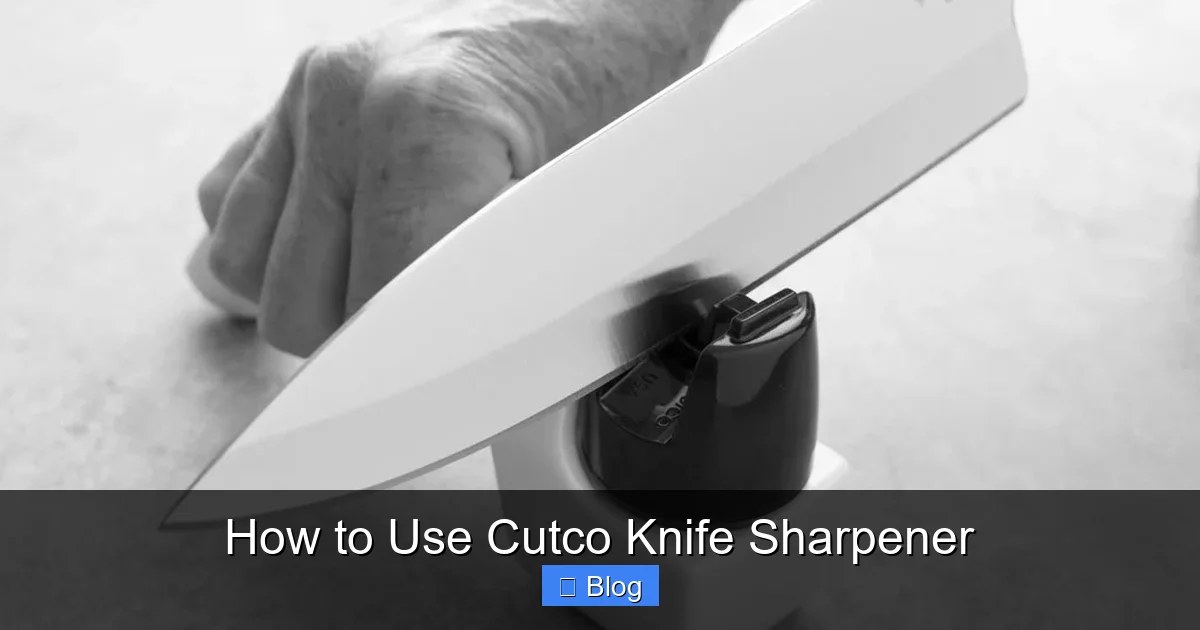
Most professional chefs will tell you that maintaining a consistent sharpening angle is the single most important—and difficult—part of the process. Cutco knives are manufactured with a precise 15-degree angle on each side of the blade (a total included angle of 30 degrees). The sharpener’s slots are permanently set to this exact angle. This means you cannot mess it up. No matter how you hold the knife, as long as you pull it straight through the slot, you’re sharpening at the correct angle. This is the core of its user-friendliness.
Two Stages, One Perfect Edge
The sharpener features two distinct slots, each with a critical job:
- The Coarse (Black) Slot: This contains industrial-grade diamond abrasives. It’s your go-to for knives that are truly dull, have rolled edges, or minor nicks. It removes metal quickly to re-establish the primary bevel.
- The Fine (Ceramic) Slot: This slot uses a ultra-hard, fine ceramic rod. Its job isn’t to remove significant metal but to realign, hone, and polish the microscopic edge created by the coarse slot. This step is what gives you that hair-splitting, laser-sharp finish.
Think of it like sanding wood: you start with a coarse grit to shape and smooth, then finish with a fine grit for a polished surface. Skipping the fine stage leaves a sharp but rough edge that will dull faster.
Step-by-Step: The Foolproof Sharpening Process
Alright, let’s get hands-on. The process is intentionally simple, but a few key details make all the difference between a good edge and a great one.
Visual guide about How to Use Cutco Knife Sharpener
Image source: yourknifeguy.com
Preparation: Setting the Stage for Success
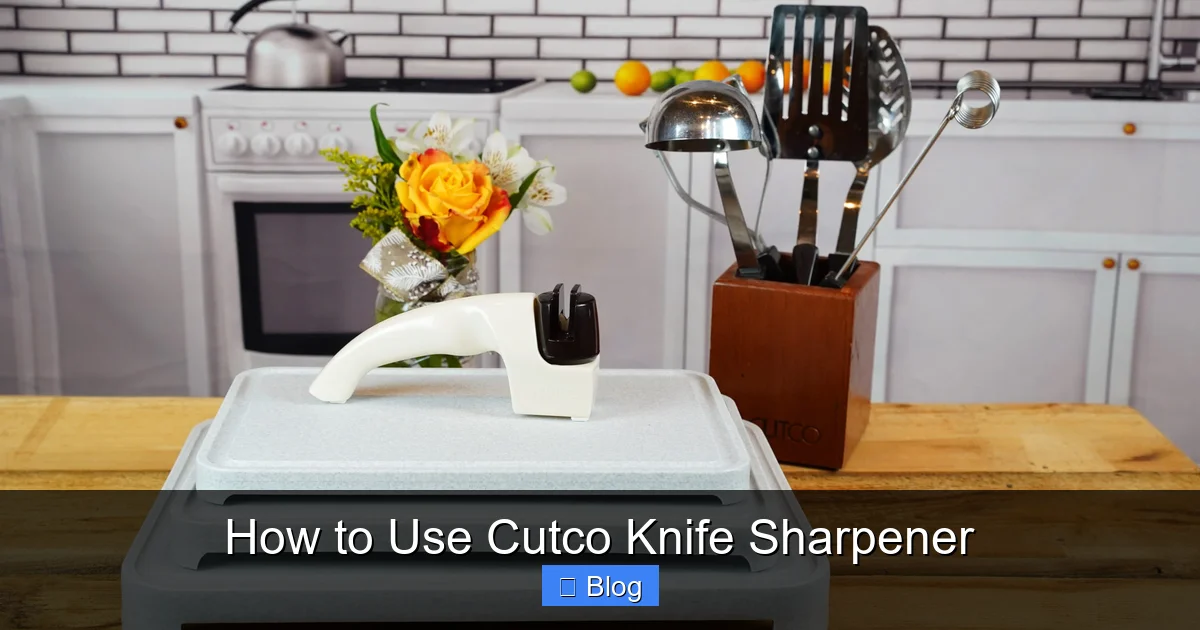
First, place your sharpener on a stable, flat surface—a countertop or cutting board is perfect. The non-slip base should be in full contact with the surface. Have a towel or paper towel nearby to wipe the blade clean after sharpening. Important: Ensure the knife and your hands are dry. No lubricating oil or water is needed for this sharpener.
Step 1: The Coarse Slot (For Dull or Damaged Knives)
If your knife just needs a touch-up, you can start with Step 2. For noticeably dull knives:
- Grip the knife handle firmly. Your thumb should be on the flat of the blade, near the handle, for control and safety.
- Position the knife. Place the heel (the part of the blade closest to the handle) into the coarse (black) slot. Ensure the blade is fully seated and flat against the guide rods.
- Pull through with control. Using moderate, steady pressure, pull the knife straight back towards you in a smooth, continuous motion. Let the sharpener do the work—don’t saw or scrub. The entire cutting edge, from heel to tip, should pass through the slot.
- Release at the tip. As the tip clears the slot, gently lift the knife away. Do not drag the tip backward through the slot, as this can damage the ceramic.
- Repeat on the other side. Now, switch hands. Place the opposite side of the blade into the same coarse slot and perform the same pull-through motion.
- Alternate sides. For best results, repeat this process 5-10 times per side. A good rule of thumb is to do an equal number of strokes on each side. You’ll feel a slight burr (a tiny flap of metal) form on the opposite side of the edge—this is a sign you’re removing metal correctly.
Step 2: The Fine Slot (The Essential Finishing Touch)
This step is non-negotiable for a truly sharp, long-lasting edge. It removes the burr and polishes the edge.
- Repeat the exact same motion. Take your knife and, using the same firm but moderate pressure, pull it through the fine (ceramic) slot 5-10 times per side, alternating just as you did with the coarse slot.
- Feel the difference. You’ll notice less resistance. The fine slot is refining, not grinding.
- The final test. After 3-4 alternating strokes per side, carefully feel the edge of the blade (thumb pad, perpendicular to the edge!) for a consistent, sharp burr. When it feels uniformly sharp all along the blade, you’re done.
Step 3: Clean and Test
Wipe the blade clean with your towel. You’ll likely see a dark metal slurry—that’s normal. Now for the fun part: the test. Try slicing a piece of paper, cutting a ripe tomato without squeezing, or gently running your thumb (perpendicular!) along the edge to feel a consistent, sticky sensation. A sharp Cutco knife should glide through tasks with minimal effort.
Practical Tips & Tricks from the Experts
Now that you know the basic motion, let’s elevate your technique with pro-level insights.
Visual guide about How to Use Cutco Knife Sharpener
Image source: thekitchenix.com
How Many Strokes Are Enough?
There’s no magic number. It depends on how dull the knife is. For a routine touch-up (every few weeks), 3-5 alternating strokes in the fine slot may suffice. For a very dull knife, you might need 10-15 alternating strokes in the coarse slot followed by 10 in the fine. The key indicator is the burr. Once you feel a consistent burr form on the opposite side after coarse sharpening, you’ve done enough. After the fine slot, the burr should be gone, leaving a clean, sharp edge.
Maintaining Your Sharpener
Your sharpener will last for decades with minimal care. Occasionally, tap it firmly on the counter to dislodge built-up metal dust (swarf). You can also gently brush it out with a dry, stiff brush. Never wash it with water or put it in the dishwasher, as this can cause the ceramic rod to become brittle. Keep it dry.
Sharpening Different Knife Types
This sharpener is designed for Cutco’s standard straight-edge knives (chef’s, paring, utility, etc.). It works excellently on:
- High-Carbon Steel & Stainless Steel: Both sharpen effectively.
- Serrated Knives: Do not use. The slots are for straight edges only. Use a dedicated ceramic rod or send serrated Cutco knives back to the factory for sharpening.
- Other Brands’ Straight-Edge Knives: It will work, but only if they have a 15-degree factory edge. Using it on a 20-degree German-style knife will dull it faster by over-thinning the edge.
Common Mistakes & How to Avoid Them
Even with a foolproof tool, a few missteps can hinder your results. Let’s troubleshoot.
Mistake 1: Pressing Too Hard
The Problem: You’re “scrubbing” the blade through the slot with all your might.
The Fix: Use firm, consistent, but moderate pressure. Let the abrasive material do the work. Excessive pressure can create an uneven edge and wears out your sharpener faster. Think of it like drawing a line with a marker—you don’t press the marker into the paper, you guide it.
Mistake 2: Inconsistent Strokes or Angles
The Problem: Wiggling the knife, not pulling it straight, or changing the angle mid-stroke.
The Fix: Focus on a single, smooth, linear motion. Your forearm should move, not just your wrist. Keep the blade flat against the guides from start to finish. The fixed angle guides ensure consistency if you follow the slot’s path.
Mistake 3: Skipping the Fine Slot
The Problem: “It’s sharp enough” after the coarse slot.
The Fix: Always finish with the fine slot. The coarse slot leaves a microscopic, jagged edge (like a saw). The fine slot straightens and polishes those teeth into a smooth, keen edge that slices cleanly and holds its edge longer. Skipping this step is the #1 reason knives seem to dull quickly after sharpening.
Mistake 4: Not Cleaning the Knife & Sharpener
The Problem: Metal dust builds up, creating a paste that can actually scratch your blade and clog the sharpener.
The Fix: Wipe the blade clean after every sharpening session. Give your sharpener a good tap and brush-out every few months to keep it performing optimally.
The Bigger Picture: Sharpening as Part of Knife Care
Sharpening is the final step in a triangle of knife maintenance: proper use, proper storage, and proper sharpening.
Honing: The Daily Habit
A honing steel (or the fine slot of your sharpener) is for daily alignment, not sharpening. Every few uses, give your knife 3-4 light, alternating strokes on a honing steel or in the fine slot. This realigns the microscopic edge that bends during use, keeping it cutting efficiently between full sharpenings. Think of it like stretching before a workout.
Proper Use & Storage
Use your knives on appropriate surfaces (wood, plastic, composite). Never cut on glass, metal, or stone. Store them in a knife block, on a magnetic strip, or with blade guards—never loose in a drawer where they knock against each other and dull.
Knowing When to Sharpen
Don’t wait until the knife is completely useless. Signs it’s time: you have to saw through soft foods like tomatoes or bell peppers, the knife pushes food rather than slicing it, or you notice you’re applying more pressure than usual. Catching dullness early means fewer strokes in the coarse slot and a longer overall knife life.
Conclusion: Your Journey to Mastery
Mastering your Cutco knife sharpener isn’t about complex techniques; it’s about understanding a simple, reliable process and incorporating it into your kitchen routine. This tool was born from a promise—a lifetime guarantee on Cutco knives—and that guarantee hinges on you being able to easily maintain their edge. By embracing the fixed-angle system, respecting the two-stage process, and avoiding common pitfalls, you transform sharpening from a dreaded chore into a quick, satisfying ritual.
Remember, a sharp knife is a safe and joyful tool. It respects the ingredients you’re working with and makes preparation a pleasure. So take that dull knife from your drawer, follow these steps, and feel the difference a truly sharp edge makes. That first clean slice through a tomato, that effortless mince of garlic—that’s the payoff. You’ve got this. Now go chop, slice, and dice with confidence.
Frequently Asked Questions
Can I sharpen other brands of knives with the Cutco sharpener?
You can, but with a major caveat. The sharpener is set to a 15-degree angle. It will work best on knives that originally have a 15-degree factory edge. Using it on knives with a wider angle (like traditional 20-degree German knives) will thin the edge excessively over time, weakening it. For other knives, check their factory angle first.
How often should I sharpen my Cutco knives?
It depends on use, but for a home cook who uses their knives several times a week, a light touch-up in the fine slot every 2-4 weeks is ideal. A full sharpening (coarse then fine) is only needed when the knife is noticeably dull, which might be every 6-12 months with proper maintenance and honing.
What if I only use the fine slot and skip the coarse slot?
That’s perfectly fine for routine maintenance! If your knife is just slightly dull from regular use and hasn’t rolled its edge, 5-10 alternating strokes in the fine slot will realign and hone it back to sharpness. Reserve the coarse slot for when the knife is truly blunt or has a rolled edge you can see or feel.
Is there a “wrong” way to hold the knife while sharpening?
The most important thing is to keep the blade flat against the guide rods from heel to tip throughout the entire pull. The grip itself isn’t as critical as control. A common safe grip is to hold the handle with your dominant hand and place your thumb on the flat of the blade near the handle for stability. Just ensure your fingers are clear of the slot.
My knife still seems dull after sharpening. What am I doing wrong?
First, ensure you did enough strokes to form a consistent burr on the opposite side during the coarse stage. Second, and most commonly, you likely skipped or didn’t do enough strokes in the fine slot. The fine slot removes the burr and polishes the edge. Finally, double-check that you were pulling the knife straight through the slot, not at an angle.
Can I sharpen my Cutco steak knives with this sharpener?
It depends on the style. If your Cutco steak knives have a straight edge (not serrated), yes, you can use the sharpener exactly as described. However, many Cutco steak knives have a serrated edge. Do not use the standard sharpener on serrated knives. You need a special serrated knife sharpener or the Cutco factory’s professional service to properly sharpen the scallops.
Pingback: Cutco Knifes - kitchenandhouseware.com