Figuring out if your oven is gas or electric is simpler than you think and crucial for safety, repairs, and cooking. You can often tell by looking inside: gas ovens have a visible burner and pilot light or ignitor, while electric ovens have exposed heating coils or a smooth, hidden element at the bottom. Listening for a whooshing sound when it lights or feeling for a warmer cooktop can also give it away. Always prioritize safety—if you suspect a gas leak, evacuate and call a pro.
Key Takeaways
- Visual Inspection is Key: The most reliable method is looking inside the oven cavity for a gas burner (like a small metal pipe with holes) or electric heating coils (visible spiral wires) or a hidden smooth element at the bottom.
- Check the Stovetop: If the cooktop has open-flame burners with removable grates and you can see a flame, it’s almost certainly a gas oven. Smooth, flat, or coil-top stovetops typically indicate electric.
- Listen and Feel: A gas oven often makes a whooshing or clicking sound followed by a “whoomph” as the burner ignites. An electric oven is silent but you may hear a faint hum. The cooktop surface will be cooler on a gas range.
- Look for Labels and Manuals: The user manual, a label on the oven door jamb, or the back panel will definitively state the fuel type. Model numbers researched online will also reveal this.
- Know the Exceptions: Dual fuel ranges combine a gas cooktop with an electric oven. Some newer gas ovens use electric ignitors instead of a standing pilot light. Don’t assume based on the stovetop alone.
- Safety First: If you smell rotten eggs (mercaptan) and suspect a gas leak, do not use any switches or phones near the appliance. Evacuate and call your gas company or 911 from a safe location.
📑 Table of Contents
- Why It Matters: The Gas vs. Electric Oven Debate
- The Quick Visual Check: Your First Step
- Listening Closely: Sound Clues to Your Oven’s Fuel Type
- The Cooktop Connection: How Your Stovetop Gives It Away
- Inside the Oven Cavity: Heating Elements and Burners
- Beyond the Basics: Labels, Manuals, and Professional Insight
- Safety First: Non-Negotiable Rules
- Conclusion: You’re Now an Oven Expert
Why It Matters: The Gas vs. Electric Oven Debate
So, you’ve moved into a new home, or maybe you’re finally tackling that long-overdue kitchen upgrade. You stand before your oven, ready to bake, roast, or broil, but a nagging question holds you back: “Is this thing gas or electric?” It might seem trivial, but knowing your oven’s power source is far more important than you might initially think. It affects everything from your cooking technique and recipe results to repair costs, energy bills, and, most critically, safety.
Gas and electric ovens operate on fundamentally different principles. A gas oven uses an open flame, burning natural gas or propane to generate heat. This offers rapid temperature changes and often moister heat, favored by many professional chefs. An electric oven uses resistive heating elements—those coiled wires or a hidden flat element—that glow red-hot. They typically provide more even, dry heat, excellent for baking and pastries. But you don’t need to be a culinary expert to benefit from this knowledge. When the oven breaks down, the repair technician will ask. When you buy parts or read a tutorial, the instructions will differ. And in the rare but serious event of a malfunction, knowing whether you’re dealing with gas lines or high-voltage wiring changes the emergency response entirely.
This guide is your definitive, step-by-step manual to solving this mystery. We’ll move from the quickest, easiest checks to more involved methods. We’ll use all your senses—sight, sound, and even touch—to give you a clear answer. Forget guesswork; by the end of this article, you’ll be able to walk up to any oven and confidently declare its fuel type. Let’s get started.
The Quick Visual Check: Your First Step
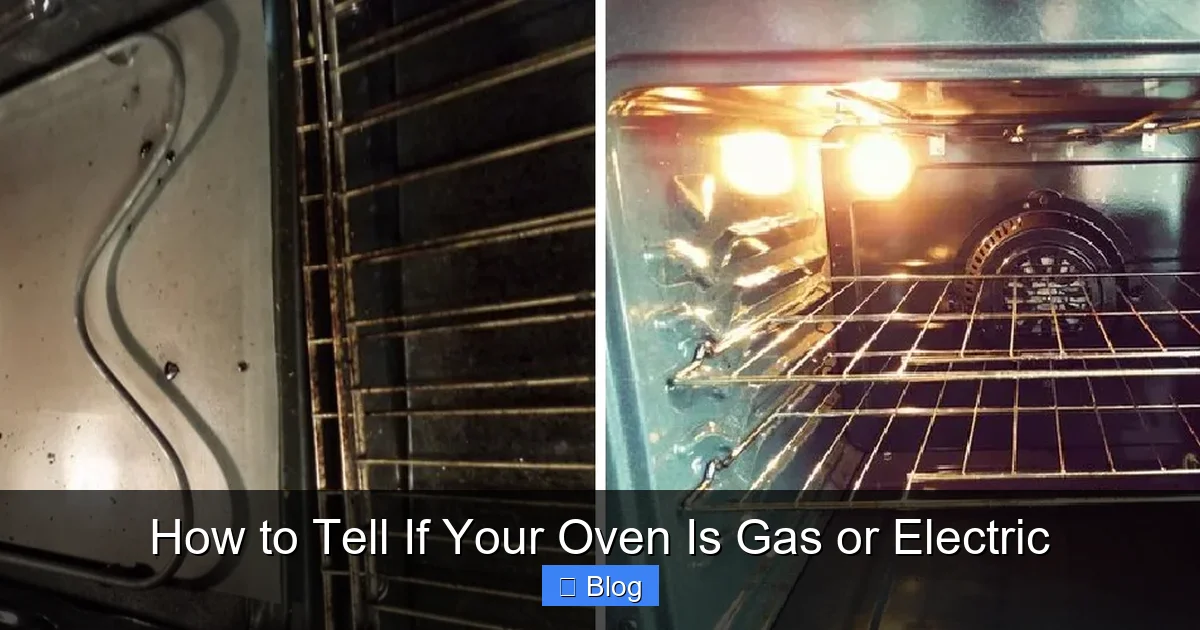
Your eyes are your most powerful tool here. The fastest way to get an answer is to open the oven door and take a good look at the interior walls and floor. What you see will be your biggest clue. This inspection should be done when the oven is completely cool to avoid burns.
Visual guide about How to Tell If Your Oven Is Gas or Electric
Image source: thekitchenix.com
Look for a Pilot Light or Ignitor
If you have a gas oven, you’ll typically find one of two things at the back of the oven cavity, often near the top or bottom:
- A Standing Pilot Light: This is a small, constantly burning blue flame. It’s less common in modern appliances but is a dead giveaway for an older gas oven. You might see it through a small window or when you open the door.
- An Electric Ignitor: In most modern gas ovens, the pilot light is gone. Instead, there’s a small, ceramic or metallic component that glows bright orange or red hot for a few seconds when you turn the oven on. It’s usually located at the back, attached to a gas tube. You might see a residue of soot or discoloration around it from the gas combustion.
What you WON’T see in a gas oven: You will not see large, coiled heating elements like you might on a stovetop. The heat source is a metal burner tube, often covered by a protective metal sheet or shield that has small holes or slots in it. The flame heats this sheet, which then radiates heat into the oven.
Search for Heating Coils or a Hidden Element
For electric ovens, the heating element is unmistakable once you know what to look for.
- Exposed Coil Elements: Common in many budget and mid-range electric ovens, you’ll see one or two large, spiral metal coils (like the elements on an electric stovetop) at the bottom of the oven. The broiler element is usually at the top, also visible as a coil.
- Hidden “Bake” Element: Many newer electric ovens hide the main baking element under the floor of the oven cavity. You won’t see a coil, but you’ll see a smooth, often slightly textured metal sheet at the bottom. When the oven is on and hot, this entire surface will glow a dull red. If you have a smooth, solid bottom with no visible burner holes or shields, it’s almost certainly electric.
The Broiler Test: Set your oven to “Broil.” In an electric oven, the top element will glow bright red-orange within a minute or two. In a gas oven, the broiler burner is a series of small holes along a metal pipe at the top. You’ll see flames coming from those holes, not a glowing coil.
Listening Closely: Sound Clues to Your Oven’s Fuel Type
Sometimes, you can’t see the heating mechanism easily, or you want to confirm your visual findings. Your ears can provide excellent secondary evidence. Crank up your listening skills the next time you preheat the oven.
Visual guide about How to Tell If Your Oven Is Gas or Electric
Image source: minshengappliances.com
The Symphony of a Gas Ignition
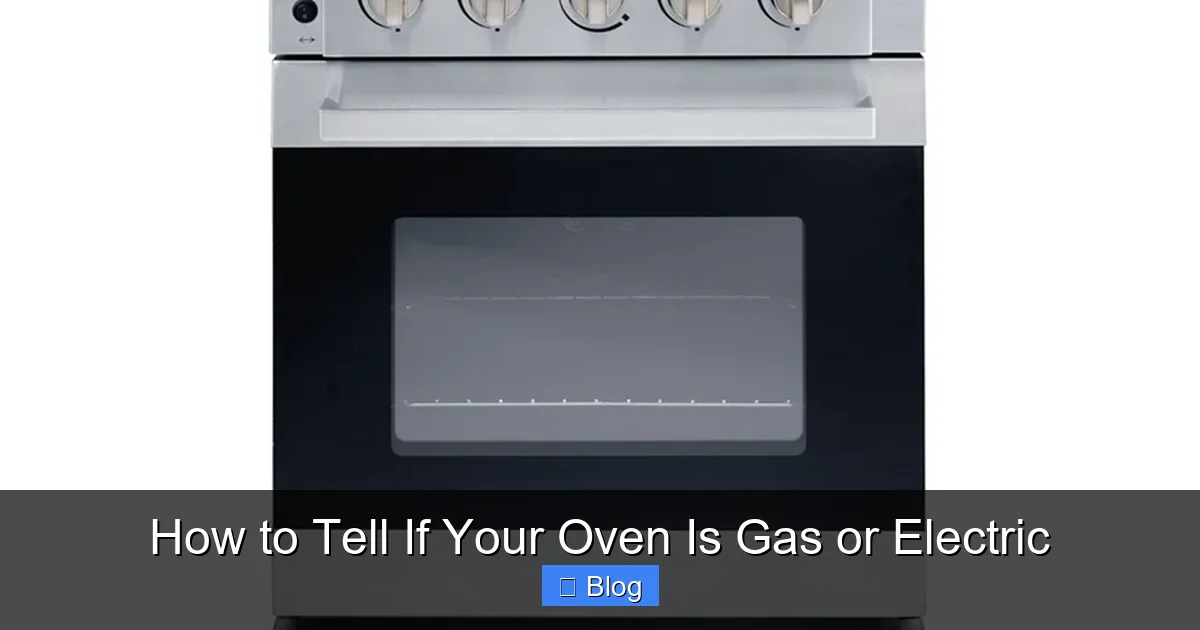
A gas oven has a distinct startup sequence. First, you’ll hear a soft clicking or ticking sound. This is the ignitor (or spark generator in older models) trying to light the gas. After a few seconds of clicking, there should be a definitive whooshing or “whoomph” sound as the gas valve opens and the burner ignites. Once lit, you may hear a low, steady roaring or hissing sound from the burner, similar to a gas stovetop but often more muffled. This sound continues as long as the oven is calling for heat.
Red Flag: If you hear continuous clicking but no ignition sound or flame, the ignitor may be weak or faulty. This is a common repair issue. If you hear a strong gas smell without ignition, turn the oven off immediately, ventilate the kitchen, and do not try to relight it—call a technician.
The Quiet Hum of Electric Heat
An electric oven is a study in subtlety. When you turn it on, there is no ignition sequence. You might hear a very faint click from the thermostat or control board engaging, but that’s it. The primary sound, if any, is a low, almost inaudible hum or buzz coming from the oven cavity as electricity flows through the element. When the element is glowing hot, you might hear a faint crackling or popping sound from the metal expanding. It is dramatically quieter at startup than a gas oven. The only time it gets loud is if the cooling fan (in many modern models) kicks on, but that’s not related to the heating method.
The Cooktop Connection: How Your Stovetop Gives It Away
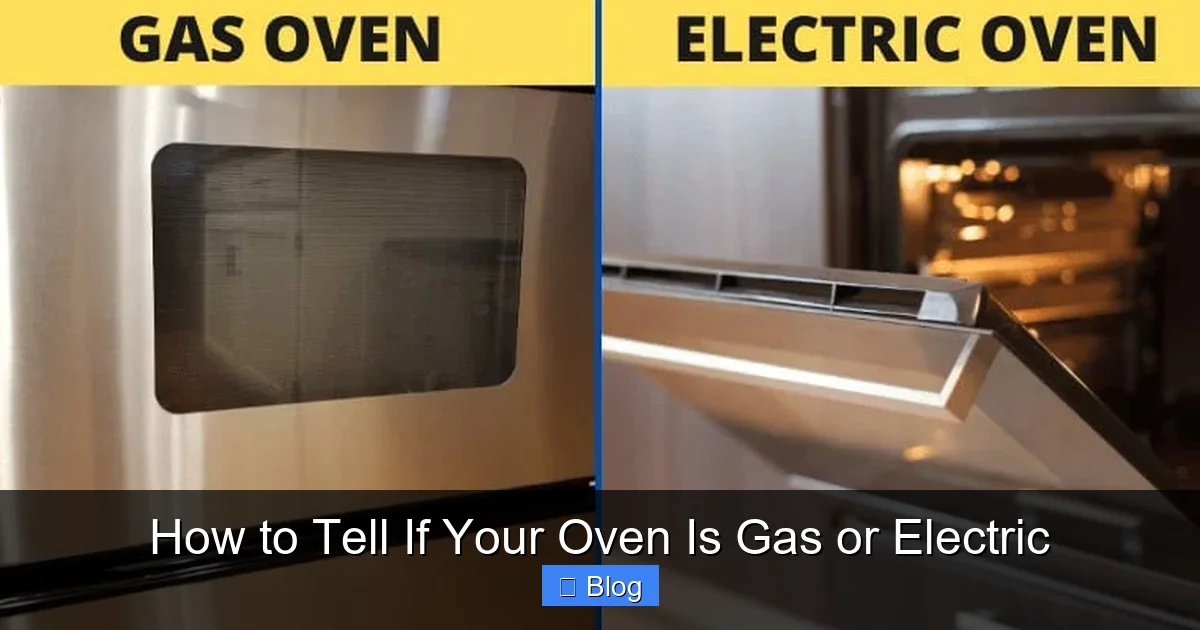
Here’s a critical piece of information: in a standard, non-dual-fuel range, the oven and the cooktop share the same fuel source. If your stovetop is gas, your oven is gas. If your stovetop is electric, your oven is electric. This is the single biggest clue for the vast majority of households. Let’s examine what your cooktop is telling you.
Visual guide about How to Tell If Your Oven Is Gas or Electric
Image source: cookeryspace.com
Open-Flame Gas Cooktops
This is unmistakable. You have removable metal grates over round burners. When you turn a knob, you either see a small blue flame immediately (if it has a standing pilot) or you hear a clicking sound and then see a flame appear (if it has an electric ignitor). The burners themselves are metal rings with small holes. The cooktop surface around the burners will be significantly cooler when the burners are off compared to an electric coil. If this is your stovetop, you have a gas oven.
Electric Coil or Smooth-Top Cooktops
- Coil Tops: You have spiral, exposed metal coils that get red-hot when turned on. They sit in a recessed basin. This is a classic electric cooktop, meaning your oven is also electric.
- Smooth-Top (Ceran/Glass):strong> The surface is a flat, black (or sometimes white) glass-ceramic. You see no coils, just glowing red rings or ovals on the surface when burners are on. This is also electric, so your oven is electric.
⚠️ Important Exception – Dual Fuel Ranges: High-end “dual fuel” ranges are designed to give you the best of both worlds: a gas cooktop for responsive stovetop cooking and an electric oven for precise, even baking. If you have a gas stovetop but suspect your oven might be electric (perhaps you’ve seen a hidden element), you might own one of these. The giveaway is that the oven will have a standard electric plug (220V) and no gas line connected to it, while the cooktop has a gas line. If you have this setup, you need to check the oven itself using the methods in Section 3.
Inside the Oven Cavity: Heating Elements and Burners
If the cooktop clue is ambiguous (as in a dual-fuel range) or you want absolute confirmation, a detailed inspection of the oven’s interior is the gold standard. This is where you’ll find the definitive hardware of your oven’s heating system.
The Gas Burner Assembly
In a gas oven, the heat comes from a burner tube, usually made of metal, that runs along the back wall or the floor. It’s often covered by a protective, perforated metal sheet or “flame spreader.” You’ll see a series of small holes or slots in this cover. The actual burner tube is underneath. When the oven is on, you should see small blue flames licking out through these holes. The flame pattern should be mostly blue with maybe a tiny hint of yellow at the tips. A mostly yellow, sputtering flame indicates a combustion problem and needs professional attention. There is no large, coiled wire.
You might also see the gas valve and tubing connected to this burner assembly. This is a clear sign of a gas-fueled system. At the very back, you might see the ignitor (that ceramic-glowing piece) mounted near the burner.
The Electric Heating Element(s)
Electric ovens rely on resistive wire coils that get extremely hot when current passes through them.
- Bake Element: Located at the bottom. It’s either a large, visible spiral coil or a smooth, flat metal strip hidden under the oven floor. If it’s hidden, the floor itself is the element. You’ll know it’s electric because there are no gas lines, valves, or flame holes—just a solid heating surface.
- Broil Element: Located at the top. It’s almost always a visible, exposed coil (though sometimes a “hidden” element is used here too in premium models). During the broil cycle, it will glow intensely orange-red.
- Convection Element: If your oven has a convection fan, there is often a separate ring-shaped element around the fan housing, usually at the back.
Key Differentiator: Electric elements are dry. There is no combustion, no gas smell, and no open flame. They are purely electrical components. If you see wires leading to a coil or a smooth panel, you have an electric oven.
Beyond the Basics: Labels, Manuals, and Professional Insight
What if your visual and auditory checks are inconclusive? Maybe the oven is installed in a way that limits access, or you’re just not sure. Here are your foolproof, non-invasive methods.
Find the Nameplate and Manual
Every major appliance has a nameplate or data tag with critical information. For your oven, check these locations:
- Inside the oven door: Look along the edge of the door frame, usually on the left or right side. The label is often on a metal strip.
- On the back of the appliance: If you can pull it out (or look behind it), the nameplate is often on the back panel.
- In the storage drawer: If your oven has a bottom warming or storage drawer, the label might be on the side wall inside.
On this label, look for fields like “Fuel Type,” “Energy Source,” “Gas,” “Electric,” “Natural Gas,” “LP (Propane),” or “120/240V.” It will state it explicitly. If you have the original user manual, it will be on the cover or in the specifications section. This is the most authoritative source.
Decode the Model Number
If you can find the model number (also on the nameplate), you can look it up online. Go to the manufacturer’s website (Whirlpool, GE, Samsung, etc.) and enter the model number in their support or product lookup section. The detailed specifications page will list the fuel type unambiguously. A quick Google search of the model number will also yield results from appliance repair forums and parts websites that will confirm it.
When in Doubt, Call a Pro
If you’ve exhausted these steps and still have a doubt—especially if you smell gas—it is time to call a qualified appliance repair technician or your gas utility company. They have the tools and experience to safely determine the fuel source and diagnose any issues. This is not a situation to gamble with. A professional can also perform a leak test if there’s any suspicion of a gas line issue. It’s a small cost for immense peace of mind and safety.
Safety First: Non-Negotiable Rules
Throughout this process, your safety is paramount. Here are the absolute rules you must follow:
- Never use an open flame to check for a gas leak. This includes lighters or matches.
- The “rotten egg” smell is your warning. Natural gas is odorless, so mercaptan (which smells like sulfur or rotten eggs) is added as a safety additive. If you smell this near your oven, treat it as an emergency.
- Do not operate light switches or use your phone in the area. A spark from an electrical switch could ignite accumulated gas.
- If you suspect a major leak: Do not try to turn the oven off or on. Do not unplug it. Immediately evacuate everyone from the house. Once you are a safe distance away, call your gas company’s emergency line or 911 from a neighbor’s house.
- For minor, confirmed leaks at connections: Turn off the gas supply valve (usually behind the oven or at the wall). Ventilate the area by opening windows. Then call a technician.
- Always work with a cool, unplugged appliance for any visual inspection that involves removing panels or reaching inside.
Remember, identifying your oven type is not just an intellectual exercise; it’s a foundational piece of knowledge for responsible homeownership. It empowers you to cook better, save money on repairs, and, most importantly, keep your family safe.
Conclusion: You’re Now an Oven Expert
Congratulations! You’ve just completed your masterclass in oven identification. You now know that the journey to the answer begins with a simple question: what does your cooktop look like? From there, you can confirm with a cool, calm look inside the oven cavity, listening for the tell-tale ignition of gas or the quiet hum of electricity. You know to hunt for the nameplate and decode the model number for absolute proof. And you are armed with the critical safety protocols that must never be compromised.
This knowledge transforms your relationship with your kitchen. No longer will you feel a pang of uncertainty when a repair guide asks for your oven type. You can shop for replacement parts with confidence. You’ll understand why your cakes rise better (or worse) and how to adjust your techniques for your specific heat source. Most importantly, you’ve taken a proactive step in ensuring your home’s safety. The next time someone asks, “How can you tell if an oven is gas or electric?” you’ll have a clear, confident, and comprehensive answer. Now, go forth and bake, roast, or broil with that newfound clarity!
Frequently Asked Questions
Can I convert a gas oven to electric or vice versa?
In most cases, no. A full conversion involves replacing the entire appliance, as the internal components, wiring, and gas lines are fundamentally different and not designed to be swapped. Some high-end dual-fuel models allow you to choose separate fuel sources for cooktop and oven, but converting a single-fuel unit is impractical and unsafe.
What if my oven has a smooth top but I think it’s gas?
You likely have a dual-fuel range. The smooth gas cooktop (with blue flames under the grates) is gas, while the oven cavity, which you’d inspect for a burner tube or hidden electric element, is electric. Check the oven’s power cord and outlet—an electric oven will have a large, heavy 220V plug, while a gas oven will only have a standard 120V plug for lights and controls.
My oven has a pilot light, but I also see a coil. Is that normal?
No, that is not normal for a standard oven. You may be looking at a separate broiler element (the coil at the top) in an otherwise gas oven. Gas ovens have a burner (with flame) for baking and often a separate gas broiler burner at the top. An electric broiler coil is only found in electric ovens. If you see both a pilot light/ignitor/flame AND a glowing red coil, you may be misidentifying parts—re-examine carefully.
Is there a way to tell without opening the oven door?
Yes, primarily by examining the cooktop (as detailed in Section 3). You can also look for a gas shut-off valve behind the range (a lever or knob on the gas line pipe) or a large 220V electrical plug and outlet. Listening at the door during preheat is another method, but it’s less reliable than a visual check.
My oven is under a counter and I can’t see the back or inside easily. What should I do?
First, check the stovetop type—it’s your strongest clue. Second, locate and read the nameplate, which is almost always on the oven door jamb or the front of the drawer below. You can often read it without moving the appliance. Finally, find the model number on that plate and look it up online. This requires zero physical inspection beyond reading a sticker.
Which is cheaper to operate, gas or electric?
This depends heavily on your local utility rates. Historically, natural gas has been cheaper than electricity in many regions, making gas ovens less expensive to run. However, with the rise of efficient electric heat pump technology and fluctuating energy prices, the gap has narrowed. For precise answers, compare your actual per-unit costs (therms for gas, kWh for electricity) and consider the oven’s efficiency. Electric ovens can sometimes be more efficient at transferring energy to food, offsetting the higher fuel cost.