Tiny ants marching around your kitchen sink? It’s a frustrating but very solvable problem. This guide provides a complete action plan, from immediate disruption tactics and deep cleaning rituals to sealing entry points and using both natural and chemical solutions. The core strategy focuses on eliminating the attractants, destroying the colony, and permanently sealing them out to reclaim your kitchen.
Key Takeaways
- Identify & Disrupt First: Find the ant trails and entry points, then immediately wipe them with soapy water or vinegar to erase their scent pheromones and halt the invasion.
- Eliminate Attractants: Meticulously clean all food residues, grease, and standing water from the sink, counter, and drain. Store all food in airtight containers.
- Seal the Perimeter: Caulk all cracks and gaps around the sink, pipes, windows, and baseboards. Install door sweeps and repair screens to block physical entry.
- Use Baits, Not Sprays: Ant baits are the most effective long-term solution as worker ants carry the poison back to the nest, eliminating the colony. Sprays only kill visible ants.
- Natural Deterrents Work: Substances like white vinegar, lemon juice, cinnamon, and peppermint oil disrupt ant navigation and are safe for kitchens with children and pets.
- Consistency is Crucial: A one-time clean isn’t enough. Implement daily habits (wipe counters, dry sink) and weekly deep cleans to maintain an ant-unfriendly environment.
- Know When to Call a Pro: For massive, persistent infestations or if you suspect carpenter ants (which damage wood), professional pest control is the safest and most effective route.
📑 Table of Contents
- Why Are Small Ants Obsessed With Your Kitchen Sink?
- Step 1: Immediate Action – Disrupt and Deny
- Step 2: The Deep Clean – Making Your Sink Area Ant-Proof
- Step 3: Seal the Fortress – Finding and Blocking Entry Points
- Step 4: Choosing Your Weapons – Natural vs. Chemical Solutions
- Step 5: Long-Term Prevention – The Ant-Free Kitchen Habit Loop
- Conclusion: Your Ant-Free Kitchen is Achievable
Why Are Small Ants Obsessed With Your Kitchen Sink?
You’re standing at your kitchen sink, ready to wash a dish, and you see them: a tiny, relentless trail of small ants. They’re not just visiting; they’ve set up a miniature highway along your countertop and down into the drain. This isn’t random. Your kitchen sink is a five-star hotel and all-you-can-eat buffet for ants, all rolled into one. Understanding why they are there is the absolute first step to getting rid of small ants around the kitchen sink for good.
The Triple Threat: Water, Food, and Shelter
Small ants, commonly odorous house ants or pavement ants, are driven by three basic needs: moisture, carbohydrates (sugar), and protein. Your sink area, unfortunately, is a jackpot for all three. The constant dampness from the faucet, leaky pipes, or a wet sponge provides essential hydration. Crumbs, sticky spills from juice or soda, residue in dirty dishes, and even the organic gunk inside your garbage disposal or drain offer a perfect food source. Finally, the dark, moist cavities behind the sink cabinet, around the p-trap, and in wall voids near plumbing offer ideal shelter for a nesting colony. They aren’t just passing through; they are establishing a satellite nest very close to this resource.
Common Culprits: Who’s Invading Your Space?
While many tiny ants look similar, identifying the type can help tailor your approach. Odorous House Ants are the most frequent offenders. They are about 1/16 to 1/8 inch long, dark brown to black, and give off a rotten coconut smell when crushed. They love sweets and are notorious for nesting in wall voids and under floors. Pavement Ants are slightly larger, with parallel lines on their head and thorax. They nest under stones and pavement but will easily move indoors for food, preferring a wider diet including grease and meat. Pharaoh Ants are a serious concern; they are very small, pale yellow to reddish, and are major pests in buildings. They have multiple queens and spread quickly, often requiring professional intervention. Seeing a few scouts is the first warning sign of a nearby nest that could number in the thousands.
The key takeaway? Those few ants you see are just the tip of the iceberg. The main colony is hidden nearby, and they are in full resource-gathering mode. Your mission is to cut off their supply line, contaminate their food source with bait, and seal the door so they can’t get back in.
Step 1: Immediate Action – Disrupt and Deny
Before you dive into deep cleaning, you need to hit the pause button on their current operation. The goal here is to break their chemical trail and immediately remove the easy food and water they are exploiting. This is your tactical response in the first 24 hours.
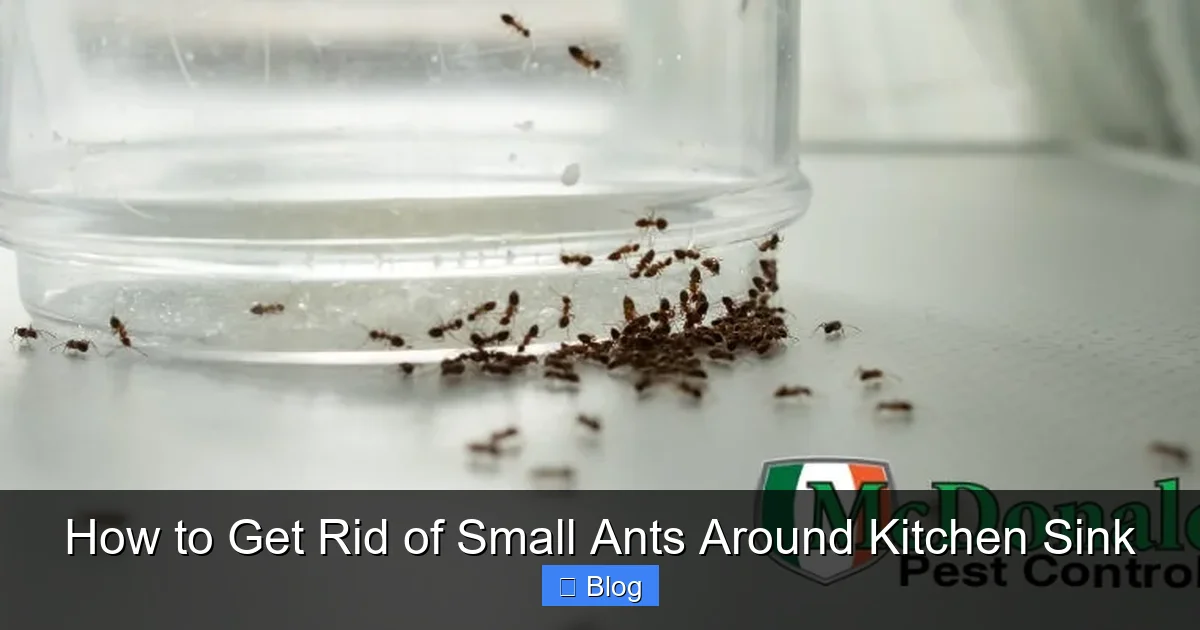
Visual guide about How to Get Rid of Small Ants Around Kitchen Sink
Image source: mcdonaldpestcontrol.com
Erase the Scent Highway
Ants navigate by following a pheromone trail left by the first scout who found the food. Killing the ants you see does nothing if the trail remains. You must erase the trail. Take a clean cloth or paper towel and soak it in one of two solutions: plain soapy water (a few drops of dish soap in a spray bottle of water) or a 50/50 mixture of white vinegar and water. Wipe down every surface the ants have traversed—the counter, the rim of the sink, the backsplash, and especially the exact line they are forming. The soap or vinegar breaks down the pheromones, leaving the next ant completely lost. This simple act causes confusion and forces them to start their search over, buying you precious time.
Declutter and Deprive
Right now, your sink area is an ant’s dream. Do a rapid sweep of the zone. Remove all food items from the counter: fruit bowls, open cereal boxes, pet food. Place them in the refrigerator or in sealed containers. Clear the sink entirely. No dirty dishes, no sponges, no damp rags. Put them in the dishwasher or hang sponges to dry completely away from the sink area. Wipe down the sink basin and faucet with your vinegar-water solution, paying special attention to the lip where gunk collects. Eliminate standing water. Fix a dripping faucet immediately—even a few drops per minute is a constant water source. Squeegee or dry the entire sink and countertop after every use for the next few days.
The Garbage Disposal & Drain Check
Your sink drain and garbage disposal are prime real estate for ant colonies. They are dark, moist, and often lined with decaying food particles. Pour a pot of boiling water down the drain to flush out loose debris and kill any ants lurking inside. Follow this with 1/2 cup of baking soda followed by 1 cup of white vinegar. The fizzing action will help dislodge grime from the pipe walls. Let it sit for 15 minutes, then flush again with more boiling water. For the garbage disposal, grind ice cubes and coarse salt to scour the blades and sides, then finish with lemon peels for a fresh scent that also deters ants.
Step 2: The Deep Clean – Making Your Sink Area Ant-Proof
The immediate actions bought you time. Now you need to perform a surgical clean to remove every microscopic attractant that might still be calling ants to your kitchen. This isn’t just about appearances; it’s about olfactory hygiene.
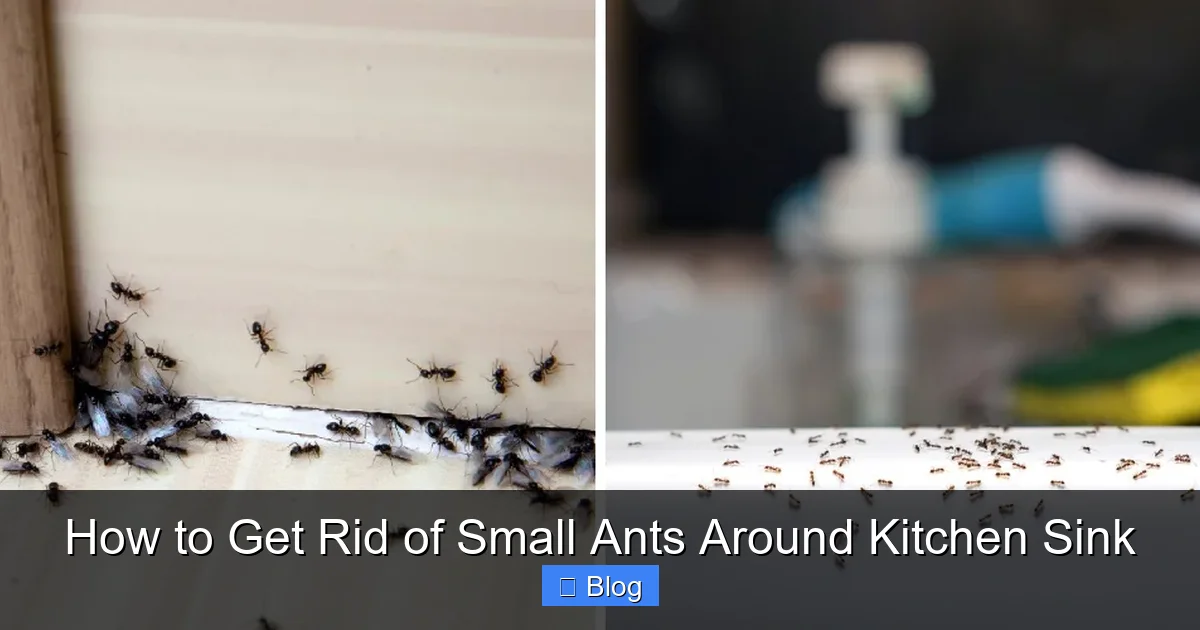
Visual guide about How to Get Rid of Small Ants Around Kitchen Sink
Image source: thekitchenix.com
Beyond the Surface: A Systematic Approach
You must think like an ant. They can detect a sugar molecule from a spill that happened days ago. Start by clearing everything off the counter and from under the sink. Pull out the sink base cabinet contents. You’re going to clean every surface, corner, and crevice.
- Counters & Backsplash: Use a dedicated cleaner for your countertop material (e.g., granite, laminate, tile). For a natural, effective clean, use a paste of baking soda and water on stubborn sticky spots, then rinse. Wipe with a vinegar-water solution for final disinfection and ant-repelling properties.
- Sink Basin & Faucet: Scrub with a non-abrasive cleaner or baking soda paste. Pay special attention to the drain flange, the crevice where the faucet meets the sink, and the sprayer hose cradle. These are prime crumb-catching spots.
- Under the Sink Cabinet: This is a critical zone. Remove all cleaning supplies. Wipe down the entire interior, including the walls, floor, and the P-trap (the U-shaped pipe). Look for any leaks, condensation, or dampness. Damp cardboard or paper bags stored here are a magnet for ants. Store items in sealed plastic bins. Check the cabinet floor for any holes or gaps in the wood or drywall where pipes enter. These are direct highways into your home’s wall voids.
- Appliances: Move the toaster, coffee maker, and knife block. Clean underneath and behind them. Crumbs accumulate in these hidden areas.
- Trash & Recycling: Take out the trash and recycling. Clean the bins inside and out with a disinfectant. Use bins with tight-sealing lids. Consider a small trash can with a foot pedal inside the cabinet under the sink to contain odors.
The Hidden Culprits: Grease and Biofilm
Ants are also attracted to grease and protein residues. Your stove hood, microwave interior, and even the toaster crumb tray can harbor these. Degrease the hood filter and exterior. Clean microwave splatters. Empty and clean toaster crumb trays. Don’t forget the underside of the dish rack—a perpetually damp, greasy spot perfect for ant trails.
Step 3: Seal the Fortress – Finding and Blocking Entry Points
You can have the cleanest kitchen in the world, but if ants can get in, they will. After you’ve cleaned, do a thorough inspection of your kitchen, focusing on the sink wall and perimeter.
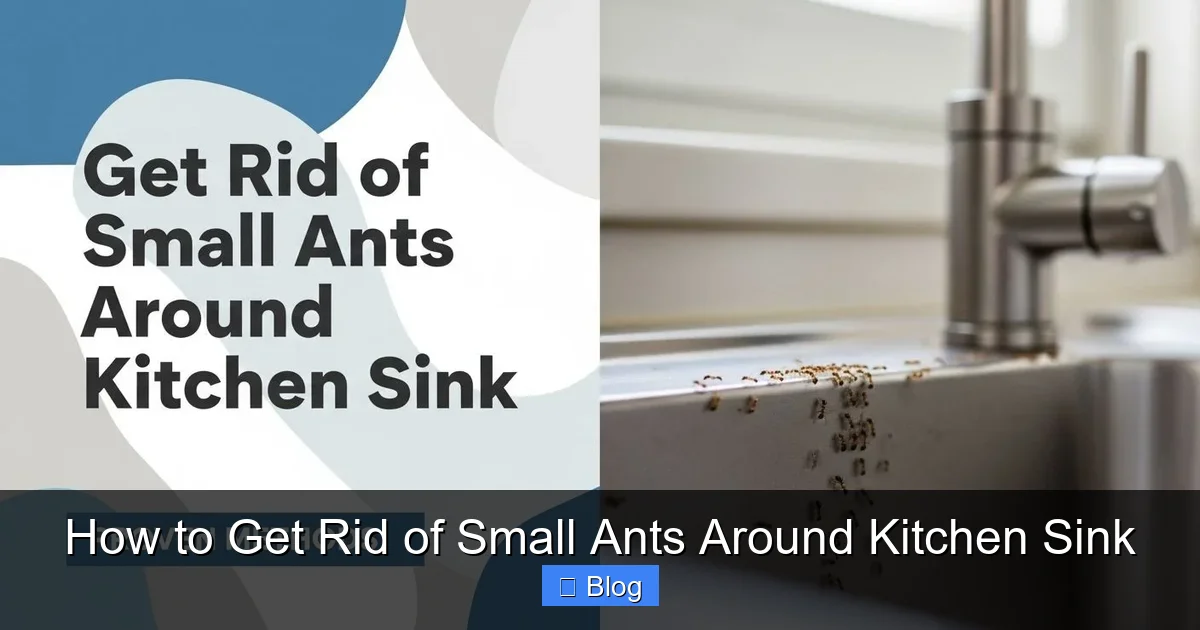
Visual guide about How to Get Rid of Small Ants Around Kitchen Sink
Image source: kitchenwaresets.com
Conduct a Perimeter Sweep
Grab a flashlight. Get on your hands and knees and inspect the following areas with extreme attention:
- Around the Sink: Look at the joint where the countertop meets the wall. Is there a gap in the caulk or sealant? This is a classic entry point. Also, check where the faucet and soap dispenser penetrate the counter.
- Pipes & Conduits: Follow every pipe (water supply, drain, gas if you have a gas stove) where it enters the wall or floor from under the sink. There is often a large, unsightly hole around these pipes that was poorly sealed during installation. This is a superhighway.
- Windows & Doors: Check the seals around your kitchen window, especially the bottom sill. Inspect the door threshold and the weather stripping. Ants can squeeze through gaps thinner than a credit card.
- Baseboards & Cracks: Run your finger along the baseboard where it meets the floor and wall. Any crack, no matter how small, is a potential entry. Check where the floor meets the wall in the corners.
- Electrical Outlets & Switches: Outlet and switch plates on exterior walls can have gaps. Consider using child-safe outlet seals if ants are getting in through these.
How to Seal Like a Pro
Once you’ve identified the gaps, it’s time to seal them. The right material is key.
- Silicone Caulk: This is your best friend for most gaps. Use a high-quality, 100% silicone caulk that is mildew-resistant for areas near moisture (like around the sink). Cut the tip at an angle, apply a continuous bead into the gap, and smooth it with a wet finger or caulk tool. It’s flexible, waterproof, and long-lasting.
- Expanding Foam: For larger holes around pipes (1-3 inches), use a minimal-expanding spray foam. Be careful—it expands a lot. Fill the hole about 70% full, let it cure, then trim the excess with a utility knife. You can cover the foam with a dab of caulk for a cleaner look.
- Weather Stripping & Door Sweeps: Replace worn weather stripping on doors and windows. Install a brush-style door sweep at the bottom of exterior doors to block the gap.
- Copper Mesh: For very large, irregular holes (like where a cable or large conduit enters), stuff the opening with coarse copper mesh. It’s impossible for ants to chew through, and you can cover it with foam or caulk.
Important: If you suspect the ants are nesting inside a wall void (you see them emerging from a small hole in the wall or baseboard), do not spray insecticide into that hole. This can kill the ants you see but scatter the colony, making the problem worse and potentially spreading it to other parts of your home. In this case, baiting is the correct strategy.
Step 4: Choosing Your Weapons – Natural vs. Chemical Solutions
With your perimeter secure and the area clean, you now need to eliminate the colony itself. There are two primary schools of thought: natural deterrents and ant baits. Ant sprays have a limited role.
The Baiting Strategy: Your Most Powerful Tool
This is the single most important concept in ant control. Baits work because they exploit ant behavior. Worker ants are foragers. They find food, carry it back to the nest, and share it with the queen, larvae, and other workers via a process called trophallaxis (regurgitation). A slow-acting bait allows a foraging ant to return to the nest and share the toxic substance before dying. This delivers the poison directly to the queen and the next generation, collapsing the entire colony from the inside.
- How to Use Baits: Place commercial ant bait stations (like Terro, Combat, or Advion) directly next to the ant trails you observed. Do not disturb the trail; place the bait right on it. The ants will find it and prefer it over other food sources. Use multiple stations if the trail is long. Do not spray ants near the bait station—you need the foragers alive to carry the poison home.
- Patience is Required: You will initially see more ants as they swarm the bait. This is good! It means they are taking it back to the nest. Activity should significantly decrease within 2-5 days and may take up to two weeks for full colony elimination. Keep the bait stations in place for at least a month after activity stops to catch any late stragglers or new eggs.
- Types of Baits: Most common are gel baits (squeezed into cracks) and station baits. Active ingredients like borax, boric acid, or fipronil are highly effective. For protein-preferring ants (like some pavement ants), look for baits labeled for grease/protein.
Natural & DIY Remedies: Safe & Supplementary
Natural methods are excellent for deterrence, creating barriers, and providing a non-toxic first line of defense. They are generally repellents, not colony eliminators, so they work best in conjunction with a clean environment and sealing.
- White Vinegar Solution: The classic. Mix equal parts white vinegar and water in a spray bottle. Spray liberally on trails, countertops, and around the sink rim. The strong acetic acid smell disrupts their scent trails and is a natural disinfectant. Safe for most surfaces (test on stone first).
- Essential Oils: Peppermint, tea tree, citrus oil, and lavender oil are powerful ant repellents. Mix 10-15 drops with 1 cup of water in a spray bottle. Shake well and spray along baseboards, window sills, and around the sink. Reapply every few days as the scent fades.
- Barrier Powders: Create physical and chemical barriers. Draw a line of cinnamon powder, coffee grounds, dried mint leaves, or baby powder across ant entry points. These substances are difficult for ants to cross. Food-grade diatomaceous earth (DE) is a fantastic natural desiccant. Dust a thin layer in hidden areas like under the sink cabinet, behind appliances, and in cracks. It’s non-toxic to humans/pets but kills ants by dehydrating them. Use food-grade DE only.
- Citrus Peels: Rub lemon or orange peels directly on counter edges and sink rims. The citric acid and d-limonene are natural deterrents.
Insecticidal Sprays: Use Sparingly and Strategically
Contact sprays (like those with pyrethroids) kill ants on contact but are primarily a temporary fix for visible ants. They do not affect the colony. Use them only for immediate knockdown of a large trail you need to clear quickly before placing bait. Always choose a product labeled for indoor kitchen use, follow instructions precisely, and keep away from food prep surfaces. The risk with overuse is that surviving ants may simply find a new trail and become bait-shy.
Step 5: Long-Term Prevention – The Ant-Free Kitchen Habit Loop
You’ve won the battle. Now, to win the war, you must adopt habits that make your kitchen sink area utterly unappealing to ants. Prevention is less work than elimination.
Daily Discipline: The 5-Minute Sink Reset
Incorporate this into your nightly routine:
- Wipe & Dry: After the last dish is done, spray the counter and sink with your vinegar-water solution and wipe thoroughly. Then, use a dry microfiber cloth to completely dry the sink basin, faucet, and countertop. No damp sponges or dishcloths left sitting.
- No Overnight Dishes: Never leave dirty dishes or wet sponges in the sink overnight. This is the #1 attractant.
- Manage the Trash: Take out the trash regularly, especially if it contains food waste. Use a bin with a sealing lid.
- Check for Drips: Give the faucet a quick glance to ensure it’s not dripping. A silent drip is a constant water source.
Weekly & Monthly Deep Dives
- Garbage Disposal Refresh: Once a week, do the baking soda/vinegar flush followed by boiling water. Grind citrus peels.
- Appliance & Cabinet Scan: Once a month, move the toaster, coffee maker, and canisters. Sweep and wipe under them. Check under the sink cabinet for any new moisture, spills, or potential entry points that may have developed from plumbing shifts.
- Inspect Perimeter: Do a quick visual check of the sealed areas (caulk, foam) to ensure they are intact. Weather stripping and door sweeps wear out.
Landscaping & Exterior Considerations
Ants often nest outdoors and enter your home. Your kitchen sink’s location might be on an exterior wall. Take these external steps:
- Trim Vegetation: Keep tree branches, shrubs, and vines at least 6-12 inches away from your house exterior. Ants use these as bridges to get to your roof or walls.
- Maintain Distance: Don’t stack firewood, mulch, or compost piles directly against your house foundation. These are prime nesting grounds.
- Check Outdoor Faucets: Ensure outdoor spigots are not leaking. The soil beneath a constantly dripped faucet becomes a massive ant magnet, and they’ll explore the wall voids searching for more.
- Seal Foundation Cracks: Walk the perimeter of your home’s foundation. Seal any visible cracks or gaps with appropriate exterior caulk or mortar.
Conclusion: Your Ant-Free Kitchen is Achievable
Getting rid of small ants around the kitchen sink is not about one magic trick; it’s about a coordinated strategy that addresses the root cause. It starts with understanding that your sink is a resource and then systematically taking that resource away. The sequence is critical: Disrupt their trail, deep clean to remove all attractants, seal every possible entry point, deploy ant baits to eliminate the colony, and then maintain a disciplined cleaning routine. Natural repellents like vinegar and essential oils are fantastic, safe allies in this fight, but they must be part of a larger plan that includes sanitation and exclusion. Remember, the few ants you see are workers on a mission. By cutting off their supplies and poisoning their return trip, you win. Stay vigilant with the daily sink reset, and you’ll enjoy a clean, ant-free kitchen for the long haul. If the problem persists despite your best efforts, it’s a sign of a large, established, or difficult-to-find nest, and consulting a licensed pest control professional is the smart, effective next step.
Frequently Asked Questions
Why do I keep getting small ants around my kitchen sink even after I clean?
Cleaning is essential, but it may not be enough if the ants have established a nest inside a wall void or under the sink cabinet. You must also find and seal their entry points and use ant baits to eliminate the hidden colony. The ants you see are foragers; killing them doesn’t stop the thousands still in the nest.
Are natural remedies like vinegar or peppermint oil enough to get rid of an ant infestation?
Natural remedies are excellent for repelling ants and disrupting their trails, but they are usually not potent enough to eliminate an entire colony on their own. They work best as a preventive measure and a supplement to a baiting program. For an active infestation, ant baits are the most reliable solution for complete eradication.
Is it safe to use ant baits in my kitchen around kids and pets?
Most commercial ant baits are designed to be low-toxicity to humans and mammals when used as directed, as they contain ingredients like borax in small amounts. However, safety is paramount. Always place bait stations in areas inaccessible to children and pets (e.g., behind the fridge, under the sink cabinet on a high shelf, inside a cabinet). Read and follow all label instructions carefully.
How long does it take to get rid of ants using bait stations?
You should see a significant reduction in ant activity within 2-5 days as foragers carry the bait back to the nest. Complete colony elimination, including the queen and new larvae, can take 1-2 weeks. It’s crucial to leave the bait stations in place for at least a month after the last ant is seen to ensure the entire colony, including any new eggs, is destroyed.
What’s the difference between sugar ants and grease ants, and does it change my approach?
“Sugar ants” is a common term for ants that prefer sweet carbohydrates, while “grease ants” prefer proteins and fats (like those in greasy food or pet food). Most common household ants are omnivorous and will eat both. To be safe, you can use a general-purpose sweet-based bait (most common) or look for a bait specifically formulated for grease/protein if you suspect that’s their primary target. In practice, a clean kitchen eliminating both food types is the best approach.
When should I call a professional exterminator for ants in my kitchen?
Call a professional if: 1) You have a massive, overwhelming infestation that DIY methods aren’t touching. 2) You suspect carpenter ants (they are larger, black or reddish, and you may see frass like sawdust or winged swarmers). 3) You cannot locate the entry points or source nest. 4) The problem persists for more than 3-4 weeks despite diligent baiting and sealing. Pros have access to stronger, targeted baits and can locate hidden nests within walls.