Never guess if a mug is oven safe—it can lead to dangerous breakage. The key is to look for explicit “oven-safe” markings, understand which materials typically qualify, and know how to perform a safe water test. Always avoid mugs with metallic paint, delicate glass, or unknown origins in the oven. When in doubt, assume it’s not safe and use a dedicated bakeware dish.
You’re ready to bake a single-serving cake or melt some butter for a fancy recipe, and you reach for your favorite, beautifully decorated mug. But a critical question stops you in your tracks: “Is this thing actually oven safe?” Using a non-oven-safe mug isn’t just a messy mistake; it’s a recipe for a potentially explosive, shattering disaster that can ruin your food, damage your oven, and cause serious injury. Knowing how to tell if a mug is oven safe is a non-negotiable kitchen skill. It’s not about guessing or hoping for the best—it’s about reading the signs, understanding materials, and performing safe checks. This guide will walk you through every method, from the simple glance to a definitive test, so you can confidently bake in a mug without fear.
Key Takeaways
- Look for explicit labeling: The only surefire way is to find “Oven-Safe,” “For Oven Use,” or a specific oven icon (often a stove or oven with wavy lines) on the bottom or packaging.
- Material matters most: Most unglazed stoneware and thick, tempered glass mugs are safe. Avoid thin glass, delicate porcelain, and anything with metallic trim or decals.
- Temperature limits apply: “Oven safe” does not mean “broiler safe” or for extreme temperatures. Most are rated for 300°F–450°F (150°C–230°C).
- When unsure, perform the water test: Fill the mug with water, place in a cold oven, heat to your target temperature, then let cool inside. Cracks indicate it’s not safe.
- Never subject cold mugs to sudden heat: Thermal shock is the primary cause of oven breakage. Always preheat the mug with the oven or use room-temperature mugs.
- Manufacturer’s word is law: If you can’t find markings, check the manufacturer’s website or contact them directly. If you can’t verify, do not use it in the oven.
📑 Table of Contents
- Why This Question is So Important: The Dangers of a Non-Oven-Safe Mug
- The First and Best Method: Decoding the Markings on the Bottom
- Material Science: Which Mug Materials Are Typically Oven-Safe?
- The Definitive DIY Test: The Cold Water Method
- Common Pitfalls and “Gray Area” Scenarios
- Best Practices for Safe Mug Baking and Care
- Conclusion: When in Doubt, Throw It Out (of the Oven)
Why This Question is So Important: The Dangers of a Non-Oven-Safe Mug
Before we dive into the “how,” let’s be very clear about the “why.” A mug that isn’t designed for oven use can fail in two primary, dangerous ways: thermal shock and structural weakness.
Understanding Thermal Shock
Thermal shock is the enemy of all glass and ceramic. It happens when one part of the material expands rapidly from heat while another part remains cool. This creates intense internal stress. Think of it like a tug-of-war where the molecules on the hot side are pulling away from the cold side until the material literally tears itself apart—shattering. This is why you should never take a mug from the fridge and put it directly into a hot oven, or vice versa. Oven-safe mugs are made from materials and with manufacturing processes (like tempering or using specific clay bodies) that can better withstand these stresses, but they still have limits.
Structural Weakness and Hidden Flaws
Many decorative mugs have flaws you can’t see. A tiny crack from a previous bump, a stress point from the molding process, or a weak spot where a handle attaches can become a failure point under heat and the weight of a batter. Non-oven-safe ceramics are often fired at lower temperatures, making them more porous and less dense. When heated, trapped moisture inside the clay can turn to steam and cause an explosive blowout. Metallic paints or decals can also melt, smoke, or even catch fire. The bottom line: using the wrong mug turns your oven into a hazard zone.
The First and Best Method: Decoding the Markings on the Bottom
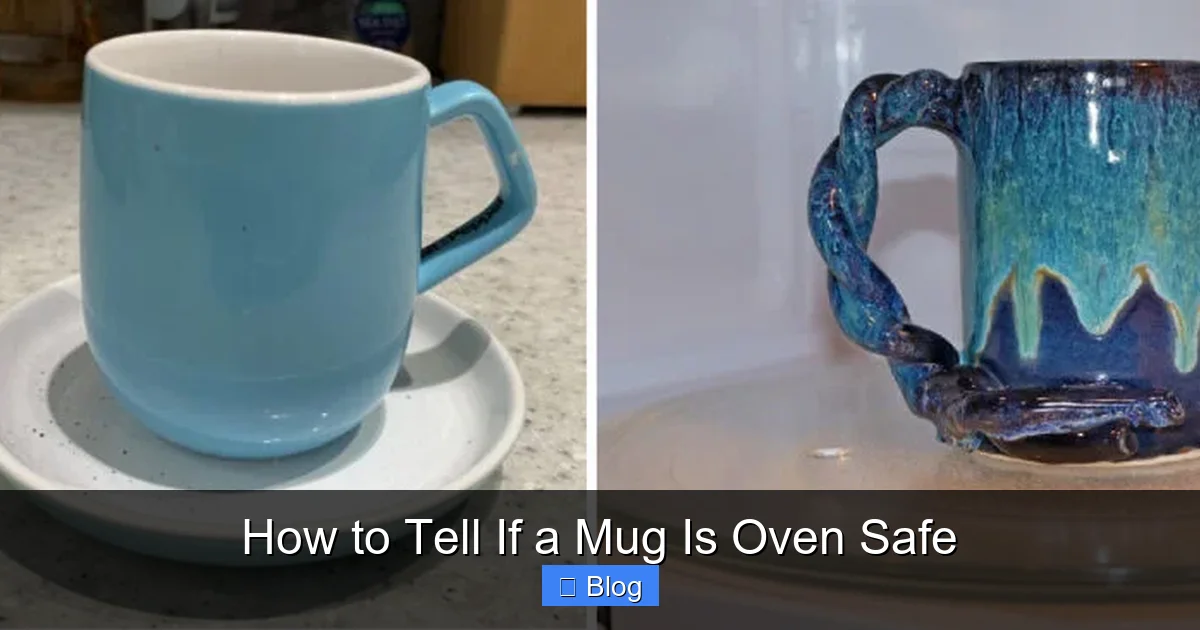
Your investigation starts with a simple, 30-second task: flip the mug over. The base is the official billboard for a manufacturer’s safety claims. You’re looking for specific words, symbols, or numbers.
Visual guide about How to Tell If a Mug Is Oven Safe
Image source: thekitchenix.com
What to Look For: The “Oven-Safe” Lexicon
The most straightforward mark will say “Oven-Safe” or “For Oven Use”. Sometimes it’s abbreviated to “Oven” or “Oven Proof.” In Europe and many other regions, you’ll often see a simple pictogram: a stove or oven icon, sometimes with wavy lines indicating heat, or just a rectangle with waves inside it. This is a universal symbol for heat resistance. You might also see a temperature range, like “Oven safe to 450°F”. That’s ideal—it tells you the exact limit.
Other Common Symbols and Their Meanings
It’s easy to confuse other common symbols with oven safety. Here’s a quick decoder ring:
- Microwave Symbol: A wavy line or a microwave oven pictogram. This does NOT mean oven-safe. Many microwave-safe items are terrible for ovens.
- Dishwasher Symbol: Usually a small dishwasher with water droplets. Irrelevant for oven use.
- Food Safe / Lead-Free: These are about chemical leaching into food, not thermal resistance. A mug can be food-safe but still shatter in the oven.
- Manufacturer’s Logo or Model Number: These are useless for determining oven safety unless paired with the words above. You’ll need to look up the model number online.
Pro Tip: Sometimes the marking is faint, worn, or under a glaze. Run your fingernail over the bottom or tilt the mug to catch the light. If you see any impressed (pressed in) or raised lettering, that’s a good sign it’s a formal marking, not just a random decoration.
Material Science: Which Mug Materials Are Typically Oven-Safe?
When markings are absent or illegible, we turn to material science. Not all ceramics and glasses are created equal. The construction and firing process dictate thermal resilience.

Visual guide about How to Tell If a Mug Is Oven Safe
Image source: heatpress.com.cn
Stoneware: Your Most Reliable Bet
True stoneware is dense, non-porous, and fired at very high temperatures (often above 1200°C / 2192°F). This vitrification process makes it incredibly strong and resistant to thermal shock. Most classic, heavy, rustic baking dishes and sturdy mugs are stoneware. If the mug feels substantial, thick, and has a somewhat rustic or earthy feel (not super thin and delicate), it’s likely stoneware and a good candidate for oven use. Look for a matte or semi-gloss finish, not a super shiny, glass-like porcelain finish.
Tempered Glass (Like Pyrex or Anchor Hocking)
Tempered glass is specifically processed to have controlled compressive stresses on the surface, making it much stronger and more thermal-shock resistant than regular glass. Many classic glass measuring cups and baking dishes are tempered. However, not all glass mugs are tempered. A delicate, thin, hand-blown glass mug is almost certainly not oven-safe. If the mug is made by a brand known for bakeware (like Pyrex) and is thick and sturdy, it’s a possibility. The word “tempered” might be printed on the bottom.
Porcelain: Proceed with Extreme Caution
This is the trickiest category. Fine porcelain is fired at very high temperatures and is vitrified, making it strong and non-porous. High-quality, thick-bodied porcelain can be oven-safe. However, much of what is sold as “porcelain” is actually delicate, thin, and designed for formal dining, not thermal stress. Its beauty is its weakness. The thin walls heat up and cool down too quickly, inviting thermal shock. Unless a porcelain mug is explicitly marked oven-safe or is from a brand that makes bakeware (like some Le Creuset pieces), assume it is not oven-safe.
Materials to Absolutely Avoid in the Oven
- Earthenware: Fired at lower temperatures, it remains porous. It can absorb water, which turns to steam and causes cracks or explosions. It’s also more prone to thermal shock. Often used for decorative, painted mugs.
- Thin, Decorative Glass: Anything hand-painted, delicate, or with bubbles (like art glass) is a no-go.
- Anything with Metallic Trim: Gold, silver, or platinum leaf/paint will melt, smoke, and potentially spark in an oven. This includes many “gift shop” style mugs.
- Plastic or Wooden Handles: Even if the body is ceramic, a plastic or wooden handle will melt or burn. The handle attachment point is also a common failure spot.
- Mugs with Stickers or Decals: The adhesive and ink will burn and create a toxic, smoky mess.
The Definitive DIY Test: The Cold Water Method
If you’ve examined the markings and assessed the material but still have a doubt, you can perform a controlled, safe test. This is for a mug you’re willing to risk—not your favorite heirloom. The goal is to simulate oven conditions without a full baking cycle.
Visual guide about How to Tell If a Mug Is Oven Safe
Image source: arthitectural.com
Step-by-Step Cold Water Test
- Inspect: Do a final visual check for any existing cracks, chips, or flaws. Do not test a damaged mug.
- Fill: Fill the mug completely with room-temperature water. The water helps distribute heat evenly and prevents the mug from heating too rapidly in dry spots.
- Place in Cold Oven: Put the filled mug on a baking sheet (to contain any potential mess) and place it in a cold oven. This is critical for avoiding initial thermal shock.
- Heat Slowly: Set the oven to a moderate temperature, like 300°F (150°C). Turn it on and let it heat up with the mug inside. The gradual temperature rise is key.
- Reach Temperature & Hold: Once the oven preheats (you’ll hear the cycle end), let the mug sit inside for 15-20 minutes. The water inside should be hot, but not boiling.
- Cool Slowly: DO NOT REMOVE THE MUG. Turn the oven off and leave the mug inside until the oven is completely cool, which may take several hours. This slow cooling is as important as the slow heating.
- Inspect and Decide: After it’s fully cool, remove the mug. Empty the water and carefully inspect it. Run your hand over the surface. Look for any new cracks, especially around the rim, base, or handle joint. Tap it lightly with your fingernail; a clear “clink” is good, a dull “clunk” or visible crack means it failed.
Interpretation: If the mug emerges with no new cracks, no crazing (fine surface cracks in the glaze), and sounds solid, it has passed a basic thermal stress test. It is likely safe for typical oven temperatures up to 350°F–400°F. However, this is not a guarantee for all future uses or for higher temperatures like broiling. It simply means it survived this cycle.
Common Pitfalls and “Gray Area” Scenarios
Even with the rules above, you’ll encounter confusing situations. Let’s clear them up.
“It’s from a Famous Brand—That Means It’s Safe, Right?”
Not necessarily. Brands like Nike, Disney, or Starbucks sell countless decorative mugs. Their primary goal is aesthetics and low-cost production, not thermal engineering. Unless it’s from their dedicated bakeware line (like a Le Creuset stoneware mug from their kitchen collection), assume it’s for display or hot beverages only. The brand name on a souvenir mug is not a safety certification.
What About My Grandma’s Vintage Ceramic Mug?
Vintage and antique mugs are a huge red zone. Manufacturing standards have changed. Older glazes might contain lead or cadmium, which can leach into food at high temperatures—a separate but deadly serious health hazard. Even if the mug is structurally sound, you should never use vintage, unknown-origin ceramics for food, let alone oven baking. The risk of heavy metal leaching is too high. Use it as a pencil holder.
I Have a Mug That Says “Heat-Resistant.” Is That the Same as Oven-Safe?
“Heat-resistant” is vague marketing language. It could mean it can handle hot coffee or a warm washcloth. It does not equate to the rigorous engineering of “oven-safe,” which specifies a temperature limit and resistance to dry, prolonged heat. Treat “heat-resistant” as a no. You need the explicit “oven” language.
The “Baking in a Mug” Recipe Trend: A Special Warning
Internet recipes for mug cakes are everywhere. They often say “use any oven-safe mug.” This is dangerously oversimplified. The rapid heating of a small amount of batter in a confined space puts immense stress on the mug. It’s a worst-case scenario for thermal shock. Only use a mug you have 100% verified is oven-safe through markings, material, and ideally, the water test. Never use a thin, delicate, or decorated mug for this specific purpose.
Best Practices for Safe Mug Baking and Care
Once you’ve confirmed a mug is oven-safe, proper use extends its life and ensures safety every time.
Always Respect Temperature Limits
If the mug is rated for 450°F, don’t push it to 500°F for a broiler setting. Most “oven-safe” ratings are for conventional baking (surrounding heat), not the intense, direct heat of a broiler. When a recipe calls for broiling, transfer the contents to a proper broiler-safe pan.
Preheating and Thermal Shock Prevention
Even the best oven-safe mug can crack if subjected to sudden change. The safest practice is to always place the mug in a cold oven and let it heat up with the oven. If you must add it to a preheated oven, ensure the mug is at room temperature and the contents are also at room temperature. Never put a cold mug (from the fridge or dishwasher) into a hot oven. Conversely, don’t take a piping hot mug from the oven and sit it on a cold, wet surface.
Handling and Placement
Place the mug on a baking sheet or stone. This provides a stable, even surface and catches any potential overflow or, in the worst case, debris. Use oven mitts. The mug will be hot, and the handle may be hotter than you expect if it’s thin or attached poorly. Always use two hands if the mug is full and heavy.
Cleaning and Storage
Let oven-safe mugs cool completely before washing. Drastic temperature changes during washing (hot soapy water on a hot mug) can also cause thermal shock over time. Store them carefully. A chip or crack, even a small one, compromises the structural integrity and makes the mug unsafe for future oven use. If you find a chip, retire the mug to non-oven duties immediately.
Conclusion: When in Doubt, Throw It Out (of the Oven)
Determining if a mug is oven safe is a process of elimination and verification. Start with the bottom for clear markings. If they’re absent, critically evaluate the material—favoring thick, dense stoneware or confirmed tempered glass. Use the cold water test as a final, practical check for mugs you’re unsure about. Remember the cardinal rules: avoid thermal shock, respect temperature limits, and never trust vague marketing terms like “heat-resistant.” Your kitchen tools are investments in safe, successful cooking. A $2 decorative mug is not worth a shattered oven door, a ruined meal, or a trip to the emergency room. The safest rule of thumb is the simplest: if you cannot find definitive proof that a mug is oven-safe, do not use it in the oven. Keep those beautiful, fragile mugs for your coffee, your pens, or your succulents, and reserve your oven for cookware explicitly designed for the job. Your peace of mind—and your oven—will thank you.
Frequently Asked Questions
Can I put a mug with a ceramic handle in the oven?
Yes, if the entire mug, including the handle, is made from a single piece of oven-safe ceramic (like stoneware) and has no plastic or wooden parts. However, the handle is often the thinnest part and can get hottest. Always use a mitt and be cautious. Handles on non-oven-safe mugs can crack or break off due to thermal stress.
Is a microwave-safe mug automatically oven-safe?
Absolutely not. Microwave safety is about preventing arcing (sparks from metal) and ensuring the material doesn’t overheat from microwave energy. Oven safety requires resistance to dry, prolonged, high-convection heat and thermal shock. Many plastics are microwave-safe but will melt in an oven. Most ceramics are microwave-safe but can shatter in an oven if not specifically designed for it.
What about glass mugs from brands like Libbey or Anchor Hocking?
Many classic glassware brands produce mugs made from tempered soda-lime glass, which can be oven-safe. Look for the word “tempered” and an oven-safe symbol on the bottom. However, newer lines or decorative glassware from these brands may not be tempered. Always check for markings. If in doubt, perform the cold water test.
Can I use a mug in a toaster oven?
Extreme caution is advised. Toaster ovens have intense, direct heat from the top and bottom elements, creating rapid temperature changes and hot spots that are even more severe than a conventional oven. Only use a mug that is explicitly marked “toaster oven safe” or has passed a very conservative test. Many mugs safe for a large oven will fail in a toaster oven. It’s generally safer to avoid using mugs in toaster ovens.
My mug says “Dishwasher and Microwave Safe.” Why isn’t that enough?
These labels are about different hazards. “Dishwasher safe” means the glaze and construction can withstand harsh detergents and rapid temperature changes from hot water. “Microwave safe” means it won’t overheat or cause arcing in a microwave. Neither tests for the prolonged, dry, high-heat environment of a conventional oven, which is the most demanding and dangerous condition for ceramics and glass.
If a mug survives one time in the oven, is it always safe to reuse?
Not necessarily. Surviving one cycle doesn’t mean it can withstand infinite cycles. Each heating and cooling cycle causes microscopic fatigue. A pre-existing, invisible flaw might have been stressed. More importantly, if you used it without knowing it was truly safe, you were lucky. The risk increases with every use. If you verified it through markings or the water test, it should be safe for repeated use within its rated temperature. If you guessed and it survived, stop using it for baking.