Determining if a lid is oven safe is crucial for safe cooking and preventing dangerous meltdowns or shattering. The primary method is to look for clear manufacturer markings like “Oven Safe” or specific temperature ratings. If unmarked, you must identify the material—tempered glass and certain metals like stainless steel or cast iron are typically safe, while plastic, wood, and regular glass are not. When in doubt, perform a cold-to-hot temperature test with water or consult the product manual. Never guess, as a non-oven-safe lid can release toxins, catch fire, or break catastrophically in high heat.
Key Takeaways
- Look for Explicit Markings: The most reliable indicator is text or symbols on the lid or packaging stating “Oven Safe,” a temperature (e.g., “Oven Safe to 450°F”), or a symbol of an oven.
- Material is Key: Tempered glass (like Pyrex), stainless steel, enameled cast iron, and some ceramics are generally oven safe. Plastic, wood, bamboo, and regular (non-tempered) glass are never oven safe.
- Check the Entire Lid: Examine the knob or handle. Even if the lid is metal or glass, a plastic or wooden handle/knob may have a lower oven-safe temperature or require removal.
- When Unmarked, Use the “Cold-to-Hot” Test: Place a small amount of water in the lid, then gradually heat it in a cold oven. Sudden, extreme temperature changes can reveal if it’s tempered (safe) or regular glass (likely to shatter).
- Consult the Manufacturer: If you have the product manual or can find the brand/model online, the official specifications are the ultimate authority on oven safety and temperature limits.
- Assume Non-Metal = Danger: If you cannot verify a lid’s safety and it has any non-metal components (except verified ceramic/glass), assume it is NOT oven safe for conventional oven use.
📑 Table of Contents
- Introduction: Why This Question Matters More Than You Think
- Section 1: The First and Best Clue – Manufacturer Markings & Packaging
- Section 2: Decoding Materials – What’s In Your Lid?
- Section 3: The Hands-On Test – When Markings Are MIA
- Section 4: Special Cases – Lids for Dutch Ovens, Skillets, and Specialty Cookware
- Section 5: Common Myths and Dangerous Assumptions
- Section 6: The Ultimate Checklist & Safe Usage Practices
- Conclusion: Confidence Comes from Knowledge
Introduction: Why This Question Matters More Than You Think
You’re following a recipe that calls for baking something covered. You grab your favorite pot and its matching lid, pop it in the oven, and walk away. A few minutes later, a cracking sound, a plume of smoke, or a melted, distorted lid greets you. This isn’t just a ruined dinner—it’s a potential safety hazard and a costly kitchen mistake. Knowing how to tell if a lid is oven safe isn’t just culinary trivia; it’s an essential skill for any home cook. The consequences of putting a non-oven-safe lid in a hot oven range from toxic fumes (from melting plastics) and ruined cookware to shattered glass that can cause serious injury. This guide will walk you through every method, from the dead-simple visual check to hands-on tests, so you can confidently answer the question: “Can this lid go in the oven?”
Section 1: The First and Best Clue – Manufacturer Markings & Packaging
Before you ever touch the lid or perform a test, your very first step should always be a thorough visual inspection. Manufacturers are required in many regions to indicate if their cookware is oven safe, and they do this in several clear ways.
Visual guide about How to Tell If a Lid Is Oven Safe
Image source: i.redd.it
Looking for Direct Labels on the Lid
Flip the lid over. Examine the underside, the rim, and the knob or handle. You’re searching for any of the following:
- Text: The words “Oven Safe,” “Oven Proof,” “For Oven Use,” or “Oven Compatible.” Sometimes it’s more specific: “Oven Safe to 425°F” or “Suitable for use up to 500°F.”
- Symbols: A small drawing of an oven is a universal symbol. You might also see a temperature gauge icon.
- Numbers: A standalone number, especially near a knob, often indicates the maximum safe temperature in Fahrenheit or Celsius.
Pro Tip: Use a flashlight. These markings are often faint, etched, or printed in a color that blends with the lid. A quick check in good light can save you from a major error.
Checking the Original Packaging and Manual
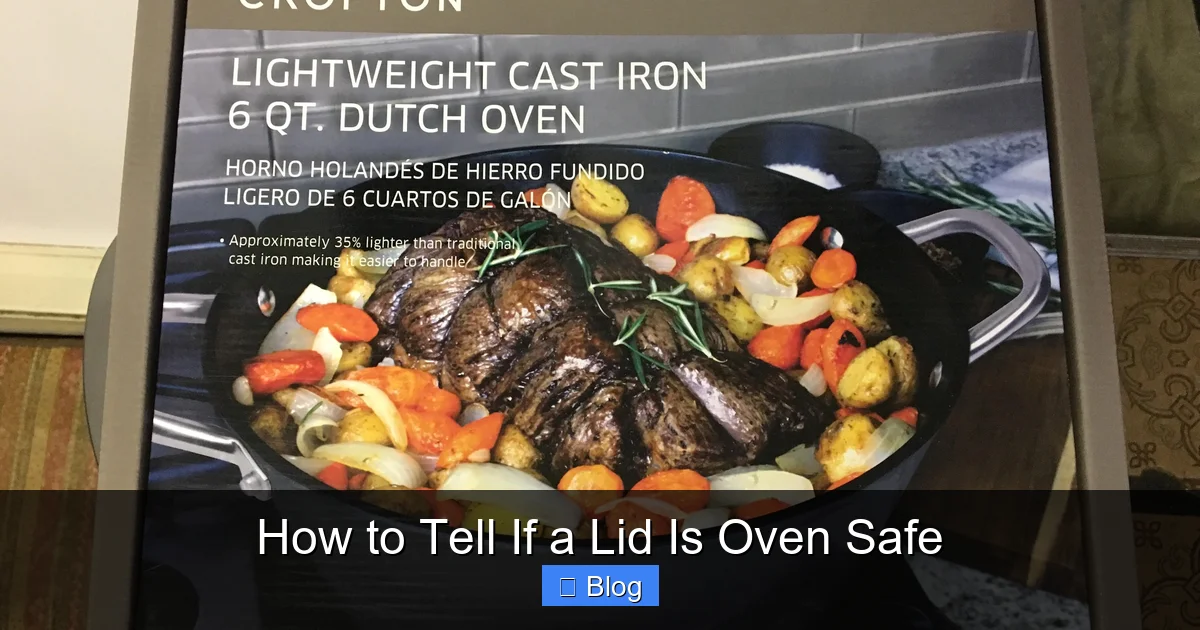
If you still have the box or instruction booklet, this is your gold standard. The packaging will almost certainly list the product’s capabilities, including oven-safe temperature ranges. The manual provides definitive, warranty-supporting information. Bookmark this page or take a photo of the relevant specs for future reference.
Understanding Common Brand Terminology
Different brands use slightly different language. “Oven Safe” is the most common. “Broiler Safe” means it can withstand the intense, direct heat from a broiler (usually 500-550°F+). “Stovetop to Oven Safe” indicates the piece can go from the cooktop directly into the oven, which is a higher endorsement of durability. If you see “Oven Safe” without a temperature, assume a conservative limit of 350°F (177°C) unless you find more specific info.
Section 2: Decoding Materials – What’s In Your Lid?
If your lid is unmarked, material identification becomes your detective work. The composition tells you almost everything. Let’s break down the common materials you’ll encounter.

Visual guide about How to Tell If a Lid Is Oven Safe
Image source: worldofpans.com
Tempered Glass (The Good Kind)
This is the star of oven-safe lids. Tempered glass is treated with heat and chemicals to make it 4-5 times stronger than regular glass and resistant to thermal shock (sudden temperature changes). Brands like Pyrex and Anchor Hocking in the US use tempered glass for their ovenware.
- How to Identify: It’s usually clear or slightly tinted (like the classic Pyrex amber). It feels heavy and solid. Tap it lightly—it will have a higher-pitched, clearer ring than regular glass.
- Safety Note: Even tempered glass has limits. Most are rated to 425-450°F. Never use it on direct stovetop heat or under a broiler unless explicitly stated.
Stainless Steel & Other Metals
Solid metal lids (stainless steel, aluminum, carbon steel, cast iron) are almost always oven safe. Metal expands and contracts uniformly, handling high heat without issue.
- The Catch: The handle or knob is the weak link. Many metal lids have plastic, phenolic (a hard plastic), or wood handles. These components have much lower heat thresholds (often 350-400°F). Sometimes the handle is removable. If so, the lid body is usually fine to 500°F+.
- Identification: Magnet test—if it’s magnetic, it’s likely stainless steel or carbon steel. If not, it could be aluminum. Cast iron is heavy, dull, and often pre-seasoned.
Enameled Cast Iron & Ceramic
The colorful, glossy coatings on cast iron or stoneware are typically enamel, which is essentially glass fused to metal or clay. This makes the entire piece non-porous and oven safe at high temperatures (often 500°F+), as long as there are no exposed metal rims that could rust if not dried properly. The enamel itself is oven safe.
The “Absolutely Not” Materials
These have no business in a conventional oven:
- Plastic: Any kind—polypropylene, silicone (unless specifically rated for high-heat baking, which most kitchen silicone is only to ~425°F), ABS, etc. It will melt, warp, and emit toxic fumes.
- Wood & Bamboo: They will dry out, crack, warp, and can even catch fire. They are for stovetop simmering or serving only.
- Regular (Annealed) Glass: This is the window pane glass of old. It has no thermal shock resistance. A hot oven or a hot liquid inside can cause it to shatter spontaneously. If it’s not marked “tempered” or “Pyrex,” assume it’s dangerous.
- Melamine: Common in some servingware. It releases formaldehyde at high temperatures. Never oven use.
Section 3: The Hands-On Test – When Markings Are MIA
So you have an unmarked lid, you’ve deduced the material (e.g., it’s a heavy, clear glass), but you’re still not 100% sure. This is where a cautious, controlled test comes in. This is for glass lids primarily. For metal, if the handle is metal and the body is metal, it’s almost certainly safe.
Visual guide about How to Tell If a Lid Is Oven Safe
Image source: images-na.ssl-images-amazon.com
The Cold-to-Hot Water Test (For Glass Lids)
This test exploits the difference between tempered and regular glass. Tempered glass can handle the stress of cold water then heat; regular glass cannot.
- Setup: Place the unmarked glass lid on a cold stovetop or in a cold oven rack. Do NOT preheat the oven.
- Add Water: Put 1-2 tablespoons of cold tap water in the center of the lid.
- Heat Slowly: Turn the oven to a low temperature, 250°F (120°C). Place the lid with the water inside into the cold oven and close the door.
- Observe: Let it heat for 15-20 minutes. If the lid is tempered glass, nothing dramatic will happen. The water will warm and eventually evaporate. If it is regular, non-tempered glass, it will likely develop a crack or shatter entirely due to the thermal stress from the cold spot (water) expanding against the warming glass.
- Interpretation: Survival does not 100% guarantee it’s rated for 450°F, but it strongly suggests it’s tempered glass and therefore safe for typical oven use (~425°F). Failure means it was dangerous and you disposed of it safely.
Critical Safety Warning: Perform this test with extreme caution. Stand back, use oven mitts, and have a clear escape path. Do not use this test on lids with plastic parts—the heat will damage them anyway. Dispose of any broken glass carefully in a thick cardboard box.
The “Manufacturer Research” Test
This is the safest non-destructive test. Identify the brand and model number (often on the underside). Search online for “[Brand Name] [Model Number] oven safe.” Visit the manufacturer’s website and find the product page or FAQ. Customer service can also be emailed with a photo. This is how you’ll discover the exact temperature limit for your specific, unmarked Calphalon or Cuisinart lid.
Section 4: Special Cases – Lids for Dutch Ovens, Skillets, and Specialty Cookware
Not all lids are created equal, and some cookware types have specific considerations.
Cast Iron Skillet Lids
These are almost always solid cast iron or sometimes stamped steel. They are 100% oven safe at any temperature your oven can reach. The only issue is the handle—if it’s a loop handle, it will get extremely hot. Use a potholder. Some modern cast iron skillets have an enamel coating on the lid, which is also fully oven safe.
Dutch Oven Lids (Enameled & Bare)
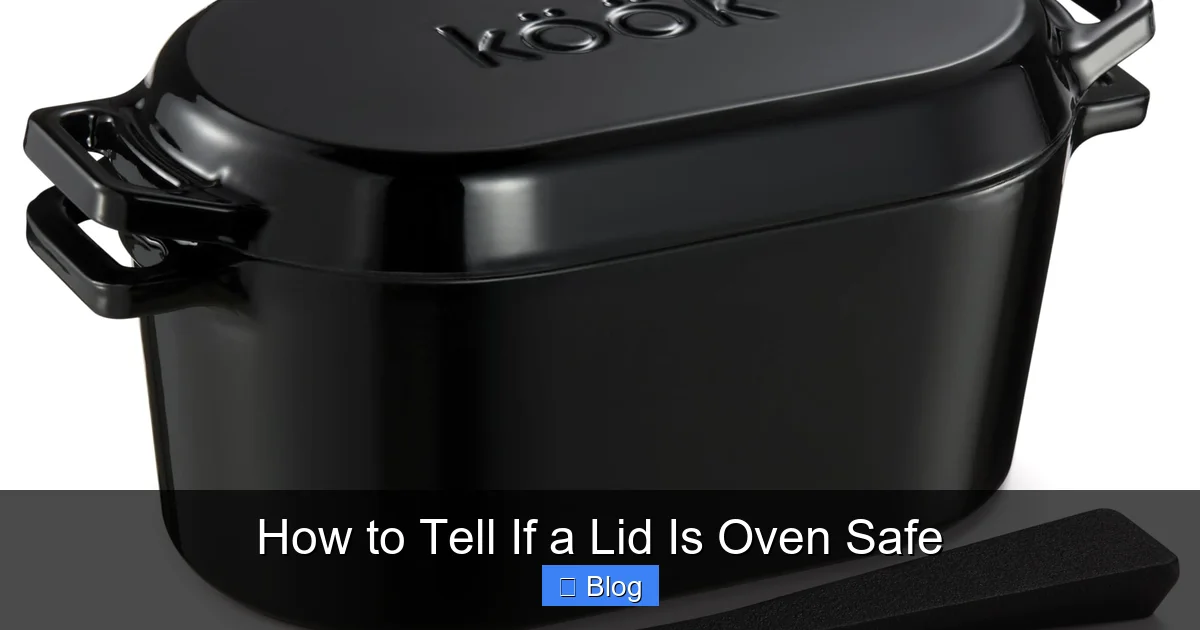
Bare cast iron Dutch oven lids (like Lodge) are as oven-safe as the pot itself—indefinitely at 500°F+. Enameled Dutch oven lids (like Le Creuset, Staub) are also fully oven safe, often to 500°F. The enamel can crack if subjected to thermal shock (cold water on hot lid), so avoid that. The knob on these is usually metal and oven safe, but some brands sell silicone knob covers that are NOT oven safe—remove them before baking.
Silicone Lids & Covers
These flexible, reusable lids are popular for bowls and containers. They are NOT designed for dry, direct oven heat. They are for covering food in the microwave or at room temperature. Some high-end silicone bakeware lids are rated to 425°F, but you must verify this explicitly. Do not assume.
Glass-Ceramic (CorningWare, Pyroceram)
This is a different material from tempered glass (though often confused with it). Original Pyroceram (vintage CorningWare) is incredibly resistant to thermal shock and is oven safe to very high temperatures (it’s used in laboratory glassware). Modern CorningWare, made of glazed stoneware, is also oven safe but has more standard temperature limits (usually 425-450°F). Always check for the marking.
Section 5: Common Myths and Dangerous Assumptions
Let’s bust some dangerous kitchen folklore.
Myth: “If It’s Glass, It’s Like Pyrex and Safe.”
False. “Pyrex” is a brand name. The original Pyrex was made of borosilicate glass (excellent thermal shock resistance). In the US, most Pyrex bakeware since the 1980s is made of tempered soda-lime glass, which is oven safe but less resistant to extreme thermal shock than the old borosilicate. More importantly, countless other brands make “glass lids” from non-tempered glass. Never assume all clear glass is created equal.
Myth: “I’ve Used This Lid in the Oven Before, So It’s Fine.”
This is a gamble. A lid might survive a slow-cooked stew at 300°F but shatter under the intense, dry heat of a 450°F roast or a broiler. Past success does not guarantee future safety, especially with temperature variations. Each use is a risk if the true limit is unknown.
Myth: “The Lid Fits My Oven-Safe Pot, So It Must Be Oven Safe.”
Cookware sets often include a lid that is designed for stovetop and oven use, but not always. A set might have a stainless steel pot with a glass lid. The pot is oven safe; the lid might be, but you must verify the lid separately. Never infer safety from fit.
Myth: “A Little Melting/Warping is Okay.”h3>
No. If a lid warps, it no longer seals properly, defeating the purpose of a covered bake. More importantly, warping indicates the material has exceeded its structural integrity. It could fail further, crack, or leach unwanted substances if it has non-stick coatings or plastics that have begun to degrade.
Section 6: The Ultimate Checklist & Safe Usage Practices
Before you close the oven door, run through this mental checklist.
Your Pre-Oven Lid Safety Checklist
- 1. Search for Markings: Found a clear “Oven Safe to X°F” or symbol? ✅ You’re good to go (within that temp).
- 2. Identify All Materials: Is every single part—lid body, knob, handle, seal—made of oven-safe materials (metal, tempered glass, ceramic, enamel)? If any part is plastic, wood, or bamboo, it’s a ❌ unless that part is removable.
- 3. Know Your Temperature: Do you know your recipe’s temperature? Does it fall within the lid’s verified limit? When in doubt, default to 350°F or lower.
- 4. Avoid Thermal Shock: Never take a cold lid and place it on a hot stovetop or into a preheated oven with cold food/liquid inside. Always start with a cold oven or allow the lid to come to temperature gradually with the oven.
- 5. Broiler Alert: Unless explicitly marked “Broiler Safe,” assume the lid is NOT for broiler use. The radiant heat from above is far more intense than surrounding oven air.
- 6. Trust, but Verify: If the lid is vintage, unmarked, or from an unknown brand, perform the cold-to-hot water test (for glass) or err on the side of caution and use a different, verified lid.
What to Do If You’re Still Unsure
When all evidence is conflicting or absent, the safest choice is always: Do not use the lid in the oven. You can often use a separate, verified oven-safe baking dish and cover it with aluminum foil. The goal is a moist cooking environment, and foil does that job perfectly well. It’s better to sacrifice a bit of convenience than to risk a fire, toxic fumes, or a shattered glass lid requiring a thorough oven cleanup and possibly a visit to the emergency room.
Conclusion: Confidence Comes from Knowledge
Mastering how to tell if a lid is oven safe transforms you from a cautious guesser into a confident, safe cook. It starts with the simple habit of checking for markings. From there, your understanding of materials—knowing that tempered glass, solid metal, and enamel are your friends, while plastic and wood are oven enemies—guides your decisions. When doubt remains, the cold-to-hot water test offers a revealing, if dramatic, answer. Remember, your cookware is an investment in your kitchen safety and culinary success. Taking 30 seconds to verify a lid’s capability protects that investment, your meal, and your home. So next time you reach for a lid, pause, inspect, and bake with absolute confidence.
Frequently Asked Questions
Can I put a glass lid from a non-stick pan in the oven?
Usually no. Most glass lids for non-stick pans have a plastic or silicone handle and a metal rim with a rubber or plastic seal. These components have low heat thresholds (often 350°F or less) and will melt or degrade. Check for specific markings, but assume it’s stovetop-only unless confirmed otherwise by the manufacturer.
Is a stainless steel lid always oven safe?
The stainless steel body is almost always oven safe to very high temperatures (500°F+). However, you must check the handle. If the handle is plastic, phenolic, or has a silicone grip, that part has a much lower limit (often 400°F or less). Some handles are removable; if so, the lid is fully oven safe with the handle off.
What temperature is “oven safe” for most cookware lids?
There is no single standard. Tempered glass lids are typically safe to 425-450°F. Enameled cast iron and all-metal lids are often safe to 500°F or higher. Always look for the specific temperature rating. If none is given, assume a conservative limit of 350-375°F to be safe.
Can I use aluminum foil as a lid substitute in the oven?
Yes, absolutely. Aluminum foil is perfectly safe for oven use at any temperature and is an excellent way to create a covered environment for baking, roasting, or steaming. It’s the recommended fallback when you don’t have a verified oven-safe lid.
How can I tell the difference between tempered and regular glass?
Visually, it’s very difficult. Tempered glass is often slightly thicker and may have a slight green or blue tint at the edges. The most reliable at-home test is the cold-to-hot water test described in this article. For absolute certainty, consult the manufacturer or look for the “tempered” label.
My lid says “Heat Resistant” but not “Oven Safe.” Is that the same?
Not necessarily. “Heat Resistant” could mean it can withstand the heat of a warm stovetop or a low-temperature oven. “Oven Safe” is a specific claim for dry, conventional oven use. Without a temperature or the exact phrase “oven safe,” you should assume it is not intended for the oven and risk a failure. Contact the manufacturer for clarification.