Roaches in kitchen appliances are a serious health hazard and a sign of a major infestation. They are attracted to food residue, warmth, and darkness. Getting rid of them requires a systematic approach: deep cleaning, targeted treatments, and long-term prevention. You must treat the appliances themselves and the hidden areas around and behind them to break the breeding cycle. This guide provides safe, effective, appliance-specific strategies to reclaim your kitchen.
You open your microwave to reheat dinner and, in a flash of movement, you see it. A dark, quick shape vanish behind the control panel. Or you pull a container from the fridge and spot a tiny, discarded roach shell. Finding roaches in your kitchen appliances isn’t just a gross surprise—it’s a five-alarm emergency for your home’s hygiene. These pests aren’t just living in your toaster; they’re using it as a fortified bunker, feasting on invisible grease and breeding in peace. Your first instinct might be to grab a can of bug spray and douse the appliance. Stop. That could ruin the electronics and won’t solve the problem. Getting rid of roaches in kitchen appliances requires a smarter, safer, and more systematic strategy. This is your comprehensive, step-by-step field guide to taking back your kitchen, appliance by appliance.
Key Takeaways
- Unplug and Empty: Always unplug appliances and remove all food, shelves, and drawers before treatment to ensure safety and access.
- Clean Ruthlessly: Roaches are attracted to microscopic grease and food particles. A deep clean with degreasers is the non-negotiable first step.
- Target the Gaps: Focus on seals, gaskets, vent openings, and the spaces behind/underneath appliances—these are prime roach harborages.
- Use Appliance-Safe Methods: Avoid sprays inside sensitive electronics. Opt for baits, gels, diatomaceous earth, or boric acid powders in crevices.
- Treat the Perimeter: Apply insecticide barrier or set baits around the appliance’s base and along wall-floor junctions to intercept roaches entering and leaving.
- Prevent Re-infestation: Store all food in airtight containers, fix appliance leaks promptly, and maintain a crack-and-crevice-free kitchen environment.
- Know When to Call Pros: For severe infestations or German cockroaches, professional pest control is often necessary for complete eradication.
📑 Table of Contents
- Why Roaches Love Your Appliances: The All-You-Can-Eat Hotel
- Phase One: The Great Appliance Purge – Preparation is Everything
- Phase Two: Appliance-Specific Attack Strategies
- Phase Three: Choosing Your Weapons – Natural vs. Chemical
- Phase Four: The Perimeter War and Breaking the Cycle
- Phase Five: The Long Game – Prevention and Vigilance
- Conclusion: A Roach-Free Kitchen is a Healthy Kitchen
Why Roaches Love Your Appliances: The All-You-Can-Eat Hotel
Before we fight, we need to understand. Kitchen appliances are roach luxury hotels. They offer three critical things roaches need to survive and thrive: food, water, and shelter.
The Food Source: It’s Not What You Think
You might keep your counters clean, but roaches are attracted to the film of grease and microscopic food particles you can’t see. The area behind your stove, the underside of your microwave’s turntable, the cooling vents of your toaster oven, and the drip pan under your refrigerator are all coated in a fine layer of cooking oils and sugars. This is a permanent, all-you-can-eat buffet for roaches. They can survive on a single crumb for months.
The Water Source: Leaks and Condensation
Appliances are water sources. A leaking dishwasher seal, condensation from the freezer unit in your fridge, the water reservoir in your coffee maker, or even the humidity inside a closed oven create perfect drinking spots. Roaches can go a month without food but only a week without water. Your appliance is providing a reliable, hidden water source.
The Shelter: Darkness, Tight Spaces, and Warmth
The back of your refrigerator compressor, the hollow handle of your oven, the insulation behind your dishwasher’s front panel, and the wiring channels in your microwave are dark, tight, and often warm. These are ideal harborage areas, protecting roaches from light, predators, and your attempts to squash them. They can squeeze into cracks as thin as a credit card, making the seams and gaskets of appliances perfect hideouts.
When you see one roach in an appliance, there are almost certainly dozens—or hundreds—more hidden in the surrounding walls, behind the appliance, and in the adjacent cabinets. You are dealing with a localized infestation point within a larger colony.
Phase One: The Great Appliance Purge – Preparation is Everything
Rushing into treatment is a mistake. Proper preparation ensures your methods reach the pests and won’t damage your expensive machines. This phase is non-negotiable.
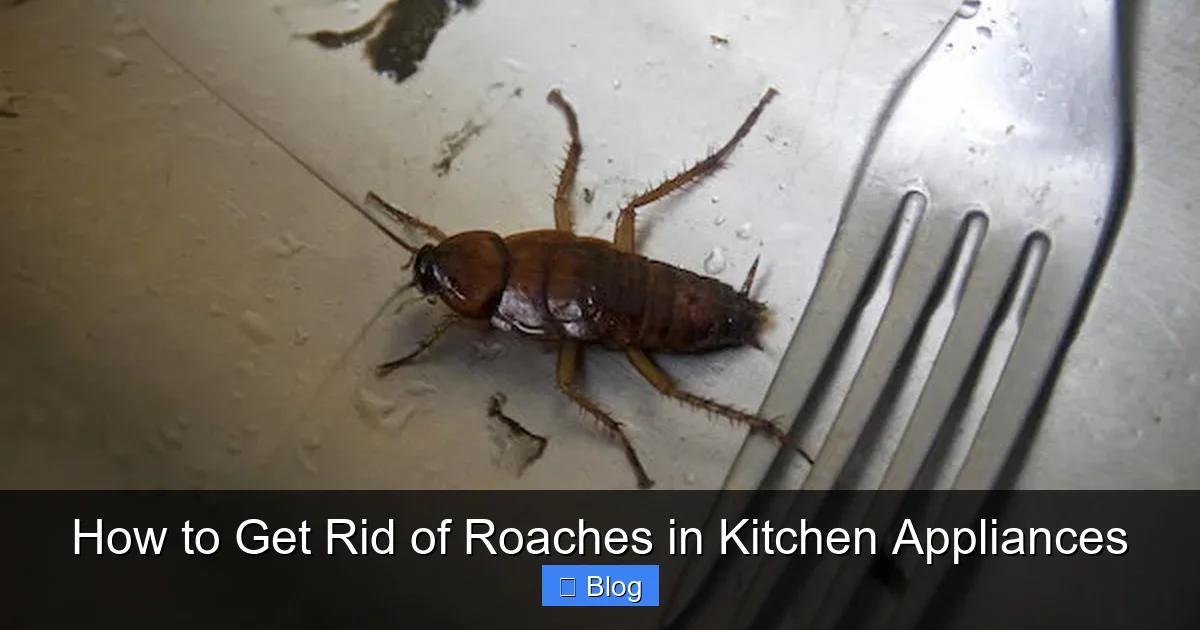
Visual guide about How to Get Rid of Roaches in Kitchen Appliances
Image source: interiordesignshub.com
Step 1: Isolate and Unplug
For major appliances like the refrigerator, oven, or dishwasher, if possible and safe, carefully pull them away from the wall. This is terrifying, as you will likely see roaches scatter. Be ready with a vacuum or a shoe. For smaller countertop appliances (microwave, toaster, coffee maker), unplug them and move them to the center of a cleared kitchen table or counter. This breaks their immediate habitat and gives you full access.
Step 2: Disassemble and Dump
Remove every removable part. This means fridge shelves and crisper drawers, microwave turntables and roller rings, oven racks and broiler pans, toaster crumb trays, and coffee maker filters and water reservoirs. Take these parts to the sink or bathtub. You will be disgusted by the amount of old food debris, grease, and roach feces (which looks like black pepper flakes or smudges) that accumulates in these hidden spots.
Step 3: The Degreasing Deep Clean
This is the most critical step. You must eliminate the food source. Use a heavy-duty kitchen degreaser or a strong solution of hot water and dish soap (like Dawn, which cuts grease) with a scrubby sponge. For ovens and microwaves, use the self-cleaning cycle only after you have manually removed loose debris and roach parts, as the extreme heat can bake on organic matter making it harder to remove later.
- Refrigerator: Clean the walls, door seals (gently pull them away to clean the groove underneath), and especially the condenser coils at the back or bottom. Use a coil brush.
- Microwave: Clean the interior ceiling, walls, turntable, and the vent grill on the back or top.
- Oven/Stove: Clean the entire interior, the door gasket (a major hideout), the burner pans (if removable), and the area under the cooktop.
- Dishwasher: Remove and clean the filter (usually at the bottom), wipe down the door gasket thoroughly, and run an empty cycle with vinegar or a dishwasher cleaner.
- Small Appliances: Wipe down the interior of toasters (after cooling), coffee maker water paths with vinegar solution, and the inside of any food processor or mixer bowls.
As you clean, you will find roach egg cases (oothecae). These are small, brown, capsule-like objects. Crush and dispose of them immediately outside in a sealed bag. One can contain 30-40 future roaches.
Phase Two: Appliance-Specific Attack Strategies
With your appliances surgically cleaned, it’s time for targeted elimination. The method depends on the appliance’s function and sensitivity to moisture/chemicals.
Visual guide about How to Get Rid of Roaches in Kitchen Appliances
Image source: tipsbulletin.com
The Refrigerator: A Cold War
The fridge is the most common appliance infestation site due to its constant condensation and door gasket.
- Gasket Treatment: This is ground zero. Use a cotton swab or old toothbrush dipped in a boric acid powder (lightly dusted) or a gel bait like Advion Roach Gel. Gently pull the rubber gasket away from the door frame and apply a tiny amount in the crevice. The roaches will crawl through it and carry it back to the nest. Do not use oil-based sprays here; they will degrade the gasket.
- Drip Pan: Locate and remove the drain pan (usually behind the front grill at the bottom). Clean it thoroughly. Place a few drops of food-grade diatomaceous earth (DE) in the bottom before reinstalling. DE is a desiccant that dries out roaches but is safe for the appliance.
- Condenser Coils: After vacuuming the dust bunnies, lightly dust the coils with boric acid. Roaches travel along these warm coils.
- Barrier Method: Apply a thin line of roach bait gel or a non-repellent insecticide concentrate (like Taurus SC or Alpine WSG) along the floor-wall junction where the fridge sits. This creates a lethal barrier. Use a caulk gun for precision.
The Microwave and Oven: Heat and Hide
These appliances offer warmth and hidden venting systems.
- Ventilation Grills: Locate all external vents (often on the back or top). Use a thin nozzle on your vacuum to suck out debris. Then, use compressed air to blow out any remaining particles from the inside channel. Do not spray liquids into vents.
- Control Panel: This is electronics. Do not spray. Use a gel bait applied with a precision tip to the seams where the control panel meets the appliance body. Roaches will crawl underneath.
- Interior: After your deep clean, place glue traps or roach motels inside the microwave and oven (when not in use). They will catch scouts and help you monitor activity.
- Oven Door: The hinge area and the inner gasket are major hideouts. Apply gel bait here, along the hinge channel.
The Dishwasher: The Moisture Trap
The filter, drain hose, and door gasket are roach paradises.
- Filter & Drain: You’ve already cleaned the filter. Now, locate the drain hose (usually a corrugated tube under the sink). Disconnect it (have a bucket ready) and flush it with hot water and vinegar. Reconnect. Pour a mixture of 1 cup baking soda followed by 1 cup vinegar down the dishwasher drain to clean and deodorize pipes.
- Door Gasket: As with the fridge, pull the gasket and apply gel bait or boric acid powder in the channel. Pay special attention to the bottom corners where water pools.
- Float Switch: This is a plastic device in the bottom of the tub that prevents overflow. It can harbor roaches. Access it (consult your manual) and clean around it, then apply a tiny dot of gel bait nearby.
Small Countertop Appliances: Toasters, Coffee Makers, Blenders
For these, the strategy is simpler but requires diligence.
- Crumb Trays are Key: Empty and clean daily. Never let crumbs accumulate.
- Internal Chambers: For toasters, shake them out over the trash daily. For coffee makers, run a vinegar cycle monthly to clean internal tubing. For blenders/food processors, disassemble and wash the gasket and blade assembly after every use.
- Surrounding Area: Keep the countertop around these appliances spotless. Wipe up any spills immediately. Do not store sugar bowls or open cereal boxes nearby.
- Storage: When not in use for extended periods, store smaller appliances in a sealed plastic bag or container.
Phase Three: Choosing Your Weapons – Natural vs. Chemical
You have two primary arsenals: natural/mechanical and chemical. A combination is most effective.
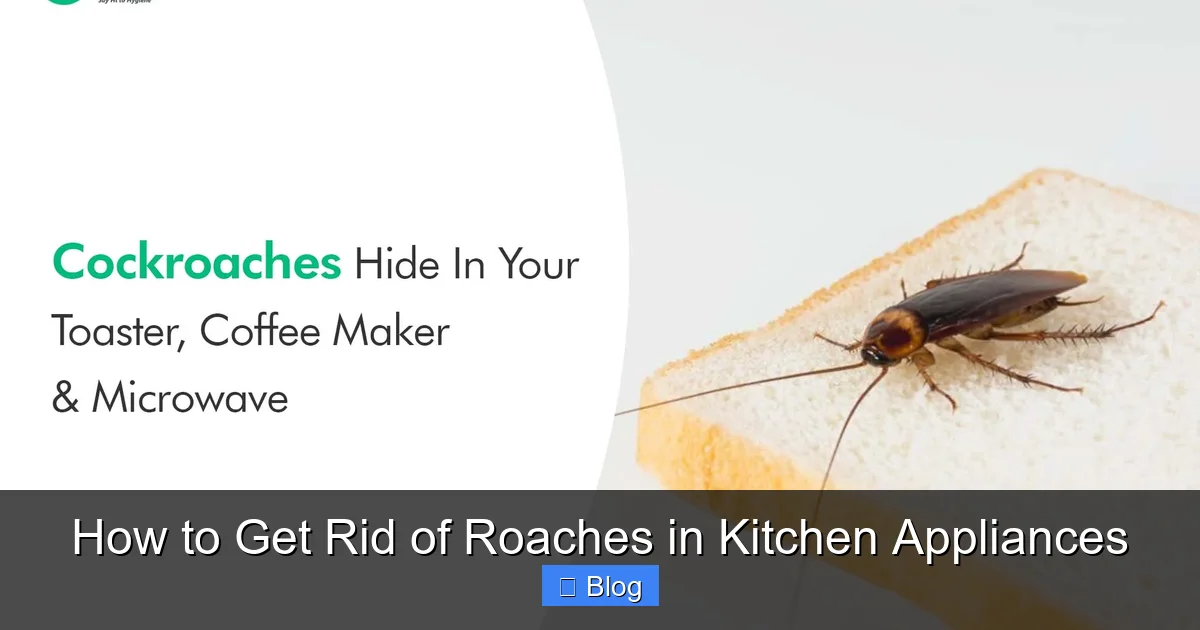
Visual guide about How to Get Rid of Roaches in Kitchen Appliances
Image source: hicare.in
The Natural & Mechanical Arsenal
These methods are safer for food-prep areas but require more persistence.
- Diatomaceous Earth (Food Grade): A fine, white powder made from fossilized algae. It works by dehydrating insects with exoskeletons. Dust a very thin layer in appliance crevices, under appliances, and in cabinet corners. It’s non-toxic to humans/pets but must be kept dry to work.
- Boric Acid: A low-toxicity chemical that acts as a stomach poison. Apply a dusting, not a pile, in hidden cracks and crevices. Roaches eat it, then return to the nest to die, and other roaches eat the carcass, spreading the poison. Keep it away from food and children/pets.
- Baking Soda: A debated home remedy. The theory is it reacts with roach stomach acids, causing gas and death. Mix equal parts baking soda and sugar as a bait. Place in bottle caps in hidden areas. Its effectiveness is lower than boric acid or commercial baits.
- Glue Traps/Sticky Boards: Excellent for monitoring. Place them along the edges of appliances, under the fridge, and in cabinet corners. They won’t solve an infestation alone but will show you where activity is highest.
The Chemical Arsenal (Use with Extreme Caution)
When used correctly in non-food areas, these are the heavy hitters.
- Roach Baits & Gels (The Gold Standard): Products like Advion, Combat, or Maxforce. They contain a slow-acting poison mixed with an irresistible attractant. Roaches eat it, live for days, and return to the nest to die, where they are consumed by others, spreading the insecticide. Apply pea-sized dots in hidden locations: behind appliance handles, in gasket crevices, under ledge lips. Never spray over bait, as it will repel roaches from eating it.
- Insecticide Sprays (Residual): Use only for perimeter treatment, never inside the cooking or food storage chambers of appliances. Choose a product labeled for indoor crack-and-crevice use (e.g., containing bifenthrin, lambda-cyhalothrin). Spray a thin line along the baseboards, behind the fridge, and under the sink where appliance pipes enter. This kills roaches crossing the barrier.
- Insecticide Concentrates (Professional Grade): For severe cases, products like Taurus SC (with fipronil) are highly effective. They must be diluted and applied with a sprayer. This is a job for a serious DIYer or, preferably, a professional.
Phase Four: The Perimeter War and Breaking the Cycle
Treating the appliance alone is like bailing out a boat with a hole in it. You must also treat the area around it, which is the roach’s superhighway.
The “Behind and Beneath” Zone
Once appliances are pulled out, you will see the horror show: droppings, egg cases, and live roaches in the wall-floor junction and the back of the cabinet. This area must be treated aggressively.
- Vacuum Thoroughly: Use a shop vac if possible. Immediately seal the vacuum bag in a plastic bag and dispose of it outside.
- Apply Bait/Insecticide: Using a caulk gun or precision applicator, apply a continuous, thin bead of gel bait or residual insecticide along the entire back wall where the appliance sits, and along the floor-wall corner. This intercepts roaches coming from the walls to the appliance and vice-versa.
- Seal Entry Points: Use silicone caulk to seal any gaps around electrical conduits, water lines, or the wall itself where the appliance back meets the wall. This physically blocks access.
The Cabinet and Pantry Sweep
Roaches travel from the appliance area into your cabinets for other food sources.
- Remove all items from cabinets and pantries.
- Wipe every shelf and wall with a degreaser.
- Apply a thin layer of boric acid or diatomaceous earth in the corners and along the back seams. Use a duster for even coverage.
- Store all food—including pet food—in hard plastic or glass containers with airtight seals. Cardboard boxes and plastic bags are no match for roach mandibles.
Phase Five: The Long Game – Prevention and Vigilance
The goal is not just to kill the current roaches but to make your kitchen a place they cannot survive.
Appliance Hygiene as a Daily Ritual
- Never leave dirty dishes in the sink or dishwasher overnight.
- Wipe down all appliance exteriors and surrounding counters every night with an all-purpose cleaner or vinegar solution.
- Empty crumb trays and clean microwave interiors weekly.
- Clean under and behind appliances at least twice a year.
- Fix any appliance leaks immediately. A dripping ice maker line or a sweating fridge is a roach magnet.
The Home-Wide Fortification
- Inspect and Seal: Walk your home with a caulk gun. Seal cracks around baseboards, behind toilets, around pipes, and in foundation walls. Pay attention to the kitchen, but also bathrooms and basements.
- Trash Management: Use trash cans with tight-sealing lids. Take out the trash every night. Keep outdoor bins away from the house.
- Paper & Cardboard: Remove these from the kitchen entirely. They are nesting material and food.
- Monitor: Keep a few glue traps in strategic locations (behind fridge, under sink, in a corner cabinet) permanently. They are your early warning system for a re-infestation.
Conclusion: A Roach-Free Kitchen is a Healthy Kitchen
Discovering roaches in your kitchen appliances is a profound violation of your sense of home and health. It feels personal. But remember, they are not a reflection of your cleanliness; they are a symptom of an accessible food, water, and shelter source. By following this phased approach—the ruthless purge, the appliance-specific attacks, the strategic use of baits and barriers, and the unwavering commitment to prevention—you can dismantle their operation. You have the tools and the knowledge. Start with the deep clean. It’s the most important step. Then, be patient and persistent. Baiting takes days to work as roaches carry the poison back to the nest. You may see more activity initially as they are disoriented. This is normal. Do not spray and disrupt the baiting process. With diligence, you will see fewer and fewer roaches until they are gone. Your kitchen appliances should be tools for nourishment, not habitats for pests. Take back your kitchen. You’ve got this.
Frequently Asked Questions
Is it safe to use roach spray inside my refrigerator or microwave?
No. Insecticide sprays are not designed for food-contact surfaces and can leave toxic residues that are impossible to fully remove from crevices and seals. They can also damage sensitive electronic components and plastic parts. Always use baits, gels, or powders in hidden crevices for appliances, and reserve sprays for perimeter barriers only.
What’s the single most effective product for roaches in appliances?
A high-quality, professional-grade roach bait gel (like Advion or Maxforce) applied with a precision tip directly into appliance gaskets, handle seams, and vent crevices is the most effective single tool. It is ingested and carried back to the nest, creating a domino effect that kills the hidden colony, including nymphs and egg-carrying females.
How do I know if the infestation is beyond my control?
Signs you need a professional include: seeing multiple roaches during the day (indicating severe overcrowding), finding large numbers of egg cases, seeing roaches after 2-3 weeks of diligent DIY treatment, or identifying a German cockroach infestation (small, light brown with two dark stripes). Professionals have access to more potent, targeted products and the expertise to find and treat every hidden harbor site.
Can roaches live inside the motors or wiring of my appliances?
They can and will hide in any warm, dark cavity. However, they typically do not infest the functional motor or wiring compartments of modern, sealed appliances as much as they use the external seams, gaskets, and insulation. Pulling the appliance away from the wall and treating the back wall and floor junction is more critical than trying to access internal motor housings, which can be dangerous and void warranties.
What natural method actually works on appliance roaches?
Food-grade diatomaceous earth (DE) and boric acid are the most effective natural options. Apply a very fine, barely visible dusting in all hidden appliance cracks, gaskets, and the floor behind the appliance. DE works by dehydration, while boric acid is a stomach poison. Both require roaches to crawl through them repeatedly, so thorough, hidden application is key.
After I kill the roaches, how do I prevent them from coming back?
Prevention is a three-part habit: 1) Eliminate Attractants: Store all food (including pet food) in sealed containers. Never leave dishes or food debris out. 2) Eliminate Water: Fix all appliance leaks, dry sinks and counters nightly, and don’t let pet water sit out overnight. 3) Exclude Entry: Seal all cracks and crevices in your kitchen and home with silicone caulk, especially around pipes, baseboards, and where appliances meet walls. Maintain a few glue traps as an early warning system.