To permanently prevent baking sheet warping, avoid thermal shock by never exposing hot sheets to cold water or sudden temperature drops. Instead, always preheat the oven gradually and let sheets cool naturally inside to maintain their shape and ensure flawless baking results every time.
Key Takeaways
- Choose heavy-gauge sheets: Thicker metal distributes heat evenly and resists bending.
- Preheat gradually: Place sheets in a cold oven, then heat to avoid thermal shock.
- Avoid cold liquids: Never pour water or add frozen food to a hot baking sheet.
- Store flat and carefully: Do not stack heavy items on top of sheets to prevent bends.
- Use the middle oven rack: This ensures the most consistent heat exposure from all sides.
- Don’t overcrowd the oven: Allow proper air circulation for even cooking and heating.
- Let sheets cool naturally: Allow them to reach room temperature before washing or storing.
📑 Table of Contents
- How to Stop Baking Sheets from Warping
- The Science Behind the Warp: Understanding Thermal Stress
- Prevention is Key: Daily Habits to Stop Warping
- Choosing the Right Sheet: A Material Guide
- Proper Use and Maintenance: Extending the Life of Your Sheets
- What to Do If a Sheet Is Already Warped
- Debunking Myths and Final Takeaways
How to Stop Baking Sheets from Warping
That heart-sinking sound of a *clunk* or the sight of a once-flat baking sheet now sporting a sad, concave curve is a familiar tragedy for many home bakers. You pull your perfectly golden-brown cookies out of the oven, only to have them slide into a newly-formed valley because your sheet decided to morph into a bowl mid-bake. It feels like a betrayal, doesn’t it? You’ve invested in what seemed like a sturdy, reliable kitchen workhorse, only for it to fail you at the crucial moment. I’ve been there, too—frustrated, confused, and wondering if I’d somehow cursed my bakeware. The good news? This warping isn’t usually magic or a manufacturing defect; it’s physics, and it’s almost entirely preventable. By understanding *why* it happens and adjusting a few simple habits, you can significantly extend the life of your baking sheets and ensure every batch turns out evenly, just as you intended. Let’s turn those wobbly sheets back into flat, reliable foundations for your culinary creations.
The Science Behind the Warp: Understanding Thermal Stress
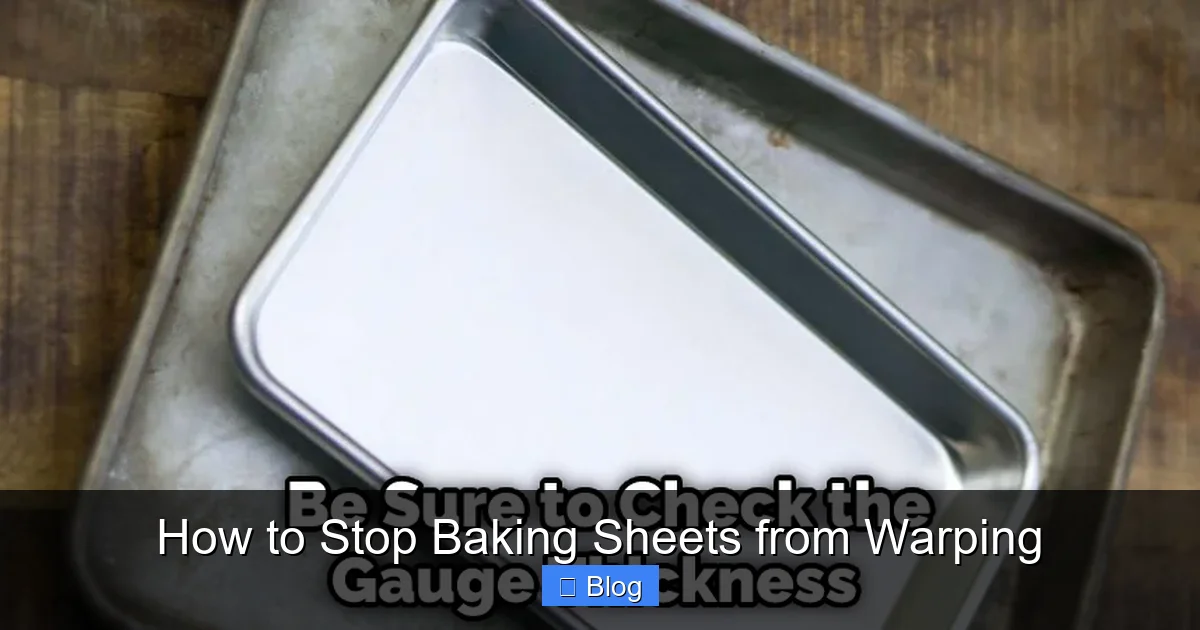
Before we dive into solutions, it helps to know the enemy. Warping is essentially a form of thermal stress. Your baking sheet is a flat piece of metal, usually aluminum or steel. When you put it in a hot oven, the entire sheet heats up, but it doesn’t do so perfectly evenly. The bottom surface, in direct contact with the oven rack and radiant heat, gets hotter faster than the top surface, which is exposed to the hot air inside the oven. This creates a temperature gradient.
Visual guide about How to Stop Baking Sheets from Warping
Image source: thekitchenix.com
Metal expands when heated. The hotter bottom expands more than the cooler top. This differential expansion creates internal stresses within the metal. If these stresses become too great—often when the temperature changes are extreme or rapid—the metal will yield, meaning it permanently deforms to relieve that stress. That permanent deformation is the warp you see and feel. Think of it like a bent piece of paper; once the fibers are stretched out of shape, they don’t spring back. The same principle applies to your baking sheet on a molecular level.
The Role of Material and Construction
Not all baking sheets are created equal in their resistance to warping. The material and construction play a huge role.
- Aluminum: An excellent conductor of heat, it heats up quickly and evenly. However, pure aluminum is relatively soft and more prone to denting and warping under extreme stress. Heavy-gauge aluminum (thicker) is far more resistant than thin, lightweight sheets.
- Steel (Carbon or Stainless): Stronger and more rigid than aluminum, steel sheets are less likely to warp from physical impact. However, steel is a poorer conductor of heat, leading to hotter and cooler spots. This uneven heating can actually *create* the thermal gradients that cause warping. Stainless steel baking sheets are particularly notorious for warping because they are often made from thinner gauge material to save weight and cost.
- Multi-Ply or Composite: High-end sheets often feature an aluminum or copper core bonded between layers of stainless steel or other metals. This aims to combine the best of both worlds: the even heating of aluminum with the durability and non-reactive surface of steel. These are generally the most warp-resistant but come at a higher price point.
- Rimmed vs. Rimless: The presence of a rim (a raised edge) adds structural rigidity. A rimless sheet (often called a “cookie sheet” in a technical sense) has no edges to help it resist deformation and is much more susceptible to warping. A full-rimmed baking pan has more structural integrity.
Prevention is Key: Daily Habits to Stop Warping
Now for the practical part. Stopping warping is mostly about managing thermal shock and avoiding extreme, uneven temperature changes. These are the habits that will save your bakeware.
Visual guide about How to Stop Baking Sheets from Warping
Image source: tastingtable.com
1. Never Subject a Hot Sheet to Cold Water
This is the number one, cardinal sin of baking sheet care. Pouring cold water into a hot pan or placing a scorching sheet directly into a sink of cold water creates an immense and sudden temperature differential. The part hit by the water contracts violently while the rest remains expanded, creating massive stress that can instantly warp or even crack the metal. Always let your baking sheet cool completely on a rack or trivet before washing it. Patience is a virtue, especially for flat pans.
2. Preheat Gradually and Evenly
Instead of putting a cold sheet into a preheated 400°F oven, try this: place the empty sheet into the oven before you turn it on, then set the temperature. This allows the sheet to heat up gradually and evenly alongside the oven cavity. Alternatively, if you need to preheat the sheet for things like pizza or crispy-bottomed roasted veggies, place it in the oven during the last 10-15 minutes of preheating, not from a cold start. This reduces the shock of going from room temperature to high heat instantly.
3. Match Pan to Heat Source
Using a thin, lightweight sheet on a powerful commercial stove top or under a broiler (which emits intense radiant heat from above) is a recipe for warping. The concentrated, direct heat overwhelms the sheet’s ability to dissipate it evenly. Use heavier, more robust pans for high-heat applications. For everyday baking, a mid-weight sheet is usually sufficient.
4. Avoid Extreme Temperature Changes in the Oven
Don’t take a frozen or refrigerated dough or batter and place it directly onto a preheated baking sheet. The cold food creates a sudden cold spot on the sheet’s surface. Instead, let the dough come to room temperature on the counter, or place the cold dough on a room-temperature sheet and then put it in the oven. The initial heating will be more uniform.
Choosing the Right Sheet: A Material Guide
If you’re in the market for new bakeware or evaluating what you have, understanding material properties is key. Here’s a quick-reference table to help you choose.
Visual guide about How to Stop Baking Sheets from Warping
Image source: tastingtable.com
| Material | Heat Conduction | Durability & Warp Resistance | Typical Price Point | Best For |
|---|---|---|---|---|
| Heavy-Gauge Aluminum | Excellent (fast & even) | Good (if thick enough, 18-gauge or heavier) | $$ | Cookies, cakes, general baking. The all-around workhorse. |
| Standard Carbon Steel | Poor (hot spots common) | Very Good (rigid, but prone to warping from uneven heat) | $ | Pizza steels, some professional-style pans. Needs careful heat management. |
| Stainless Steel | Poor (very uneven) | Fair to Poor (often thin, warps easily; strong but not rigid against thermal stress) | $$$ | Rust-resistant tasks, acidic foods. Often requires an aluminum or copper core for best performance. |
| Multi-Ply (Alum./Copper Core) | Excellent (engineered for evenness) | Excellent (thick, bonded layers resist deformation) | $$$$ | Serious bakers and cooks. Investment piece for ultimate performance and longevity. |
Note: Gauge refers to thickness; a lower number (e.g., 12) is thicker than a higher number (e.g., 20). For warp resistance, aim for 18-gauge or heavier for aluminum.
Proper Use and Maintenance: Extending the Life of Your Sheets
How you use and care for your sheets day-to-day makes a monumental difference. These practices protect your investment.
The Right Way to Wash
As mentioned, never plunge a hot sheet into water. Let it cool. For stuck-on bits, don’t use harsh abrasives like steel wool on non-stick surfaces, and avoid them on polished aluminum to prevent scratching. Soak in warm, soapy water instead. For baked-on carbonized sugar or protein, a paste of baking soda and water, left to sit for an hour, works wonders without harsh scrubbing. Dry thoroughly to prevent water spots and potential rust on steel.
Storage Solutions
Stacking heavy pots on top of your baking sheets can cause dents and subtle bends over time, which become weak points. Store them vertically on their edges if possible (using a pan organizer rack), or if stacking is your only option, place a layer of paper towels or a soft cloth between each sheet to cushion them and prevent scratching.
Mind the Broiler
The broiler is a warp-inducing monster for most standard baking sheets. The intense, direct heat from above can superheat one side of the sheet rapidly. If you must broil on a sheet, use the heaviest, most robust one you own, and position it on a lower rack if possible, so the food is closer to the heat but the sheet itself isn’t directly under the element. A dedicated broiler pan, designed with a slotted top and a sturdy, often cast-iron base, is a better tool for this job.
What to Do If a Sheet Is Already Warped
Don’t toss it just yet! Depending on the severity, you might be able to salvage it for less critical tasks.
Assess the Damage
A slight, subtle bow might only be noticeable when you run your hand over it. This sheet is still perfectly usable for items that don’t require a perfectly flat surface, like roasting vegetables, baking a lasagna, or cooking a sheet-pan dinner where food fills the surface and its own weight helps even things out. It’s also fine for use as a liner under a frozen pizza or as a catch-all tray for oven spills.
Attempting a Correction (Use with Caution)
For a more pronounced warp, some people try a careful, manual correction. Place the sheet concave-side down on a flat, stable surface like a sturdy table. Place a wood block or thick towel over the highest point of the warp. Then, using a rubber mallet or the heel of your hand, gently tap the block to apply controlled pressure. The goal is to persuade the metal back, not beat it. Go slowly, check your progress frequently, and understand you risk cracking or further damaging the sheet. This is a last-ditch effort for a favorite pan you’re not ready to retire.
When to Retire the Pan
If the warp is severe—causing liquids to pool on one side, making it wobble on a flat surface, or creating a sharp crease—it’s time to repurpose. A badly warped sheet is a tripping hazard if stored improperly and a nuisance for baking. Recycle it if possible, or give it a new life in the garage for organizing tools, holding paint, or as a drip tray for DIY projects.
Debunking Myths and Final Takeaways
Let’s clear up a couple of common misconceptions. First, the idea that you must never use metal utensils on a baking sheet. While you should avoid them on non-stick coatings to prevent scratching, a well-seasoned aluminum or steel sheet can handle metal spatulas just fine for tasks like flipping seared meats. The concern about metal utensils causing warping is largely unfounded; warping is a thermal issue, not a surface scratch issue.
Second, the myth that all warping is a sign of cheap quality. While thin, low-quality sheets warp more readily, even the best, thickest, multi-ply sheet can warp if subjected to extreme thermal abuse—like being doused in cold water straight from a 500°F oven. Quality gives you a much larger margin for error, but it doesn’t make you invincible.
So, what’s the real secret to stopping baking sheets from warping? It’s less about finding a mythical indestructible pan and more about becoming a more mindful cook. It’s about respecting the material, understanding its limits, and treating it with a little care. By preheating gradually, avoiding thermal shock, choosing appropriate tools for the job, and storing them wisely, you transform your baking sheets from disposable items into long-term kitchen allies. The next time you slide a tray of cookies into the oven, you can do so with confidence, knowing you’ve done your part to keep that sheet flat and ready for many more bakes to come. Your cookies—and your wallet—will thank you.
Frequently Asked Questions
Why do baking sheets warp in the first place?
Baking sheets warp due to thermal shock, which happens when there’s a rapid and uneven temperature change, like putting a cold sheet in a hot oven or dousing a hot sheet with cold water. Thin, low-quality metals are especially prone to this stress.
Can preheating a baking sheet prevent warping?
Yes, gradually preheating your baking sheet alongside your oven helps it expand evenly and reduces thermal shock. This is a key step to stop baking sheets from warping, especially with thicker, commercial-grade sheets.
Does the material of the baking sheet affect warping?
Absolutely. Heavy-gauge aluminum and aluminum core (or “sandwich”) construction are more resistant to warping than thin, lightweight steel. Look for sheets with reinforced rims and thicker, multi-ply construction for the best durability.
Is a thicker baking sheet less likely to warp?
Yes, thickness (gauge) is a major factor. Thicker sheets distribute heat more evenly and have more structural integrity to withstand temperature changes without bending. Opt for sheets that feel substantial and don’t flex easily in the center.
What’s the best way to cool a baking sheet to avoid warping?
Always let your baking sheet cool completely on a wire rack at room temperature. Never plunge a hot sheet into cold water or place it on a cold surface, as this rapid cooling is the primary cause of warping.
What should I do if my baking sheet has already warped?
For minor warping, you can sometimes carefully try to bend it back by hand when cool. However, severe warping is often permanent. To stop baking sheets from warping in the future, invest in a high-quality, thick-gauge sheet and follow proper heating and cooling practices.