A power outage can leave your Whirlpool refrigerator confused and unresponsive. Resetting it is often the first step to restore function and protect your food. The process typically involves a full power cycle—unplugging the unit or turning off the circuit breaker for several minutes—to clear the control board’s memory. After restoring power, allow 24 hours for the refrigerator to reach proper temperatures before restocking. If basic resetting fails, consult the user manual for model-specific instructions or error code diagnostics.
Key Takeaways
- Always Start with Safety: Unplug the refrigerator or turn off its dedicated circuit breaker before attempting any inspection or reset to avoid electric shock.
- The 5-Minute Rule is Crucial: A complete reset requires the unit to be without power for at least 5 minutes to fully clear the electronic control board’s memory.
- Patience After Reset is Non-Negotiable: It can take up to 24 hours for a refrigerator to stabilize and reach its set temperatures after a power interruption or reset.
- Listen and Observe: After power is restored, listen for the compressor and fans starting. If they don’t run, or if you hear unusual noises, further troubleshooting is needed.
- Check for Error Codes: Modern Whirlpool fridges display diagnostic codes. Note any flashing lights or symbols on the control panel before resetting, as they indicate specific faults.
- Food Safety Comes First: If the outage lasted more than 4 hours and the fridge temperature rose above 40°F (4°C), discard perishable foods to prevent illness.
- Know When to Call a Pro: If the refrigerator does not respond to a proper reset, runs constantly, or the freezer thaws, contact an authorized Whirlpool technician.
📑 Table of Contents
- Understanding the Aftermath: Why Your Whirlpool Fridge Needs a Reset
- Immediate Actions: What to Do The Moment Power Returns
- The Core Reset Procedure: Your Step-by-Step Guide
- After the Reset: The Critical Stabilization Period
- Troubleshooting: When a Simple Reset Isn’t Enough
- When to Call the Pros: Recognizing Your Limits
- Prevention and Preparedness: Avoiding Future Crises
Understanding the Aftermath: Why Your Whirlpool Fridge Needs a Reset
When the lights flicker out and the hum of your refrigerator ceases, a small electronic brain inside your Whirlpool appliance goes into a state of confusion. Modern refrigerators are not just boxes with motors; they are sophisticated systems controlled by electronic motherboards that manage temperature, defrost cycles, ice production, and even water dispensing. A sudden loss of power, whether from a grid failure, a tripped breaker, or an unplugged cord, can cause this control board to lock up or store erroneous data. It’s similar to how your computer might freeze and need a reboot. This is the primary reason you need to know how to reset a Whirlpool refrigerator after a power outage. The reset clears this temporary glitch and gives the appliance a clean slate to restart its operational logic. Without this step, your fridge might remain in a “safe mode,” refusing to cool, or it might attempt to run with corrupted instructions, leading to inefficient cooling, frost buildup, or complete failure to start. Understanding this helps you move from frustration to methodical problem-solving.
The Control Board: Your Fridge’s Command Center
The heart of your Whirlpool refrigerator’s intelligence is its main electronic control board, often located behind the fridge or in the fresh food compartment’s ceiling. This board receives signals from numerous sensors—thermistors monitoring temperature in the freezer and fridge sections, door switches, and defrost sensors. It then sends power to the compressor, condenser fan, evaporator fan, and defrost heater in precise sequences. A power surge or sudden interruption can corrupt the board’s software or leave relays in a stuck state. A manual reset is the equivalent of forcing this board to reboot, wiping the corrupted short-term memory and restarting the boot-up sequence from its factory default parameters. This is why the simple act of unplugging the unit is so often the first and most effective solution.
Power Outage vs. Surge: Different Problems, Similar Reset
It’s useful to distinguish between a pure outage (complete loss of power) and a power surge (a brief spike in voltage). An outage typically causes the confusion described above. A surge, however, can cause physical damage to the control board’s components, capacitors, or wiring. A reset might fix an outage-induced glitch, but it will not repair fried circuitry. If your refrigerator was plugged into a basic outlet without surge protection during a known electrical storm and now won’t respond to a reset, the control board itself may be damaged and require replacement. The reset process is the same, but the outcome will guide your next steps.
Immediate Actions: What to Do The Moment Power Returns
Before you even think about pressing buttons or flipping switches, there are critical immediate actions to take when power returns after an outage. Your first priority is food safety, followed by appliance assessment. Do not rush to plug things back in blindly. This phase is about observation and basic safety.
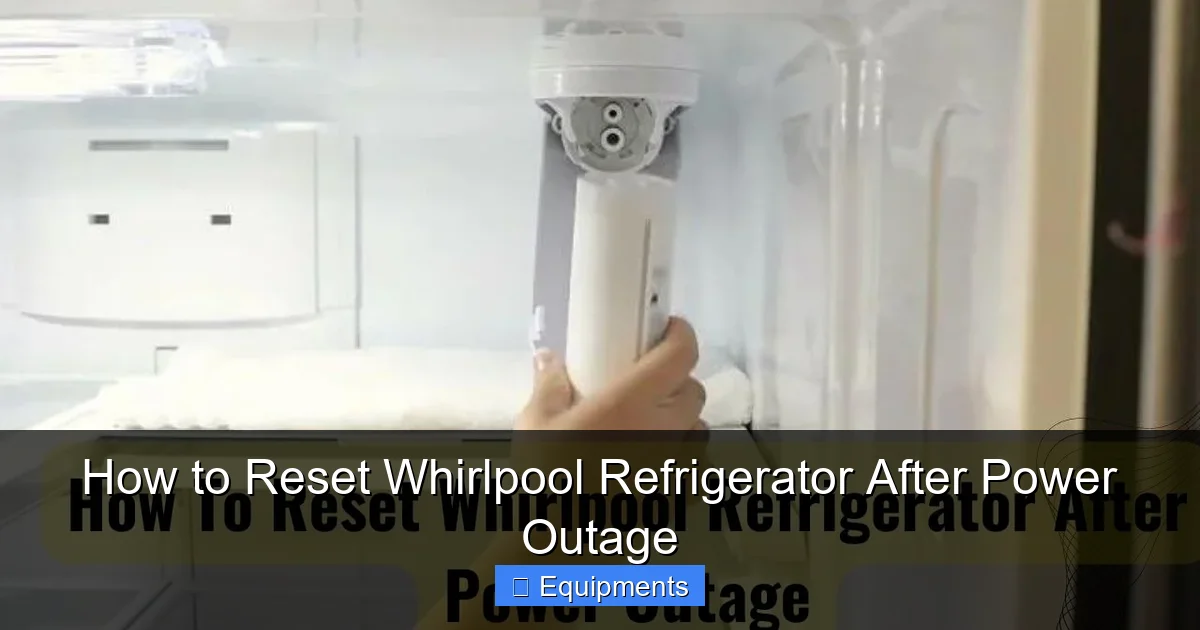
Visual guide about How to Reset Whirlpool Refrigerator After Power Outage
Image source: refrigeratorsolutions.com
Step 1: Assess the Duration and Temperature
The USDA states that a refrigerator will keep food safely cold for about 4 hours if unopened, and a full freezer will maintain its temperature for approximately 48 hours (24 hours if half-full). As soon as power returns, do not open the refrigerator doors. Instead, feel the exterior. Is it warm? Listen closely. Can you hear any faint humming or clicking sounds? These are clues. If the outage was brief (under an hour) and the interior still feels cold, the fridge may have maintained temperature and simply needs a reboot. If it’s been several hours and the interior is clearly warm, you must prepare to discard perishables like meat, dairy, and leftovers. Use a thermometer to check the internal temperature once you open it; anything above 40°F (4°C) for more than two hours is unsafe.
Step 2: Perform a Visual and Auditory Inspection
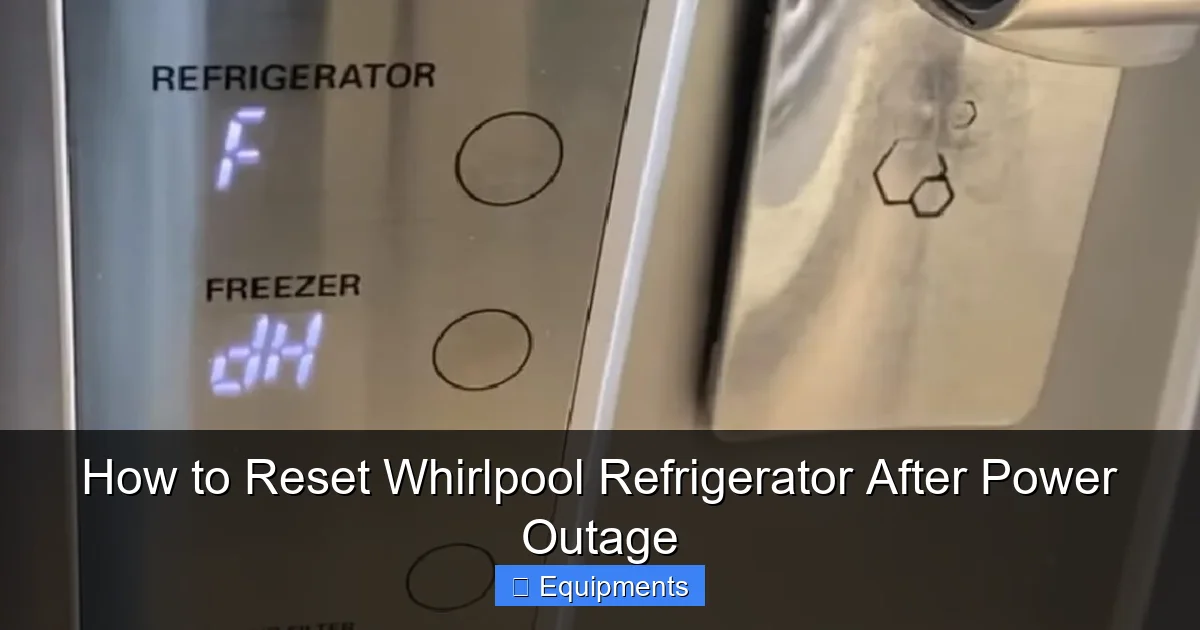
With the power still on, do a quick walk-around. Look for any visible damage to the power cord or plug. Check the circuit breaker panel to see if the breaker for the kitchen or refrigerator has tripped. If it has, reset the breaker first. Then, stand near the refrigerator. You should hear a soft hum or a periodic clicking sound (the compressor or defrost timer engaging). If it is completely silent, that indicates the unit is not receiving power or a critical component has failed. Also, look at the control panel. Are any lights on? Are there any unusual symbols, letters, or flashing lights displayed? Write down or photograph any error code—this is vital information for troubleshooting or for a service technician.
Step 3: The Initial Power Cycle
Even if the fridge seems dead, the first step is a simple power cycle. Go to your electrical panel and turn OFF the dedicated circuit breaker for the refrigerator. If you don’t have a dedicated breaker, unplug the refrigerator’s cord from the wall outlet. Leave it in this powered-down state. This is not the full reset yet; this is just ensuring all residual power is drained. Wait for 2-3 minutes. This allows capacitors in the control circuit to fully discharge. After waiting, restore power by flipping the breaker back ON or plugging the cord in firmly. Observe the control panel. Does it light up? Do you hear any sounds? If yes, the basic electrical path is intact. If not, you may have a tripped internal overload protector (which can sometimes reset itself after hours of being unplugged) or a more serious electrical fault. Proceed to the full reset procedure regardless of this initial response, as it is necessary to clear the control board.
The Core Reset Procedure: Your Step-by-Step Guide
Now, for the main event. The definitive method to reset a Whirlpool refrigerator after a power outage is a controlled, complete power interruption. This forces the main control board to undergo a full reboot, clearing any error states or corrupted instructions it may have stored during the outage. The steps are simple but must be followed precisely and with patience.
Visual guide about How to Reset Whirlpool Refrigerator After Power Outage
Image source: refrigeratorsolutions.com
Method 1: The Unplug Method (Most Common)
This is the standard approach for almost all Whirlpool models, including French door, side-by-side, and top/bottom freezer styles. First, ensure you have a clear path to the outlet. The refrigerator is heavy and often in a tight space. Gently pull it forward enough to access the plug. Do not yank the cord. Firmly grasp the plug and pull it directly out from the wall outlet. Once unplugged, tape a note to the fridge door saying “DO NOT PLUG IN – RESET IN PROGRESS” to avoid accidental reconnection by a family member.
Now, the timer starts. You must leave the refrigerator unplugged for a minimum of five minutes. This is the critical window. Many people make the mistake of plugging it back in after 30 seconds. That is not enough time for the capacitors on the control board to fully discharge and for the volatile memory to clear. Set a timer. Use this five-minute window to clean the condenser coils (usually at the back or bottom front grille) with a coil brush. Dusty coils make the fridge work harder post-reset. After five minutes, plug the refrigerator securely back into the outlet. Do not use an extension cord; it must be plugged directly into a properly grounded wall outlet.
Method 2: The Circuit Breaker Method
If your refrigerator is hardwired or the plug is inaccessible behind a cabinet, you must use your home’s electrical panel. Locate the circuit breaker that controls the refrigerator’s circuit. It is often labeled “KITCHEN,” “REFRIG,” or “DINING ROOM.” Flip this breaker to the OFF position. You will hear a definite click. Again, wait for a full five minutes. This method has the added benefit of ensuring zero power draw from the unit. After five minutes, flip the breaker back to ON. Listen for the refrigerator to click on. The interior lights should come on, and you should hear the fans and compressor engage within a minute or two.
Method 3: The Control Panel Reset (For Some Models)
A minority of newer Whirlpool models with digital touchscreens may have a specific “Reset” or “Power Reset” option buried in a settings menu. Consult your user manual. If available, the path is usually something like: “Settings” > “System” > “Reset” or “Power Cycle.” This method is software-based and may not be as thorough as a physical power disconnect, but it’s worth trying first if your model has it, as it’s more convenient. However, if the fridge is completely unresponsive, this method won’t work because the control panel itself is dead. In a post-outage scenario, the physical unplug/breaker method is almost always necessary first.
After the Reset: The Critical Stabilization Period
You have completed the power cycle. The lights are on. You might hear sounds. This does not mean your refrigerator is ready for groceries. This is a common and costly mistake. After a reset or any significant power loss, the refrigeration system needs time to stabilize. The compressor oil needs to settle, the refrigerant pressures need to equalize, and the temperature in both compartments must drop to safe levels.
Visual guide about How to Reset Whirlpool Refrigerator After Power Outage
Image source: machineanswered.com
Why 24 Hours is the Golden Rule
Manufacturers, including Whirlpool, consistently state that it can take up to 24 hours for a refrigerator to reach and maintain its set temperatures after initial startup, a power outage, or a reset. During this period, the compressor will run almost continuously, which is normal. It is working to pull down the temperature of the insulated cabinet, the shelves, the food containers, and the air inside. If you load it with warm groceries immediately, you overwhelm the system. It will struggle, run excessively, and may never achieve a stable, even cold temperature. This leads to warm spots, frost in the freezer, and premature wear on the compressor. Resist the urge to restock. Use this time to clean the interior with a mild solution of baking soda and water, removing any spoiled food and odors from the outage.
Monitoring Temperatures Properly
Do not rely on the feel of the shelves or the frost on the freezer walls. Use dedicated appliance thermometers. Place one on a middle shelf in the refrigerator and one in the center of the freezer. The FDA recommends the fridge be at or below 40°F (4°C) and the freezer at 0°F (-18°C). Check these thermometers after 4 hours, 8 hours, 12 hours, and finally at the 24-hour mark. Only when both compartments have held their target temperatures for several hours should you consider restocking. When you do restock, do it in batches if possible, allowing the fridge to recover between additions.
What Normal Operation Sounds Like
During the stabilization period, listen. A healthy Whirlpool refrigerator will have a low, steady hum from the compressor. You’ll also hear the evaporator fan (behind the freezer wall) circulating air—a soft whirring. Every 8-12 hours, you should hear a brief click followed by a period of silence—this is the defrost cycle activating. The compressor turns off, a heater melts frost from the evaporator coils, and the water drains away. After 20-30 minutes, you’ll hear another click and the compressor/fans will resume. If you hear loud rattling, buzzing that doesn’t stop, grinding, or repeated rapid clicking without the compressor starting, shut it down and call for service. These are signs of a failing compressor, a bad condenser fan motor, or a stuck defrost timer.
Troubleshooting: When a Simple Reset Isn’t Enough
You’ve followed the reset procedure to the letter. You’ve waited 24 hours. But your Whirlpool refrigerator is still not cooling properly. The freezer is a puddle, and the fresh food section feels like a closet. Now what? This is where systematic troubleshooting begins. The reset has ruled out a simple software glitch. The problem is now likely mechanical or electrical.
Diagnosing with Error Codes
First, revisit the control panel. Did you see any flashing lights or strange symbols before the reset? Many Whirlpool models use a diagnostic mode or display specific blink patterns to indicate faults. For example, a flashing “F” or “E” followed by a number is an error code. The user manual is your best friend here. It will have a section “Understanding Display Messages” or “Diagnostic Codes.” Common codes might indicate a defrost system failure (F1, F2), a sensor problem (F3, F4), or a communication error between the main board and the display. Note the exact code. Even if the display is now blank, the fault may return. If you can access diagnostic mode (often by pressing and holding certain buttons), you can run a self-test. Again, the manual provides the exact sequence for your model number.
Basic Checks: The “Duh” Moments That Matter
Before assuming the worst, eliminate the simplest possibilities. Is the refrigerator plugged in fully? Sometimes, a reset can cause the plug to become slightly loose. Is the circuit breaker tripped? It might have tripped again when the compressor tried to start. Is the temperature control dial or digital setting turned up high enough? It could have been accidentally turned down. Are the condenser coils clean? Excess dust and pet hair acts as an insulator, making the compressor work overtime and potentially overheat and shut down. Are the door seals intact and sealing? Lift a dollar bill halfway out of the door. If it slips out easily with no resistance, the gasket is leaky, and cold air is escaping, making the unit work too hard. A leaky gasket can mimic a cooling failure.
Listening and Feeling: The Sensory Diagnosis
Put your ear to the side of the refrigerator, near the back bottom. Can you hear the condenser fan running? It should be a steady hum. If it’s silent, the fan motor may be dead, causing the compressor to overheat and shut off. Next, open the freezer door. Do you feel cold air flowing down from the back wall? If not, the evaporator fan (behind that wall) may not be working. You might also notice a significant frost buildup on the back wall of the freezer, indicating a defrost system failure. The defrost heater, defrost thermostat, or the main board’s defrost output could be faulty. Finally, touch the compressor (the black tank-like unit at the back bottom). Is it hot to the touch? A hot compressor that isn’t running often points to a start relay or overload protector failure, or a locked compressor. Do not attempt to repair these components yourself unless you are qualified.
When to Call the Pros: Recognizing Your Limits
Appliance repair involves high-voltage electricity, pressurized refrigerant systems, and precise mechanical systems. There is a clear line between a reset/cleaning task and a repair that requires a professional. Knowing when to stop and pick up the phone saves you time, money, and potential injury.
Clear Signs That Require a Technician
Call an authorized Whirlpool service technician if: The refrigerator does not power on at all after a verified reset and breaker check (control board or internal wiring fault). The compressor runs continuously without cycling off (could be low refrigerant, a bad thermostat, or a malfunctioning control board). You hear loud knocking, rattling, or grinding from the compressor area (compressor failure). There is a significant frost buildup on the back wall of the freezer while the fridge section remains warm (defrost system failure). You see a persistent error code that the manual indicates requires professional service. You smell burning electrical odors. Any time you need to access sealed refrigerant systems or replace major components like the compressor, condenser fan, or evaporator fan, a certified technician with EPA 608 certification is legally required in the United States to handle refrigerant.
Finding the Right Help
Always use an “Authorized Whirlpool Service Provider.” These technicians have factory training, access to correct parts, and updated technical service bulletins that address known model-specific issues. You can find the list on the official Whirlpool website by entering your zip code. Have your refrigerator’s full model number and serial number ready. This is found on a sticker inside the fresh food compartment on the side wall or ceiling, or on the back. The technician will ask for this. Be prepared to describe the full history: the power outage, the reset steps you performed, any sounds or error codes observed, and the symptoms you’re currently experiencing. This information speeds up diagnosis.
Prevention and Preparedness: Avoiding Future Crises
Your experience with a post-power outage reset is a perfect catalyst for becoming better prepared. A little foresight can minimize downtime, food loss, and stress the next time the grid fails.
Invest in Simple Protection
The most effective tool is a small, inexpensive plug-in surge protector rated for appliances (not just computers). This can shield the refrigerator’s sensitive electronics from damaging voltage spikes that often accompany power restoration. For areas with frequent outages, consider a whole-home surge protector installed at your electrical panel. For true power backup, a dedicated refrigerator UPS (Uninterruptible Power Supply) or a home generator is the gold standard. A quality refrigerator UPS can keep the fridge running for several hours during an outage, maintaining temperature and allowing a graceful shutdown instead of a sudden stop. If using a generator, always follow safety guidelines and ensure it is properly grounded and vented.
Create an Outage Plan
Have appliance thermometers in both fridge and freezer at all times. Keep a supply of dry ice or block ice in your freezer as a backup cooling method (learn how to use it safely). Know the location of your refrigerator’s circuit breaker. Keep the user manual in an accessible place, or take a photo of the model/serial number and store it in your phone. Know the 4-hour rule for food safety. Assemble a “fridge outage kit” with thermometers, a notepad to track times and temperatures, heavy-duty bags for disposing of spoiled food, and a mild cleaning solution. During an outage, keep the doors closed. Every time you open them, you let in warm air and accelerate warming.
Routine Maintenance is Key
A well-maintained refrigerator is more resilient. Clean the condenser coils every 6-12 months. Check and clean the door gaskets with warm, soapy water; ensure they are pliable and seal tightly. Set the refrigerator temperature to 37-40°F and the freezer to 0-5°F. These are optimal for food safety and efficiency. Listen to your fridge’s normal operating sounds so you can recognize when something changes. A fridge that is consistently working too hard is a fridge that is more likely to fail when stressed by a power event.
Frequently Asked Questions
How long should I leave my Whirlpool refrigerator unplugged to reset it?
You should leave it unplugged or with the circuit breaker off for a full 5 minutes. This is the minimum time needed to completely drain residual power from the control board and clear its memory. Plugging it back in sooner may not resolve the issue.
My refrigerator is cooling but the ice maker isn’t working after the outage. Is a reset needed?
Yes, the ice maker module has its own memory and may need to be reset. After performing the main refrigerator power cycle, the ice maker should reset automatically. If it doesn’t, consult your manual for a specific “Ice Maker Reset” procedure, which often involves holding a button or lever for a few seconds. Ensure the feeler arm is in the down position and there are no jammed ice cubes.
Can I reset my Whirlpool refrigerator without unplugging it?
For a post-power outage glitch, a physical power disconnect is almost always required for a true reset. Some newer models have a software reset in the settings menu, but if the unit is completely unresponsive, this option is inaccessible. The circuit breaker method is the safest and most thorough alternative to unplugging.
What do the flashing lights on my Whirlpool refrigerator control panel mean?
Flashing lights or symbols indicate a diagnostic error code. The pattern (e.g., F1, E5, or a specific sequence of blinks) points to a specific fault like a defrost problem, sensor failure, or communication error. You must look up this code in your user manual’s troubleshooting section to understand what component needs service.
How can I tell if my food is still safe after a power outage?
If the power was out for more than 4 hours and the refrigerator door remained closed, check the temperature with a thermometer. Perishable food is unsafe if the fridge temperature stayed above 40°F (4°C) for over 2 hours. In the freezer, food is safe if it still has ice crystals or is at 40°F or below. When in doubt, throw it out to prevent foodborne illness.
My Whirlpool fridge still doesn’t work after a reset. What should I do?
If the unit does not power on, cool, or if it runs constantly but doesn’t chill after a proper 5-minute power cycle and 24-hour stabilization, you have a hardware failure. Check for obvious issues like a tripped breaker or dirty coils. If those are fine, note any error codes and contact an authorized Whirlpool service technician for diagnosis and repair.
Pingback: Power Outage Food Ideas - kitchenandhouseware.com
Pingback: Food to Have on Hand in Case of Power Outage - kitchenandhouseware.com