Putting a lock on your fridge is a simple, effective way to control access to food and ensure safety. Whether you’re a parent managing a child’s snacking, a landlord protecting appliances, or someone with medical dietary needs, a fridge lock provides peace of mind. This guide covers everything from choosing the right lock type—adhesive, cable, or built-in—to detailed installation instructions for any fridge model. We also highlight crucial safety tips to avoid damaging your appliance and explore creative solutions for specific needs.
Key Takeaways
- Primary Purpose: Fridge locks are primarily for child safety, dietary management, shared living situations, or securing high-value items in commercial settings.
- Lock Types: The main options are adhesive strap locks (easiest), cable locks (versatile), and built-in/latch locks (permanent and discreet).
- No-Drill Principle: For most home users, adhesive or cable locks are best as they require no tools and cause zero damage to the refrigerator’s finish or seal.
- Installation is Tool-Free: The most common locks install in minutes with just cleaning the surface and applying strong adhesive or threading a cable.
- Safety First: Never use locks that compromise the fridge door seal or interfere with ventilation. Always prioritize emergency access.
- Consider the Seal: Any external lock must not put pressure on the rubber door gasket, as this can cause premature wear and leaks.
- Check Lease Agreements: Renters must get landlord permission before applying any adhesive, as some may be considered permanent alterations.
[FEATURED_IMAGE_PLACEHOLDER]
📑 Table of Contents
- Why Would You Need to Lock a Refrigerator?
- Types of Fridge Locks: Which One is Right for You?
- Step-by-Step: How to Install an Adhesive Strap Lock
- Step-by-Step: How to Install a Cable Lock
- Critical Safety & Practical Considerations
- Creative and Alternative Solutions
- Conclusion: Choosing Peace of Mind
Why Would You Need to Lock a Refrigerator?
At first glance, locking a refrigerator might seem like an extreme measure. After all, it’s the source of cold drinks and midnight snacks! But for many people, a simple fridge lock solves real, everyday problems. It’s not about hoarding food or being overly restrictive; it’s about safety, health, and harmony in the home or workplace.
For parents of toddlers and young children, the kitchen is a landmine of potential hazards. While stove guards and cabinet locks are common, the fridge is often an overlooked danger. A curious child can pull out heavy containers of milk, break glass jars of pickles, or even get a hand caught in the door. More insidiously, unrestricted access means constant snacking on sweets and juice, ruining appetites for meals and leading to sugar highs and crashes. A fridge lock gives parents back control, ensuring meals are planned and eaten at the table, not sneaked from the shelves at 10 AM.
Beyond parenting, there are other critical needs. Individuals managing serious medical conditions like diabetes, severe food allergies, or kidney disease often have strictly controlled diets. An unlocked fridge can be a temptation or a risk for other household members who may not understand the gravity of “just a bite.” A lock ensures only the person with the dietary restrictions—or a designated caregiver—can access the specific foods required for their health.
In shared living situations like college dorms, roommates, or multi-generational homes, food theft and “mystery consumption” are classic sources of conflict. “Who drank my last soda?” and “Where did my leftovers go?” are frustrating questions. A clear, agreed-upon locking system removes the ambiguity and protects personal property. Similarly, landlords installing a fridge in a common area or a small business owner providing a communal fridge for employees may use locks to prevent theft and manage inventory.
The Psychology of Access Control
Interestingly, the act of locking a fridge can shift household dynamics. It moves food from a free-for-all to a managed resource. This can spark valuable conversations about respect, shared responsibilities, and budgeting. For a child, it can be framed not as a punishment, but as a “special grown-up rule” that applies to everyone, making it a part of family structure rather than a personal restriction. The key is communication—explaining the “why” behind the lock is as important as installing it correctly.
Types of Fridge Locks: Which One is Right for You?
Not all fridge locks are created equal. The best choice depends on your specific fridge model, your aesthetic tolerance, how permanent you want the solution to be, and your budget. Let’s break down the three primary categories available on the market.
Visual guide about How to Put a Lock on a Fridge
Image source: img.ltwebstatic.com
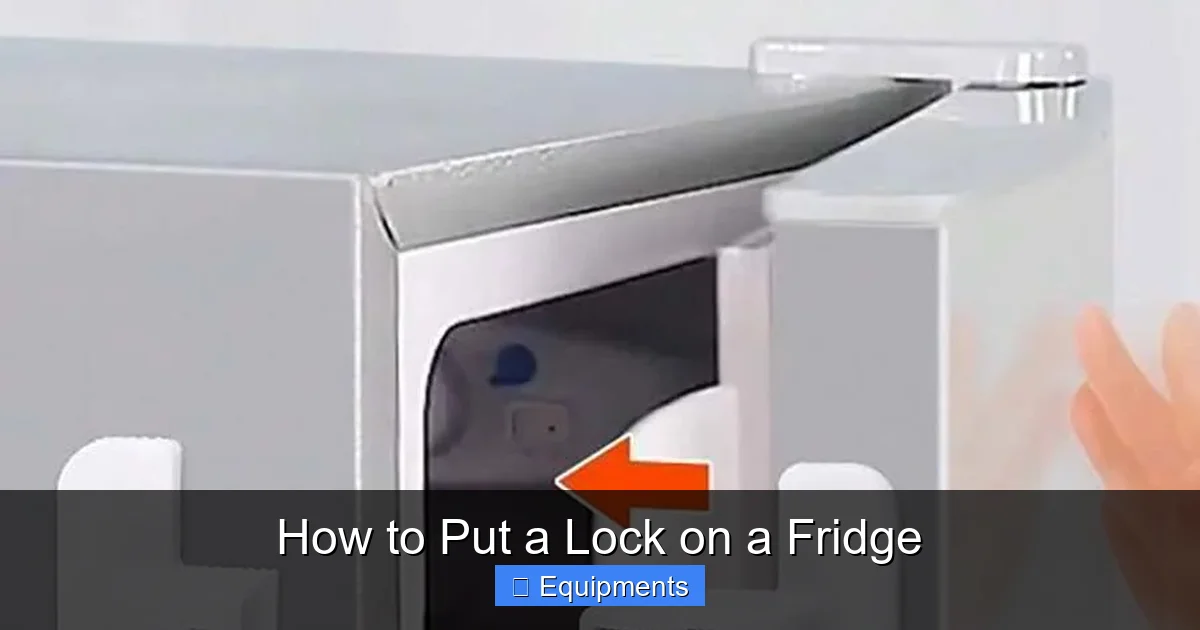
Adhesive Strap Locks (The Most Common & User-Friendly)
These are the locks you’ve likely seen. They consist of two flexible plastic or fabric straps with strong adhesive backing on one side and a locking mechanism (a small plastic clasp or a combination/keys) on the other. You stick one strap to the fridge door and the other to the adjacent side of the fridge cabinet. When closed, the straps meet in the middle and click into the lock.
Pros: Incredibly easy to install (just peel and stick), no tools required, inexpensive (often $5-$15), and removable with effort. They work on virtually any standard refrigerator with a smooth metal or plastic surface. The straps are usually long enough to accommodate different door thicknesses.
Cons: The adhesive can lose effectiveness over time, especially if exposed to condensation or frequent cleaning. On very textured surfaces or stainless steel with a protective film, adhesion may be poor. They are also the most visible lock type. If removed improperly, they can leave some adhesive residue.
Cable Locks (The Versatile & Secure Option)
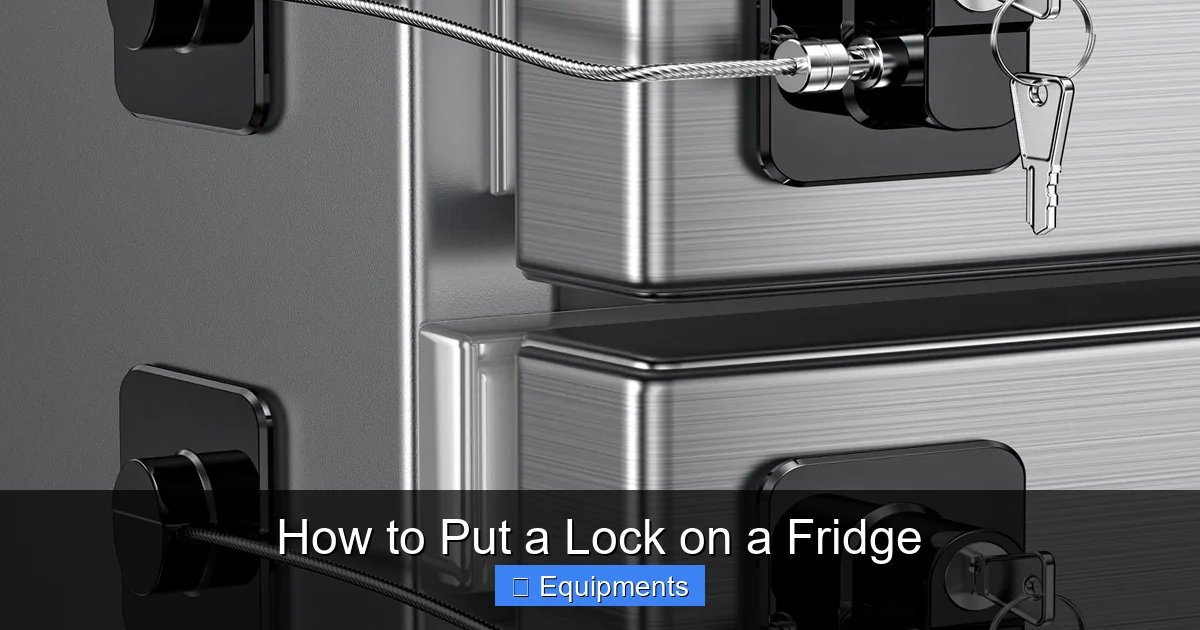
Think of a small, plastic-coated steel cable with a key or combination lock at one end and a loop at the other. To install, you thread the cable through the fridge’s handle (if it has an enclosed design) or around the entire door frame, then secure it with the lock. Some versions use a “clam-shell” design that clamps onto the door and side without threading.
Pros: Extremely versatile. Can be used on fridges, freezers, cabinets, and even lockers. The cable is sturdy and tamper-resistant. It doesn’t rely on adhesive, so it’s perfect for renters who can’t leave any residue. Often more secure against determined prying than simple strap locks.
Cons: Can be slightly more fiddly to install than strap locks. The cable can potentially scratch a delicate stainless steel finish if not coated properly or if debris gets trapped. It may rattle slightly if not tensioned correctly. The most secure versions require threading, which can be tricky on some handle designs.
Built-In or Recessed Latch Locks (The Permanent & Discreet Solution)
This is a more industrial or custom approach. It involves installing a physical latch mechanism (like a cam lock or hasp) directly into the refrigerator’s door and frame. This usually requires drilling small pilot holes and screwing the components in place. Some high-end commercial refrigerators come with provisions for this, and aftermarket kits exist.
Pros: The most secure and permanent solution. It’s incredibly discreet and looks like a factory-installed feature. It does not rely on adhesive or tension, so it’s unaffected by humidity. Perfect for commercial kitchens, labs, or situations requiring maximum security.
Cons: Requires tools and DIY skill (drilling, screwing). This method almost always voids the manufacturer’s warranty and can cause irreversible damage to the fridge’s outer panels or, worse, its internal wiring/insulation if drilled incorrectly. It is generally not recommended for standard home refrigerators unless you are an expert or dealing with a decommissioned unit. The risk of costly error is very high.
Smart Locks & Alarms (The High-Tech Alternative)
For the tech-savvy, there are Wi-Fi or Bluetooth-enabled locks and simple alarm attachments. These devices attach like a cable or strap lock but send a notification to your phone when the door is opened or if the lock is tampered with. Some even have internal cameras. They don’t always physically lock but serve as a powerful deterrent and alert system.
Pros: Real-time alerts, remote monitoring, integration with smart home systems. Great for monitoring teenagers or employees without necessarily restricting access entirely.
Cons: More expensive ($30-$100+), requires batteries and a network connection, setup can be more complex. The physical attachment is still often a basic strap or cable.
Our Recommendation: For 95% of home users, a high-quality adhesive strap lock or a coated cable lock is the perfect balance of effectiveness, ease of use, and non-destructiveness. Start there.
Step-by-Step: How to Install an Adhesive Strap Lock
This is the go-to method for most families and renters. Follow these steps for a secure, clean installation.
Visual guide about How to Put a Lock on a Fridge
Image source: m.media-amazon.com
Tools & Materials You’ll Need
- Adhesive fridge lock (straps with locking mechanism)
- Isopropyl alcohol (rubbing alcohol)
- Clean, lint-free microfiber cloth
- Hair dryer (optional, but helpful)
- Scissors (if straps are too long)
Installation Process
- Choose Your Location: Decide where the lock will sit. The ideal spot is on the front of the fridge, aligning the two straps across the seam where the door meets the cabinet. Avoid placing it over the rubber door gasket (seal). A common spot is just below the door handle or on the side of the door if your fridge has a vertical handle. Ensure the lock, when engaged, does not interfere with the door’s ability to close fully and create an airtight seal.
- Clean Thoroughly: This is the most critical step for adhesion. Use isopropyl alcohol on the microfiber cloth to vigorously clean the exact areas where the adhesive pads will stick. Remove all grease, fingerprints, dust, and any waxy residue. Clean a slightly larger area than the strap. Let it dry completely (30 seconds). Alcohol evaporates quickly and leaves no residue.
- Prepare the Straps: If your lock has long straps, you may need to trim them to size. Most have marked lines for different door widths. Measure your fridge door’s thickness from the outer edge to the sealing surface, and trim the strap accordingly. Do this before peeling off the backing.
- Apply with Pressure: Peel the backing off the adhesive pad on one strap. Firmly press it onto the cleaned, dry surface of the fridge door. Apply even, firm pressure for 30-60 seconds. Repeat for the other strap on the fridge cabinet (the main body). Ensure they align perfectly when the door is closed. Use a hair dryer on low heat for 15-20 seconds over the adhesive after application; the gentle warmth can help activate and strengthen the bond.
- Let it Cure: Do not engage the lock or open/close the door repeatedly for at least 1 hour, preferably 24 hours. This allows the adhesive to reach its full bonding strength.
- Test & Adjust: After curing, close the door gently. The two strap ends should meet cleanly and click into the lock mechanism. Engage and disengage the lock several times. If the door doesn’t seal (you might feel cold air leaking or hear the fridge compressor running more), the lock is likely pulling the door out of alignment. You may need to reposition one strap slightly.
Removal Tips
To remove, do not just yank. Use a hairdryer on warm (not hot) to soften the adhesive. Gently work a plastic credit card or a dedicated adhesive remover tool under the edge of the strap. Slowly peel it back. Any leftover adhesive can be removed with more rubbing alcohol, a commercial adhesive remover like Goo Gone, or a little peanut butter (the oils break down adhesive). Clean the area again with alcohol afterward.
Step-by-Step: How to Install a Cable Lock
Cable locks offer a no-adhesive alternative that is often even more secure. The installation varies slightly by design.
Visual guide about How to Put a Lock on a Fridge
Image source: cdn.shopify.com
Tools & Materials You’ll Need
- Cable lock with key/combination
- Soft cloth or towel
Installation Process (Standard Thread-Through Style)
- Identify the Path: Examine your fridge’s handle. Many have a hollow tube or enclosed loop design. If yours does, you can simply thread the cable end through this handle. If not, you will need to loop the cable around the entire door frame, from the hinge side, across the front, and back to the lock point. This is less ideal as it can interfere with the door swing if not done carefully.
- Thread the Cable: For handle-threading, feed the looped end of the cable through the handle opening. Pull several inches through. For full-frame looping, open the door fully, drape the cable around the perimeter of the door (the part that seals against the cabinet), and bring the ends to the front.
- Engage the Lock: Bring the two ends of the cable together on the front of the fridge. Insert the key-end into the locking mechanism and turn the key (or set the combination) to secure it. The cable should be taut enough that the door cannot be opened, but not so tight that it strains the handle or distorts the door.
- Final Check: Gently try to open the door. It should not move. Ensure the cable is not pinched anywhere and that the door seal remains uncompressed when locked. Listen for any air leaks when the fridge is running.
Installation Process (Clamp/Snap Style)
Some cable locks use two plastic clamps that grip the door and cabinet. For these:
- Clean the contact surfaces (as in the adhesive section).
- Position one clamp on the fridge door and the other on the cabinet, directly opposite each other.
- Snap the cable into the locking mechanism which bridges the two clamps. These often have a keyhole or combination dial on the front.
- Test for tightness and door seal integrity.
Safety & Aesthetics
Cable locks are generally very safe for the fridge. The main risk is abrasion. Always ensure the plastic coating on the cable is intact. If you have a stainless steel fridge, run your finger along the cable path to confirm there’s no rough edge that could scratch. You can pad contact points with a tiny piece of felt or electrical tape if needed.
Critical Safety & Practical Considerations
Before you buy and install any lock, there are non-negotiable safety principles to follow. Your refrigerator is a complex appliance, and interfering with it incorrectly can cause damage, inefficiency, or even hazards.
Never Compromise the Door Seal (Gasket)
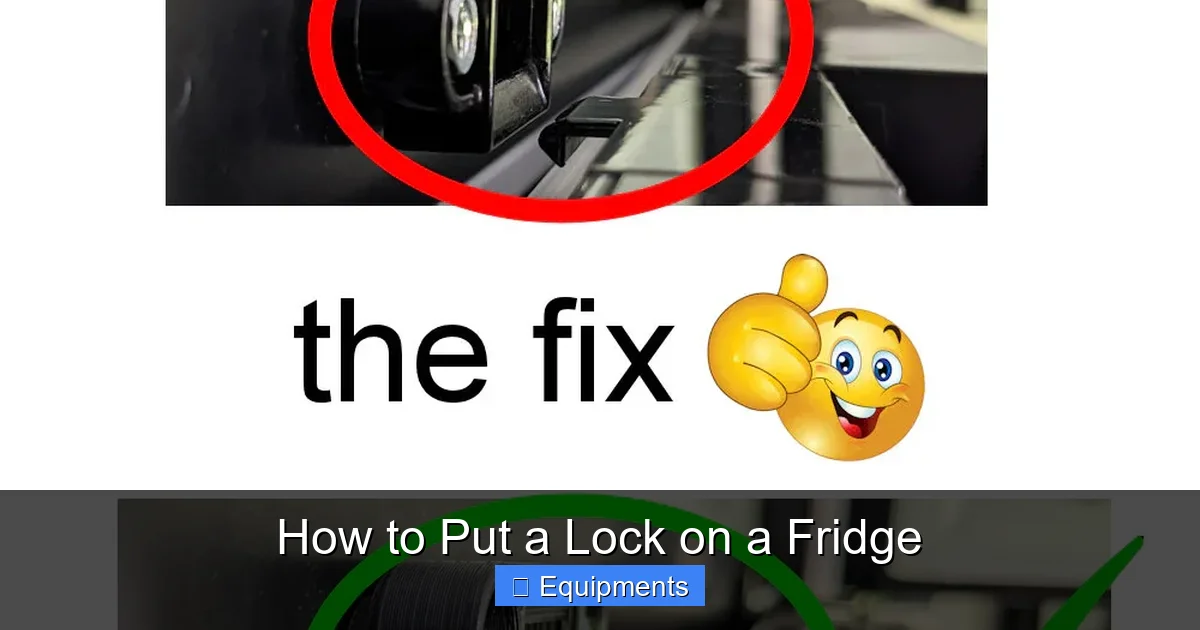
The rubber gasket around your fridge door is what creates the airtight seal. If this seal is broken, your fridge works overtime, your food spoils faster, and your energy bill soars. Your lock must never, under any circumstances, press into, pinch, or deform this gasket. When the door is closed and locked, you should be able to slide a thin piece of paper around the entire perimeter of the seal with slight resistance. If the lock prevents this, it’s installed incorrectly. The lock’s point of contact should be on the rigid metal or plastic of the door and cabinet, not the soft rubber.
Ventilation is Key
Refrigerators need to breathe. The condenser coils (usually on the back or underneath) and ventilation grilles must have clear airflow. Do not install a lock or have cables that dangle into these areas. Ensure the lock mechanism itself isn’t sitting directly on a heat vent.
Emergency Access Must Be Maintained
In a fire, carbon monoxide leak, or medical emergency, every second counts. A fridge lock should never be the only barrier to a room or impede escape. Keep the key or combination in a known, accessible location outside the locked fridge (e.g., on a hook by the door, with a designated family member). For combination locks, ensure all responsible adults know the code. Never use a lock that requires a key that is itself locked inside the fridge!
Material Compatibility
Check your fridge’s surface. Standard painted metal or white plastic is fine for adhesives. For stainless steel, be extra cautious. Many stainless steel fridges have a protective anti-fingerprint coating that adhesives can permanently damage. Test any adhesive in an inconspicuous spot (like the very top or bottom corner) for 24 hours before full installation. For stainless, a cable lock threaded through the handle is often the safest bet.
Warranty and Landlord Considerations
Read your refrigerator’s warranty. It almost certainly states that any damage caused by “unauthorized modification” voids the warranty. Drilling holes (for built-in latches) is a clear violation. Even strong adhesives, if they remove paint or finish upon removal, could be grounds for a denied warranty claim. If you rent, your lease almost certainly requires you to return the property in its original condition. Any adhesive residue or holes will come out of your security deposit. Always get written permission from your landlord before installing anything, and agree on the removal method and responsibility for repair.
Creative and Alternative Solutions
A physical lock isn’t the only way to manage fridge access. Depending on your goal, you might find a simpler or more elegant solution.
The “High Shelf” Strategy
For managing a child’s snacking, simply place all “off-limits” items—sugary drinks, snacks, desserts—on the highest shelf or in a specific drawer that the child cannot reach. This requires no purchase, no installation, and is a natural barrier. Combine this with a clear, consistent rule: “Snacks are from the lower basket.” This teaches children about boundaries and organization.
Mini-Fridge Segregation
For shared housing or severe dietary needs, consider a small, separate mini-fridge for the restricted person’s food. This is a clean, zero-conflict solution. The main fridge remains communal, and the individual’s special foods are secure in their own space. It can even be placed in their bedroom. The cost of a used mini-fridge is often less than the stress of constant policing.
Cabinet Locks for Fridge Drawers
Many modern fridges have deep, full-width drawers for meats, cheeses, and produce. If the issue is specific items (like deli meats for a allergy), a simple child safety cabinet lock (the kind that uses magnets to open) can be applied to the drawer front. This is highly discreet and only locks the drawer, not the entire appliance.
Inventory & Communication Systems
Sometimes, the problem is not security but accountability. Implement a shared Google Doc or a whiteboard on the fridge where everyone logs what they take from communal supplies. This transparency reduces “mystery consumption.” Pair it with a rule that if you finish something (like the milk), you add it to the grocery list immediately.
Professional/Commercial Options
For landlords or businesses, there are refrigerators designed with lockable compartments or full-door locks that are integrated and robust. Some even have keypad entry and audit logs. If you are furnishing a rental property or office, investing in a fridge with this feature built-in is the most professional and durable long-term solution, though it comes with a higher upfront cost.
Conclusion: Choosing Peace of Mind
Learning how to put a lock on a fridge is about more than just a physical installation; it’s about implementing a system of trust, safety, and respect. For parents, it’s a tool to foster healthy eating habits and prevent accidents. For those with medical needs, it’s a critical health safeguard. For shared spaces, it’s a conflict-resolution strategy that removes ambiguity.
The path forward is clear. Start by honestly assessing your need and your fridge’s surface. In almost all residential cases, a high-quality adhesive strap lock or a coated cable lock is the recommended, safe, and reversible choice. Remember the golden rules: clean with alcohol, cure fully, and never, ever compromise the door seal. Test the seal with a dollar bill after installation—if it slides out easily, you’re good. If it’s held tight, the seal is intact.
Finally, communicate. Explain the reason for the lock to everyone affected. Frame it positively—as a way to keep everyone safe, healthy, and respectful of shared resources. A lock is a tool, not a punishment. Used wisely, it brings not just security to your food, but harmony to your home. Now, armed with this knowledge, you can make the right choice for your situation and install your solution with confidence.
Frequently Asked Questions
Will putting a lock on my fridge damage it?
Not if you use the correct method. Adhesive and cable locks are designed to be non-destructive. The key is proper surface cleaning before applying adhesive and ensuring the lock does not strain the door or seal. Drilling holes for built-in locks will cause permanent damage and void warranties.
What if my child figures out how to open the lock?
Choose a lock appropriate for the child’s age and dexterity. For very young children, a simple push-button or slide lock (often on adhesive straps) is sufficient. For older, more determined kids, a keyed lock with a hidden key or a combination lock where only adults know the code is better. The goal is to create a barrier that is insurmountable for the child, not necessarily impossible for an adult.
Can I lock a fridge without buying anything?
For temporary or low-stakes situations, you can use a strong rubber band or a long piece of string/paracord looped around the handle and secured with a complex knot. However, this is not secure, can be easily defeated, and may look messy. It’s better to invest in a $10 lock for reliability and safety.
I’m a renter. Can I still use a fridge lock?
Yes, absolutely. Renters should only use non-adhesive solutions like cable locks or certain clamp-style strap locks that do not use permanent adhesive. Always check your lease, but a removable cable lock that leaves no trace is almost always permissible. Get verbal or written approval from your landlord to be safe.
Is there a lock that makes noise if the fridge is opened?
Yes, there are simple alarm attachments that clip onto the fridge door. They are battery-operated and emit a loud beep when the magnetic seal is broken. They do not physically lock the door but act as a powerful deterrent and alert system. They are easy to install and remove and are perfect for monitoring without full restriction.
Should I get a keyed lock or a combination lock?
This depends on your household. Combination locks are convenient as no key is needed, but codes can be shared or forgotten. Keyed locks offer physical security—if the key is hidden, only those with it can open. For homes with very young children who might learn a code, a keyed lock with the key stored high up is safer. For adults only, a combination lock is often simpler. Consider a lock that offers both options.