An orange or yellow flame in your gas oven is a serious warning sign of improper combustion, often caused by a dirty burner or insufficient air supply. This not only reduces cooking efficiency but can produce dangerous carbon monoxide. The fix typically involves a thorough cleaning of the burner ports and ensuring proper air mixture, but always prioritize safety by checking for gas smells and knowing when to call a licensed technician.
Key Takeaways
- An Orange Flame is a Red Flag: A healthy gas oven flame is blue with a possibly small yellow tip. A predominantly orange or yellow flame indicates incomplete combustion, which is inefficient and potentially hazardous.
- Primary Culprit is Usually Dirt: The most common cause is food debris, grease, and dust clogging the tiny venturi ports in the burner tubes, disrupting the gas-air mixture.
- Safety is the Absolute Priority: Always disconnect the oven from power and shut off the gas supply before inspection or cleaning. If you smell gas or suspect a leak, evacuate and call a professional immediately.
- Cleaning is a Systematic Process: Fixing it requires carefully disassembling access panels, gently cleaning every burner port with proper tools (like a paperclip or soft brush), and ensuring gas orifices are clear.
- Air Shutter Adjustment May Be Needed: After cleaning, you may need to adjust the air shutter to restore the correct blue flame, but this should be done cautiously and with the oven on for observation.
- Not All Issues Are DIY: Problems like a faulty gas valve, incorrect gas pressure, or damaged internal components require a licensed appliance repair technician. Do not attempt to repair these yourself.
- Regular Prevention is Key: Routine cleaning of spills promptly and scheduling annual professional maintenance are the best ways to prevent burner clogs and ensure safe, efficient operation.
📑 Table of Contents
- Understanding the Flame: What Does a Healthy Gas Oven Flame Look Like?
- Safety First: Non-Negotiable Precautions Before You Touch Anything
- Diagnosing the Root Cause: Why Is My Oven Flame Orange?
- The Step-by-Step Fix: Cleaning Your Oven Burner
- Testing Your Work and Fine-Tuning the Air Shutter
- When to Call a Professional: Recognizing Your Limits
- Prevention and Long-Term Maintenance: Keeping the Flame Blue
- Conclusion: A Blue Flame is a Safe and Efficient Flame
Understanding the Flame: What Does a Healthy Gas Oven Flame Look Like?
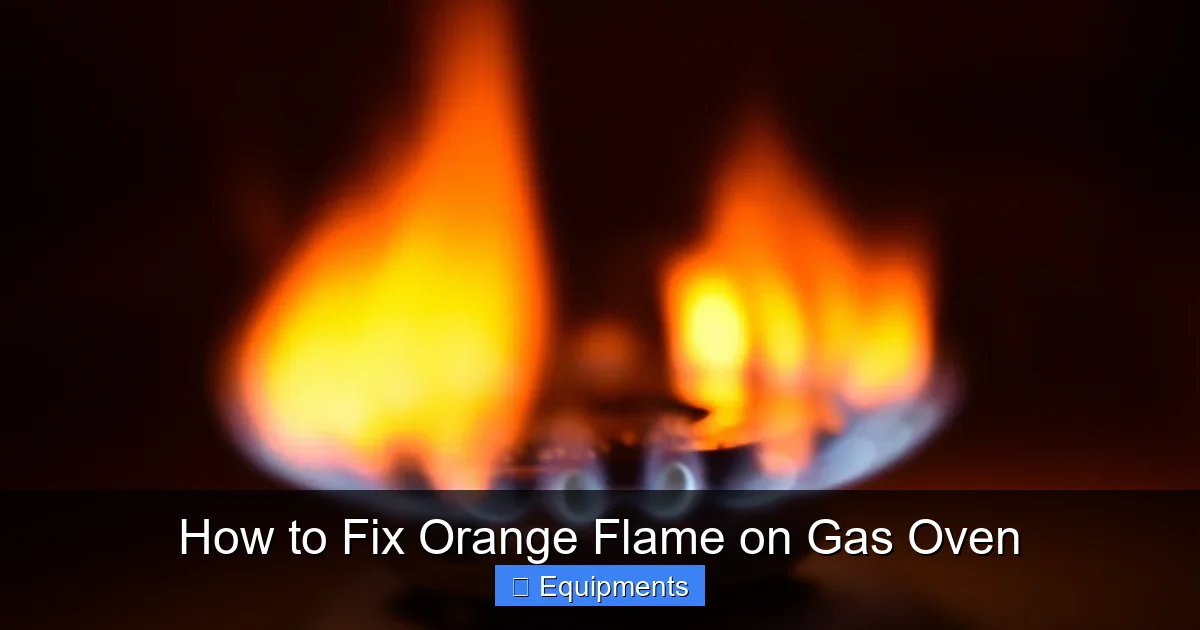
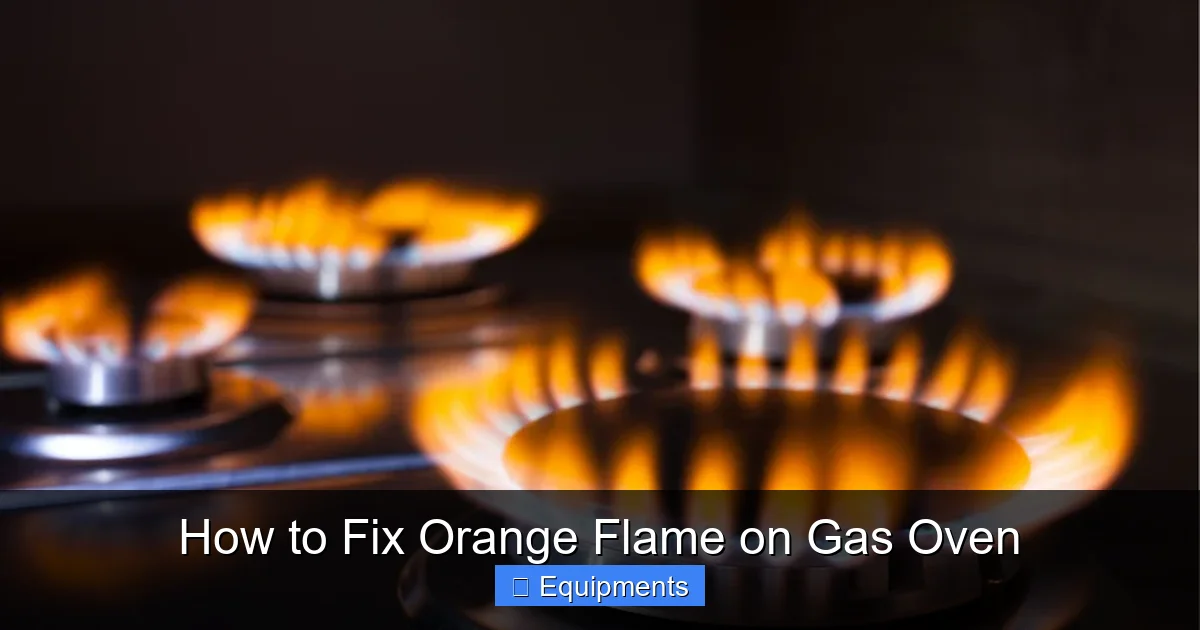
Before we dive into fixing a problem, we need to understand what “normal” looks like. When your gas oven is working perfectly, the burner flame should be mostly a bright, steady blue. You might see a very small, crisp yellow tip at the very end of the flame—this is often considered acceptable. That blue color is a sign of complete combustion. It means the gas (fuel) is mixing perfectly with oxygen (air) from your home’s supply and burning hot and clean.
Now, what about that worrying orange flame? An orange, yellow, or “sooty” flame is a classic symptom of incomplete combustion. This means there isn’t enough oxygen mixing with the gas before it burns. The result is a cooler, dirtier burn that wastes fuel, cooks unevenly, and—most critically—produces excess carbon monoxide (CO), an odorless, colorless, and deadly gas. An orange flame can also flicker, lift off the burner ports, or make a roaring sound instead of a gentle hiss. Seeing this should trigger an immediate response, starting with safety checks.
Safety First: Non-Negotiable Precautions Before You Touch Anything
Your safety and your home’s safety are the most important considerations. Gas is a powerful utility, and working with it requires caution. Never rush into repairs. Follow these steps in order:
Visual guide about How to Fix Orange Flame on Gas Oven
Image source: housekeepingbay.com
The Essential Pre-Repair Checklist
1. Ventilate the Area: Open windows and doors to your kitchen and, if possible, the rest of the house. Get fresh air circulating to disperse any potential gas or combustion byproducts.
2. Locate and Shut Off the Gas Supply: Find the gas shut-off valve for your oven. It’s usually located behind the oven or in a basement/utility area near the appliance line. Turn the valve handle perpendicular to the gas pipe to close it. This is your single most important safety step.
3. Disconnect Electrical Power: Unplug the oven from the wall outlet. If it’s a hardwired unit, turn off the dedicated circuit breaker in your electrical panel. This prevents any accidental ignition of the oven lights or electronics while you’re working.
4. Smell for Gas: Before you start disassembling anything, do a final gas smell check near the oven and the shut-off valve. If you detect even a faint odor of rotten eggs (the added mercaptan), STOP. Do not operate any electrical switches, lights, or flames. Evacuate the house and call your gas company or a licensed technician from a safe location.
5. Gather the Right Tools: You’ll typically need a screwdriver set ( Phillips and flathead), a soft-bristle brush (like a toothbrush), a flexible paperclip or a specialized burner cleaning tool, a vacuum with a crevice tool, and possibly a flashlight. Avoid using metal tools that can scratch or damage the delicate burner ports.
Diagnosing the Root Cause: Why Is My Oven Flame Orange?
With safety measures in place, it’s time to play detective. The orange flame is a symptom; we need to find the disease. In over 80% of cases in standard home ovens, the problem stems from one place: a dirty burner. But other issues can mimic this symptom.
Visual guide about How to Fix Orange Flame on Gas Oven
Image source: housekeepingbay.com
The #1 Suspect: Clogged Burner Ports
Your oven’s gas burner is a long tube with hundreds of tiny holes or ports along its length. Gas travels through the tube and is forced out these ports, where it mixes with air and ignites. Over time, food splatters, grease vapor, dust, and even bits of foil from cleaning can clog these microscopic holes. When ports are blocked, the gas has fewer exit points, disrupting the delicate air-gas mixture. The result is that orange, lazy flame. The clogged ports starve the flame of oxygen.
Secondary Causes: Air Mixture and Pressure
If the burner itself is clean, the next likely culprit is the air shutter. This is a adjustable flap on the burner tube or gas line that controls how much ambient air mixes with the gas before it exits the ports. If it’s closed too much, you get a fuel-rich (yellow/orange) mixture. If it’s open too far, the flame can become noisy and lift off. Another less common cause is an issue with the gas pressure from your home’s supply, which is a problem only your gas company or a technician can address. A faulty gas valve that isn’t delivering the correct amount of gas can also cause poor combustion.
The Step-by-Step Fix: Cleaning Your Oven Burner
Assuming you’ve ruled out a gas leak and are confident the issue is a dirty burner, let’s get cleaning. This process requires patience and attention to detail.

Visual guide about How to Fix Orange Flame on Gas Oven
Image source: i.ytimg.com
Step 1: Access the Burner Assembly
First, you need to get to the burner. This usually means removing the oven’s bottom panel. In most models, this is a sheet metal or porcelain-coated panel held by 4-6 screws. Unscrew it and set it aside carefully. You should now see the burner tube(s) running from back to front, mounted on brackets. There may also be a small igniter (glow bar) and a gas valve with wires attached. Do not disconnect any gas lines or electrical wires at this stage. Your goal is to clean the burner in place or with minimal removal.
Step 2: The Delicate Art of Port Cleaning
This is the core of the repair. Take your soft-bristle brush and gently sweep along the length of the burner tube to remove loose debris and grease film from the surface. Now, for the ports. Take your straightened paperclip. Be incredibly gentle. You are not drilling; you are probing. Insert the tip of the paperclip into each visible port hole and give it a slight twist and wiggle. The goal is to dislodge any crusty debris blocking the hole. Do not force it or enlarge the hole. Work your way down the entire length of the burner on both sides. For stubborn clogs, you can use a low-pressure air can (like for electronics) to blow out debris from the opposite side of the port.
Step 3: Clean the Venturi and Air Mixture Tube
At the point where the gas line connects to the burner tube, there is often a small, wider chamber called a venturi. This is where air initially mixes with the gas. This area can also collect gunk. Use your brush and a cotton swab dipped in a little soapy water (wring it out thoroughly) to clean inside this tube. Rinse with a barely-damp cloth and dry completely. Ensure the small hole where the gas enters the burner tube from the valve is also clear.
Step 4: Vacuum and Reassemble
Use the crevice tool of your vacuum to suck out all the loose debris you’ve dislodged from inside the burner tube and the oven floor. Once everything is clean and dry, carefully replace the bottom oven panel and secure it with screws. Do not reattach the gas or power yet.
Testing Your Work and Fine-Tuning the Air Shutter
Now for the moment of truth. But we’re not done yet. Cleaning might have fixed it, but you may need a small adjustment.
The Initial Test (With Caution)
1. Reconnect Gas and Power: Turn the gas shut-off valve back on. Reconnect the electrical power (plug in or flip the breaker).
2. Set and Ignite: Set the oven to a bake temperature (e.g., 350°F). Listen for the igniter to glow and then the “whoosh” of gas lighting. Stand to the side—not directly in front—of the oven door.
3. Observe the Flame: Carefully peer through the oven door window or open the door slightly (be mindful of the heat). What do you see?
Interpreting the Results and Adjusting the Air Shutter
Scenario A: Perfect Blue Flame. Excellent! Your cleaning did the trick. The problem is solved. Let the oven run for 10-15 minutes to confirm stability.
Scenario B: Still Orange/Yellow, but Cleaner. The burner is cleaner, but the air-gas mix is still off. You likely need to adjust the air shutter. This is a sliding or rotating collar on the gas tube where it enters the burner. With the oven running, carefully loosen the set screw on the collar and slide it slightly more open (away from the burner) or closed (towards the burner). You are trying to increase the air intake. Make tiny adjustments (1/8 turn at a time), wait 30 seconds, and observe. The goal is a crisp blue flame. Once achieved, tighten the set screw. Never adjust this while the oven is off and gas is on.
Scenario C: Flame is Blue but Lifting or Very Loud. You’ve opened the air shutter too far. Close it slightly until the flame sits nicely on the burner ports and is quieter.
When to Call a Professional: Recognizing Your Limits
Gas appliance repair is serious business. There are clear boundaries for DIY. Stop immediately and call a licensed, insured appliance repair technician if:
- You smell gas at any point during the process, even after shutting the valve.
- The flame is completely orange and large even after a thorough cleaning and air shutter adjustment.
- You notice soot or black residue building up on the oven walls or food, indicating ongoing poor combustion.
- You have to disconnect any gas lines or valves to access the burner. Sealing these connections requires special tools and knowledge.
- The oven’s igniter is glowing but the gas won’t light at all, or it clicks continuously without lighting.
- You are uncomfortable or unsure at any step. There is no shame in calling a pro. The cost of a service call is minor compared to the risk of a gas leak or carbon monoxide poisoning.
Professionals can diagnose faulty gas valves, test line pressure, check for cracked heat exchangers (in ranges with sealed burners), and ensure everything meets code. This is their expertise.
Prevention and Long-Term Maintenance: Keeping the Flame Blue
An ounce of prevention is worth a pound of cure. Once you’ve fixed your orange flame, adopt these habits to keep it blue:
Routine Cleaning Habits
Wipe up any food or grease spills in the oven immediately after it cools down. Letting debris bake onto the burner area is the fastest way to clog it. Use a drip pan or baking sheet under items that might bubble over. Avoid using aluminum foil to line the oven bottom, as it can melt and block vents or burners.
Annual Professional Tune-Up
Consider having your gas range or oven inspected by a qualified technician once a year. They will deep clean the burners, check the gas pressure, test safety systems, and ensure everything is operating at peak efficiency and safety. This is a smart investment in your appliance’s lifespan and your family’s well-being.
Monitor Your Cooking
Be mindful of what you cook. Very messy, greasy foods (like pizzas with lots of cheese or fatty meats) are prime culprits for sending grease vapors into the burner assembly. Use a pizza stone or baking sheet with a lip to contain splatters.
Conclusion: A Blue Flame is a Safe and Efficient Flame
That orange glow in your oven is not just an aesthetic problem; it’s your appliance sending a clear distress signal about inefficient and dangerous combustion. For the vast majority of homeowners, the solution lies in a methodical, safe cleaning of the burner ports and a potential air shutter adjustment. By following the safety-first protocol—shutting off gas and power—and using gentle, precise cleaning techniques, you can often restore that healthy blue flame and regain efficient, safe cooking. Remember, a clean burner is a happy burner. However, your confidence must have a ceiling. If the problem persists after cleaning, or if any step feels beyond your skill, the only correct move is to call a licensed professional. Your safety and the safety of your home are worth far more than the cost of a service call. Treat your gas oven with respect, maintain it proactively, and it will serve you well for years to come, with a flame that is brilliantly, correctly blue.
Frequently Asked Questions
Can I use my gas oven with an orange flame?
No, you should not use it. An orange flame indicates incomplete combustion, which produces dangerous carbon monoxide. Shut off the oven and do not use it until the issue is diagnosed and fixed.
What’s the difference between a normal yellow tip and a dangerous orange flame?
A small, crisp yellow tip at the very end of an otherwise blue flame can be normal. A fully orange or yellow flame that is large, sooty, and fills the burner tube is abnormal and indicates a serious air-gas mixture problem or a clog.
How often should I clean my gas oven burners?
As part of routine oven cleaning, wipe spills immediately. For a deeper burner cleaning to prevent clogs, consider doing the gentle port-cleaning process outlined above once or twice a year, or whenever you notice performance changes.
Can a dirty oven filter cause an orange flame?
Yes. Some gas ovens, especially ranges with a downdraft ventilation system or sealed burners, have filters or screens that can become clogged with grease. This restricts airflow to the burner, causing an orange flame. Check your owner’s manual for filter location and cleaning instructions.
Is an orange flame always caused by something I did wrong?
Not necessarily. While spills are a common cause, normal wear and tear, dust accumulation in the air, or minor shifts in home gas pressure can also contribute. Regular maintenance helps combat these factors.
My burner is spotless but the flame is still orange. Now what?
If you’ve confirmed the burner ports are completely clear, the issue is likely beyond simple DIY. The air shutter may be faulty, the gas pressure may be incorrect, or an internal component like the gas valve could be failing. This requires diagnosis by a licensed technician.
