Getting hair dye out of granite requires immediate, gentle action because granite is a porous natural stone that can absorb stains. Never use vinegar, bleach, or abrasive scrubbers, as they will etch and damage the sealant and stone. For fresh stains, blot immediately with a damp cloth. For set-in stains, create a poultice with baking soda and hydrogen peroxide, apply, and cover for 24-48 hours. Always test any cleaner on a hidden area first and re-seal your granite annually to protect it.
Key Takeaways
- Act Immediately: Blot fresh hair dye spills with a damp, soft cloth to absorb the pigment before it penetrates the granite’s pores.
- Avoid Harsh Chemicals: Never use vinegar, lemon juice, bleach, or ammonia-based cleaners; they will strip the sealant and etch the stone’s surface.
- Test First: Always perform a patch test on an inconspicuous area (like an underside corner) with any cleaning solution to check for discoloration or damage.
- Use Gentle Poultices: For set-in stains, a paste of baking soda and 3% hydrogen peroxide applied under plastic wrap for 24-48 hours can draw out dye without scratching.
- No Abrasives: Never use steel wool, scrub pads, or powdered cleansers; they will permanently scratch the polished granite finish.
- Re-Seal Regularly: A properly sealed granite countertop has more time to resist stains. Test sealant integrity with a water droplet; if it absorbs, re-seal.
- Know When to Call a Pro: For deep, old, or large stains, a professional stone restoration specialist has the tools and industrial-grade poultices to safely remove dye.
📑 Table of Contents
- Understanding Your Granite Countertop: It’s Not as Solid as It Looks
- Immediate Action Plan: The First 60 Seconds Are Critical
- The “Do Not” List: What Absolutely Destroys Granite
- Safe and Effective DIY Removal Methods for Hair Dye Stains
- Special Considerations for Different Types of Hair Dye
- Prevention and Long-Term Protection: Your Best Defense
- When to Call a Professional Stone Restoration Specialist
- Conclusion: Patience and Prevention Are Your Greatest Tools
Understanding Your Granite Countertop: It’s Not as Solid as It Looks
You just finished a vibrant at-home dye job, and a single drop of rich, pigmented hair dye landed on your beautiful granite countertop. Your heart sinks. Granite, that luxurious and durable natural stone, is the crown jewel of many kitchens. But its beauty comes with a secret vulnerability: it’s porous. Think of granite not as a solid, impenetrable slab, but as a network of millions of tiny microscopic tunnels and pits. This is what gives it its unique, speckled character. However, this same porosity means liquids—especially intensely colored, chemically complex ones like hair dye—can be drawn deep into the stone through capillary action. Hair dye contains permanent or semi-permanent pigments and oxidizing agents designed to penetrate and bind to hair keratin. On granite, these pigments can behave similarly, staining the stone from within. The good news? With the right knowledge and a calm, patient approach, you can often tackle this mishap. The wrong approach, however, can turn a fixable stain into a permanent eyesore or, worse, damage the entire countertop surface. This guide will walk you through exactly how to get hair dye out of granite countertops safely and effectively, starting with the most critical rule: understanding your enemy and your stone.
Why Granite Needs Special Care
Granite is an igneous rock, formed from cooled magma. Its composition includes minerals like quartz, feldspar, and mica. The polish you see is just the very top layer. Beneath that, the stone is absorbent. A high-quality sealant is applied to the surface to fill those pores and create a protective barrier, but no sealant is 100% permanent. It wears down over time with use, cleaning, and exposure to acids. Hair dye, especially permanent dyes which are alkaline, can sometimes break down this sealant locally, allowing pigment direct access to the stone’s body. This is why our methods focus on two goals: 1) lifting the pigment from the surface, and 2) drawing it out from within the stone without using anything that harms the stone itself.
Immediate Action Plan: The First 60 Seconds Are Critical
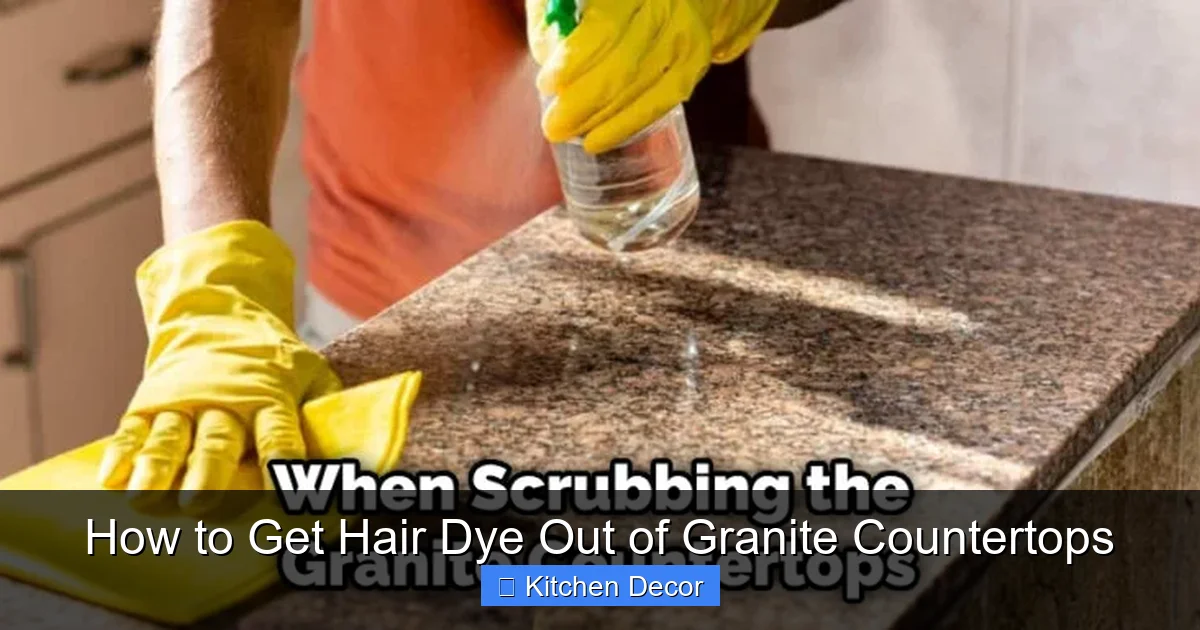
If the spill is fresh—meaning it happened less than a minute ago—your best weapon is immediate, gentle absorption. Do not, under any circumstances, rub or scrub. Rubbing will grind the dye deeper into the stone and potentially scratch the surface if any grit is present. Instead, follow this precise sequence:
Visual guide about How to Get Hair Dye Out of Granite Countertops
Image source: thekitchenix.com
- Step 1: Use a clean, soft, white cloth or a stack of paper towels. White is crucial to avoid transferring any dye from a colored cloth.
- Step 2: Press down firmly and hold for 10-15 seconds to allow the cloth to wick up the liquid. Lift, and immediately place a dry section of the cloth or a new dry towel on the spot. Press again.
- Step 3: Repeat this “press and lift” process, using a clean area of the cloth each time, until no more dye transfers to the cloth. You are absorbing, not wiping.
- Step 4: Once the excess liquid is gone, lightly dampen a *different* clean, soft cloth with plain distilled water (to avoid mineral deposits from tap water). Wring it out until it is barely damp. Gently wipe the area to remove any residual surface film. Pat dry immediately with a soft towel.
If the dye has already dried and formed a film, do not add water to try to re-wet it initially. This can set the stain. Proceed directly to the targeted cleaning solutions in the next section.
The “Do Not” List: What Absolutely Destroys Granite
Before we discuss what to do, you must internalize what never to do. The instinct is to reach for powerful household cleaners, but granite is a natural stone with specific enemies. Using these common solutions will cause more damage than the stain itself.
Visual guide about How to Get Hair Dye Out of Granite Countertops
Image source: thekitchenix.com
Acidic Attackers: Vinegar, Lemon, and Citrus Cleaners
Granite contains calcite, a mineral that reacts vigorously with acids. Vinegar (acetic acid), lemon juice (citric acid), and many all-purpose cleaners are acidic. When they come into contact with your granite, they don’t just clean; they etch the surface. This etching is a chemical reaction that dulls the polished finish, leaving a permanent, rough, chalky patch that is now more porous and susceptible to future staining. The “cleaning” you attempt will create a new, larger problem that requires professional polishing to fix.
The Bleach Betrayal
Chlorine bleach is a powerful oxidizer and a popular stain-fighter. On granite, it is a catastrophe. It will break down and remove the protective sealant almost instantly, exposing the raw stone. The dye will then have free reign to penetrate deeply. Furthermore, bleach can cause discoloration or yellowing in certain types of granite, especially those with iron-bearing minerals. It is simply not safe for any natural stone surface.
Abrasive Agents: Scrub Pads and Powders
Steel wool, green scrub pads, Comet, Ajax, or even baking soda used with force are all abrasives. Granite is hard, but its polished surface is a delicate skin. Abrasives will leave a network of fine scratches. These scratches are not just cosmetic; they create a dull, matte finish and exponentially increase the surface area for future stains to take hold. You will trade a colored stain for a permanently scratched, dull patch.
Safe and Effective DIY Removal Methods for Hair Dye Stains
Armed with the knowledge of what to avoid, we can now employ safe, stone-friendly methods. The principle behind most successful granite stain removal is the “poultice.” A poultice is a moist, absorbent paste that, when covered, creates a mild drawing action. It works by rehydrating the stain and then pulling the pigment particles up into the poultice material as it dries. Patience is key; these methods are not instant.
Visual guide about How to Get Hair Dye Out of Granite Countertops
Image source: thekitchenix.com
Method 1: The Rubbing Alcohol Solution (For Fresh to Moderate Stains)
Isopropyl alcohol (rubbing alcohol) is a fantastic first-line defender. It is a solvent that can break down many hair dye components without harming granite when used correctly. It evaporates quickly and leaves no acidic residue.
- Recipe: Mix 1 part 70% isopropyl alcohol with 1 part distilled water. For extra cleaning power, add a drop of a mild, pH-neutral dish soap (like Dawn Original).
- Application: Dampen a soft, white cloth with the solution. It should be moist, not soaking. Blot the stained area gently. Do not rub. Let the solution sit for 1-2 minutes to penetrate.
- Removal: Using a clean section of the cloth dampened with plain distilled water, blot the area to rinse away the alcohol and dissolved dye. Immediately pat completely dry with a soft, absorbent towel.
- Repeat: If the stain lightens but persists, repeat this process 2-3 times, allowing the area to dry completely between attempts.
Method 2: The Hydrogen Peroxide & Baking Soda Poultice (For Set-In Stains)
This is the gold-standard, most recommended method for organic and pigment-based stains like hair dye on granite. Hydrogen peroxide (H₂O₂) is a gentle oxidizer that can break down dye molecules, while baking soda (sodium bicarbonate) provides a mild, non-abrasive thickening and absorbent base.
- Recipe: In a small bowl, mix 3% hydrogen peroxide (the standard pharmacy strength) with enough baking soda to form a thick paste, similar to peanut butter consistency. The paste should be spreadable but not runny.
- Application: Using a plastic spatula or your fingers (wear gloves), apply a generous layer of the paste directly onto the stained area, covering it completely. Press it gently into the surface.
- Covering: Place a piece of plastic wrap over the poultice. This prevents it from drying out too quickly and ensures a consistent drawing action. Seal the edges of the plastic wrap to the countertop with painter’s tape.
- Waiting Period: Let it sit undisturbed for 24 to 48 hours. You will see the poultice dry out and possibly darken as it draws out the stain.
- Removal: After 24-48 hours, remove the plastic wrap. Use the plastic spatula to scrape off the dried poultice. Discard it. Dampen a soft cloth with distilled water and gently wipe the area. Pat dry thoroughly.
- Assessment: If the stain is significantly lighter but still visible, you can repeat the poultice process. Often, 2-3 applications are needed for deep stains.
Method 3: Commercial Granite Poultice Powder (For Stubborn or Large Stains)
For stains that resist the baking soda/hydrogen peroxide method, or for covering a larger area, consider a commercial granite poultice product. Brands like Stone Tech or DuPont offer specialized, non-acidic poultice powders designed for deep stain extraction in natural stone.
- Process: Follow the manufacturer’s instructions exactly. Typically, you mix the powder with a specific solvent (often water or a provided liquid) to form a putty-like consistency.
- Application: Apply a thick layer (about 1/4 inch thick) over the stain, extending 1-2 inches beyond the stained area. Cover with plastic wrap as described above.
- Timing: These poultices often require a longer dwell time, sometimes up to 72 hours, to fully dry and draw out the stain.
- Removal: Once completely dry and hardened, break it off in chunks. Any residual powder can be wiped with a damp cloth. These products are formulated to be safe for granite when used correctly.
Special Considerations for Different Types of Hair Dye
Not all hair dyes are created equal, and their chemistry can influence the removal approach.
Permanent & Demi-Permanent Dyes
These are the most challenging. They contain small, oxidized pigment molecules (PPD, PTD, etc.) and ammonia or an alkaline agent to open the hair cuticle. On granite, the alkaline agent can compromise the sealant, and the tiny pigment molecules can penetrate deeply. The hydrogen peroxide/baking soda poultice is your best bet here, as the peroxide can help break down these oxidized pigments. Multiple applications will likely be necessary.
Semi-Permanent & Deposit-Only Dyes
These are typically larger, pre-formed pigment molecules that sit on the hair’s surface. They are often less alkaline. They might be slightly easier to lift with the alcohol solution method if caught early, but the poultice method is still recommended for best results as they can still stain.
Natural & Food-Based Dyes (Henna, Beet Juice)
These are tannin and plant-based stains. They are notoriously stubborn on many surfaces. For these on granite, the hydrogen peroxide poultice is again the go-to. The oxidizing power of the peroxide is excellent at breaking down the complex organic molecules in plant dyes. For very old henna stains, a commercial poultice may be required.
Prevention and Long-Term Protection: Your Best Defense
Once you’ve successfully removed the stain, your focus must shift to preventing a recurrence. Granite care is an ongoing process.
The Importance of Proper Sealing
A sealant is not a permanent shield; it’s a sacrificial barrier that needs replenishing. The most common mistake homeowners make is assuming their granite is “always sealed.” It is not. You should perform a simple “water test” every 6 months: place a few drops of water on the countertop in an inconspicuous spot. If the water beads up and sits on top after 15 minutes, your seal is good. If the water darkens the stone (absorbs), it’s time to re-seal.
- How to Re-Seal: Clean the countertop thoroughly with a pH-neutral stone cleaner and let it dry completely (24 hours is ideal). Apply a high-quality penetrating granite/sealer (look for brands like Miracle Sealants, Stone Tech, or Granite Gold) according to the product directions. Typically, you apply with a cloth, let it soak in for 10-15 minutes, and wipe off excess. Apply a second coat. Allow to cure for 24-72 hours before heavy use.
Daily Habits for a Safe Kitchen
Prevention is infinitely easier than removal. Integrate these habits:
- Use Cutting Boards & Trivets: Never place hair dye bottles, bowls, or brushes directly on the granite. Use a dedicated, non-porous tray (like glass or ceramic) for all dyeing supplies.
- Wipe Spills Immediately: Adopt the “press, don’t wipe” habit for any liquid spill—water, juice, oil, or dye.
- Use Coasters: For all drinks, especially colored ones like soda, wine, or iced tea.
- Choose Safe Cleaners: Use only cleaners specifically labeled “safe for natural stone” or pH-neutral soaps for daily cleaning. Keep a spray bottle of your alcohol/water solution handy for quick spot treatment of potential staining agents.
When to Call a Professional Stone Restoration Specialist
There are times when DIY methods are not enough, and attempting them could cause more harm. Recognize these scenarios:
- The Stain is Very Old or Dark: If the dye has been sitting for weeks or months and has deeply penetrated, it may require professional-grade, strong oxidizing poultices or diamond honing to remove a thin top layer of stone.
- The Stain is in a High-Traffic Area: If it’s on a prime workspace near the sink or stove, you may not want to risk a multi-day poultice application that disrupts kitchen use.
- You’re Uncomfortable or Uncertain: If the thought of experimenting on your expensive countertop causes anxiety, a professional assessment is a wise investment. The cost of a pro is far less than the cost of replacing a section of countertop.
- Previous DIY Attempts Failed: If you’ve tried harsh methods and created etch marks or scratches, a professional can often repair the damage through polishing and re-honing.
Professional stone restorers have access to industrial-strength, stone-safe chemicals, specialized poultice materials, and diamond abrasives. They can also assess the type of granite and the condition of its sealant to tailor the safest, most effective removal strategy. Look for companies certified by the Stone Restoration Industry Association (SRIA) or with strong local reviews specifically for stone repair.
Conclusion: Patience and Prevention Are Your Greatest Tools
Discovering a hair dye stain on your granite countertop is a frustrating moment, but it is rarely a disaster. The path to saving your stone is built on three pillars: immediate and gentle response, unwavering adherence to stone-safe methods, and a commitment to long-term prevention. Remember, your granite’s beauty lies in its natural, porous character, which is also its Achilles’ heel. By using the gentle poultice techniques outlined—starting with the alcohol solution for fresh spots and escalating to the hydrogen peroxide and baking soda paste for deeper stains—you can often win the battle against pigment. Always, always test in a hidden spot first. The most important takeaway is to reject the siren call of household acids and abrasives. They offer a quick, satisfying scrub that leads to permanent, irreversible damage. Invest the time in the slow, drawing action of a poultice. Once your countertop is clean again, make a ritual of the water test and regular sealing. Treat your granite with the respect its natural composition demands, and it will remain a stunning, durable centerpiece in your kitchen for years to come. A stained countertop is a temporary problem; a damaged one is forever. Choose patience.
Frequently Asked Questions
Can I use nail polish remover (acetone) on granite to get out hair dye?
No. Acetone is a strong solvent that is safe for some stones but can be risky for others. It can strip the sealant and potentially discolor or etch certain types of granite. It is not a recommended first-line treatment. Stick to isopropyl alcohol (rubbing alcohol), which is much gentler and safe for granite when diluted.
What if the hair dye stain is from a temporary or semi-permanent color like Manic Panic?
Even temporary dyes contain highly concentrated pigments that can stain. The same removal methods apply. Start with the rubbing alcohol solution. If that fails, use the hydrogen peroxide and baking soda poultice. Semi-permanent dyes can sometimes be a bit easier to lift than permanent oxidative dyes, but they still require the careful, non-abrasive approach.
Will baking soda alone scratch my granite?
Baking soda is a very mild abrasive (about a 2.5 on the Mohs scale, while granite is 6-7). When used gently as a paste *with a liquid* like hydrogen peroxide or water, it is not aggressive enough to scratch polished granite. The risk comes from applying it with force or using it dry. Always mix it into a thick paste and apply with a soft cloth or plastic spatula, then let it sit without scrubbing.
My granite countertop is already dull in spots from old cleaning. Can I still use these methods?
If your granite is already etched or dull from past use of acids, you need to be extra cautious. First, ensure the area is thoroughly cleaned and free of any old cleaner residue. Proceed with the poultice method, as it involves no rubbing. However, note that the poultice may not restore the original shine to an already-damaged area. After stain removal, you may need to consult a professional about re-polishing the affected sections to restore the finish.
Is there any difference in treating black granite vs. light-colored granite?
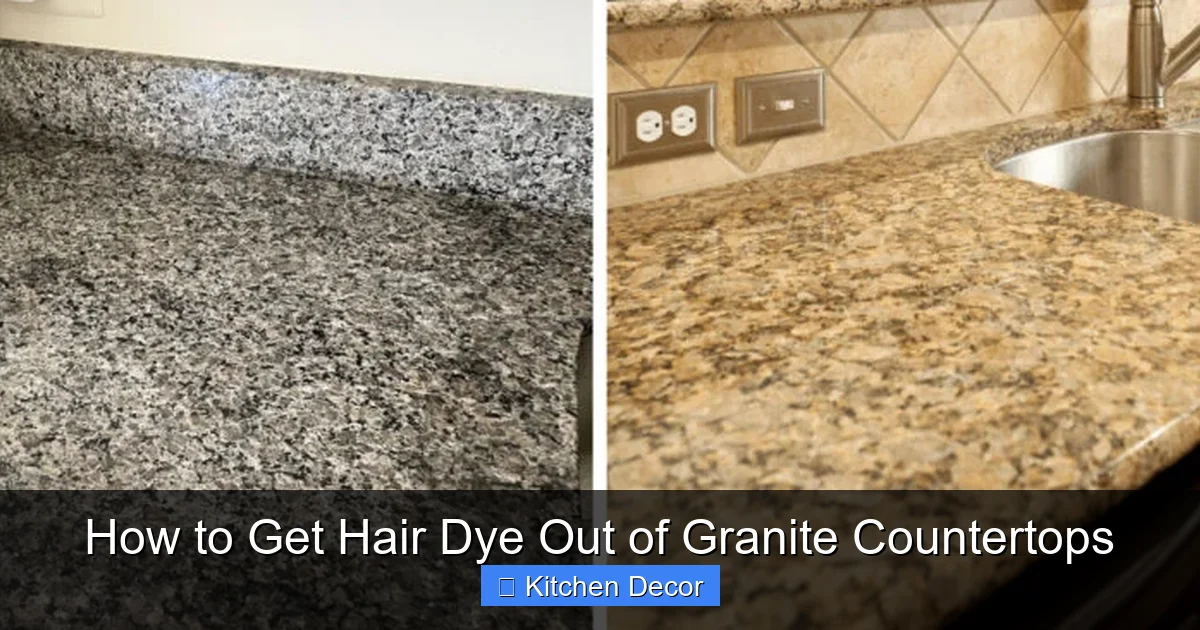
The principles are identical, but the visibility of progress differs. On light granite (white, gray, beige), a hair dye stain is very obvious, so you’ll see results clearly. On dark granite (black, dark gray, deep blue), the stain might be less visible initially but can still penetrate. The poultice method works the same, but be extra diligent about testing in an inconspicuous spot on dark stone to ensure no lightening or discoloration occurs from the peroxide, especially on black granites that may have mineral deposits that react.
How do I know if my granite is properly sealed before I try to clean the stain?
You perform the water test on a *different, inconspicuous area* of the countertop, not on the stain itself. Place 3-4 drops of water on the stone. After 15 minutes, check the area. If the water has beaded up and the stone looks dry underneath, your seal is good. If the water has been absorbed and you see a dark spot, the stone is unsealed or the seal has failed. In the case of a failed seal, you must re-seal the entire countertop *after* you have successfully removed the stain, as an unsealed countertop will make future stains much harder to combat.