Cooking a perfect Wagyu steak in 2026 is less about fancy techniques and more about precision equipment and respecting the meat. The right pan, an accurate thermometer, and understanding how to handle its rich fat are your most important tools. Focus on drying the steak thoroughly, achieving a superb sear, and allowing it to rest properly. This approach guarantees a luxurious, melt-in-your-mouth experience every time, turning an expensive cut into a transcendent meal.
Key Takeaways
- Equipment is Everything: Invest in a heavy, oven-safe pan (carbon steel or cast iron) and a reliable instant-read thermometer. These are non-negotiable for 2026 precision.
- Dryness Over Everything: Pat the steak completely dry with paper towels immediately before seasoning. Moisture is the enemy of the Maillard reaction and a crisp crust.
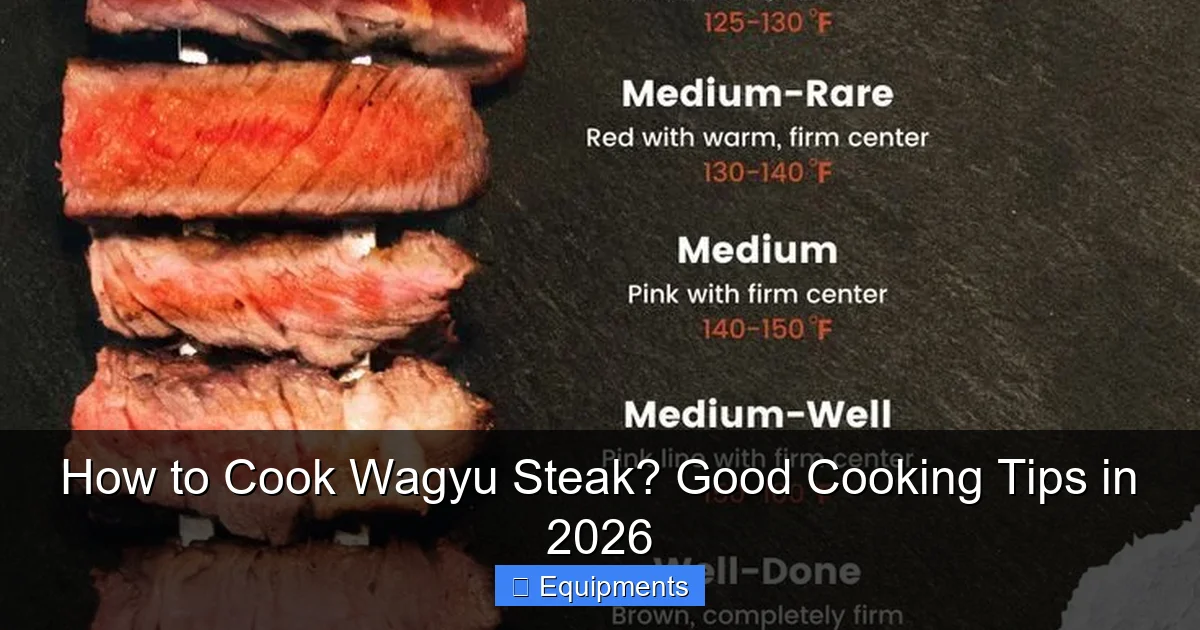
- Temperature is Your Guide: Cook to temperature, not time. Use a thermometer to pull the steak at 120-125°F for rare, 130°F for medium-rare. Carryover cooking will bring it up 5-10 degrees.
- Rest, Don’t Cut: Rest the steak for at least 5-10 minutes on a warm rack. This allows juices to redistribute. Cutting too soon releases them onto the cutting board.
- Slice Against the Grain: Identify the direction of the muscle fibers and slice perpendicular to them. This shortens the fibers and makes each tender bite effortless to chew.
- Season Simply and Late: Use only flaky sea salt (like Maldon) and freshly cracked black pepper applied just before cooking. Complex rubs mask the beef’s delicate flavor.
- Respect the Fat: Render some of the beautiful fat by scoring the fat cap and searing it first. But don’t overdo it; the intramuscular fat (marbling) is what makes Wagyu special.
📑 Table of Contents
- Welcome to the Future of Steak: Why 2026 is All About the Gear
- H2: The Foundation: Choosing & Understanding Your Wagyu
- H2: The 2026 Essential Equipment Kit: Upgrade Your Tools
- H2: Pre-Cooking Ritual: The 30 Minutes That Change Everything
- H2: The Cooking Method: Mastering the Pan-Sear (The 2026 Gold Standard)
- H2: Alternative 2026 Methods: Reverse Sear & Sous Vide
- H2: The Grand Finale: Resting, Slicing, and Serving
- H2>Conclusion: The 2026 Mindset for Wagyu Mastery
Welcome to the Future of Steak: Why 2026 is All About the Gear
Let’s be real. The moment a beautiful piece of Wagyu beef hits your kitchen, a little pressure settles in. This isn’t just any steak. We’re talking about a culinary treasure, a product of meticulous genetics, specialized feeding, and often, a price tag that makes your wallet wince. Your goal isn’t just to “cook” it. Your goal is to honor it. And in 2026, honoring Wagyu correctly has become a science of precision, driven by smarter equipment and a deeper understanding of what makes this beef so uniquely decadent.
The old ways—a hot pan, a guess at doneness, a quick rest—can still yield a good result. But they can also lead to a tragic waste of a phenomenal ingredient. Overcook it by a minute, and you’ve squandered that sublime, buttery marbling. Undercook the exterior, and you miss that essential, crusty, caramelized sear that contrasts so beautifully with the tender interior. This year, it’s time to upgrade your process. We’re moving beyond intuition and into an era where the right tools eliminate guesswork. Think of this guide as your equipment-first manifesto for achieving steakhouse-quality Wagyu at home, year after luxurious year.
H2: The Foundation: Choosing & Understanding Your Wagyu
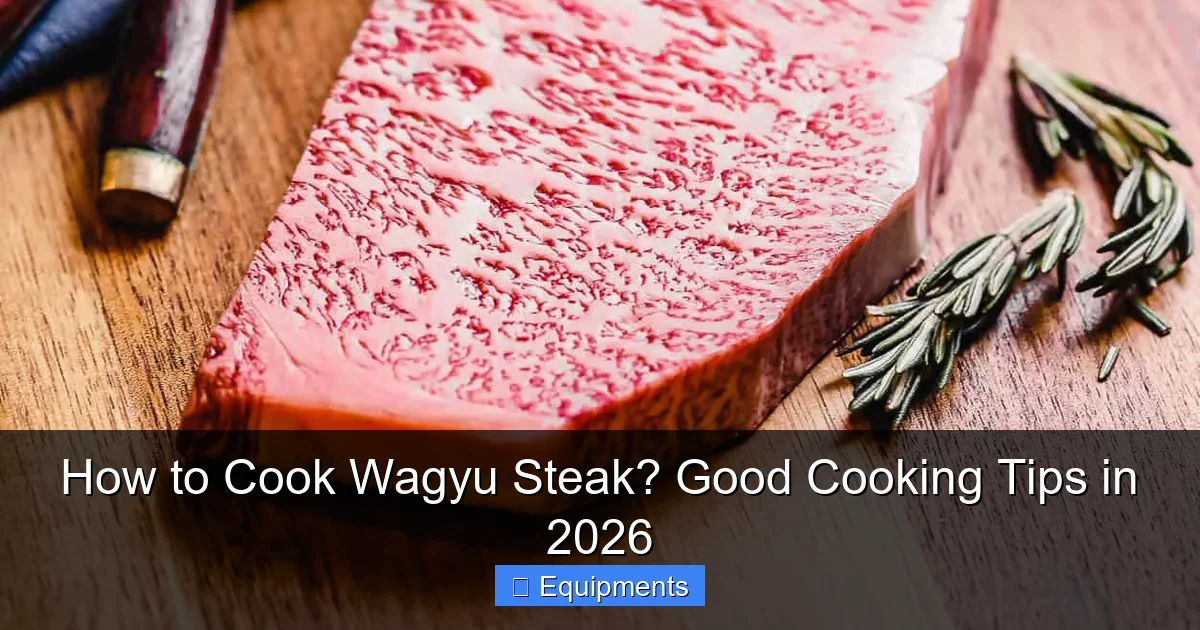
Before we even touch a pan, we need to talk about what you’ve actually bought. “Wagyu” simply means “Japanese cow.” The magic lies in the specific breed (typically Japanese Black) and the legendary marbling, or *shimofuri*, that infiltrates the muscle. This isn’t just fat; it’s a complex network of monounsaturated fats that melt at body temperature, creating that signature “melt-in-your-mouth” sensation.
Visual guide about How to Cook Wagyu Steak? Good Cooking Tips in 2026
Image source: i.pinimg.com
Decoding the Grading: AUS-MEAT vs. Japanese BMS
In 2026, you’ll most commonly encounter two grading systems. Japanese Beef Marbling Standard (BMS): This is the gold standard, ranging from 3 to 12, with 8+ considered exceptional. The higher the number, the more intricate and abundant the marbling. AUS-MEAT Marbling Score: Used for Australian Wagyu (a crossbreed), it goes from 0 to 9. A score of 7+ is outstanding. For the home cook, aim for a BMS of 7+ or an AUS-MEAT score of 6+. Anything lower might be delicious, but you’re not getting the full spectrum of the Wagyu experience. The equipment tips in this guide are designed for these high-marbling cuts; a leaner piece would require slightly different handling.
Cut Selection: The 2026 Pantheon
While you can find Wagyu ribeye, strip, and even filet, the king of home cooking in 2026 remains the Wagyu New York Strip (also called Striploin) or a thick-cut Wagyu Ribeye. Why? They have the perfect balance of that stunning marbling and a hearty, beefy muscle structure that holds up beautifully to a sear. A 1.5 to 2-inch thickness is ideal. It gives you a wider margin for error with your internal temperature and allows for a proper crust without cooking the center too much. If you’re splurging on a Wagyu Filet Mignon, remember it’s the least marbled of the prime cuts, so the cooking technique is even more critical to avoid dryness.
H2: The 2026 Essential Equipment Kit: Upgrade Your Tools
Chef Thomas Keller once said, “To be a good cook, you have to have the right tools.” For Wagyu, this is gospel. Your investment in the beef deserves an investment in the gear that will treat it right. Forget about non-stick pans and cheap thermometers. Here’s your 2026 toolkit.
Visual guide about How to Cook Wagyu Steak? Good Cooking Tips in 2026
Image source: grillseeker.com
The Pan: Your Most Critical Decision
You need a pan that can hold insane, sustained heat and transfer it efficiently to the steak’s surface. This is non-negotiable.
- Carbon Steel (The 2026 Favorite): Lighter than cast iron, seasons beautifully, and responds to heat changes faster. It’s the choice of many modern steak chefs for its excellent heat retention and searing power. Brands like Matfer Bourgeat or De Buyer are benchmarks.
- Cast Iron (The Timeless Workhorse): Unbeatable for heat retention and creating a rock-solid crust. It’s heavier and takes longer to heat up, but once it’s hot, it stays hot. Ensure it’s well-seasoned to prevent sticking. A pre-2020 cast iron pan is fine, but a new, smooth-surfaced one from a brand like Staub or Le Creuset is even better.
- Avoid: Stainless steel alone (poor heat retention, food sticks), non-stick (can’t handle the high heat needed for a proper sear), and thin, flimsy pans.
The Thermometer: Ditch the Guesswork
In 2026, there is no excuse for not using a thermometer. Your finger is not a reliable tool. Get an instant-read digital thermometer. Models like the Thermapen ONE or Meater+ (a wireless probe) are industry standards. They give you a reading in 1-3 seconds with pinpoint accuracy. This is your #1 tool for hitting that perfect 130°F medium-rare target every single time. Probe thermometers are great for reverse searing.
The Resting Rack & Cutting Board
A simple wire cooling rack placed over a baking sheet or plate elevates the steak, allowing air to circulate and preventing the bottom from steaming and losing its crispness. For a cutting board, use a sturdy wood (like maple or walnut) or a composite board. Avoid glass or marble—they’ll dull your knife and are terrible for resting.
Other 2026 Gear Worth Considering
- Heavy Kitchen Towels: For the crucial step of patting the steak bone-dry.
- Fine-Mesh Sieve: For sprinkling salt evenly from a height.
- High-Smoke-Point Oil: Avocado oil, refined safflower oil, or grapeseed oil. Save your expensive EVOO for salads.
- Cast Iron Press (Optional): A 2-3 lb weight can ensure even contact, but a good pan and steady hand often suffice.
H2: Pre-Cooking Ritual: The 30 Minutes That Change Everything
You’ve got your beautiful, graded steak and your gleaming equipment. The work begins long before the pan hits the heat. This pre-game ritual is what separates the good from the transcendent.

Visual guide about How to Cook Wagyu Steak? Good Cooking Tips in 2026
Image source: imperialwagyubeef.com
Step 1: Temperature Equalization (The “Come to Room Temp” Myth)
Forget the old advice to let it sit out for an hour. In 2026, we know that’s inefficient and a food safety risk. The real goal is to take the chill off the surface. Remove your steak from the fridge 30-45 minutes before cooking. This allows the interior to warm slightly, ensuring more even cooking. It will still be cool to the touch in the center, which is perfect.
Step 2: The Ultimate Dry (Your Secret Weapon)
This is the single most important step for a great crust. Take your steak and place it on a double layer of paper towels. Press down firmly and pat it completely dry on all sides, including the edges. Do this right before seasoning and cooking. If there’s any moisture on the surface, it will steam the meat instead of searing it. You can even let it air-dry on a rack in the fridge for a few hours for an ultra-dry surface, but the towel method is 95% as effective for weeknight cooking.
Step 3: Scoring & Seasoning
Look at the fat cap on the edge of your steak. Using a sharp knife, make 3-4 shallow, diagonal cuts through the fat, about 1/4-inch deep. This renders the fat during cooking and prevents it from curling. Now, season. Use only flaky sea salt and coarsely cracked black pepper. Hold your hand 12 inches above the steak and sprinkle evenly on both sides. The height ensures an even distribution. Do this immediately before the steak hits the pan. Salting too early can draw out moisture, but for a 30-45 minute rest, a light salting is actually beneficial (it begins to season and dry the surface). The key is to salt after the drying step.
H2: The Cooking Method: Mastering the Pan-Sear (The 2026 Gold Standard)
For a classic, steakhouse-style Wagyu, the stovetop-to-oven pan-sear is the undisputed champion in 2026. It gives you absolute control over the crust and the interior. This method is ideal for 1.5-inch thick cuts.
Step-by-Step: The Perfect Sear
- Heat the Pan: Place your dry, seasoned steak near the stove. Heat your carbon steel or cast iron pan over medium-high to high heat for a full 3-4 minutes. You want it smoking hot. Add 1-2 teaspoons of your high-smoke-point oil and swirl to coat. The oil should shimmer and possibly start to smoke slightly. This is your signal.
- Sear the Fat Cap First: Using tongs, hold the steak vertically and sear the fatty edge for 45-60 seconds. This renders some fat and creates a delicious, crispy edge. Rotate the steak to render all edges.
- Sear the Faces: Lay the steak flat in the pan. It should sizzle violently. Don’t move it! Let it develop a deep brown crust for 1.5 to 2 minutes. Press down gently once or twice to ensure full contact.
- Flip and Repeat: Flip with tongs (never a fork—you’ll lose juices!). Sear the second side for another 1.5 to 2 minutes. You should have a beautiful, even crust.
- Aromatics & Butter (Optional but Luxurious): In the last 30 seconds, reduce heat to medium. Add 2 tablespoons of butter, a couple of crushed garlic cloves, and a sprig of thyme or rosemary. Tilt the pan and continuously spoon the foaming butter over the steak. This adds a layer of flavor and a gorgeous finish.
- Check Temperature: Insert your instant-read thermometer horizontally into the thickest part, avoiding bone or fat. For medium-rare, pull it at 125-130°F. For rare, 120°F. Trust the thermometer.
The Oven Finish (For Thicker Steaks)
If your steak is over 2 inches thick, after searing both faces, immediately transfer the entire pan to a preheated 400°F oven. Roast for 3-6 minutes, checking temperature after 3 minutes, until it reaches your target. This cooks the interior more gently and evenly without burning the crust.
H2: Alternative 2026 Methods: Reverse Sear & Sous Vide
The pan-sear is king, but two modern methods have gained serious traction for their unparalleled precision, especially with very thick or bone-in Wagyu cuts like aTomahawk.
Reverse Sear: The Champion of Thickness
This method cooks the steak from the outside in, but very slowly at a low temperature first. Equipment: A wire rack, a baking sheet, and an oven or smoker set to 225-250°F. Pat your steak dry and season generously. Place it on the rack on the baking sheet and cook in the low oven until the internal temperature is about 15-20°F below your target (e.g., 110°F for medium-rare). This can take 20-40 minutes depending on thickness. Then, sear it in a screaming-hot pan for 60-90 seconds per side. The result is a steak with a perfect, uniform doneness from edge to center and an incredible crust. It’s the most forgiving method for thick cuts.
Sous Vide: The Laboratory-Perfect Method
This is the ultimate precision tool. Equipment: A sous vide immersion circulator and a vacuum sealer (or heavy-duty zip-top bags with the water displacement method). Season the steak, place it in a bag with a sprig of thyme and a drizzle of oil, and seal. Set your circulator to your exact target temperature (e.g., 129°F for perfect medium-rare). Submerge the bag for 1-2 hours. The steak will be perfectly cooked edge-to-edge, but it will look gray and unappetizing. The final step is a very brief (45 seconds per side) sear in a scorching hot pan with oil to develop the crust. This method guarantees zero chance of overcooking and is perfect for achieving a uniform doneness in a heavily marbled steak.
H2: The Grand Finale: Resting, Slicing, and Serving
You’ve cooked it to perfect temperature. The pan is clean. Now, the final, crucial steps that make or break the experience.
Resting: The Non-Negotiable Pause
As soon as your steak hits its target temperature, remove it from the pan and place it on the wire rack set over a plate. Tent it loosely with foil. Let it rest for a minimum of 5 minutes for a 1.5-inch steak, 8-10 minutes for a 2-inch+ steak. This is not optional. During this time, the violent contraction of the muscle fibers relaxes, and the juices that were forced to the center redistribute throughout the meat. Cutting into it now would cause a torrent of precious, flavorful juices to spill out, leaving you with a dry steak.
Slicing: Art Meets Science
Use a sharp, long carving knife (a Granton slicer is ideal). Identify the direction of the muscle fibers—this is “the grain.” Slice perpendicular (across) to the grain. For a ribeye, this is usually straightforward. For a strip, you may need to adjust your angle. Cutting against the grain shortens the muscle fibers, making each bite feel incredibly tender and easy to chew. For Wagyu, you can slice relatively thinly (1/4-inch) to showcase the stunning marbling pattern. Serve immediately.
Serving: Less is More
Wagyu is the star. Do not smother it in sauce. A sprinkle of the original flaky sea salt on the sliced steak is all you need. For sides, think simple, bright, and acidic to cut through the richness: a crisp arugula salad with lemon, roasted fingerling potatoes, or grilled asparagus. A bold, acidic red wine like a Barolo or a full-bodied Cabernet Sauvignon is the classic pairing.
H2>Conclusion: The 2026 Mindset for Wagyu Mastery
Cooking Wagyu steak in 2026 is a beautiful synthesis of respect for a extraordinary ingredient and the embrace of modern, precise tools. It’s about trading guesswork for data (a thermometer), trading a crowded pan for the right pan, and trading a rushed meal for a ritual that includes proper resting and slicing. The equipment isn’t about showing off; it’s about removing variables so you can consistently achieve that dream: a crust so deep and complex it sings, and an interior so tender and rich it feels like a luxury you’ve earned. Start with the essentials—a great pan and a great thermometer. Master the dry, the sear, and the rest. Then, experiment with reverse sear or sous vide. But always, always remember to slice against the grain. With this equipment-first approach, you’re not just cooking dinner. You’re performing an act of culinary appreciation, and every bite will prove it.
Frequently Asked Questions
What is the ideal thickness for a Wagyu steak when pan-searing?
Aim for 1.5 to 2 inches thick. This provides enough mass to develop a deep, crusty exterior without cooking the center past medium-rare. Thinner cuts will overcook too quickly and won’t showcase the marbling’s texture properly.
Should I use oil or butter to cook my Wagyu steak?
Use a high-smoke-point oil (avocado, grapeseed) for the initial sear, as butter burns at high temperatures. You can add butter, garlic, and herbs in the last 30 seconds of cooking to baste the steak and add flavor, but the primary cooking fat should be a neutral oil.
How long should I rest a Wagyu steak after cooking?
Rest for at least 5 minutes for a 1.5-inch steak and 8-10 minutes for a 2-inch or thicker steak. Resting on a wire rack is ideal to keep the bottom crisp. This allows juices to redistribute and prevents them from running out when you slice.
When should I season the steak with salt and pepper?
Season immediately after patting it dry and just before it hits the hot pan. This prevents moisture from being drawn out too early. For a 30-45 minute rest before cooking, you can season right after drying, as the salt will help dry the surface further.
Can I cook a frozen Wagyu steak, or must it be thawed?
It must be fully thawed in the refrigerator 24-48 hours before cooking. Cooking from frozen will result in an uneven cook, with a grey, steamed exterior and an overcooked outer ring by the time the center reaches temperature.
What are the best simple side dishes to serve with Wagyu steak?
Keep sides simple and acidic to balance the richness. Think a crisp arugula salad with shaved Parmesan and lemon vinaigrette, roasted potatoes with rosemary, grilled asparagus, or simply some good crusty bread to soak up the delicious pan juices.
Pingback: 10 Minute Steak Seasoning Recipe - kitchenandhouseware.com
Pingback: Usda Cook Steak from Frozen Disadvantages Food Safety Cooking Frozen Meat - kitchenandhouseware.com
Pingback: How to Cook Chateaubriand Perfectly - kitchenandhouseware.com
Pingback: Tomahawk Steak - kitchenandhouseware.com
Pingback: T Bone Steak Cooking Time - kitchenandhouseware.com
Pingback: Cooking Steak in Air Fryer Temp and Time - kitchenandhouseware.com
Pingback: How to Cook Cube Steak - kitchenandhouseware.com
Pingback: Prime Rib Cook Time - kitchenandhouseware.com
Pingback: How Long to Cook Beef Tenderloin per Pound at 425 - kitchenandhouseware.com
Pingback: Prime Rib Cooking Time Chart - kitchenandhouseware.com