Changing the color of your Corian countertops is absolutely possible without a full replacement. The two primary methods are refinishing (sanding and refinishing the existing surface) and resurfacing (applying a new, thin layer of solid surface material). Refinishing is best for minor color shifts or restoring the original color, while resurfacing allows for a complete color change. Both processes require significant skill, specialized equipment, and dust control; professional installation is strongly recommended for a flawless, durable result that maintains Corian’s integral beauty and warranty considerations.
Key Takeaways
- Two Main Paths: You can change color via refinishing (sanding down the top layer) or resurfacing (adding a new thin layer). Refinishing restores or slightly alters color; resurfacing allows a full change.
- Professional Job: This is not a typical DIY project. It requires industrial-grade sanders, dust containment systems, and expertise to avoid damaging the countertop or creating an uneven surface.
- Color Limitations: You can generally only go darker from a light color via refinishing. Going from dark to light or making a dramatic shift typically requires resurfacing with a new color sheet.
- Cost vs. Replacement: While cheaper than full replacement, professional color change still costs significantly (often 30-50% of new countertop cost) and takes several days.
- Seam & Edge Considerations: The color change process affects the entire visible surface. Seams may become more noticeable if not perfectly matched, and integrated sinks or edges will change color along with the countertop.
- Warranty Impact: Altering the surface yourself will void DuPont™/Corian® manufacturer warranties. Using a certified professional may preserve certain aspects of the warranty.
- Maintenance Remains Key: The newly refinished or resurfaced top still requires the same gentle, non-abrasive cleaning to maintain its appearance and prevent scratching.
[FEATURED_IMAGE_PLACEHOLDER]
📑 Table of Contents
- Introduction: Giving Your Dated Corian a Vibrant New Life
- Understanding Your Canvas: What Exactly Is Corian?
- The Two Primary Methods: Refinishing vs. Resurfacing
- The Professional Process: A Step-by-Step Look at What’s Involved
- Why DIY is a Risky Proposition (and Usually a Bad Idea)
- Cost, Timeline, and What to Expect
- Maintaining Your Newly Transformed Countertops
- Conclusion: A Smart Upgrade with Lasting Impact
Introduction: Giving Your Dated Corian a Vibrant New Life
So, your Corian countertops, once the pride of your kitchen, now feel a little… tired. Maybe that ubiquitous beige from the 90s doesn’t spark joy anymore, or perhaps a dark color feels too heavy for your bright, modern space. The good news? You don’t have to rip them out and start from scratch. The very nature of Corian—a solid, homogeneous acrylic material—means its color goes all the way through. This opens a door to transformation that isn’t available with many other surface materials. Changing the color of your Corian countertops is a viable, and often more economical, alternative to full replacement.
But before you grab a sander from the garage, it’s crucial to understand what’s really involved. This isn’t like painting a cabinet. It’s a specialized refinishing process that, when done correctly, can make your countertops look brand new in a completely different hue. When done poorly, it can result in a permanently ruined surface. This guide will walk you through every aspect of how to change the color of Corian countertops, from the science behind it to the step-by-step process and, most importantly, why hiring a professional is almost always the wisest choice.
Understanding Your Canvas: What Exactly Is Corian?
To grasp how color change works, you need to understand what Corian is. Created by DuPont, Corian is a solid surface material. This means it’s not a veneer or a coating; it’s a homogenous blend of acrylic polymer resin and natural mineral fillers. The color and pattern are distributed uniformly throughout the entire slab, typically 1/2-inch or 3/4-inch thick. This is its superpower for refinishing.

Visual guide about How to Change the Color of Corian Countertops
Image source: i.pinimg.com
The Homogeneous Advantage (and Challenge)
Because the color is consistent throughout, if you sand or machine away the top layer, you reveal a fresh surface of the same material and color. For refinishing to restore an original color, this is perfect. However, if you want a different color, simply sanding won’t work—you’ll just expose more of the old color. To achieve a true color change, you must either sand down through the entire color layer (which is rarely feasible due to thickness and pattern depth) or apply a completely new layer of a different color on top.
Why You Can’t Just “Paint” Corian
Standard paint will not adhere properly to Corian’s non-porous, slick surface. It will peel and fail quickly. The only acceptable methods are mechanical (sanding) or adhesive (bonding a new sheet). Any claim of a simple “paint-on” solution for a permanent color change is misleading and will lead to disappointment.
The Two Primary Methods: Refinishing vs. Resurfacing
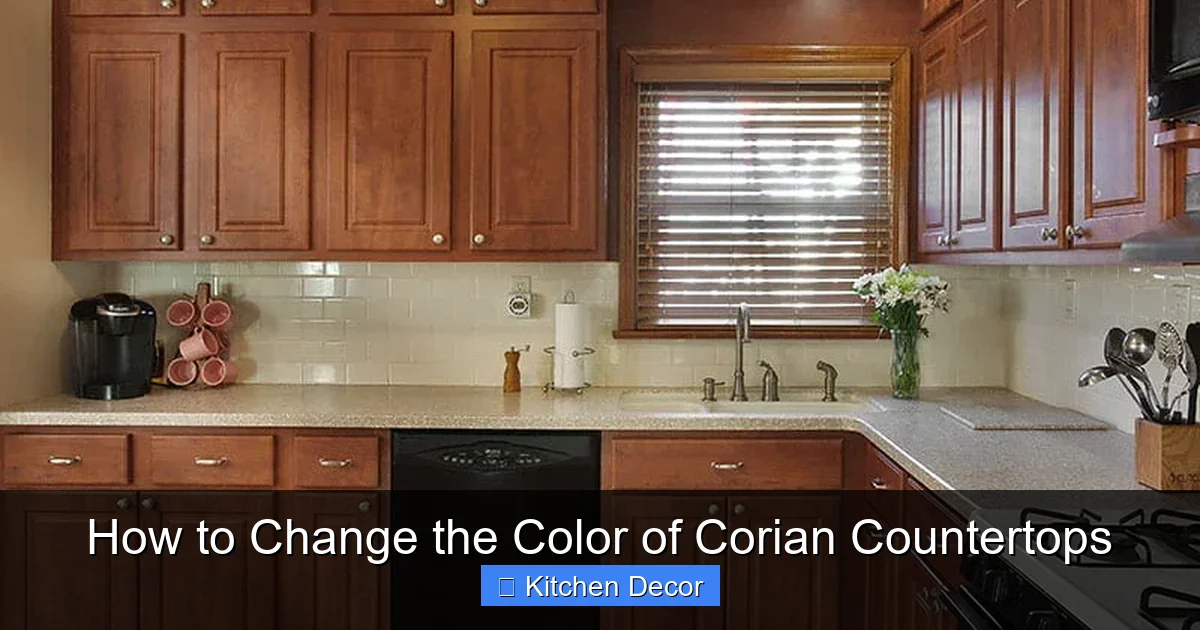
This is the core decision point. Understanding the difference between these two processes is essential for setting realistic expectations.
Visual guide about How to Change the Color of Corian Countertops
Image source: kitchenmagic.com
Method 1: Refinishing (Sanding & Re-polishing)
This process involves using progressively finer grits of industrial abrasive pads and sanding equipment to remove the top layer of the Corian—usually about 1/64th to 1/32nd of an inch. This layer contains any scratches, stains, etching, and the very top pigment. Once removed, the surface is polished back to its original matte, satin, or gloss finish using a series of finer abrasives and buffing compounds.
- Best For: Restoring the original color by removing surface damage. It can also slightly darken a light color if a very fine layer is removed, but the change is minimal.
- Result: The countertop looks renewed in its same color, but with a flawless, scratch-free surface. Patterns will be identical to the original, just refreshed.
- Limitation: You cannot change to a fundamentally different color. You are limited to the color you already have.
Method 2: Resurfacing (Applying a New Layer)
This is the true method for a color change. It involves bonding a new, thin sheet (typically 1/8-inch thick) of Corian in the desired new color directly over the existing countertop. The new sheet is carefully templated, cut, and adhered with a specialized, color-matched adhesive. The seams are then meticulously joined and sanded flush. Finally, the entire new surface (including integrated sinks, if applicable) is polished to the desired finish.
- Best For: A complete color transformation—going from beige to charcoal, from white to a bold blue, etc.
- Result: A countertop that appears brand new in the new color. The underlying old color is completely hidden.
- Consideration: The integrated edges and any built-in sinks will now be the new color. This creates a cohesive, monolithic look. The process adds a very slight thickness (1/8″) to the countertop, which may require adjustments to things like backsplashes or appliance clearances in rare cases.
The Professional Process: A Step-by-Step Look at What’s Involved
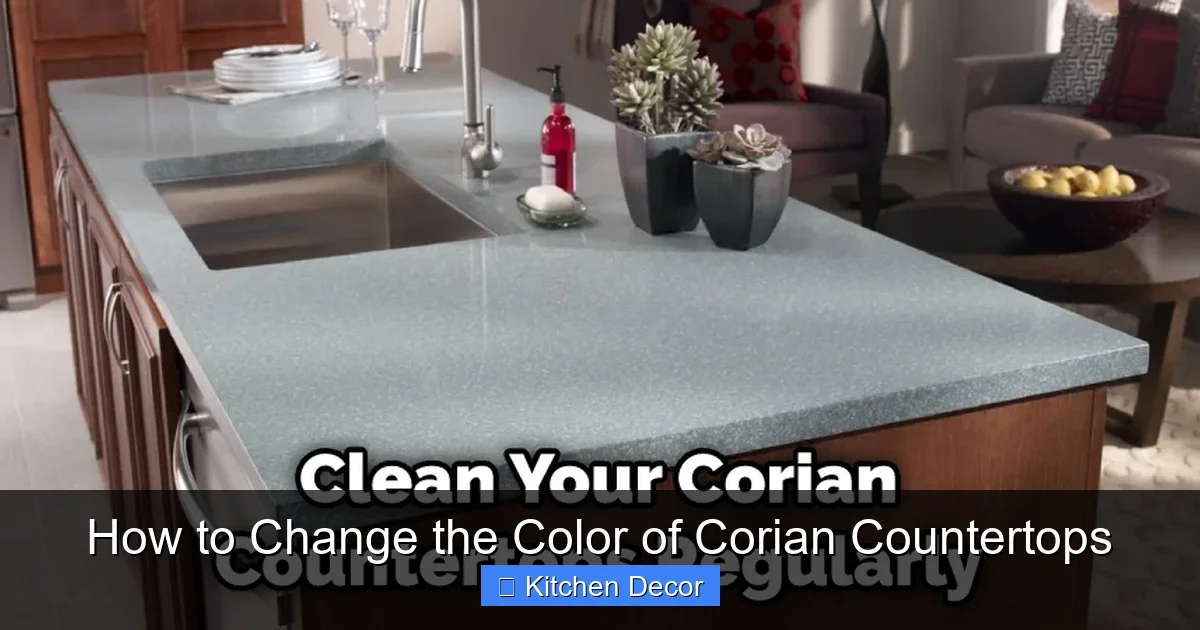
Whether refinishing or resurfacing, the process is intensive and requires expertise. Here’s a simplified view of what a professional team does.
Visual guide about How to Change the Color of Corian Countertops
Image source: thekitchenix.com
Phase 1: Assessment & Templating (For Resurfacing)
A technician will first inspect your countertops for major damage, warping, or substrate issues. For resurfacing, they will create a precise template of your entire countertop layout, including any integrated sinks, cooktops, and curves. This template is used to cut the new Corian sheet with computer-aided precision.
Phase 2: Surface Preparation & Dust Containment
This is critical. The work area is sealed off with plastic sheeting and zippered containment systems to prevent dust from invading the rest of your home. Professional wet-sanding systems are used to dramatically reduce airborne silica dust, which is a serious health hazard. The countertop is thoroughly cleaned and degreased.
Phase 3: The Machining (Refinishing or Resurfacing)
For Refinishing: The pro uses a series of graded abrasive pads on a large, orbital floor sander. They start with a coarser grit to remove the top layer and scratches, then progressively move to finer and finer grits until the surface is perfectly smooth and scratch-free.
For Resurfacing: The existing surface is lightly abraded (a process called “scuff-sanding”) to create a mechanical bond for the new adhesive. The new Corian sheet, cut from the template, is then carefully positioned and applied with the color-matched adhesive. The seams are meticulously fused using a solvent welding process that essentially melts the two pieces together into a single, seamless unit.
Phase 4: The Final Polish
This is where the magic happens. Using a series of buffing pads with increasingly fine diamond abrasives or polishing compounds, the technician brings the surface to its final luster—whether a soft matte, elegant satin, or high-gloss finish. Integrated sinks are polished as part of the same process for a seamless look. The result is a surface that is non-porous, hygienic, and repels stains.
Why DIY is a Risky Proposition (and Usually a Bad Idea)
You might see videos online of people sanding Corian with handheld orbital sanders. While you can *lightly* buff out a small scratch yourself, a full countertop refinish or resurface is a different beast entirely. Here’s why DIY is not recommended:
The Equipment Barrier
Professionals use large, heavy-duty floor sanders with industrial vacuum attachments. A handheld sander will take exponentially longer, will not provide an even, flat result across a large expanse, and will create a catastrophic dust storm. The dust from sanding Corian is extremely fine and hazardous to inhale.
The Skill & Experience Gap
Knowing when to switch grits, how to maintain a perfectly flat sanding plane, and how to identify the exact moment to stop sanding (to avoid cutting through the decorative layer into the substrate) comes from years of experience. One misstep with a coarse grit can leave a permanent, visible swirl or gouge. Seam welding for resurfacing is a true art form; a poor seam will be glaringly obvious.
The Cost of Failure
If you ruin your countertops, the only fix is full replacement—a cost far exceeding the price of hiring a pro the first time. You also risk damaging plumbing, cooktops, or walls during the messy process. The value of your home could be impacted by a botched job.
The Bottom Line: This is a professional service for a reason. For a guaranteed beautiful, durable result that protects your investment, seek out a company specializing in Corian fabrication and refinishing. Ask for references and examples of color change work specifically.
Cost, Timeline, and What to Expect
Budgeting and planning are key. Here’s a realistic breakdown.
Cost Factors
Refinishing (same color) is less expensive than resurfacing (new color). Costs vary by region, company, and the size/layout of your kitchen. On average:
- Refinishing: $5 – $10 per square foot.
- Resurfacing: $15 – $30+ per square foot.
For a typical 30-square-foot kitchen counter, that’s a range of $150-$300 for refinishing and $450-$900+ for resurfacing. This is still 30-60% less than the $3,000-$6,000+ cost of new Corian countertops with installation.
Timeline
The process is not a one-day job. A typical project involves:
- Consultation & Quote: 1-3 days.
- Material Ordering (for resurfacing): 1-2 weeks for the new Corian sheet to arrive.
- On-Site Work: 2-4 days. This includes setup, the machining, polishing, and cleanup. You will not be able to use your kitchen during this time.
What to Expect During the Project
Expect noise, dust (even with containment, some will escape), and a temporary loss of your kitchen. A good crew will be respectful, clean up at the end of each day, and communicate clearly. You’ll need to remove all items from the countertops and nearby cabinets. The final reveal is usually stunning, with a surface that looks and feels brand new.
Maintaining Your Newly Transformed Countertops
Once you’ve invested in a color change, proper care ensures it lasts for years.
- Daily Cleaning: Use a soft cloth or sponge with warm water and a mild dish soap. Avoid abrasive cleaners, scouring pads (like Scotch-Brite), or powdered cleansers, which will dull the finish.
- Tough Stains: For stubborn stains, use a non-abrasive liquid cleanser (like those designed for solid surfaces) and a soft-bristle brush. For minor scratches, a green Scotch-Brite pad used with the grain can often buff them out on a matte/satin finish.
- Heat & Impact: While Corian is heat-resistant, it is not heat-proof. Always use trivets or hot pads. Do not place hot pans directly from the stove or oven onto the surface. Avoid dragging heavy, sharp objects across it.
- Seams: The seam line (if resurfaced) is no stronger or weaker than the rest of the countertop. Treat it with the same care.
With gentle care, your newly colored Corian countertops will retain their beauty and functionality for a decade or more, proving that a full rip-out was never necessary.
Conclusion: A Smart Upgrade with Lasting Impact
Changing the color of your Corian countertops is a testament to the material’s unique durability and versatility. It bridges the gap between a simple refresh and a major renovation. By choosing the professional methods of refinishing or resurfacing, you can achieve a dramatic transformation that breathes new life into your kitchen’s core. The key is informed decision-making: understanding the difference between the two methods, budgeting appropriately, and—most critically—entrusting the work to experienced specialists.
Your countertops are a central stage in your kitchen’s story. If the current chapter feels stale, rewriting it with a new color is a powerful and practical solution. It’s an investment that pays dividends in daily enjoyment and overall home appeal, all while honoring the solid-surface legacy of your Corian. Take the first step by consulting with reputable Corian refinishing professionals in your area, get detailed quotes, and get ready to see your kitchen in a whole new light.
Frequently Asked Questions
Can I change my Corian countertop from a dark color to a light color?
Yes, but this almost always requires the resurfacing method (applying a new, thin layer). Refinishing by sanding can only remove a tiny top layer and will not reveal a lighter color underneath; you would have to sand through the entire slab, which is not feasible. Resurfacing with a white or light-colored sheet is the standard solution.
How long does the color change process take?
From start to finish, expect the project to take 1-3 weeks. This includes the initial consultation, material ordering (for resurfacing), and 2-4 days of on-site work where your kitchen will be out of commission. The actual sanding and polishing phase typically takes 2-3 full days.
Will changing the color damage or weaken my countertop?
When performed correctly by a professional, neither refinishing nor resurfacing should compromise the structural integrity. Refinishing removes only a microscopic amount of material. Resurfacing adds a bonded layer, which does not weaken the underlying countertop. The main risk is from improper DIY work, which can cause irreparable damage.
Can I change the color of my integrated Corian sink to match?
Absolutely. This is one of the major benefits of the resurfacing process. The new Corian sheet is applied over the entire surface, including the sink bowl, creating a seamless, monolithic look where the countertop and sink are the same new color from the moment you turn on the water.
Is the color change permanent? Will it fade or peel?
Yes, the change is permanent. Because refinishing reveals the original solid-color material or resurfacing bonds a new solid sheet, the color is integral to the material itself, not a surface coating. It will not peel or fade like paint or laminate. However, deep scratches can still occur and will show the material’s color throughout.
Will my Corian warranty be voided by a color change?
Any work that alters the original surface will void the manufacturer’s (DuPont/Corian) limited warranty. However, reputable professional refinishing/resurfacing companies often offer their own warranty on workmanship and materials for a period (e.g., 1-5 years). Always discuss warranty implications with both the manufacturer and your chosen installer before proceeding.