Baking chicken thighs at 350°F typically takes 45-55 minutes for bone-in, skin-on pieces and 30-40 minutes for boneless, skinless thighs. The absolute key to perfect chicken is using an instant-read thermometer to ensure the internal temperature reaches 165°F (170°F for bone-in for carryover cooking). Always let the chicken rest for 5-10 minutes after baking to allow juices to redistribute, resulting in moist, tender meat every time.
So, you’ve got a package of beautiful chicken thighs and an oven dial set to 350°F. The big question echoes in your kitchen: how long to bake chicken thighs at 350? It seems simple, but the answer holds the key to transforming that humble cut into a legendary dinner—juicy, flavorful, and perfectly cooked. In 2026, we’re moving beyond rigid timers. The modern approach combines science, smart equipment, and a few revolutionary techniques to guarantee success, no matter your skill level. Forget dry, overcooked meat. Let’s unlock the secrets.
Chicken thighs are the forgiving, flavorful powerhouse of the poultry world. Their dark meat and higher fat content make them nearly impossible to dry out, if you cook them properly. The “properly” part hinges on understanding two things: the physical differences between your thighs and the unwavering truth of internal temperature. This guide will walk you through everything, from the exact timeline to the 2026 equipment upgrades and techniques that separate good chicken from unforgettable chicken.
Key Takeaways
- Internal Temperature is Law: Never guess. A reliable instant-read thermometer is the single most important piece of equipment. Target 165°F in the thickest part, away from bone.
- Bone-In Takes Longer: Bone conducts heat slowly. Bone-in, skin-on thighs need 45-55 minutes at 350°F, while boneless, skinless need 30-40 minutes.
- Skin-On Equals Crisp: For crispy skin, start thighs skin-side up on a rack over a baking sheet. The fat renders, and the skin crisps beautifully in the dry oven heat.
- Resting is Non-Negotiable: Tent with foil and let rest for 5-10 minutes post-oven. This allows juices to settle, preventing them from running out when you cut into the meat.
- Equipment Matters: Use a rimmed baking sheet or a 9×13 dish. A wire rack elevates the chicken for even cooking and crispier skin. Calibrate your oven for accuracy.
- Dry-Brine for 2026: The year’s top pro-tip: salt thighs uncovered in the fridge for 4-24 hours before baking. This seasons deeply and yields incredibly crispy, shatteringly crisp skin.
- Size Varies: “Large” is relative. Always cook to temperature, not time. A small thigh will be done sooner; a massive one will take longer. Trust your thermometer.
📑 Table of Contents
- Understanding Your Chicken Thighs: The Foundation of Time
- The 2026 Equipment Arsenal: Tools for Timeless Results
- The 350°F Baking Timeline: Your 2026 Cheat Sheet
- Pro Techniques for 2026: Elevating Your Thighs
- Avoiding the 7 Most Common Baking Mistakes
- Conclusion: Your Journey to Perfect Thighs Starts Now
Understanding Your Chicken Thighs: The Foundation of Time
Before we talk minutes, we must talk anatomy. Not all chicken thighs are created equal, and their construction directly dictates their baking time at 350°F. The two primary variables are the bone and the skin.
Bone-In vs. Boneless: The Heat Conductor Dilemma
The bone is a heat sink. It absorbs oven energy and heats up slowly, then radiates that heat into the meat surrounding it. This means a bone-in thigh will take significantly longer to cook through than a boneless one of the same size. You’re essentially cooking the meat and heating the bone to the core. A boneless thigh has no such obstacle; heat penetrates directly and evenly from all sides.
- Bone-In, Skin-On (The Classic): This is the gold standard for flavor and moisture. Expect a bake time of 45 to 55 minutes at 350°F. The bone insulates, keeping the meat next to it succulent, while the skin acts as a natural baste.
- Boneless, Skinless (The Lean Workhorse): These cook much faster because there’s no bone to heat. They are also more prone to drying out if overcooked. Target a bake time of 30 to 40 minutes at 350°F. They’re great for quick meals, shredding, or recipes where you’ll add a sauce or breading.
- Bone-In, Skinless: A nice middle ground. The bone provides insulation and flavor, but without skin, you lose the crispy top layer. Cook time is similar to bone-in, skin-on, about 45-50 minutes. Consider adding a topping or cooking it in a liquid to keep the surface moist.
Skin-On vs. Skinless: Crisp vs. Simplicity
Skin is more than just a crispy treat; it’s a barrier and a flavor enhancer. During baking, the fat under the skin renders (melts) and bastes the meat from above, adding richness and helping to prevent surface drying. For crispy skin, you need two things: dry skin and direct, unobstructed oven heat. That’s why placing thighs skin-side up on a rack is the 2026 standard method.
The 2026 Equipment Arsenal: Tools for Timeless Results
Your oven’s time is a suggestion. Your equipment is your truth-teller. In 2026, the market is flooded with gadgets, but you only need a few, high-quality tools to master how long to bake chicken thighs at 350 with absolute precision.
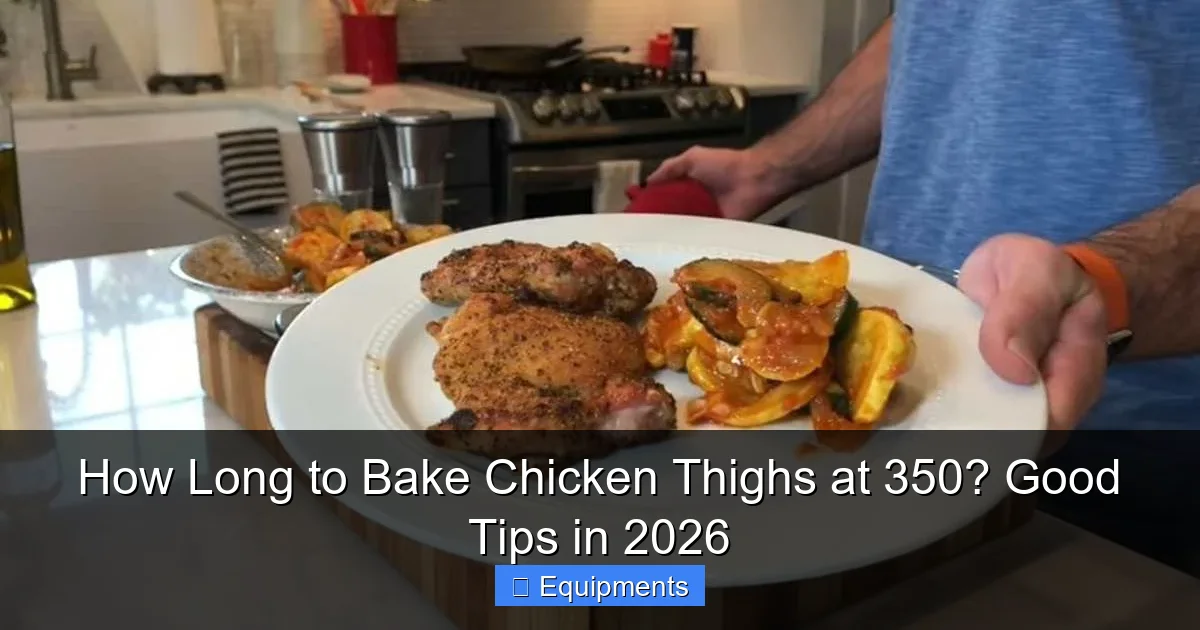
Visual guide about How Long to Bake Chicken Thighs at 350? Good Tips in 2026
Image source: shiftychevre.com
1. The Non-Negotiable: A Digital Instant-Read Thermometer
This is your co-pilot. Your oven’s temperature can be off by 25°F or more. Thigh sizes vary. The only way to know for sure is to measure. Invest in a good one (like from Thermapen, ThermoWorks, or a reliable Amazon bestseller). Probe the thickest part of the thigh, avoiding the bone. For boneless, aim for the center. The magic number is 165°F (74°C). For bone-in, many chefs pull it at 160-162°F, knowing the residual heat (carryover cooking) will bring it to 165°F while resting, keeping the meat even juicier.
2. The Right Vessel: Baking Sheets and Racks
Your choice of bakeware affects cooking time and texture.
- Rimmed Baking Sheet + Wire Rack: The champion setup. The rack elevates the chicken, allowing hot air to circulate all around for even cooking and maximum skin crispiness. The rim catches any drips for easy cleanup.
- 9×13-inch Baking Dish: Good for a crowd or if you’re cooking the thighs in a liquid (broth, beer, sauce) to keep them moist. Without a rack, the bottom will steam and not crisp.
- Dark vs. Light Pans: Dark metal pans absorb and transfer heat more aggressively, potentially burning the bottom before the top is done. Light-colored or non-stick pans are more forgiving. In 2026, many are opting for heavy-duty, light-colored aluminum sheets for predictability.
3. Oven Calibration: Know Your True Temp
That dial or digital readout is a hope, not a fact. Use your oven thermometer to check the actual temperature at 350°F. If it’s running hot (360°F+), your chicken will cook faster and risk burning. If it’s running cool (340°F-), it will take longer. Adjust your expected bake time accordingly or, better yet, always cook to temperature, not time.
The 350°F Baking Timeline: Your 2026 Cheat Sheet
With your equipment ready and your chicken prepped, here is the estimated timeline for baking chicken thighs at 350°F. Remember, these are guides. Your thermometer is the final authority.

Visual guide about How Long to Bake Chicken Thighs at 350? Good Tips in 2026
Image source: shiftychevre.com
Bone-In, Skin-On Thighs (45-55 minutes)
This is the most common scenario. Preheat your oven to 350°F. Pat the thighs very dry with paper towels—this is crucial for crispy skin. Season generously. Place them skin-side up on a wire rack set in a rimmed baking sheet. Bake for 45 minutes, then start checking. Insert your thermometer into the thickest part of the meat, not touching bone. When it reads 160°F, pull the pan. Tent loosely with foil and let rest for 5-10 minutes. The temperature will rise to 165°F, and the juices will redistribute. Total time: ~50 minutes.
Boneless, Skinless Thighs (30-40 minutes)
These cook quickly. Pat dry, season, and arrange in a single layer in a baking dish or on a sheet pan. You can sear them first in a hot skillet for extra color if you like. Bake for 25 minutes, then check temperature. They can go from juicy to dry in minutes, so don’t walk away. Pull at 165°F and rest 5 minutes. Total time: ~35 minutes.
The “Why” Behind the Times: Maillard Reaction & Carryover Cooking
At 350°F, you’re in the sweet spot for two things: safe cooking and the Maillard reaction (that beautiful browning and flavor development). Bone-in thighs need more time for the heat to travel through the bone and into the center meat. The resting period is science, not superstition. The muscle fibers relax, and the hot juices that were pooled in the center during cooking spread throughout the thigh. If you cut immediately, all that flavor runs onto your cutting board.
Pro Techniques for 2026: Elevating Your Thighs
Everyone can bake a thigh. But to make it exceptional, incorporate these 2026-forward techniques.
The Dry-Brine Revolution (The #1 2026 Tip)
This is the game-changer. 24 hours before baking, season your thighs with salt (about 1 tsp per pound) and nothing else. Place them on a rack over a baking sheet, uncovered, in the refrigerator. The salt draws out moisture, which then dissolves the salt and is reabsorbed, seasoning the meat deeply. Simultaneously, the fridge’s dry air dehydrates the skin surface. The result? Unbelievably crispy, shatteringly crisp skin and meat that is seasoned from within. No need to rinse; just pat dry and add your other spices before baking. This can reduce overall baking time by 5-10 minutes as the skin starts crisper.
Aromatic Bedding: Boost Flavor with Zero Effort
Before adding your thighs, toss sliced onions, lemon wedges, garlic cloves, and fresh herbs (thyme, rosemary) onto the bottom of your baking dish or under the rack. As the chicken cooks, its fat and juices drip onto these aromatics, roasting them into a fragrant, flavorful base. You can serve this soft, roasted mixture alongside the chicken or stir it into pan juices for an instant sauce.
High-Heat Finish for Ultimate Crisp
If your skin isn’t as crisp as you’d like after the main bake, don’t panic. For the final 2-3 minutes, switch your oven to Broil (or your air fryer oven to “Air Fry” mode). Watch like a hawk! This intense, direct heat will blister and crisp the skin beautifully without overcooking the interior.
Avoiding the 7 Most Common Baking Mistakes
Even with the best timeline, pitfalls can ruin your chicken. Here’s what to watch for in 2026.
Mistake 1: Relying on Time Alone
This is the cardinal sin. Ovens vary, thigh sizes vary. The 45-minute mark is a suggestion. Your thermometer is your only guarantee. Always, always check.
Mistake 2: Skipping the Pat-Dry
Wet skin steams. It will never get crispy. Take 30 seconds to thoroughly pat every inch of the skin with paper towels before seasoning. If you dry-brined, this step is already done for you.
Mistake 3: Crowding the Pan
Chicken needs space. If thighs are touching, they’ll steam instead of roast, leading to rubbery skin and uneven cooking. Use multiple pans or a large enough sheet. They should have at least an inch of space between them.
Mistake 4: Forgetting the Rest
Cutting into chicken right out of the oven is like squeezing a water balloon. All the hot, flavorful juices gush out, leaving you with dry meat. The 5-10 minute rest is a small wait for a massive payoff in juiciness.
Mistake 5: Using the Wrong Rack Position
For even browning and cooking, use the middle rack. The top rack is too close to the broiler element and can burn the skin before the center cooks. The bottom rack can cause the bottoms to cook too fast and potentially burn on a dark pan.
Mistake 6: Not Adjusting for Convection
If you have a convection oven (fans circulate hot air), food cooks faster and more evenly. Reduce the baking temperature by 25°F (so to 325°F) or reduce the cook time by about 25%. Monitor temperature closely the first time.
Mistake 7: Ignoring Carryover Cooking
Chicken continues to cook after it leaves the oven. This is especially true for large, bone-in pieces. If you pull a thigh at exactly 165°F, it may overshoot to 170°F while resting, drying out. For bone-in, pull at 160-162°F. For boneless, 163-165°F is fine.
Conclusion: Your Journey to Perfect Thighs Starts Now
Mastering how long to bake chicken thighs at 350 isn’t about memorizing a single number. It’s about understanding the variables—bone, skin, equipment, and oven quirks—and using them to your advantage. The core principle is timeless: cook to temperature, not time. Invest in a good thermometer, embrace the dry-brine technique of 2026, and always, always let your chicken rest.
With these tools and knowledge, you’re no longer following a recipe blindly. You’re in control. You can adapt to any thigh size, any oven, and any desired outcome—from fall-off-the-bone tender to perfectly crisp-skinned. So preheat that oven, pat those thighs dry, and get ready for the best, most reliable chicken you’ve ever made. It’s not just dinner; it’s a skill that will serve you for years to come.
Frequently Asked Questions
What is the exact bake time for bone-in, skin-on chicken thighs at 350°F?
For average-sized thighs, bake for 45-55 minutes. However, you must use an instant-read thermometer to confirm the internal temperature reaches 165°F. Pull them from the oven at 160-162°F to allow for carryover cooking during the 5-10 minute rest period.
Should I cover the chicken thighs with foil while baking?
No, do not cover them if you want crispy skin. Covering creates a steamy environment that will make the skin rubbery. For crispy skin, bake uncovered on a rack. You can tent the pan with foil only during the last 10-15 minutes if the skin is browning too quickly before the meat is cooked through.
How can I tell if chicken thighs are done without a thermometer?
While a thermometer is the only reliable method, visual and tactile cues include: juices running clear (not pink) when pierced, and the meat pulling away slightly from the bone. However, these are not foolproof. Undercooked chicken is a serious health risk. A $15 digital thermometer is the best equipment investment you can make for safe, perfect poultry.
Can I marinate chicken thighs before baking at 350°F?
Absolutely. Marinating adds flavor and can tenderize. Marinate for 2-12 hours in the refrigerator. If your marinade contains sugar (like honey or brown sugar), it can cause burning. Pat the thighs dry before baking and consider reducing the oven temperature to 325°F or using the high-heat finish method to prevent burnt sugar.
Does using a convection oven change the baking time?
Yes. Convection ovens cook faster and more evenly due to circulating air. Reduce the baking temperature by 25°F (so bake at 325°F) or reduce the cook time by about 25%. Start checking for doneness early. The skin may also crisp more quickly in a convection oven.
What’s the best way to reheat baked chicken thighs without drying them out?
The best method is gentle. Place thighs in a baking dish, add a splash of chicken broth or water to the bottom, cover tightly with foil, and reheat in a 300°F oven until warmed through (about 15-20 minutes). This steams the chicken gently. A microwave will work but often makes skin soggy and meat tough. For crisp skin, reheat in an air fryer at 350°F for 3-5 minutes after the main reheating.
Pingback: How Long to Cook Chicken Breast in Oven - kitchenandhouseware.com
Pingback: Homemade Shake and Bake Chicken Thighs Recipe - kitchenandhouseware.com
Pingback: How Long to Bake a Chicken Leg - kitchenandhouseware.com
Pingback: Baked Frozen Chicken Thighs - kitchenandhouseware.com
Pingback: Chicken Thighs with Mushrooms and Mushroom Soup - kitchenandhouseware.com
Pingback: Protein in Chicken Thigh - kitchenandhouseware.com
Pingback: How to Bake Snall Chicken Leg Quarter - kitchenandhouseware.com