An immersion blender, or stick blender, is a handheld kitchen tool with a motorized base and a long, rotating blending shaft. Unlike countertop blenders, its submersible design allows you to blend ingredients directly inside pots, bowls, or cups. It works by transferring power from the motor through the shaft to spin the blades at high speed, creating a vortex that pulls food down for smooth, consistent results without transferring messy batches.
Key Takeaways
- Core Mechanism: A motor in the handle drives a long shaft that spins a blade attachment at the end, creating a vortex to blend food in any container.
- Submersible Advantage: Its “dip-in” design lets you blend soups, sauces, and smoothies directly in the cooking pot or serving bowl, minimizing cleanup and transfers.
- Power vs. Task: Motor wattage (typically 200-800W) determines capability; higher power handles tough jobs like ice or frozen fruit, while lower power excels with soft liquids.
- Blade Design is Key: S-shaped or multi-blade attachments are optimized for different tasks—from pureeing to emulsifying—and are often interchangeable.
- Safety First: The sealed motor housing protects against splashes, but the shaft and blades must remain fully submerged to avoid damage and splatter.
- Versatility Over Power: While less powerful than countertop blenders for heavy-duty tasks, its agility and ease of use make it indispensable for everyday prep.
📑 Table of Contents
- The Ingenious “Dip-In” Revolution: What Makes an Immersion Blender Different?
- Anatomy of an Immersion Blender: Breaking Down the Components
- The Science of the Spin: How the Blending Mechanism Actually Works
- Practical Applications: From Silky Soups to Fluffy Meringues
- Safety, Maintenance, and Longevity: Protecting Your Investment
- Immersion Blender vs. The Competition: Where It Fits in Your Kitchen
- Choosing the Right One: Matching Mechanics to Your Needs
- Conclusion: Mastering the Vortex
The Ingenious “Dip-In” Revolution: What Makes an Immersion Blender Different?
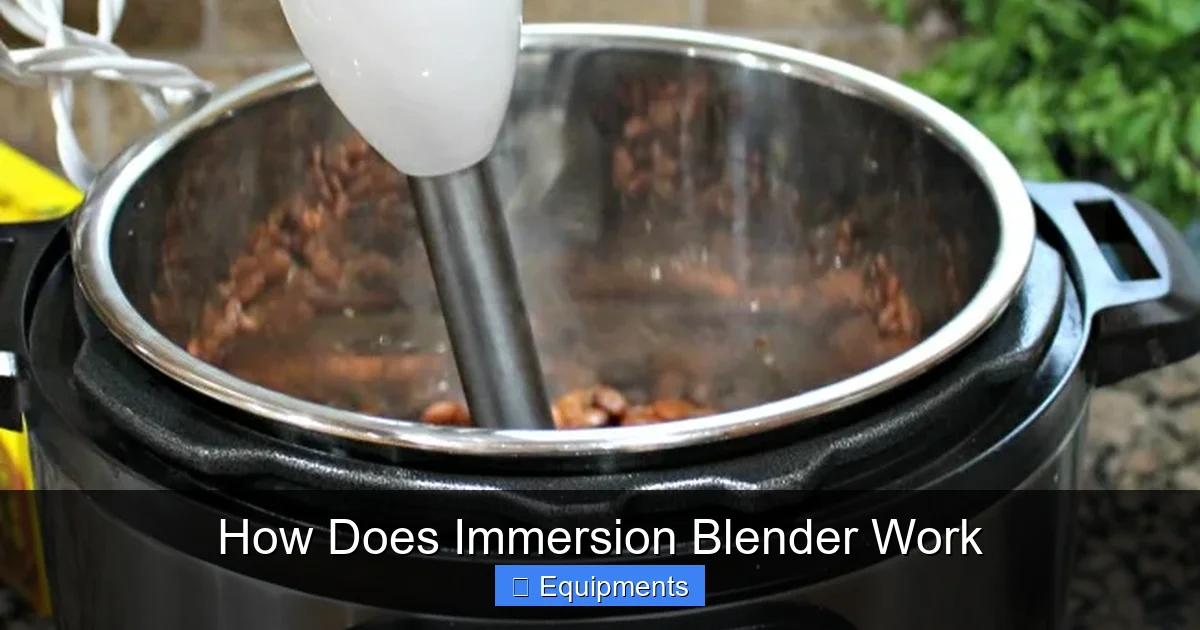
Imagine you’ve just simmered a beautiful, velvety tomato soup in a heavy Dutch oven. The traditional method? You’d have to carefully ladle that hot, messy soup in batches into a clunky countertop blender, hold the lid down with a towel (a messy, risky maneuver!), blend, then pour it back. It’s a hassle. Now, imagine instead taking a sleek, wand-like tool, lowering it right into the pot, pressing a button, and watching the soup transform into silky perfection without ever leaving the pot. That’s the magic of an immersion blender, also called a hand blender or stick blender.
Its genius lies in its fundamental design philosophy: bring the appliance to the food, not the food to the appliance. This isn’t just a convenience; it’s a complete rethinking of the blending process. At its heart, an immersion blender is a simple yet brilliant machine: a motor, a shaft, and a blade. But how these three components work together in a submersible, handheld package is what unlocks its unique utility. Let’s dive deep into the mechanics, the engineering, and the practical application of this kitchen workhorse.
Anatomy of an Immersion Blender: Breaking Down the Components
To understand how it works, you first need to know the parts. An immersion blender is deceptively simple, but each component is engineered for a specific purpose.
Visual guide about How Does Immersion Blender Work
Image source: kitchenncooking.com
The Motor Housing: The Powerhouse in Your Hand
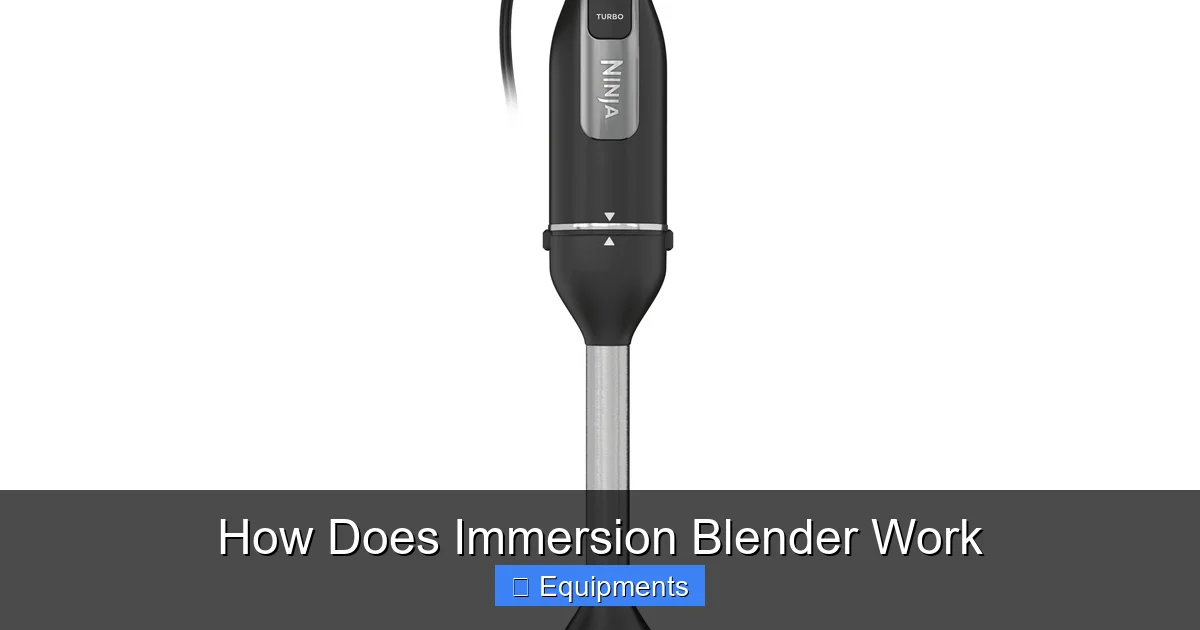
At the top of the device, you’ll find the motor housing. This is typically a sleek, ergonomic plastic or metal casing that contains the electric motor, the speed control switch or button, and the power cord (for corded models) or a battery compartment (for cordless). This unit is not designed to get wet. It’s sealed to protect the electrical components from steam and splashes, but it should always remain outside the container you’re blending. The motor inside converts electrical energy into rotational force, or torque. The quality and power of this motor (measured in watts) dictate what the blender can handle. A 250-watt motor is fine for soft fruits and liquids, while a 600-800 watt motor can tackle frozen ingredients, nuts, or thick doughs.
The Shaft: The Conduit of Power
Extending downward from the motor housing is a long, narrow, stainless steel shaft. This is the critical link. It’s a rigid rod that transmits the rotational motion from the motor down to the blade attachment at the very end. The shaft must be long enough to reach the bottom of most pots and pans (typically 12-18 inches) while allowing your hand to comfortably grip the motor housing well above the container’s rim. Stainless steel is the material of choice because it’s strong, rust-resistant, and easy to clean. Some models have a removable shaft for easier cleaning or storage.
The Blade Attachment: Where the Action Happens
This is the business end. The blade attachment screws onto the bottom of the shaft. It’s usually a small, stainless steel unit with one or more sharp, curved blades. The most common design is the S-shaped or “whisk” blade, which is fantastic for pureeing soups, making smoothies, and whipping cream. Many brands offer a set of interchangeable attachments, such as:
- Chopping/Processing Blade: Often a smaller, multi-blade assembly for mincing herbs, chopping nuts, or making small batches of pesto.
- Whisk Attachment: A wire whisk that replaces the blade for beating eggs, whipping cream, or mixing pancake batter with incredible aeration.
- Beaker/Measuring Cup: A sturdy, narrow plastic or glass container designed to fit the blender perfectly, often with measurement markings for precision.
The design of the blade attachment is crucial. Its shape creates a vortex—a powerful, downward-pulling whirlpool—that draws food from the top and sides of the container down into the blades, ensuring even blending without the need to constantly move the wand.
The Science of the Spin: How the Blending Mechanism Actually Works
Now that we know the parts, let’s connect the dots. When you press the trigger or button, an electrical circuit is completed, powering the motor. Inside the motor, electromagnets create a rotating magnetic field that spins a rotor (the moving part). This rotor is connected directly to the top of the shaft. So, as the rotor spins, it makes the entire shaft rotate at high speed—often between 10,000 and 20,000 revolutions per minute (RPM).
Visual guide about How Does Immersion Blender Work
Image source: crdms.images.consumerreports.org
At the bottom, the spinning shaft drives the blade attachment. The sharp, angled blades cut through the food. But it’s more than just cutting; it’s about fluid dynamics. The high-speed rotation of the blades creates a low-pressure zone directly in front of them (like the suction in a vacuum cleaner). This low pressure pulls the surrounding liquid and food particles down toward the blades. Simultaneously, the blades push food outward and upward along the sides of the container. This continuous cycle—down the center, out the sides, and back down—creates a powerful, self-contained vortex. This vortex is the key to achieving a smooth, homogenous puree or emulsion without the need to tilt, shake, or stir the container manually.
The Importance of Submersion and Container Shape
This vortex mechanism explains two critical rules for using an immersion blender effectively. First, the blade attachment must always be fully submerged. If it breaches the surface, air is sucked into the system, breaking the vortex and causing messy splattering. It also puts strain on the motor as it works inefficiently. Second, the container shape matters. A wide, shallow pan will create a less effective vortex than a deep, narrow pot or the included beaker. The ideal container has vertical sides that help contain and direct the swirling liquid, maximizing the blending action. This is why you’ll get better results pureeing soup in the original stockpot than in a wide frying pan.
Practical Applications: From Silky Soups to Fluffy Meringues
Understanding the mechanics helps you use the tool like a pro. Its design makes it uniquely suited for specific tasks.
Visual guide about How Does Immersion Blender Work
Image source: kitchencuddle.com
Perfect for Hot Liquids and Large Batches
This is the immersion blender’s superpower. You can safely blend boiling-hot soups, sauces, or stews right in the pot. No dangerous transfers of scalding liquid. No waiting for food to cool. This is a massive time-saver and a major safety win. It’s also perfect for making large volumes of vinaigrette, mayonnaise, or hollandaise sauce directly in a mixing bowl or large jar. The ability to emulsify—combining oil and vinegar/water into a stable mixture—is exceptional because the high-speed vortex forces the two liquids together intensely and consistently.
Ideal for Soft Foods and Precise Control
It excels with soft-cooked vegetables, ripe fruits, cooked beans, and oatmeal. You have complete control over the texture. Want a chunky salsa? Pulse briefly. Need a perfectly smooth baby food puree? Blend longer. You can easily stop, check the consistency, and adjust without ever removing the food from its cooking vessel. This level of control is harder to achieve with a countertop blender where you have to stop, remove the pitcher, check, and re-blend.
Limitations and What It Can’t Do Well
Knowing the limitations is part of understanding how it works. The motor, while powerful for its size, is generally less powerful than a full-size countertop blender. It will struggle with:
- Very Hard, Dry Ingredients: Whole ice cubes, frozen fruit straight from the freezer, or large quantities of nuts can quickly overheat and burn out the motor. Always use softer frozen fruit or add some liquid.
- Large, Dense Volumes: Trying to blend a full pot of thick, stew-like chili might be too much. It’s best to work in batches for very thick mixtures.
- Air Incorporation: For tasks requiring a lot of air, like whipping egg whites to stiff peaks, the dedicated whisk attachment is good, but a stand mixer is still the champion.
Safety, Maintenance, and Longevity: Protecting Your Investment
The immersion blender’s wet environment requires smart handling to ensure it works perfectly for years.
Essential Safety Practices
The cardinal rule: never submerge the motor housing. It is not waterproof. Always keep the handle and control panel dry and above the rim of your container. Before each use, check that the blade attachment is screwed on tightly. A loose attachment can become a projectile. When blending hot liquids, start the blender *after* the shaft is fully submerged to prevent a burst of steam and splatter. Also, be mindful of the powerful suction; keep long sleeves, towels, and your fingers away from the business end while it’s running.
Cleaning: The Easiest Part
This is where the immersion blender truly shines. Most parts are dishwasher safe (top rack recommended for the shaft and blades). For quick cleaning, simply fill a tall glass or your blending beaker with warm, soapy water, immerse the shaft and blades, and run the blender for 30 seconds. The vortex created will clean the blades and the lower shaft. Rinse thoroughly. The motor housing just needs a wipe-down with a damp cloth. Always ensure all parts are completely dry before reassembling and storing.
Troubleshooting Common Issues
If your blender seems underpowered, check for a loose blade attachment. If it’s overheating, you’re likely overworking it with too thick or frozen ingredients—let food soften or add more liquid. A burning smell is a serious red flag; unplug immediately and let it cool. Persistent issues usually mean a worn-out motor or seal, at which point repair is often less cost-effective than replacement for these relatively affordable appliances.
Immersion Blender vs. The Competition: Where It Fits in Your Kitchen
No appliance exists in a vacuum. Understanding how an immersion blender compares to its cousins helps you decide when to reach for it.
vs. Countertop Blender
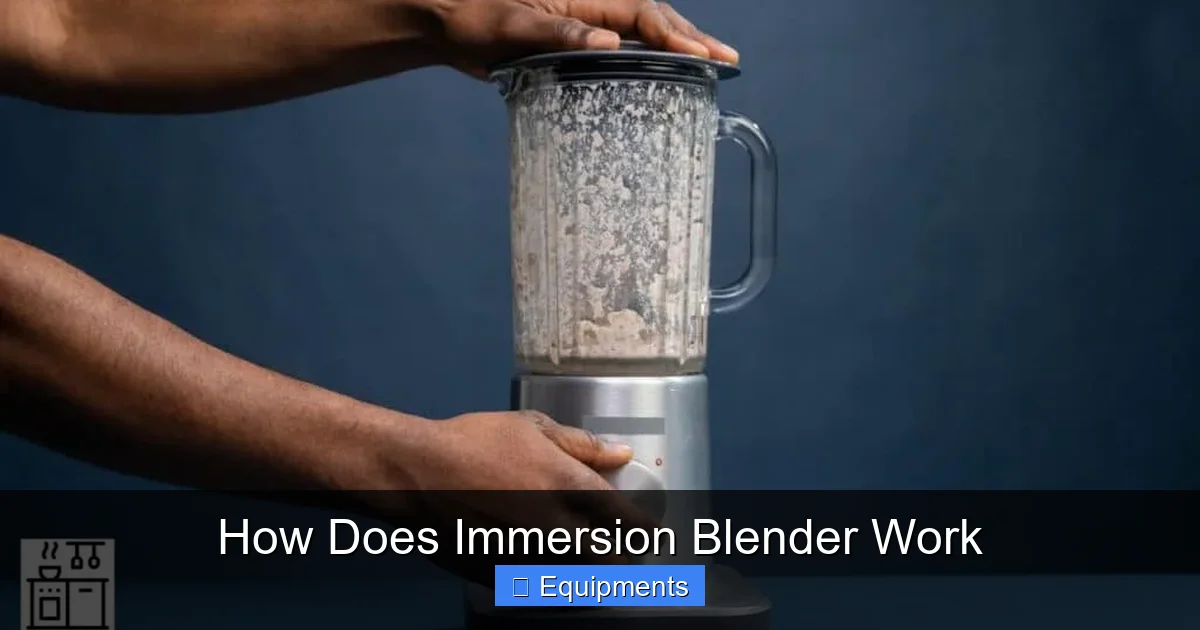
The countertop blender is the heavyweight champion. It has a more powerful motor and a sealed pitcher that can crush ice, make nut butters, and handle large, hard frozen batches with ease. However, it’s bulky, requires transferring hot food (dangerous!), and creates more cleanup (pitcher, lid, gasket). The immersion blender is the agile specialist: superior for hot liquids, large pots, and quick, controlled tasks with minimal cleanup. In many kitchens, they are complementary, not replacements.
vs. Food Processor
A food processor is a chopping, shredding, and dough-making master with a wide, shallow bowl and a feed tube. It’s built for dry and semi-dry tasks. The immersion blender is a liquid-centric tool. You wouldn’t use an immersion blender to grate cheese or slice vegetables, but you wouldn’t use a food processor to puree soup in the pot. They work together beautifully: the food processor preps your mirepoix, the immersion blender finishes the soup.
vs. Hand Mixer
Hand mixers are for aeration—beating eggs, creaming butter and sugar, whipping cream. They use beaters that rotate in a planetary motion (around their own axis and around the bowl). An immersion blender with a whisk attachment can do some of this, but a dedicated hand mixer or stand mixer is far more efficient and effective for tasks requiring high volumes of air. The immersion blender’s strength is in cutting and shearing, not aerating.
Choosing the Right One: Matching Mechanics to Your Needs
When shopping, think about how the mechanics align with your cooking style.
- Power (Watts): For smoothies, soups, and sauces, 200-300W is sufficient. For frozen fruit, ice, or nut butters, look for 600W+.
- Shaft Material: Stainless steel is durable and non-reactive. Avoid plastic shafts if you plan to use it with hot foods frequently.
- Speed Settings: Multiple speeds give you more control. A pulse function is great for chunkier textures.
- Attachments: Consider what you’ll do. A chopping blade is useful for small-batch salsas or pesto. A whisk is great if you don’t have a hand mixer.
- Ease of Cleaning: Removable shafts and dishwasher-safe parts are huge pluses. Check if the blade attachment is easy to disassemble for thorough cleaning.
- Corded vs. Cordless: Cordless offers ultimate freedom and no cord management but has limited battery life and power. Corded provides consistent, unlimited power but can be cumbersome.
Conclusion: Mastering the Vortex
The immersion blender is a masterpiece of functional engineering. Its simple concept—a motorized spinning shaft—solves a multitude of kitchen frustrations by eliminating the dangerous, messy transfer of hot or bulky foods. It works by creating a powerful, contained vortex that pulls ingredients down into high-speed blades, delivering smooth results with unparalleled convenience and control. While it won’t replace your countertop blender for crushing ice or your food processor for shredding cheese, its unique ability to work directly in your cooking vessel makes it an irreplaceable tool for making soups, sauces, dips, and drinks. By understanding its mechanics—the importance of submersion, the role of blade design, and the limits of its motor—you can use it safely, effectively, and enjoy its benefits for years to come. It’s not just a blender; it’s your direct line to kitchen efficiency.
Frequently Asked Questions
Can an immersion blender crush ice?
Generally, no. The motor and blade design are not built for the extreme stress of hard, solid ice. It can dull the blades quickly and overheat the motor. For frozen drinks, use a countertop blender or let ice soften slightly first.
Are immersion blender attachments interchangeable between brands?
Almost never. The attachment mechanism (threading, connection style) is proprietary to each brand and often to specific models within a brand. You must use attachments designed for your specific immersion blender model.
Is it safe to use an immersion blender with hot liquids?
Yes, and this is one of its best features. However, always start blending only after the entire blade assembly is fully submerged to prevent a burst of hot steam or splatter. Keep the motor housing dry and above the pot’s rim.
Why is my immersion blender so loud?
High-speed motors in a handheld, open-air design are inherently louder than enclosed countertop appliances. This is normal. Excessive noise or a grinding sound can indicate a loose blade attachment or a failing motor bearing.
Can I use an immersion blender in a cast iron skillet?
Technically yes, but it’s not ideal. The wide, shallow shape of a skillet doesn’t create an efficient vortex, leading to more splatter and uneven blending. A deep pot or the included beaker is far more effective.
How do I store my immersion blender to prevent damage?
Ensure all parts are completely dry. Store it lying flat or hanging by its handle. Avoid coiling the cord tightly around the unit. If it has a removable shaft, store them separately to prevent stress on the connection point.