The core difference lies in design and purpose: an immersion blender (hand blender) is a handheld, wand-like tool that blends directly in any pot or bowl, perfect for soups and sauces. A regular blender (countertop blender) is a stationary appliance with a fixed pitcher and powerful motor, ideal for crushing ice, making smoothies, and processing hard ingredients. Your choice depends on your primary cooking tasks—soups and light duty favor immersion, while frozen drinks and heavy processing demand a regular blender.
Key Takeaways
- Design & Mechanism: Immersion blenders are handheld wands you submerge directly into food; regular blenders are stationary units with a dedicated pitcher and blade assembly.
- Power & Performance: Regular blenders typically have more powerful motors and robust blades for crushing ice and frozen foods; immersion blenders have less power, suited for soft-cooked ingredients and emulsifying.
- Versatility & Use Cases: Immersion blenders excel at blending soups, sauces, and small batches directly in the cooking pot; regular blenders are king for smoothies, frozen drinks, nut butters, and large purees.
- Cleaning & Storage: Immersion blenders are easier to rinse and take up minimal space; regular blenders often have more parts (pitcher, lid, blade) and require more storage room.
- Cost & Value: Immersion blenders are generally more affordable; high-performance regular blenders can be a significant investment but offer unmatched power for specific tasks.
📑 Table of Contents
- Introduction: Two Blenders, Two Jobs
- Design and Physical Functionality
- Power, Motor Strength, and Blade Engineering
- Versatility and Ideal Use Cases
- Cleaning, Storage, and Practical Considerations
- Price Points and Long-Term Value
- Making the Right Choice for Your Kitchen
- Conclusion: Purpose Over Prestige
Introduction: Two Blenders, Two Jobs
Walk into any kitchen, and you’ll likely find a blender. But not all blenders are created equal. The two most common types—the immersion blender and the regular countertop blender—often get confused, yet they are fundamentally different tools designed for different jobs. Using the wrong one can lead to frustrating results, a messy kitchen, or even a broken appliance. Understanding the immersion blender vs regular blender debate is key to upgrading your kitchen toolkit efficiently.
Think of it like this: one is a precision sculptor’s tool, the other is a industrial mixer. The immersion blender, also called a hand blender or stick blender, offers finesse and convenience for in-pot blending. The regular blender, with its powerful motor and sealed pitcher, is a workhorse for tackling tough, frozen, or large-volume ingredients. Let’s break down every difference so you can confidently choose which one belongs on your counter—or if you need both.
Design and Physical Functionality
The most obvious difference is right in front of you. One you hold over a pot, the other you pour ingredients into.
Visual guide about What Is the Difference Between an Immersion Blender and a Regular Blender
Image source: worldofblenders.com
The Immersion Blender: A Handheld Wizard
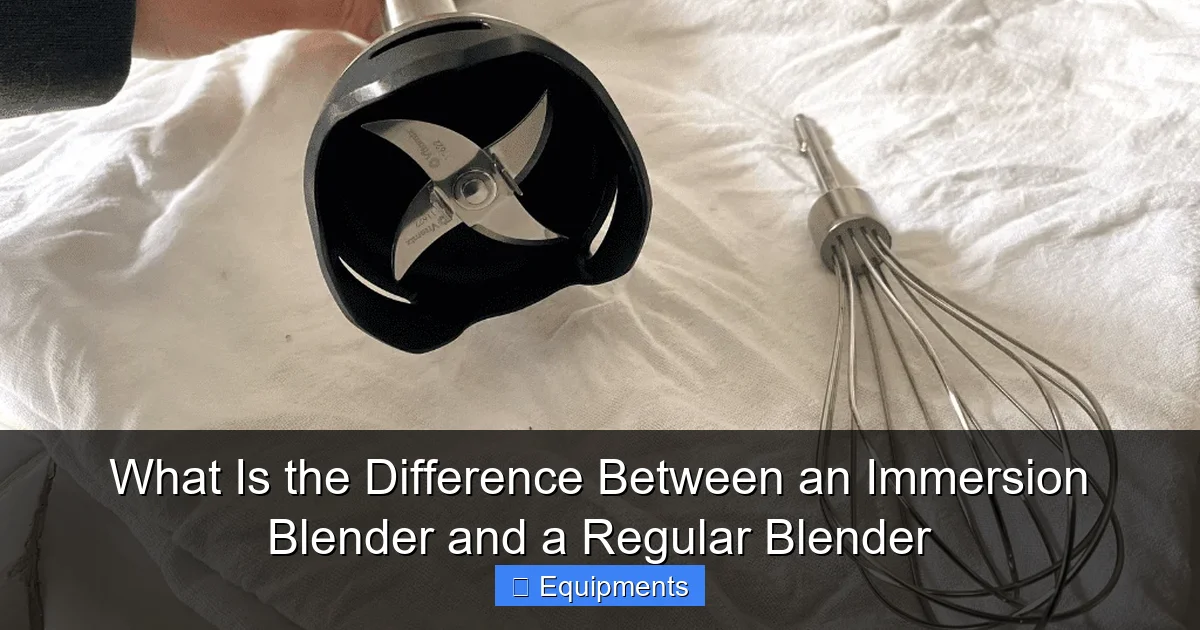
An immersion blender is a long, narrow wand with a motor at the top and a set of rotating blades at the bottom. You simply plunge the blade end directly into a pot of soup, a bowl of batter, or a cup of dressing. Its genius is in its simplicity and portability. There’s no pitcher to transfer hot soup into (a major safety and mess hazard), and you can blend precisely where the food is.
Most models have a simple on/off button or variable speed trigger. The shaft is often stainless steel, and the blade assembly can sometimes be removed for cleaning or replaced with other attachments like a whisk or chopper. Because it’s handheld, you control the blending process by moving the wand through the mixture, making it excellent for achieving a specific texture—some chunks left in a salsa, or perfectly smooth soup.
The Regular Countertop Blender: The Stationary Powerhouse
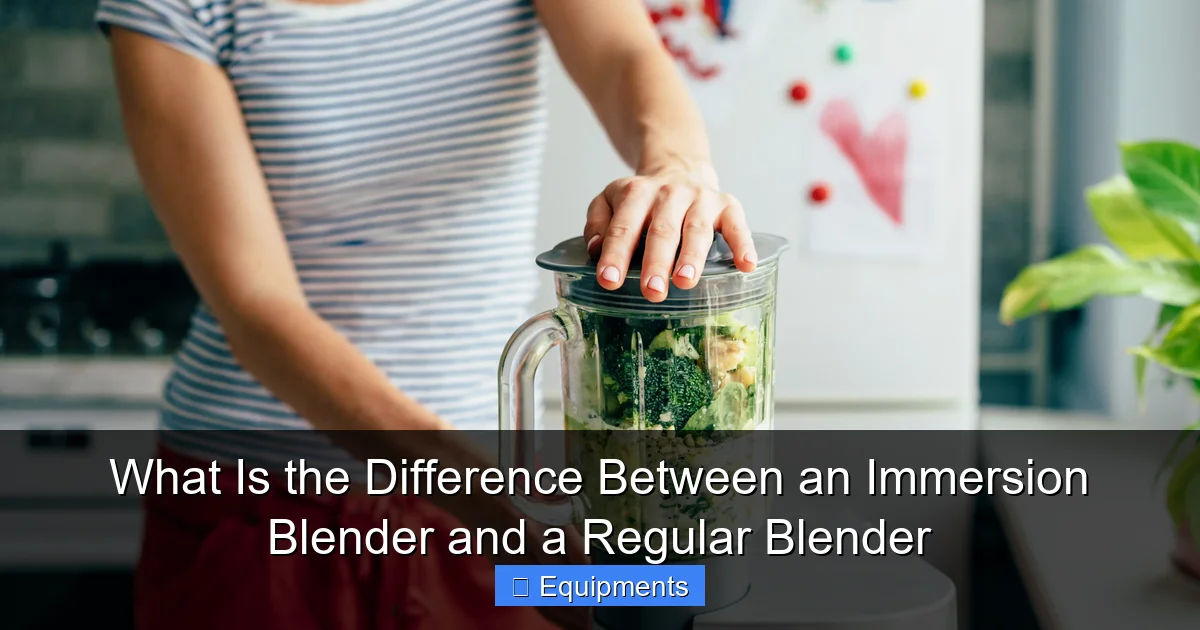
A regular blender is a freestanding appliance with a heavy base housing a powerful motor. On top of that base locks a dedicated plastic or glass pitcher. Inside the pitcher, at the bottom, is a multi-blade assembly designed to create a vortex that pulls ingredients down for even blending.
You must always pour your ingredients into its pitcher, secure the lid (often with a removable center cap for adding ingredients mid-blend), and place the pitcher onto the motor base. It’s a closed system. This design is built for power and containment. It can handle volatile ingredients (like hot liquids, if the model is rated for it) and keeps everything contained, which is great for wet, splattery mixtures. Its weight and size mean it claims a permanent spot on your counter or in a cabinet.
Power, Motor Strength, and Blade Engineering
This is where performance diverges dramatically. Power isn’t just about watts; it’s about torque and blade design.
Visual guide about What Is the Difference Between an Immersion Blender and a Regular Blender
Image source: img.huffingtonpost.com
Wattage and Torque: Crushing vs. Emulsifying
Regular blenders almost always have more powerful motors, typically ranging from 300 to 1500+ watts. This raw power is necessary to drive blades through dense, frozen, or hard ingredients like ice cubes, frozen fruit, nuts, and raw vegetables. The high torque at low speeds is what shatters ice and pulverizes seeds.
Immersion blenders have less powerful motors, usually between 150 and 300 watts. Their strength is in high-speed rotation for emulsifying and pureeing already-soft foods. They can handle a pot of boiled vegetables or a bowl of softened avocado with ease, but they will struggle, overheat, or stall if asked to crush ice or blend a thick, frozen smoothie directly. Attempting this can burn out the motor quickly.
Blade Design: Purpose-Built for the Task
Regular blender blades are typically a multi-pronged, flat assembly that rides close to the bottom of the pitcher. Their shape is optimized for creating a powerful whirlpool (vortex) that sucks food down and throws it against the sides for total breakdown.
Immersion blender blades are smaller, simpler, and often positioned at an angle. Some have a protective guard around the blades to prevent scratching pots. Their design is for cutting and stirring within a larger volume of liquid, not for creating a contained cyclone. This makes them safer for use in cookware but less effective at pulling down and pulverizing very thick or dry mixtures.
Versatility and Ideal Use Cases
Choosing between them often comes down to what you cook most. Each has a domain where it shines.
Visual guide about What Is the Difference Between an Immersion Blender and a Regular Blender
Image source: imgv2-1-f.scribdassets.com
When an Immersion Blender is Your Best Friend
- Soups and Sauces: This is the #1 reason to own one. You can blend a pot of tomato soup or potato chowder right on the stove. No dangerous hot liquid transfers, no extra dirty dishes.
- Small-Batch Dressings and Mayo: Whip up a quick vinaigrette or mayonnaise in the same cup or jar you’ll store it in. The emulsifying power is perfect for oil-and-vinegar blends.
- Baby Food: Puree a few steamed veggies in a small bowl with minimal cleanup.
- Whisking and Mixing: With a whisk attachment, it can beat eggs, whip cream, or mix pancake batter with less effort than by hand.
- Light Chopping: Some models come with a small chopper attachment for nuts or herbs, but this is a secondary function.
When a Regular Blender is Non-Negotiable
- Frozen Drinks and Smoothies: Only a powerful, heavy-duty blender with sharp blades can consistently crush ice and frozen fruit into a silky texture.
- Nut Butters and Frozen Desserts: Making peanut butter or banana “nice” cream requires sustained power to break down fats and solids. A high-performance blender is essential.
- Large-Batch Purees: For a big pot of tomato sauce or a party-sized batch of hummus, the regular blender’s capacity and power are superior.
- Crushing Hard Ingredients: Grinding coffee beans, seeds, or ice for cocktails needs the torque and sealed containment of a countertop model.
- Hot Soups (in a sealed pitcher): Some modern high-end blenders (like certain Vitamix or Blendtec models) are explicitly designed to handle hot liquids safely in their sealed pitchers. This is a specific, powerful use case.
Cleaning, Storage, and Practical Considerations
The daily experience of owning and using each tool differs significantly here.
The “Rinse and Wipe” Simplicity of Immersion Blenders
Cleaning an immersion blender is famously easy. The wand and blade can usually be rinsed right in the sink or even placed in the dishwasher (check manufacturer guidelines). There’s no pitcher with a tricky blade assembly to scrub, no seals to dislodge. You simply detach the shaft if possible, wash, and wipe down the motor body with a damp cloth. Storage is a breeze—it takes up a drawer’s worth of space.
The More Involved Cleanup of Regular Blenders
Cleaning a regular blender involves disassembling the pitcher, lid, and blade gasket. Food can get trapped under the blade assembly, requiring careful scrubbing. The pitcher is large and can be awkward to wash. Most pitchers and lids are dishwasher safe, but the base motor unit must never get wet. Storage is the bigger issue: the pitcher is bulky and often round, making it a challenge in narrow cabinets. You usually have to store it on the counter or in a deep pantry.
Price Points and Long-Term Value
Your budget will absolutely influence your decision, but consider long-term value, not just upfront cost.
Immersion Blender: The Budget-Friendly Specialist
You can get a decent, functional immersion blender for $30-$70. High-end models with more power, multiple speeds, and premium attachments (like a food chopper) might run $100-$200. For the core tasks of soup blending and light emulsifying, even a mid-range model offers excellent value. It’s a low-risk purchase that solves a specific, common kitchen problem.
Regular Blender: The Investment Workhorse
The regular blender market has a vast range. Basic models start around $50, but they often have weak motors and plastic gears that wear out quickly. For reliable smoothie-making and heavy-duty tasks, expect to spend $150-$400 on a reputable brand (KitchenAid, Breville, Vitamix, Blendtec). These are built to last years, with powerful motors and durable pitchers. The high-end “performance blenders” are kitchen investments that can replace multiple appliances (food processor, mixer) for some users.
Making the Right Choice for Your Kitchen
So, which one should you buy? Ask yourself these questions.
Assess Your Cooking Habits Honestly
Do you make a lot of homemade soup, sauce, or puree? Do you value minimal cleanup and cooking directly in the pot? An immersion blender is your clear winner. Is your morning ritual a frozen smoothie or protein shake? Do you make nut butters, grind ice, or blend large batches? You need the raw power of a regular blender.
Consider Space and Budget
Live in a small apartment with limited counter and cabinet space? The immersion blender’s compact form is a huge advantage. On a tight budget but need a blender for occasional smoothies? A small, affordable regular blender might suffice, but know its limits. If you have the space and budget, and you love smoothies and frozen drinks, investing in a quality countertop blender will bring daily joy and reliability.
The “Both” Scenario: The Ultimate Kitchen Duo
Many serious home cooks own both. They are truly complementary tools. Use the immersion blender for weekday soups and quick sauces. Use the regular blender for weekend smoothie bowls, homemade nut butter, and big-batch party dips. If your budget and storage allow, this combination provides maximum flexibility. Just be sure to read the terms and conditions for each appliance regarding warranty and proper use to protect your investment.
Conclusion: Purpose Over Prestige
The difference between an immersion blender and a regular blender isn’t about which is “better”—it’s about which is better for the job. The immersion blender is the agile, convenient specialist for hot liquids and in-container blending. The regular blender is the muscular, contained generalist for crushing, pureeing, and handling frozen ingredients. Your decision should be guided by your most frequent kitchen tasks, your available space, and your budget. There is no one-size-fits-all answer, but now you have the knowledge to make a choice that will genuinely improve your cooking routine. Choose the tool that fits your hand, your recipes, and your life.
Frequently Asked Questions
Can I use an immersion blender to crush ice or make smoothies?
No, it’s not recommended. Immersion blenders lack the power and blade design to effectively crush ice or frozen fruit. Attempting to do so will likely stall the motor, overheat it, and potentially damage the appliance. Use a regular countertop blender for frozen drinks.
Is it safe to blend hot soup in a regular blender?
It can be dangerous due to steam pressure building up in a sealed pitcher, which can cause the lid to blow off and spray scalding liquid. Only use a regular blender for hot liquids if the manufacturer explicitly states it is safe and provides specific instructions (like removing the vent cap). The immersion blender is the safer choice for hot soups.
Can a regular blender replace an immersion blender for making soups?
Technically yes, but it’s inconvenient and risky. You must carefully transfer the hot soup from the pot to the blender pitcher in batches, blend, then transfer back. This is messy, dangerous, and creates more dishes. The immersion blender does this job with one tool, directly in the pot.
Which blender is easier to clean?
The immersion blender is significantly easier to clean. You can often rinse the shaft and blade under running water or place it in the dishwasher. A regular blender requires disassembling and scrubbing the pitcher, lid, and blade assembly, with more nooks for food to hide.
Do I need a high-wattage blender for smoothies?
For consistently smooth frozen smoothies, a higher wattage (at least 600-800 watts) is strongly recommended. Lower-wattage blenders will struggle with ice and frozen fruit, leaving chunks and straining the motor. High wattage ensures power and longevity for tough ingredients.
Can I use an immersion blender in any pot or bowl?
Yes, that’s its main advantage. As long as the container is deep enough to fully submerge the blades and is made of a material the stainless steel won’t scratch (avoid non-stick surfaces directly), you can use it in any pot, pan, or deep bowl. Always ensure the motor housing stays above the liquid level.