Using a non-oven-safe thermometer in the oven can melt it, ruin your food, and create a dangerous situation. The primary way to know is to check for an explicit “oven safe” label or symbol from the manufacturer, typically found on the dial, probe, or packaging. If no clear marking exists, you must assume it is NOT oven safe and use alternative methods or a dedicated oven-safe probe thermometer to ensure both food safety and equipment longevity.
Key Takeaways
- Explicit labeling is the gold standard: Look for the words “Oven Safe” or a specific oven symbol (often a small oven graphic) on the thermometer’s dial, probe handle, or original packaging.
- Probe thermometers are most often oven safe: The category of “probe” or “leave-in” thermometers is specifically designed for oven use, while most “instant-read” or “digital” styles are not.
- Material clues matter: Stainless steel probes are generally more heat-resistant than plastic-encased ones, but the handle’s material is the critical factor—it must withstand high heat without melting.
- When in doubt, perform the boiling water test: A safe, at-home method to check for basic heat resistance, though it doesn’t replicate prolonged dry oven heat.
- Never assume based on price or brand alone: Even expensive thermometers can have non-oven-safe components if they are designed purely for stovetop or quick-check use.
- The handle is the weakest link: The part of the thermometer you hold is most likely to contain plastic or composite materials that will warp or melt in an oven.
- Using a non-oven-safe thermometer is a fire and food safety risk: Melting plastic can cause fumes, ruin your dish, and give you a false temperature reading, leading to undercooked meat.
📑 Table of Contents
- Why This Question Is More Important Than You Think
- Understanding the Types of Meat Thermometers
- How to Identify an Oven-Safe Thermometer: The Detective Work
- The At-Home “Boiling Water Test”: A Practical (But Limited) Check
- Common Mistakes and Dangerous Assumptions
- What To Do If Your Thermometer Is NOT Oven Safe: Safe Alternatives
- Conclusion: Safety First, Perfect Results Always
Why This Question Is More Important Than You Think
You’re roasting a beautiful prime rib or maybe a whole chicken. The recipe says to monitor the internal temperature. You glance at your trusty digital thermometer and think, “Why not just leave the probe in there?” It seems like the perfect, convenient solution. But popping a thermometer that isn’t designed for the oven into that hot, dry environment is one of the most common—and potentially dangerous—kitchen mistakes you can make.
The consequences range from annoying to catastrophic. At best, you’ll melt the plastic housing or dial, ruining a perfectly good tool. At worst, you could create toxic fumes from burning plastic, start a small fire if the probe touches a heating element, or—most insidiously—get a completely inaccurate temperature reading because the thermometer’s components have failed, leading you to serve undercooked meat and risk foodborne illness. Knowing the difference isn’t just about protecting your equipment; it’s about fundamental cooking safety and achieving the perfectly cooked results you’re aiming for.
Understanding the Types of Meat Thermometers
Before we can identify which ones are oven safe, we need to understand the basic families of thermometers. Their design purpose is the biggest clue to their heat tolerance.
Visual guide about How Do I Know If My Meat Thermometer Is Oven Safe
Image source: images-na.ssl-images-amazon.com
The Two Main Categories: Instant-Read vs. Probe
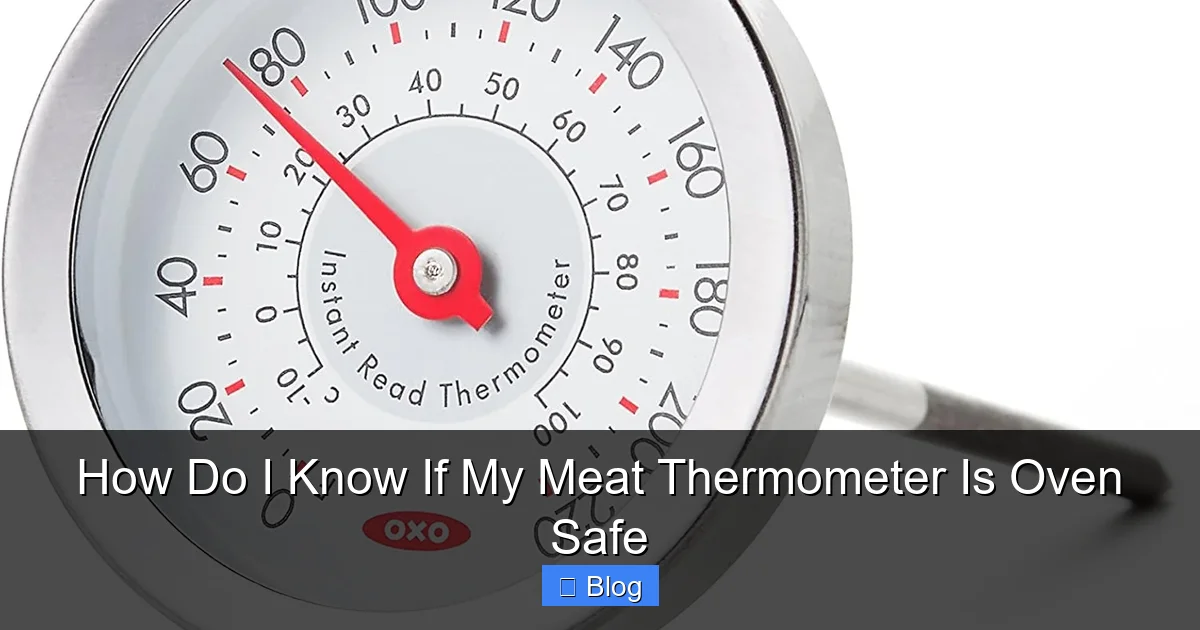
Instant-Read Thermometers: These are the classic dial or digital devices you jab into a piece of meat, wait a few seconds for a reading, and then remove. Their entire design is for quick, temporary use. They are not meant to stay in food while it cooks. The vast majority of instant-read thermometers, both analog and digital, are NOT oven safe. Their handles are almost always made of plastic or composite materials that will warp, melt, or discolor under prolonged dry heat. Some high-end analog instant-reads (like certain models from ThermoWorks) have metal handles and may be oven-safe for short periods, but this is the exception, not the rule, and must be explicitly stated by the manufacturer.
Probe Thermometers (Leave-In or Oven Probe): This category is defined by a long metal probe attached to a heat-resistant cable that connects to a digital readout unit. The probe is designed to be inserted into the meat before it goes into the oven or grill, and left there for the entire cooking time. The readout unit stays safely outside the cooking chamber. By design, the probe itself must be oven-safe. However, the critical distinction is that the probe tip and the cable are oven-safe, but the readout unit is almost NEVER oven-safe. It contains sensitive electronics and a plastic casing that will be destroyed by oven heat. This is a crucial point of confusion for many home cooks.
Specialty and Legacy Types
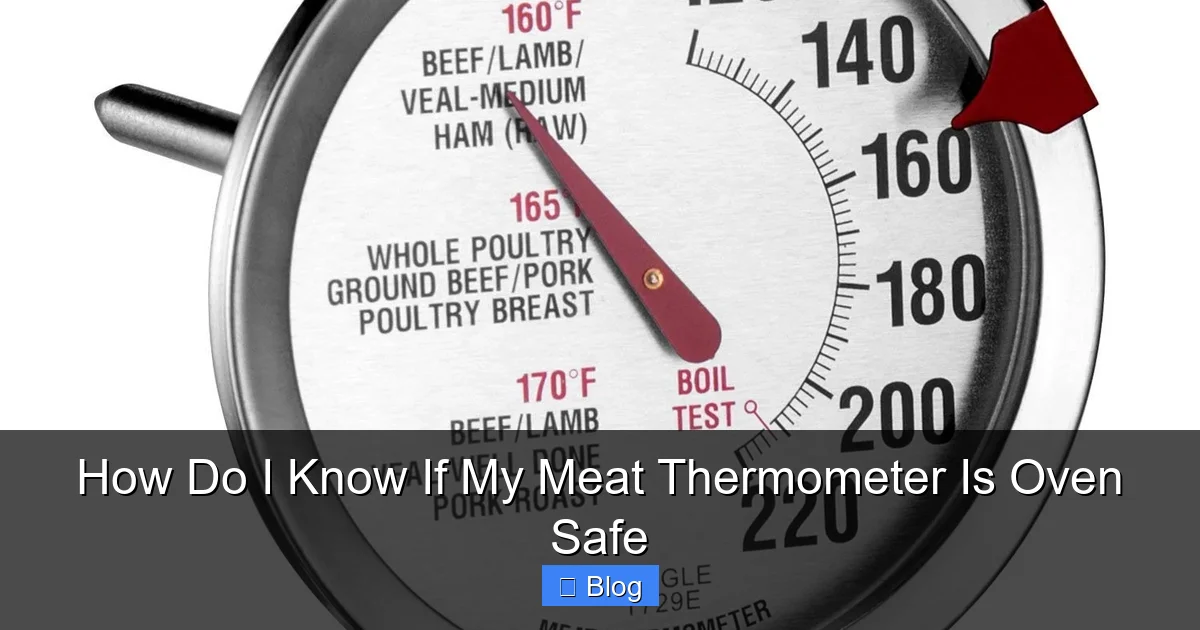
There are also oven-safe dial thermometers (the old-fashioned ones with a big dial that sits on the oven rack) and disposable pop-up thermometers (like those found in turkeys). These are inherently oven-safe because they are designed for that specific purpose. The dial thermometers have all-metal or high-heat-resistant construction, and pop-ups are single-use with simple, heat-tolerant mechanisms. When discussing your standard handheld thermometer, we are almost always talking about the instant-read vs. probe dichotomy.
How to Identify an Oven-Safe Thermometer: The Detective Work
So you have a thermometer in your drawer. How do you determine its fate? You must become a kitchen detective, looking for three key pieces of evidence.

Visual guide about How Do I Know If My Meat Thermometer Is Oven Safe
Image source: kitchensupply.com
1. The Manufacturer’s Label: Your First and Best Clue
This is non-negotiable. The manufacturer knows exactly what their product can withstand. Your mission is to find the words “Oven Safe” or a symbol representing an oven. Check these locations in order:
- The Dial Face: On analog thermometers, look around the edge of the dial or near the brand name.
- The Probe or Stem: Sometimes the marking is laser-etched or printed right on the metal probe itself, close to where it meets the handle.
- The Handle: Look for text or symbols on the plastic or metal housing of the handle.
- The Packaging/Manual: If you still have the original box or instruction booklet, this is the most reliable source. It will specify “Oven Safe” or “Not for Oven Use” in the specifications or safety instructions.
- Online Product Listings: Search for your exact model number online. The product description on the manufacturer’s website or a reputable retailer’s site will state its capabilities. Look for phrases like “probe is oven safe up to 500°F” or “for use in oven, smoker, or grill.”
What a label looks like: It might say “Oven Safe to 450°F,” “For Oven, BBQ, and Smoker,” or simply have a small icon of an oven. If it says “Oven Safe” without a temperature, it typically means safe for standard home oven temperatures (up to 450-500°F). If it says “Heat Resistant” or “High Heat,” that’s vague—you need a specific “oven safe” claim.
2. Construction and Materials: Reading the Tea Leaves
If no label is found, you must assess the build. This is an educated guess, not a guarantee.
- The Handle: This is the most important part. Is it solid metal (stainless steel, aluminum)? If yes, and the thermometer is a probe-style with a cable, there’s a good chance the probe is oven-safe. Is it plastic, rubberized, or a composite material? If yes, it is almost certainly NOT oven safe. Plastic melts. Even “high-heat” plastics used in some kitchen gadgets can warp or degrade in a 350°F+ oven.
- The Probe/Cable Junction: Look at where the metal probe meets the handle or cable. Is there a plastic ring or housing? That plastic will melt. A seamless metal-to-metal or metal-to-cable connection (where the cable itself is sheathed in metal braid) is a positive sign.
- The Probe Itself: Is it a thin, single piece of stainless steel? That’s good. Is it a thin wire with a plastic coating? That plastic coating will melt. Is it a wide, flat probe (like on some oven-safe dial thermometers)? That’s also a good sign, as it’s designed to stay in.
- Digital Readout Units: If it’s a digital thermometer with a screen and buttons on the probe end (like a Thermapen), the entire unit is plastic. It is 100% NOT oven safe. The only exception is if it’s a probe-style with a separate, remote display.
3. The “Is It a Probe?” Litmus Test
Ask yourself this simple question: “Is this thermometer designed and marketed to be left in the food while it cooks?” If the answer is yes, it’s a probe thermometer, and the probe component should be oven-safe. If the answer is no—if it’s a tool you pull out, check, and put away—it’s an instant-read, and you should assume it is NOT oven safe. The marketing language is a huge clue. Words like “leave-in,” “continuous monitoring,” “with probe” for oven/grill/smoker all point to oven-safe probe capability.
The At-Home “Boiling Water Test”: A Practical (But Limited) Check
If you’ve exhausted the detective work and still have doubts, you can perform a simple, low-risk test. Remember: this test checks for heat and steam resistance, not the prolonged dry heat of an oven. It’s a good indicator but not a 100% guarantee for oven use.
Visual guide about How Do I Know If My Meat Thermometer Is Oven Safe
Image source: images-na.ssl-images-amazon.com
Step-by-Step Guide to the Test
- Prepare: Fill a small pot with water and bring it to a rolling boil on your stovetop.
- Submerge: Carefully insert the probe tip (the part that goes into the meat) into the boiling water. Ensure the handle and any plastic parts are well clear of the steam and pot. You can use a clamp or oven mitt to hold it if needed.
- Observe: Leave it in the vigorously boiling water for 2-3 minutes. Watch the handle, the probe-to-handle junction, and any plastic components.
- Check: Carefully remove the thermometer. Immediately feel the handle and junction. Is it hot but solid? Did it warp, soften, or change shape? Did you smell burning plastic or see any discoloration? Check the probe tip—is it still securely attached?
- Interpret: If the handle is hot but rigid, the junction is intact, and there’s no smell or warping, the thermometer has passed a basic heat/steam resistance test. This is a positive sign but not a final verdict for oven safety. If the handle softened, warped, or you smell burning, it has failed and is definitely not oven safe.
Limitations of This Test
This test does not replicate an oven’s dry heat. Some materials that handle boiling water steam beautifully might still degrade under the direct, dry, and often more intense radiant heat of an oven. Conversely, if it fails this easy test, it will absolutely fail in the oven. A pass is encouraging but not a substitute for a manufacturer’s “oven safe” guarantee. Use this test only on thermometers you suspect might be oven-safe based on their probe-style design and metal construction.
Common Mistakes and Dangerous Assumptions
Even with the best knowledge, it’s easy to fall into traps. Here are the most frequent and hazardous errors people make.
“It’s Stainless Steel, So It Must Be Fine”
This is the biggest myth. While the probe is often stainless steel, the handle is not. That beautiful stainless steel shaft is useless if it’s attached to a plastic handle that will melt into a puddle on your oven floor. Always check the handle material first.
“My Expensive Brand Name Thermometer Is Automatically Oven Safe”
Brand reputation does not dictate design. A $200 digital instant-read thermometer (like a Thermapen) is engineered for speed and accuracy in quick checks, not for prolonged heat exposure. Its body is plastic. It is not oven safe. Conversely, a $15 basic probe thermometer from a generic brand might be perfectly oven-safe because that’s its sole purpose. Always verify by model number, not by price tag.
“I’ve Used It in the Oven Before and It Was Fine”
This is a gamble that will eventually pay out in a loss. Thermometers degrade. A plastic handle that survived one 400°F roast might become brittle and crack on the next, or warp slightly, affecting calibration. “Getting away with it” once is not a safety certification. You are playing Russian roulette with your equipment and your meal.
“The Cable Sheath Is Silicone, So It’s Heatproof”
Silicone is heat-resistant, often up to 450-500°F. This is why many probe thermometer cables have a silicone outer sheath. This is a good sign for the cable, but it means nothing about the readout unit or the probe-to-cable connection point. That connection is almost always a plastic mold. That plastic will melt. The rule stands: only the probe and cable (on a true probe thermometer) are oven-safe. The display unit is not.
“I’ll Just Wrap the Handle in Foil”
This is a dangerous hack. Foil can reflect heat and might buy you a few minutes, but it’s not a reliable insulator. The heat will still conduct through the metal probe into the handle and junction. The plastic will still soften and fail. Foil can also create a fire hazard if it touches a heating element. Do not rely on this method.
What To Do If Your Thermometer Is NOT Oven Safe: Safe Alternatives
Don’t despair! If your favorite thermometer is an instant-read, you still have excellent, safe options for monitoring oven temperature.
The Classic and Reliable Method: Frequent Checking
This is the old-school way. Simply use your instant-read thermometer to check the meat’s temperature at regular intervals. Open the oven door, quickly insert the probe into the thickest part (avoiding bone), get your reading, and remove it. Yes, you lose some oven heat each time you open the door, but for most roasts, checking every 15-20 minutes is perfectly acceptable and won’t significantly extend cook time. This is the safest, most accurate way to use a non-oven-safe thermometer.
Invest in a Dedicated Oven Probe Thermometer
This is the ultimate solution for hands-off, precise cooking. A good oven probe thermometer (like those from ThermoWorks, Meater, or even affordable models from OXO) consists of:
- An all-metal probe (often with a stainless steel cable).
- A long, heat-resistant cable (silicone-sheathed).
- A separate, wireless or wired readout unit that stays outside the oven.
- Many modern versions have alarms that beep when your target temperature is reached.
This is the tool designed specifically for the job. The probe goes in, the cable snakes out the oven door (or through a gasket), and the display sits on your counter. No risk, no guesswork.
Use Your Oven’s Built-in Thermometer (If It Has One)
Some modern ovens have built-in temperature probes that connect to the control panel. This is the integrated, factory-approved solution. Consult your oven’s manual to see if it has this feature and what type of probe it uses (you usually have to buy the specific probe from the manufacturer).
The “Two-Thermometer” Strategy
If you love your instant-read for its speed and accuracy but need oven monitoring, consider buying an inexpensive, dedicated leave-in probe thermometer just for oven use. Use the probe for the long cook, and use your instant-read for quick spot-checks or for foods that cook too quickly to need monitoring (like pan-seared steaks).
Conclusion: Safety First, Perfect Results Always
Knowing whether your meat thermometer is oven safe boils down to three core principles: find the label, understand the design, and never guess. An explicit “Oven Safe” marking from the manufacturer is the only true guarantee. If that’s absent, perform a critical assessment of the handle and construction. When in absolute doubt, treat it as non-oven-safe and use the safe, reliable method of periodic checking with an instant-read thermometer, or better yet, invest in the right tool for the job—a dedicated oven probe thermometer.
Your kitchen tools are investments in great food and safe cooking. Using them as intended protects that investment and, more importantly, protects you and your family from the real risks of equipment failure and undercooked food. Take five minutes now to check your thermometers. Look for that label. Understand which one is your “oven buddy” and which one is your “quick-check pal.” That small act of due diligence will pay dividends in perfectly cooked roasts, peace of mind, and a safer kitchen for years to come. Happy, and safe, cooking!
Frequently Asked Questions
Can I put any digital meat thermometer in the oven?
No. Most digital thermometers, especially instant-read models like the Thermapen, are not oven safe because their plastic housings and electronic displays will melt. Only digital thermometers specifically designed as “probe” or “leave-in” models with a remote display are oven safe, and even then, only the probe and cable are safe—the display unit must stay outside the oven.
What temperature is considered “oven safe” for a thermometer?
For standard home oven use, a thermometer labeled “oven safe” should reliably withstand temperatures up to at least 450°F (232°C). Many are rated for 500°F (260°C). Always check the manufacturer’s specifications for the exact rated temperature, as this can vary between models.
If my thermometer has a metal handle, is it automatically oven safe?
Not automatically, but it’s a very strong positive sign. A solid metal handle on a probe-style thermometer indicates it’s designed for high heat. However, you must still check the probe-to-handle junction and the cable connection point for any plastic components. The complete absence of plastic in the heat path is key. Look for the “oven safe” label to be certain.
Is the boiling water test a foolproof way to check oven safety?
No, it’s not foolproof. The boiling water test checks resistance to heat and steam, which is a good basic indicator. However, it does not replicate the prolonged, dry, radiant heat of an oven. A thermometer might pass this test but still fail in an oven due to different heat transfer. It’s a useful screening tool for obvious failures, but a passing result is not a substitute for a manufacturer’s oven-safe guarantee.
What happens if I accidentally use a non-oven-safe thermometer in the oven?
The plastic components (handle, dial bezel, cable jacket at the junction) will soften, warp, melt, or potentially catch fire. This can ruin the thermometer, create toxic fumes, make a mess in your oven, and, most dangerously, give you a false temperature reading because the failed thermometer is no longer accurate, risking undercooked meat and foodborne illness.
Can I use an oven-safe dial thermometer (the kind that sits on the rack) for everything?
You can, but it’s not ideal for all tasks. These are excellent for large roasts or whole birds where you want continuous monitoring. However, they are generally slower and less accurate than modern digital probe thermometers. They also require you to open the oven door to read them (though some have magnetic backs for oven door viewing). For quick checks on steaks or chops, an instant-read digital thermometer is still more convenient.