While a blender can handle some food processor tasks, they are fundamentally different tools designed for distinct purposes. A blender excels with liquids and soft solids for purees and smoothies, thanks to its powerful motor and sealed, narrow jar. A food processor is built for dry, hard ingredients, using interchangeable blades and a wide, shallow bowl for chopping, shredding, and kneading. Using the wrong tool often leads to poor results, a messy kitchen, or even appliance damage. Understanding these core differences is essential for choosing the right machine for your recipe and getting the best texture and efficiency.
Key Takeaways
- Core Design Differs: Blenders have a tall, narrow jar with fixed blades for creating vortexes with liquids. Food processors have a wide, shallow bowl with interchangeable blades for dry processing.
- Liquid vs. Dry: Blenders are champions of liquids (soups, smoothies). Food processors dominate dry tasks (chopping, shredding, kneading dough).
- Texture is Key: Blenders create smooth, pureed textures. Food processors create coarse, chunky, or grated textures and can handle dough.
- Blender Success Tips: Use the pulse function, avoid overfilling, add minimal liquid for dry tasks, and use the tamper correctly.
- Food Processor Wins: For pie dough, shredded cheese, sliced veggies, and nut butters, a food processor is superior and often necessary.
- Safety First: Never use a blender for extremely hard tasks like grinding whole spices or ice without liquid, as it can overheat or break the blades.
- It’s About the Right Tool: A blender can *substitute* for a food processor in a pinch for some tasks, but it cannot fully *replace* it for versatile, dry food prep.
📑 Table of Contents
- The Great Kitchen Debate: Blender or Food Processor?
- Anatomy of a Blender vs. Anatomy of a Food Processor
- Tasks Where a Blender Can Substitute for a Food Processor (With Caveats)
- Tasks Where a Blender Will Struggle or Fail (Food Processor Territory)
- Pro Tips: How to Use Your Blender for Food Processor-Style Tasks
- The Bottom Line: Which Tool for Which Job?
- Conclusion: Embrace the Multitool, But Respect the Specialist
The Great Kitchen Debate: Blender or Food Processor?
Walk into any modern kitchen, and you’ll likely find two countertop workhorses: a blender and a food processor. They both chop, mix, and pulverize food, so it’s a natural question to ask: Can you use a blender as a food processor? The short answer is: sometimes, for some things, but not always, and not as well. To understand why, we need to look under the hood—or rather, into the jars and bowls—of these two appliances. They are engineered for different jobs, and using one in place of the other is like using a hammer to turn a screw. It might work in a pinch, but you’ll likely damage the material and won’t get the best result.
This isn’t just about brand loyalty or kitchen gadget obsession. It’s about efficiency, safety, and achieving the perfect texture for your culinary creations. A smooth, velvety soup is a triumph for a blender but a failure for a food processor. Conversely, a flaky pie crust made in a blender would be a heartbreaking, over-worked mess. Let’s break down the anatomy, the strengths, and the limitations of each machine to give you a clear, practical guide on when to reach for your blender and when you absolutely need to dust off the food processor.
Anatomy of a Blender vs. Anatomy of a Food Processor
The differences start at the very foundation of their design. These physical characteristics dictate what each machine can do well.
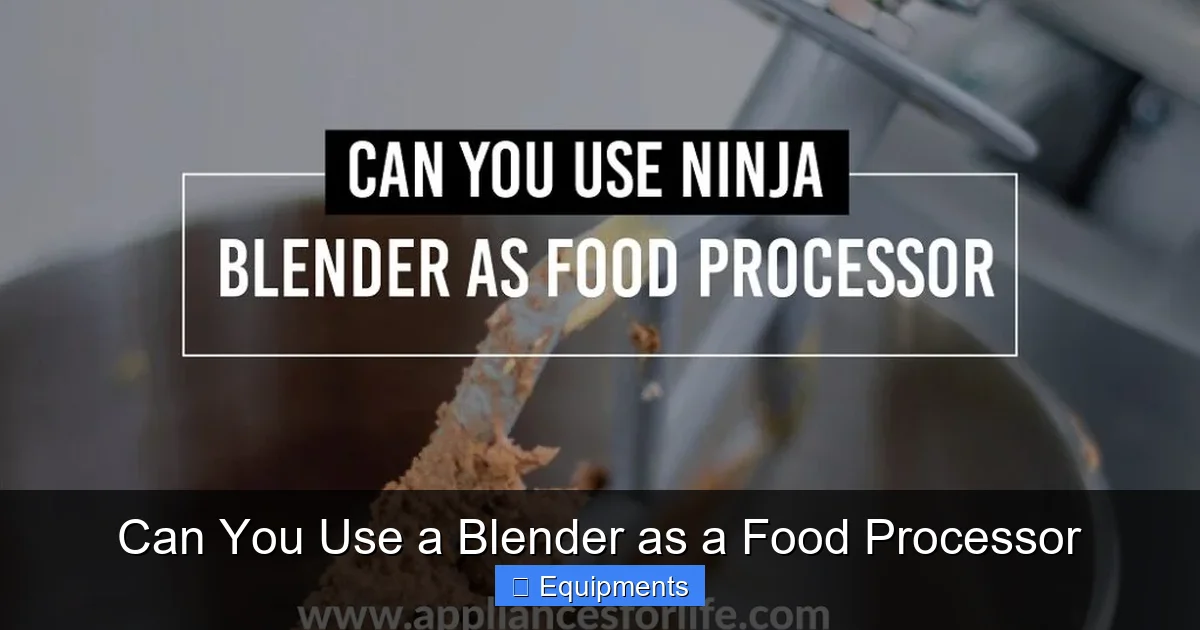
Visual guide about Can You Use a Blender as a Food Processor
Image source: appliancesforlife.com
The Blender: A Vortex Engine
Think of a blender as a vortex engine. Its core components are:
- The Jar: Typically tall, narrow, and made of glass, plastic, or stainless steel. This shape is crucial for creating a powerful, swirling vortex that pulls ingredients down toward the blades.
- The Blade Assembly: Usually a single, fixed, multi-pronged blade at the bottom, often connected directly to the motor shaft. It’s designed for high-speed rotation to liquefy and emulsify.
- The Motor Base: Generally more powerful in terms of RPM (revolutions per minute) than a food processor. It’s built for sustained high-speed operation, especially with liquid contents that help cool the motor.
- The Lid & Tamper: The lid has a sealed opening (often with a rubber gasket) to prevent leaks. The tamper is a vital tool for pushing down stubborn ingredients without stopping the machine or risking injury.
The blender’s entire system is optimized for liquid-based processing. The narrow jar concentrates ingredients against the blade, and the high speed incorporates air and creates friction, which generates heat—great for hot soups, bad for dough.
The Food Processor: The Chopping & Shredding Specialist
The food processor is a modular workshop. Its key parts are:
- The Bowl: Wide, shallow, and circular. This expansive surface area allows ingredients to circulate freely around the blades without needing liquid to create movement.
- Interchangeable Blades & Discs: This is the food processor’s superpower. Common attachments include:
- S-Blade (Chopping Blade): For mincing, pureeing (dry), and mixing.
- Shredding Disc: A grater-like disc for cheese, vegetables, and potatoes.
- Slicing Disc: For uniform slices of cucumber, potato, etc.
- Dough Blade: A blunt, curved blade that kneads without cutting too aggressively.
- The Feed Tube: A wide, chute-like opening with a plunger. This allows you to add ingredients while the machine is running and, crucially, to safely feed long items like carrots or zucchini directly onto the spinning disc.
- The Motor Base: Typically has high torque (rotational force) at lower speeds. It’s built for short, powerful bursts of work (pulses) rather than continuous high-speed blending. It often has safety interlocks that prevent operation unless the bowl and lid are locked correctly.
The food processor’s design is all about dry, hard, and bulky ingredient manipulation. The wide bowl and specialized blades give you control over the size and shape of the final product, from a coarse chop to a fine grate.
Tasks Where a Blender Can Substitute for a Food Processor (With Caveats)
Now for the practical part. There are several common food processor tasks you can attempt with a blender, but success depends on technique, ingredient preparation, and managing your expectations.
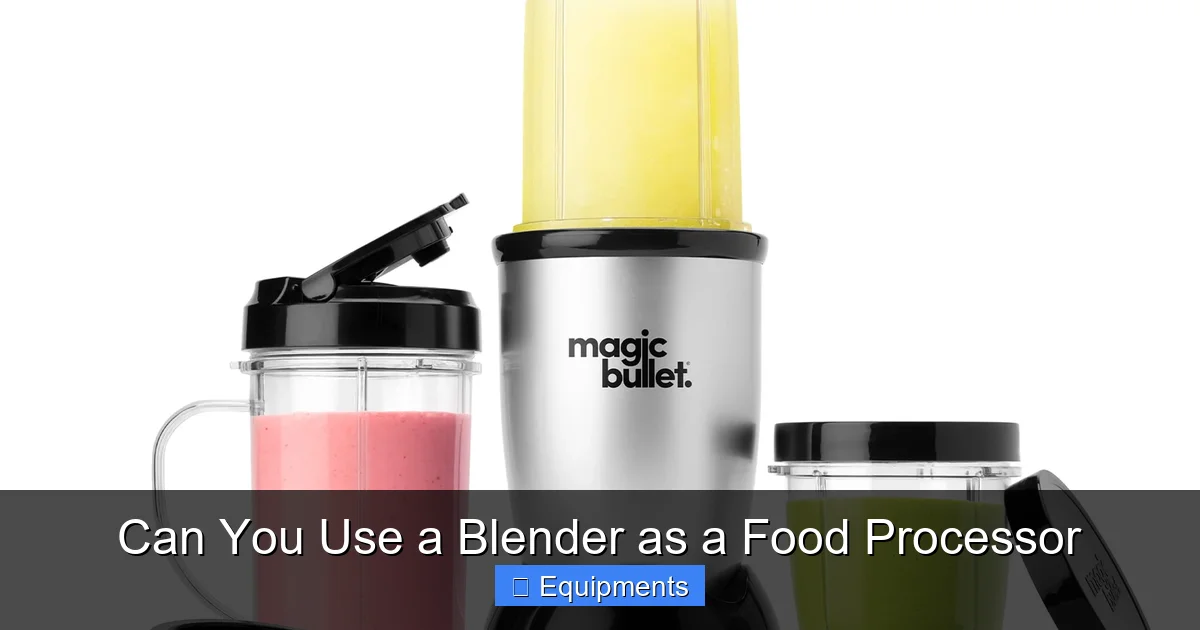
Visual guide about Can You Use a Blender as a Food Processor
Image source: m.media-amazon.com
Chopping & Mincing (Soft Items)
For soft vegetables like onions, peppers, or mushrooms, or for mincing garlic and herbs, a blender can work. The key is the pulse function. Dump the ingredients in the dry blender jar. Use very short pulses (1-2 seconds), shaking the jar gently between pulses to redistribute the contents. If you run the blender continuously, you’ll quickly turn your onions into onion juice or your herbs into a green paste. This method works best for small batches. For larger quantities, you’ll spend more time scraping and shaking than you would with a food processor’s efficient circulation.
Making Nut Butters & Pastes
This is a borderline case. You can make nut butters (almond, peanut) or seed pastes (tahini) in a high-powered blender, but it requires patience and a specific technique. You must start with roasted, warm nuts for the best results. The process will be longer and louder than in a food processor. You’ll need to stop frequently to scrape down the sides, as the ingredients will form a ball that hugs the walls, away from the blades. A food processor’s wide bowl keeps the paste in constant contact with the S-blade, making the process faster and more consistent. The blender may also strain its motor more during this extended, high-torque job.
Pureeing Cooked Vegetables & Legumes
This is a clear win for the blender and a perfect example of using the right tool. Hummus, mashed potatoes, black bean dip, or roasted red pepper soup—these are all tasks where a blender’s ability to create a perfectly smooth, creamy puree is unmatched. A food processor can do it, but the result often has a slightly grainier, more textured consistency because its blades are designed to chop, not liquefy. For silky-smooth results, the blender is king.
Making Salad Dressings & Emulsified Sauces
Another blender specialty. Vinaigrettes, mayonnaise, aioli, and creamy herb sauces rely on the blender’s high-speed vortex to force oil and water (or acid) together into a stable, unified emulsion. The narrow jar and powerful motor create the shear force needed. A food processor can emulsify, but it’s less efficient and can sometimes separate more easily, especially with smaller quantities.
Tasks Where a Blender Will Struggle or Fail (Food Processor Territory)
Here are the core functions where a blender is simply the wrong tool for the job. Attempting these will lead to frustration, poor results, or potentially damage your appliance.
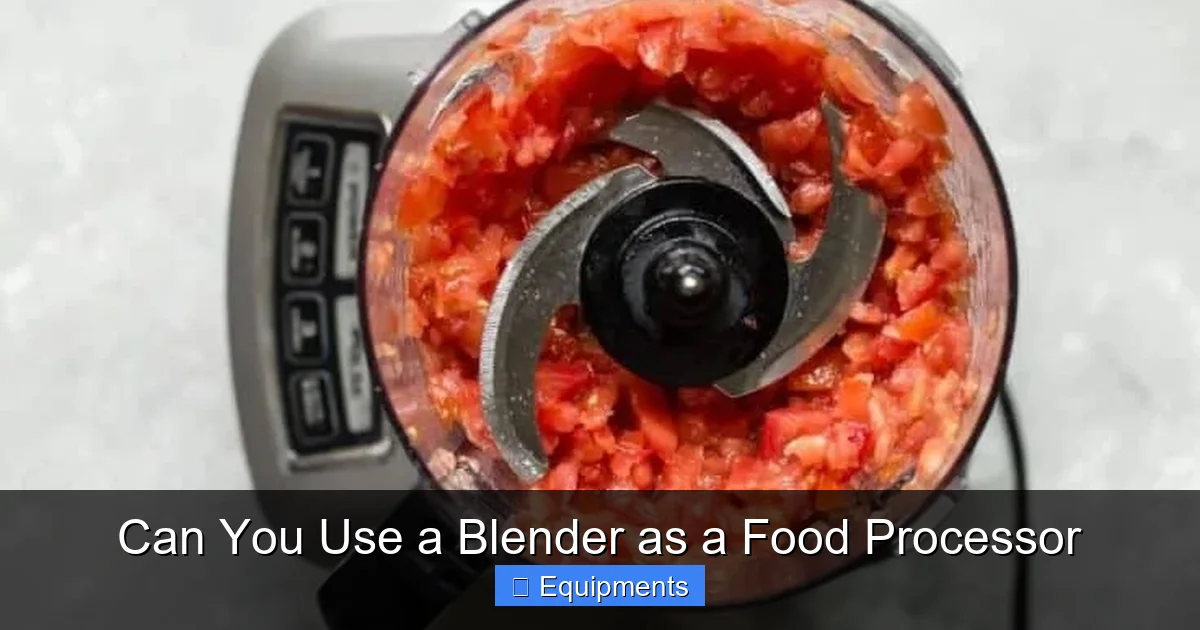
Visual guide about Can You Use a Blender as a Food Processor
Image source: culinaryhill.com
Shredding & Grating
This is non-negotiable. You cannot shred cheese, carrots, zucchini, or potatoes in a standard blender jar. The blades are not designed for grating, and the narrow jar would immediately clog. The only shredding a blender can do is if you buy a separate, specialized attachment (which is rare and often poorly made). The food processor’s shredding disc is a dedicated, efficient tool for this job. Trying to “chop” these items into grated pieces in a blender will result in an uneven, pulpy mess.
Slicing
Similarly, uniform slices of cucumber, potato, or radish are impossible without a food processor’s slicing disc. The blender’s blade will simply chop or puree. This is a task with no blender workaround.
Kneading Dough
While you can mix a quick bread batter or pancake mix in a blender, kneading yeast dough (for bread, pizza, pie crust) is a food processor exclusive. The dough blade is specifically designed to gently stretch and fold gluten strands without cutting them, developing elasticity. A blender’s high-speed, chopping action will over-develop and heat the gluten, resulting in a tough, dense final product. It will also place immense strain on the blender’s motor, which isn’t designed for the dense, elastic resistance of dough.
Chopping Hard, Dry Ingredients
Try to chop whole, raw carrots or a block of cold butter in a blender. The narrow jar will funnel the ingredients into a tight cylinder against the blades, which will either spin uselessly (if the item is too big) or force the motor to labor and overheat. The food processor’s wide bowl allows ingredients to circulate, getting chopped evenly by the S-blade from all sides. For dry spice grinding, a small electric spice grinder or a mortar and pestle is still superior to both.
Processing Large Quantities
A standard blender jar holds 48-64 oz, but its effective processing volume for dry tasks is much less—maybe 1-2 cups at a time to allow for movement. A food processor with a 12-cup bowl can easily handle 4-6 cups of shredded vegetables or a large batch of dough without clogging. For meal prep or cooking for a crowd, the food processor’s capacity is a massive advantage.
Pro Tips: How to Use Your Blender for Food Processor-Style Tasks
If you’re in a situation where you only have a blender and you need to attempt a food processor task, follow these rules to maximize your chances of success and minimize risk.
1. Master the Pulse, Ditch the “Blend” Button
This is the single most important tip. For any dry or semi-dry task, never use the continuous “blend” or “puree” setting. The continuous high speed will turn your ingredients into a paste or liquid. Use the “pulse” function in sharp, 0.5 to 2-second bursts. Listen and watch. Stop as soon as you reach the desired chop. It’s better to under-process and pulse again than to over-process with no undo button.
2. Prep Ingredients to the Right Size
Cut everything into uniform, small pieces before adding to the blender. For onions or peppers, a ½-inch dice is a good target. This reduces the workload on the blades and helps ensure even chopping. Large, whole pieces will either not get chopped or will get jammed against the blade.
3. Work in Small Batches
Do not overfill the blender jar. For dry chopping, fill it no more than 1/3 full. This gives the ingredients room to move and fall back onto the blades. Overfilling is the #1 cause of poor chopping results and motor strain in a blender used for dry tasks.
4. Use the Tamper Correctly (If You Have One)
The tamper is your friend for pushing down ingredients that stick to the sides. But there is a critical rule: NEVER insert the tamper while the blender is running. Always stop the machine, unplug it if needed, and then use the tamper to push ingredients toward the center. For dry tasks, the tamper is less useful than for thick smoothies, as there’s less liquid to create a vortex to pull ingredients down.
5. Add Minimal Liquid (The Secret Weapon)
For tasks like making a coarse pesto or chopping nuts, adding just a teaspoon or two of a neutral liquid (water, oil, lemon juice) can be a game-changer. It’s not enough to create a puree, but it provides just enough lubrication to help ingredients move and get chopped by the blades. This mimics the slight moisture that might naturally be in food (like the oil in nuts). Start with almost no liquid and add the tiniest amount only if things aren’t moving.
6. Accept a Different (Often Inferior) Texture
Manage your expectations. A blender-chopped onion will be more irregular and pulpy than a food processor’s even dice. Blender-made pesto will likely be smoother and more paste-like than a food processor’s version, which retains more texture from the nuts and herbs. If the recipe specifically calls for a “coarse chop” or “diced,” a blender is a risky substitute.
The Bottom Line: Which Tool for Which Job?
Let’s make this crystal clear with a simple reference guide.
Reach for Your BLENDER When:
- Making smoothies, milkshakes, or frozen drinks.
- Pureeing soups, sauces, or baby food to a silky-smooth consistency.
- Making creamy dressings, mayonnaise, or emulsified sauces.
- Crushing ice for drinks (only if your blender is rated for it).
- Preparing smooth nut or seed butters (with patience).
- Whipping cream or beating eggs (with care).
Reach for your FOOD PROCESSOR When:
- Shredding or grating cheese, vegetables, or potatoes.
- Slicing vegetables uniformly.
- Chopping onions, nuts, or herbs into a coarse or fine chop without pureeing.
- Making pie crust, biscuit dough, or kneading any yeast dough.
- Making traditional, textured hummus or coarse tapenades.
- Processing large batches of anything (chopped veggies, shredded cheese, dough).
- Grinding dry ingredients into a coarse meal (like breadcrumbs or flour).
The “In-Between” Tasks (Use Your Judgment):
- Making Pesto: Blender = smoother paste. Food Processor = more textured, rustic. Both work, but the food processor is easier and more traditional.
- Chopping Soft Veggies: Blender (with pulse) can work for small amounts. Food processor is faster and more consistent.
- Making Nut Butter: Blender (high-powered) can do it with effort. Food processor is easier and more reliable.
Conclusion: Embrace the Multitool, But Respect the Specialist
So, can you use a blender as a food processor? The honest answer is: you can try, but you shouldn’t expect specialist results from a generalist tool. A blender is a magnificent instrument for liquid transformation. Its power and design are perfectly suited for creating emulsions, purees, and aerated frozen treats. A food processor, with its modularity and wide-bowl efficiency, is the undisputed champion of dry, solid food preparation—chopping, shredding, slicing, and kneading.
Trying to make your blender do a food processor’s job is often a compromise. You’ll get uneven textures, messy jars, and stressed motors. For the home cook, the most efficient and satisfying path is to understand and respect the intended purpose of each machine. If your budget or counter space allows for only one, a high-powered blender is the more versatile single purchase, as it can tackle a wider range of tasks, including many food processor jobs, with some technique adjustments. However, if you regularly bake (pie crusts, bread), make large salads (shredded carrots, cheese), or value perfectly diced mirepoix, a food processor is not a luxury—it’s a necessity that will save you time and elevate your results.
Ultimately, a well-equipped kitchen understands that the right tool for the right job isn’t just a cliché; it’s the foundation of great cooking. Use your blender for what it does best, and save the food processor for its domain. Your recipes—and your appliances—will thank you for it.
Frequently Asked Questions
Can I make dough in a blender?
No, you should not make yeast dough in a blender. The blender’s high-speed chopping action will over-develop and heat the gluten, resulting in tough, dense bread or pastry. It also places excessive strain on the motor. Use a food processor with a dedicated dough blade or mix/knead by hand.
Can a blender shred cheese or carrots?
No. A standard blender cannot shred or grate. Its blades are designed for cutting and pulverizing, not grating. Attempting this will result in a pulpy, uneven mess and will likely clog the narrow jar. You need a food processor with a shredding disc for this task.
Is it safe to put dry ingredients in a blender?
It is generally safe for small quantities of soft, dry items (like oats or nuts) if you use the pulse function and do not overfill. However, you should never put very hard, whole ingredients (like whole spices or ice without liquid) into a blender, as this can damage the blades or overheat the motor. Always consult your blender’s manual for its specific capabilities.
Why does my blender smoke or overheat when I try to chop nuts?
This happens because you are asking the blender to perform a high-torque, low-speed task it isn’t designed for. The motor is working too hard against dense, dry ingredients with no liquid to lubricate and cool the system. Stop immediately, let the motor cool, and use a food processor for large quantities of nuts or hard dry chopping.
Can I use a blender to make hummus?
Yes, a blender can make hummus, and it will often produce a smoother, creamier texture than a food processor. However, it may require more scraping of the sides and possibly a tiny bit of added liquid (water or oil) to get the chickpeas moving. The trade-off is that you lose some of the traditional, slightly coarse texture a food processor gives.
What’s the main reason a blender fails at food processor tasks?
The main reason is the fundamental design difference: the blender’s narrow, tall jar is engineered to create a vortex with liquid, pulling ingredients down to be pulverized. For dry, bulky ingredients, this design causes clogging and uneven processing. The food processor’s wide, shallow bowl allows ingredients to circulate freely around specialized blades, providing even, controlled results without needing liquid.
Pingback: Can You Eat Pufferfish - kitchenandhouseware.com
Pingback: Can You Grind Chicken in a Food Processor - kitchenandhouseware.com
Pingback: Can You Eat Tempeh Raw - kitchenandhouseware.com
Pingback: Can You Eat Acorns - kitchenandhouseware.com
Pingback: Can You Cook Botulism Out of Food - kitchenandhouseware.com