Blending does not destroy insoluble fiber. The mechanical process of a blender physically breaks down the tough, stringy structure of insoluble fiber into much smaller pieces, but the fundamental dietary fiber molecules remain intact and nutritionally active. Unlike juicing, which removes fiber entirely, blending creates a suspension where both soluble and insoluble fiber are present, promoting satiety and digestive health. The key difference is in the physical form, not the chemical destruction, of the fiber.
Key Takeaways
- Blending transforms, not destroys: Insoluble fiber’s physical structure is pulverized into tiny particles, but its molecular composition and health benefits are preserved.
- Blending vs. Juicing is critical: Juicing extracts liquid and discards the fiber pulp. Blending incorporates the entire food, including all its fiber, into the final drink.
- Particle size matters for digestion: Smaller fiber particles from blending may be easier for some digestive systems to handle while still providing the bulking effect of insoluble fiber.
- Blender power influences texture: High-speed blenders create smoother textures with finer fiber particles, while less powerful blenders leave a coarser, more noticeable pulp.
- Nutrient bioavailability can increase: Breaking down cell walls through blending can make some nutrients more accessible, working synergistically with the fiber.
- You retain all the fiber: A smoothie made in a blender contains 100% of the insoluble (and soluble) fiber from the whole ingredients you put in, unlike a juice.
- Practical tip for max fiber: Include the skins of fruits and vegetables (like apples, cucumbers, potatoes) and use fibrous greens like kale or collards with their stems for the highest insoluble fiber content.
📑 Table of Contents
- The Great Fiber Debate: What Happens in Your Blender?
- Understanding the Two Titans of Dietary Fiber
- The Blender’s Action: A Physical, Not Chemical, Transformation
- Comparing Blending to Other Food Processing Methods
- The Implications of Smaller Fiber Particles on Digestion and Health
- Practical Application: Maximizing Fiber in Your Blended Creations
- Debunking Myths: “Fiber Must Be Chewed” and Other Concerns
- Conclusion: Blend with Confidence, Eat with Variety
The Great Fiber Debate: What Happens in Your Blender?
You stand at the kitchen counter, ready to power up your blender. Into the carafe go a handful of spinach, half a banana, a cup of berries, and maybe some carrot or celery. You hit the button, and with a roar, your solid ingredients transform into a smooth, drinkable mixture. It’s quick, convenient, and feels like a health hack. But a nagging question might bubble up, especially if you’re mindful about your fiber intake: Does blending destroy insoluble fiber? It’s a common concern, often whispered among health enthusiasts. The fear is that this violent mechanical action might somehow “break” or “cancel out” the very dietary fiber we’re trying to consume more of. After all, if we’re supposed to chew our food to aid digestion, what does a blade spinning at 25,000 RPM do?
The short, reassuring answer is no, blending does not chemically destroy or deactivate insoluble fiber. However, the full answer is a fascinating dive into food science, digestion, and how we define “destruction.” The process fundamentally changes the physical form of insoluble fiber—grinding its tough, stringy, cellulose-rich structure into microscopic particles—but it does not alter its chemical identity or its core physiological functions in your body. To understand why, we need to first get clear on what insoluble fiber actually is and how our bodies are designed to handle it.
Understanding the Two Titans of Dietary Fiber
Before we can judge the blender’s impact, we must meet our subject. Dietary fiber isn’t a single entity; it’s a family of plant-based carbohydrates that human digestive enzymes cannot break down. They pass through our stomach and small intestine largely intact, reaching the colon where they play various roles. They are broadly split into two camps: soluble and insoluble. Both are crucial, but they behave very differently.
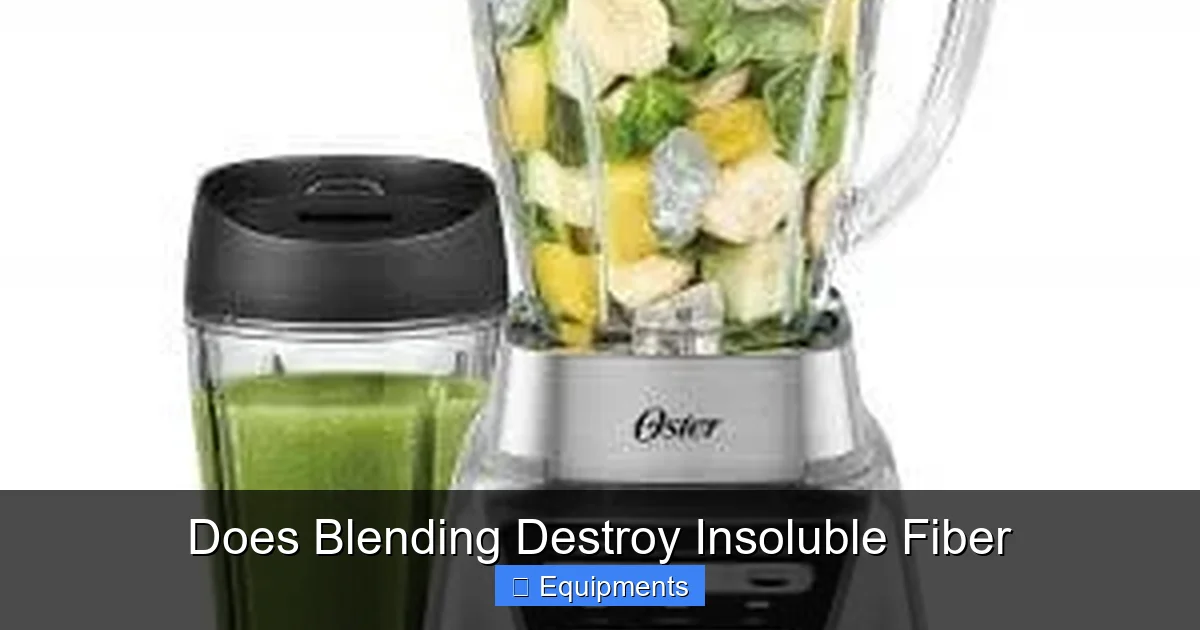
Visual guide about Does Blending Destroy Insoluble Fiber
Image source: kitchenhabit.com
Soluble Fiber: The Soothing, Gel-Forming Type
Soluble fiber, as its name suggests, dissolves in water to form a viscous, gel-like substance in your digestive tract. Think of it like a sponge. You find it in oats, beans, apples, citrus fruits, and psyllium. Its superpowers include slowing digestion (which helps regulate blood sugar spikes), softening stool, and acting as a prebiotic—food for the beneficial bacteria in your gut. In a blended smoothie, soluble fiber from fruits like banana or avocado contributes significantly to that thick, creamy texture we love.
Insoluble Fiber: The Bulking, Sweeping Type
This is our star of the show. Insoluble fiber does not dissolve in water. It remains firm, rough, and retains its structure, adding bulk and weight to stool. It’s found in the skins of fruits and vegetables, whole grain bran, nuts, seeds, and the fibrous stalks of plants like celery and kale. Its primary job is to act like a broom, sweeping through your intestines, stimulating peristalsis (the muscular contractions that move food along), and promoting regular bowel movements. It adds that satisfying, “chewy” texture to whole foods like raw carrots or the crunch of an apple with its skin on. Chemically, its backbone is made of strong, complex molecules like cellulose, hemicellulose, and lignin—the very components that give plants their rigid structure.
The Blender’s Action: A Physical, Not Chemical, Transformation
Now, let’s bring in the blender. This kitchen workhorse operates on a simple but powerful principle: high-speed mechanical shear. Sharp blades rotate at incredible velocities, creating a vortex that pulls food down and smashes it against the walls of the container. This force tears, crushes, and pulverizes.
Visual guide about Does Blending Destroy Insoluble Fiber
Image source: probiotiv.com
What Gets Broken? Cell Walls and Structures
The blender’s primary target is the plant’s cellular architecture. Fruits and vegetables are made of millions of tiny cells held together by rigid cell walls. These walls are rich in—you guessed it—insoluble fiber, particularly cellulose. When you blend, you are physically shredding these cell walls into tiny fragments. The long, fibrous strands of cellulose are chopped into microscopic pieces. The tough, woody lignin structures are shattered. The result is a homogeneous mixture where you can no longer see distinct fibers with the naked eye. The “broom” has been ground into a fine, almost dust-like powder suspended in the smoothie liquid.
What Does NOT Get Broken? The Chemical Bonds
Here is the critical scientific distinction. The blender applies physical force, not chemical energy. It does not break the covalent chemical bonds that hold the glucose molecules together in the cellulose chain. To break those bonds and truly “destroy” or hydrolyze cellulose into simple sugars would require intense heat, strong acids, or specific enzymes (like cellulase) that humans simply do not possess. Your blender is not a chemical reactor; it’s a high-powered food processor. Therefore, the insoluble fiber molecules—the cellulose, hemicellulose, and lignin—emerge from the blending process chemically unchanged. They are just in a much, much smaller physical form.
Comparing Blending to Other Food Processing Methods
To truly appreciate what blending does and does not do, it’s helpful to contrast it with other common ways we process food, especially regarding fiber.
Visual guide about Does Blending Destroy Insoluble Fiber
Image source: probiotiv.com
Blending vs. Juicing: The Night and Day Difference
This is the most important comparison. A juicer, whether centrifugal or masticating, works by extracting the liquid from the plant material and separating and discarding the solid pulp. That pulp is where virtually all of the insoluble fiber resides. A glass of fresh carrot juice is delicious and nutrient-dense, but it contains almost zero insoluble fiber. A blended carrot smoothie, made with the whole carrot, contains 100% of its original fiber content. Juicing removes fiber; blending incorporates it.
Blending vs. Cooking: Heat vs. Shear
Heat from cooking (boiling, steaming) can soften the structure of plant cell walls, making them easier to break down. It can also cause some soluble fibers to gel. However, prolonged, intense heat can degrade certain heat-sensitive nutrients and may slightly alter the structure of some fibers, though the core insoluble cellulose remains largely intact. Blending, being a cold process (assuming you use cool ingredients), avoids any thermal degradation but achieves its structural breakdown purely through mechanical force. Cooked, then blended vegetables (like in a soup) have their fiber structure softened by heat and then further pulverized by the blender.
Blending vs. Chewing: The Body’s Natural First Step
Chewing is the first, and often most overlooked, step of mechanical digestion. Your teeth grind food, and salivary enzymes begin breaking down starches. The goal of chewing is to increase surface area and form a manageable bolus. A blender performs a vastly more thorough and complete version of this mechanical breakdown. It creates a particle size far smaller than even the most diligent chewing could achieve. So, in a sense, blending is like “pre-chewing” your food to an extreme degree. The subsequent digestive processes in your stomach and intestines will then work on this finely divided material.
The Implications of Smaller Fiber Particles on Digestion and Health
So, we’ve established that blending turns insoluble fiber from long, sweeping strands into a fine powder. Does this change how it affects our bodies? The answer is yes, but not in a way that negates its benefits. It changes the experience of the fiber, not its function.
The Bulking Effect is Preserved, but the Texture is Different
The primary role of insoluble fiber is to add bulk to stool and stimulate intestinal movement. This function is absolutely preserved in a blended smoothie. The microscopic fiber particles still absorb water, increase the mass of the chyme (digestive contents), and provide the physical stimulus for peristalsis. However, because the particles are so small, you may not feel the same gritty or fibrous texture that you would if you ate the whole, unblended food. For some people with sensitive digestive tracts (like those with diverticulitis in flare-up or severe IBS), this finer particle size might actually be easier to tolerate than coarse, raw fibrous foods. The broom is still sweeping, but with many more, much finer bristles.
Satiety Signals: A Potential Trade-Off
One often-cited benefit of whole foods is the satiety (fullness) they provide, partly due to the act of chewing and the physical presence of bulky fiber in the stomach. Some research suggests that liquids may not trigger the same fullness signals as solid foods, potentially leading to less satiety and higher calorie intake later. A blended smoothie, while containing all the fiber, is in liquid form. You may not feel as full after drinking a kale smoothie as you would from eating a large kale salad with the same amount of fiber. This is a behavioral and physiological nuance, not a statement on fiber destruction. To counteract this, you can make your smoothies thicker (use less liquid, add avocado or chia seeds), drink them slowly with a spoon, and be mindful of total calorie content.
Gut Microbiome Fuel: Fully Intact
The beneficial bacteria in your colon (the microbiome) ferment both soluble and insoluble fibers, producing short-chain fatty acids (SCFAs) like butyrate, which are crucial for colon health. The finely ground insoluble fiber from blending is actually more accessible to these bacteria because of its vastly increased surface area. While insoluble fiber is fermented more slowly and less completely than soluble fiber, the blender’s action does not hinder this process; it may even slightly facilitate it by exposing more surface to bacterial enzymes.
Practical Application: Maximizing Fiber in Your Blended Creations
Armed with the knowledge that blending retains all your precious insoluble fiber, how do you optimize your smoothie-making to ensure you’re getting the most out of it? The equipment and your ingredient choices matter.
Blender Power and Blade Design
Not all blenders are created equal. A personal blender or a low-wattage countertop model may struggle to pulverize very tough, fibrous ingredients like raw beets, carrot tops, or the stems of kale and collard greens. You might end up with a gritty, unpleasant texture or, worse, a machine that overheats and shuts off. For the finest particle size and smoothest incorporation of insoluble fiber, a high-powered blender (1,000 watts or more) with sharp, robust blades is ideal. Brands like Vitamix, Blendtec, and newer high-performance models from Ninja or Breville excel here. They can reduce almost any whole food to a silky suspension, effectively maximizing the bioavailability of all nutrients while fully integrating the fiber.
Ingredient Selection: The Fiber Foundation
Your smoothie is only as fibrous as the ingredients you put in. To boost insoluble fiber, focus on:
- Vegetable Skins: Wash organic produce well and blend apples, pears, cucumbers, potatoes (white or sweet), and zucchini with their skins on. The skin is a fiber powerhouse.
- Leafy Greens with Stems: Don’t waste the tough stems of kale, collards, or Swiss chard. They are packed with fiber. Tear leaves off the stem, but chop the stems finely and add them. A powerful blender will handle them easily.
- Root Vegetables: Carrots, beets, parsnips, and ginger root are excellent sources. Use them raw for maximum fiber integrity.
- Seeds and Nuts: Flaxseeds (ground), chia seeds, and almonds add both insoluble and soluble fiber, plus healthy fats. They contribute to a thicker texture.
- Whole Grains: A tablespoon of raw rolled oats or quinoa can add significant fiber and make your smoothie more sustaining.
The “Smoothie vs. Salad” Mindset Shift
It’s helpful to stop thinking of a blended smoothie as a “lesser” version of a whole food salad. Instead, see it as a different format for consuming whole plant foods. You are still ingesting the complete nutrient and fiber profile of the carrot, spinach, and berry. The form is liquid, which can be advantageous for nutrient absorption (some compounds are more bioavailable when cell walls are broken) and for consuming larger quantities of vegetables than you might comfortably eat in a sitting. The key is to make it balanced: include protein (Greek yogurt, protein powder, nut butter), healthy fats (avocado, seeds), and a mix of fruits and low-sugar vegetables to avoid a sugar bomb.
Debunking Myths: “Fiber Must Be Chewed” and Other Concerns
Let’s address some persistent myths that fuel the “blending destroys fiber” worry.
Myth 1: “Fiber has to be chewed to be effective.”
While chewing is the first step of digestion and signals your brain that you’re eating, the mechanical breakdown of fiber for its physiological effects (bulking, fermentation) occurs primarily in the colon via bacterial action. Whether the fiber particles enter your system from a well-chewed bite of broccoli or a perfectly blended broccoli smoothie, they will reach the colon and perform their function. The blender simply performs Step One (mechanical breakdown) more efficiently than your teeth.
Myth 2: “Blending makes fiber ‘invisible’ so your body doesn’t recognize it.”
Your digestive system doesn’t have eyes. It responds to chemical composition and physical properties (solubility, particle size, water-holding capacity). As long as the cellulose and lignin molecules are present—and they are—your body recognizes them as dietary fiber. Their invisibility in a smoothie is irrelevant to their function.
Myth 3: “The heat from the blender motor destroys nutrients and fiber.”
This is a partial concern. Yes, prolonged blending of large quantities in a high-powered blender can generate some heat due to friction. However, this heat is minimal and brief compared to cooking. It might degrade a tiny amount of heat-sensitive vitamins (like Vitamin C or some B vitamins), but it does not affect the heat-stable structure of insoluble fiber. If you’re concerned about heat, blend in short bursts, use chilled ingredients, or add frozen fruit to keep temperatures down.
Conclusion: Blend with Confidence, Eat with Variety
So, does blending destroy insoluble fiber? The science is clear and reassuring: it does not. The blender is a tool of physical transformation, not chemical annihilation. It takes the formidable, sweeping brooms of insoluble fiber from foods like celery, kale stems, and apple skins and grinds them into a fine, functional dust that your digestive system can utilize just as effectively. You are not losing fiber; you are simply changing its form from a coarse, tactile experience to a smooth, drinkable one.
This knowledge empowers you. You can confidently use your blender as a powerful tool to increase your daily intake of plant foods and, by extension, their valuable insoluble fiber. A daily green smoothie packed with vegetable skins, leafy greens, and seeds is a fantastic strategy for supporting digestive regularity and overall gut health. However, the final wisdom is one of balance. While blending is excellent, it shouldn’t be the only way you consume fiber. The act of chewing whole, crunchy foods like raw vegetables, nuts, and whole fruits provides different sensory and satiety cues and introduces a variety of fiber particle sizes into your diet. Use your blender to complement a diet rich in whole, minimally processed plant foods. Blend your broccoli stems into a smoothie, but also roast or steam broccoli florets and eat them whole. In the grand symphony of nutrition, blending is a powerful and fiber-friendly instrument—just don’t let it play the only note.
Frequently Asked Questions
Does blending destroy the fiber in fruit and vegetable skins?
No. Blending pulverizes the skin’s structure but leaves the insoluble fiber molecules (like cellulose) chemically intact. You consume all the fiber when you drink the entire smoothie, skin included.
Is the fiber in a smoothie as effective as fiber from whole food?
Yes, the fiber is chemically the same and performs the same bulking and fermenting functions. The main difference is that the finely ground particles in a smoothie may be less noticeable physically and may trigger slightly different satiety signals compared to chewing whole food.
Will a less powerful blender remove fiber like a juicer does?
No. A blender, regardless of power, incorporates all the solid material into the final product. A weak blender may leave a gritty texture with larger fiber particles, but it does not separate and discard fiber pulp like a dedicated juicer does.
Can blending insoluble fiber cause digestive discomfort?
For most people, no. The finely ground fiber is often easier to digest than coarse, raw fibers. However, if you suddenly increase your fiber intake dramatically via smoothies, it can cause gas or bloating. Introduce high-fiber smoothies gradually and ensure you drink plenty of water.
Should I add water or milk to my smoothie to help the fiber work?
Yes. Insoluble fiber works by absorbing water to add bulk. Consuming your fiber-rich smoothie with adequate liquid (water, milk, or the liquid from the fruits/veggies themselves) is essential for it to function properly and prevent constipation.
Can I make a high-fiber smoothie ahead of time and store it?
You can, but fiber quality is best immediately after blending. Over time (especially 24+ hours), the smoothie may separate, and the finely ground fiber particles can begin to settle. For maximum texture and nutrient retention, it’s best to drink your smoothie right after making it. If storing, give it a vigorous shake or re-blend before drinking.