Discover the easiest way to master your Thermador dishwasher. From loading tips to program selection and maintenance tricks, this guide walks you through every step so your dishes come out spotless while saving energy and water. Follow our simple, friend‑like advice and keep your appliance running like new.
Key Takeaways
- Proper loading: Arrange plates, glasses, and utensils to maximize water flow and avoid damage.
- Program selection: Choose the right cycle for load size, soil level, and energy efficiency.
- Detergent & rinse aid: Use the correct type and amount to prevent spots and improve cleaning.
- Regular maintenance: Clean filters, spray arms, and door seals to keep performance high.
- Troubleshooting basics: Identify common error codes and quick fixes before calling service.
- Energy‑saving tips: Run full loads, use Eco cycles, and schedule off‑peak washing.
- Safety reminders: Keep the door closed, avoid over‑filling, and follow electrical guidelines.
📑 Table of Contents
- Introduction: Why Your Thermador Dishwasher Deserves Attention
- 1. Getting Started: First‑Time Setup
- 2. Loading Your Thermador Dishwasher the Right Way
- 3. Choosing the Perfect Cycle
- 4. Detergents, Rinse Aids, and Add‑Ons
- 5. Routine Maintenance: Keep It Running Like New
- 6. Troubleshooting Common Issues
- Conclusion: Your Thermador Dishwasher, Mastered
Introduction: Why Your Thermador Dishwasher Deserves Attention
Thermador dishwashers are built for luxury kitchens. They combine sleek design with powerful cleaning technology, so you can enjoy more time at the table and less time scrubbing. But, like any high‑end appliance, they work best when you know the right way to load, select cycles, and keep them clean.
This guide is like a chat with a friend who already knows the ins and outs. We’ll walk through everything—from opening the door for the first time to troubleshooting a stubborn error code. By the end, you’ll feel confident that every plate, pot, and glass comes out sparkling while you save water, energy, and money.
1. Getting Started: First‑Time Setup
Unpacking and positioning
When the box arrives, carefully remove the dishwasher and place it on a level floor. Use a spirit level; Thermador recommends a tolerance of ±0.5 cm. If the unit isn’t level, adjust the front legs with the supplied wrench.

Visual guide about How to Use Thermador Dishwasher
Image source: worstbrands.com
Connecting power and water
- Electrical: Plug into a dedicated 120 V/240 V circuit with a grounded outlet. Do not use extension cords.
- Water supply: Attach the braided stainless‑steel hose to the hot‑water line. Tighten with a wrench, but avoid over‑tightening, which can damage threads.
- Drain hose: Connect to the sink’s drain tailpiece or a dedicated garbage disposal outlet. Ensure a high loop or air gap to prevent backflow.
Running the first cycle
Before loading any dishes, run an empty “Sanitize” or “Rinse” cycle. This clears out any debris from manufacturing and primes the spray arms. Use a cup of white vinegar in the bottom rack to neutralize odors.
2. Loading Your Thermador Dishwasher the Right Way
Understanding rack design
Thermador models typically have a lower rack with adjustable tines, an upper rack with fold‑down tines, and a third‑level cutlery basket. Some premium versions add a flexible third rack for small items.
Visual guide about How to Use Thermador Dishwasher
Image source: missvickie.com
Step‑by‑step loading guide
- Bottom rack: Place plates, bowls, and pans facing the center so water jets hit the dirty side. Large items like casserole dishes go on the back, where the spray arm has the most reach.
- Upper rack: Load glasses, mugs, and small bowls upside‑down. Use the fold‑down tines to create extra space for tall items.
- Cutlery basket: Mix knives, forks, and spoons with handles down. This prevents them from nesting and improves rinse.
- Third rack (if equipped): Ideal for lids, small containers, and silicone bakeware. Keep items small enough to fit without blocking the spray.
Common loading mistakes to avoid
- Overloading the lower rack—water can’t reach the bottom of plates.
- Placing plastic items on the top rack too close to the heating element—may melt.
- Loading large pots upside‑down—prevents proper drainage.
- Mixing heavily soiled pots with lightly soiled dishes—results in uneven cleaning.
3. Choosing the Perfect Cycle
Standard cycle options
Thermador dishwashers typically offer the following programs:

Visual guide about How to Use Thermador Dishwasher
Image source: thermadorappliance.support
- AutoSense: Sensors detect soil level and adjust water, temperature, and time.
- Heavy/Demand Wash: For pots, pans, and baked‑on food.
- Normal/Quick Wash: Everyday dishes with moderate soil.
- Eco/Energy Saver: Lower temperature, longer cycle—great for lightly soiled loads.
- Sanitize: High‑temperature rinse to kill bacteria—ideal for baby bottles.
How to match load to cycle
| Load Type | Recommended Cycle |
|---|---|
| Lightly soiled glasses & cutlery | Eco or Quick Wash |
| Heavily soiled pots & pans | Heavy/Demand Wash |
| Mixed everyday dishes | AutoSense |
| Baby bottles, cutting boards | Sanitize |
Extra features
- Delay Start: Set the dishwasher to run during off‑peak hours.
- Half Load: Use upper or lower rack only, saving water.
- Steam Boost: Adds a steam burst for stubborn grime.
4. Detergents, Rinse Aids, and Add‑Ons
Choosing the right detergent
Thermador recommends low‑phosphate, liquid or powder detergents. For hard water areas, a built‑in water softener works best with a high‑efficiency (HE) detergent.
How much to use
Over‑dosing creates excess suds and can leave residue. Follow the manufacturer’s chart on the detergent cup:
- Light load: 1/2 scoop
- Normal load: 1 scoop
- Heavy load: 1 1/2 scoops
Rinse aid importance
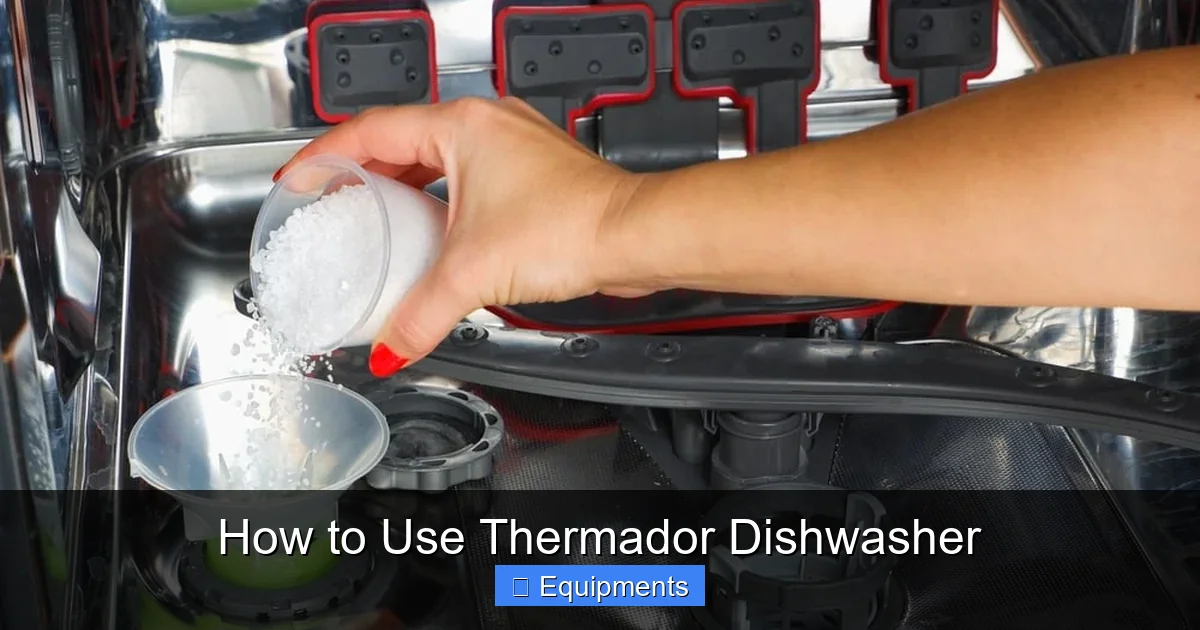
Rinse aid reduces surface tension, preventing water spots on glassware. Fill the rinse‑aid dispenser to the “Full” line and set the dispense level (usually 4–5 for most homes). Refill weekly if you run the dishwasher daily.
Optional boosters
For occasional tough jobs, add a dishwasher booster (e.g., a calcium remover) to the bottom of the tub before starting the cycle. Use only once a month to avoid corrosion.
5. Routine Maintenance: Keep It Running Like New
Cleaning the filter
The filter sits at the bottom of the lower rack. Remove it every two weeks:
- Turn the dishwasher off and open the door.
- Pull out the lower rack.
- Twist the filter knob counter‑clockwise and lift.
- Rinse under warm water; use a soft brush for stubborn bits.
- Replace and lock it back in place.
Spray arm inspection
Check the spray arms monthly for clogs:
- Remove the arm (consult the user manual for your model).
- Rinse under running water.
- Use a toothpick to clear any blocked holes.
- Reinstall securely.
Door seal and exterior care
Wipe the rubber gasket with a damp cloth and a mild detergent. Avoid abrasive cleaners that can damage the seal. Clean the stainless‑steel exterior with a non‑abrasive cleaner and a soft cloth to maintain the showroom shine.
Descaling for hard water
If you have hard water, run a descaling cycle every 3‑4 months. Use a commercial dishwasher cleaner or a cup of white vinegar placed on the top rack. Follow the “Empty Cycle” instructions in the manual.
6. Troubleshooting Common Issues
Dishwasher won’t start
Check that the door is fully closed and latched. Verify the power outlet is live (use a lamp or tester). If the control panel is unresponsive, reset by turning off the circuit breaker for 30 seconds, then restore power.
Spots on glasses
Increase rinse‑aid level, ensure the water temperature is at least 120 °F, and run the “Sanitize” cycle occasionally. Hard water may require a water‑softening cartridge.
Water not draining
Inspect the filter for debris, check the drain hose for kinks, and make sure the air gap isn’t clogged. A quick “Drain & Spin” cycle can clear minor blockages.
Unusual noises
Hard objects (bones, glass shards) may be rattling in the spray arm. Pause the cycle, open the door, and remove any foreign items. If the noise persists, the pump motor may need professional service.
Error codes
Thermador displays a series of blinking lights for errors. Common codes:
- F01: Water fill issue – check inlet valve.
- F02: Drain pump problem – inspect hose.
- F03: Temperature sensor fault – may need replacement.
Consult the user manual for a full list, then try the suggested reset steps before calling a technician.
Conclusion: Your Thermador Dishwasher, Mastered
Using a Thermador dishwasher is simple once you understand the basics of loading, cycle selection, detergent use, and regular upkeep. By following the tips in this guide, you’ll enjoy sparkling dishes, lower utility bills, and a longer‑lasting appliance. Remember, the key is consistency—clean the filter, keep the spray arms clear, and choose the right program for each load. Your kitchen will thank you, and you’ll have more time to enjoy the meals you love.
Frequently Asked Questions
How often should I clean the filter in my Thermador dishwasher?
It’s best to clean the filter every two weeks, or after each heavy‑load cycle if you notice food particles building up.
Can I use regular dish soap in a Thermador dishwasher?
No. Regular dish soap creates excess suds that can overflow. Always use a dishwasher‑specific detergent.
What temperature does the “Sanitize” cycle reach?
The Sanitize cycle typically heats water to around 150 °F (65 °C) to meet NSF/ANSI standards for bacterial reduction.
My dishwasher leaves a film on my dishes. What should I do?
Increase the rinse‑aid level, check that the water temperature is at least 120 °F, and run an empty rinse with a cup of white vinegar to clear any mineral buildup.
Is it safe to run the dishwasher on the “Delay Start” during the night?
Yes, as long as the appliance is in a well‑ventilated area and the power supply is stable. Delay start can help you take advantage of off‑peak electricity rates.
What should I do if the dishwasher displays an error code I don’t recognize?
First, turn the unit off, wait 30 seconds, and restart. If the code persists, consult the user manual’s error‑code chart or contact Thermador customer support for guidance.