To instantly determine if a pan is nonstick, perform a simple water test: beads forming on the surface confirm the coating. Visually, inspect for a smooth, dark finish free of scratches. Protect this layer by avoiding metal utensils and harsh cleaners.
Key Takeaways
- Understanding How To Tell If Pan Is Nonstick: Provides essential knowledge for making informed decisions
- Practical applications: Can be applied in various real-world scenarios
- Key benefits: Offers significant advantages when properly implemented
- Important considerations: Requires attention to specific details and best practices
- Future implications: Continues to evolve and impact related fields
📑 Table of Contents
- That Mysterious Pan: How to Really Know If It’s Nonstick (And What To Do If It’s Not)
- The Visual Check: What Your Pan’s Surface is Saying (Before You Even Cook)
- The Practical Tests: Simple At-Home Experiments to Confirm Nonstick Properties
- Understanding the Materials: What “Nonstick” Actually Means
- Red Flags: When Your Nonstick Pan is on Its Last Legs
- Pro-Tips for Verifying and Preserving Your Nonstick Investment
- The Final Word: Embracing Your Pan’s True Identity
That Mysterious Pan: How to Really Know If It’s Nonstick (And What To Do If It’s Not)
We’ve all been there. You’re staring at a pan in your cupboard or considering a purchase, and a simple question bubbles up: “Is this actually nonstick?” It seems like it should be obvious, but sometimes it’s not. Maybe it’s an older hand-me-down with no box, or a sleek, dark pan that looks like a million others. You pour in some oil, and it still sticks. Or you’re at a garage sale, holding a pan that claims to be “Teflon,” but you’re not sure if that’s a good thing anymore. The confusion is real, and it can lead to ruined eggs, scrubbing nightmares, and wasted money. This isn’t just about satisfying curiosity; it’s about protecting your cookware investment and your cooking sanity. Let’s demystify the nonstick pan together, friend. By the end of this guide, you’ll be a pro at identifying true nonstick surfaces, understanding what they are (and aren’t), and knowing exactly how to care for them.
The Visual Check: What Your Pan’s Surface is Saying (Before You Even Cook)
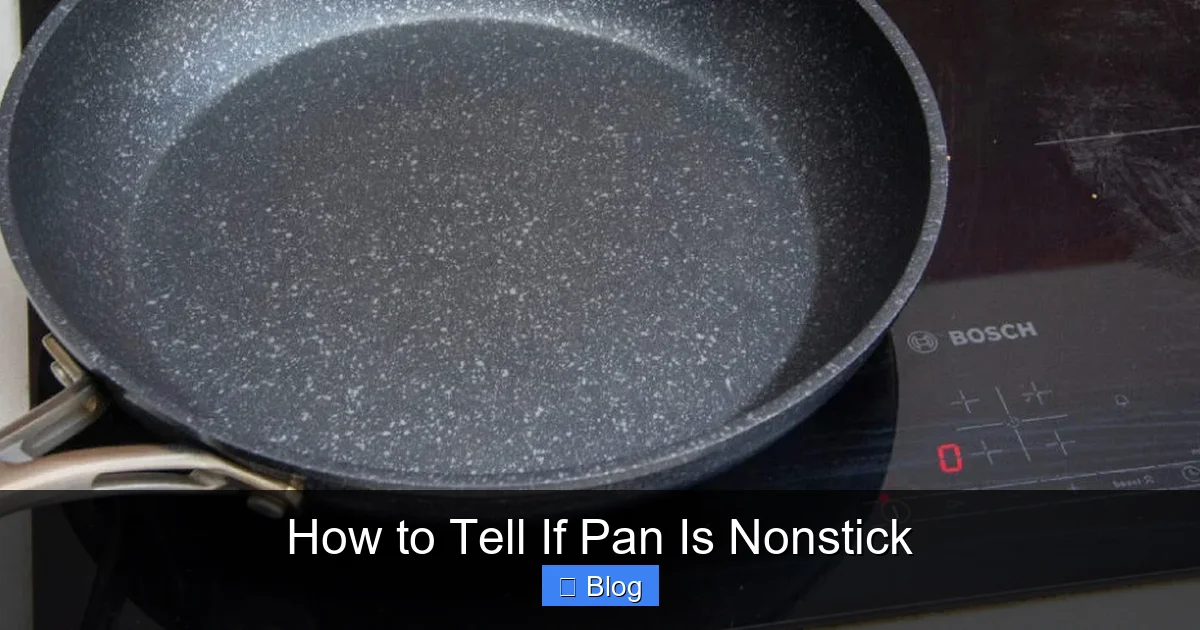
Your first clue is often right in front of your eyes. Nonstick surfaces have distinct visual characteristics that set them apart from other common cookware materials like stainless steel, cast iron, or carbon steel. Learning to read these signs is your first line of defense.
Visual guide about How to Tell If Pan Is Nonstick
Image source: thekitchenix.com
The Signature Look: Color and Finish
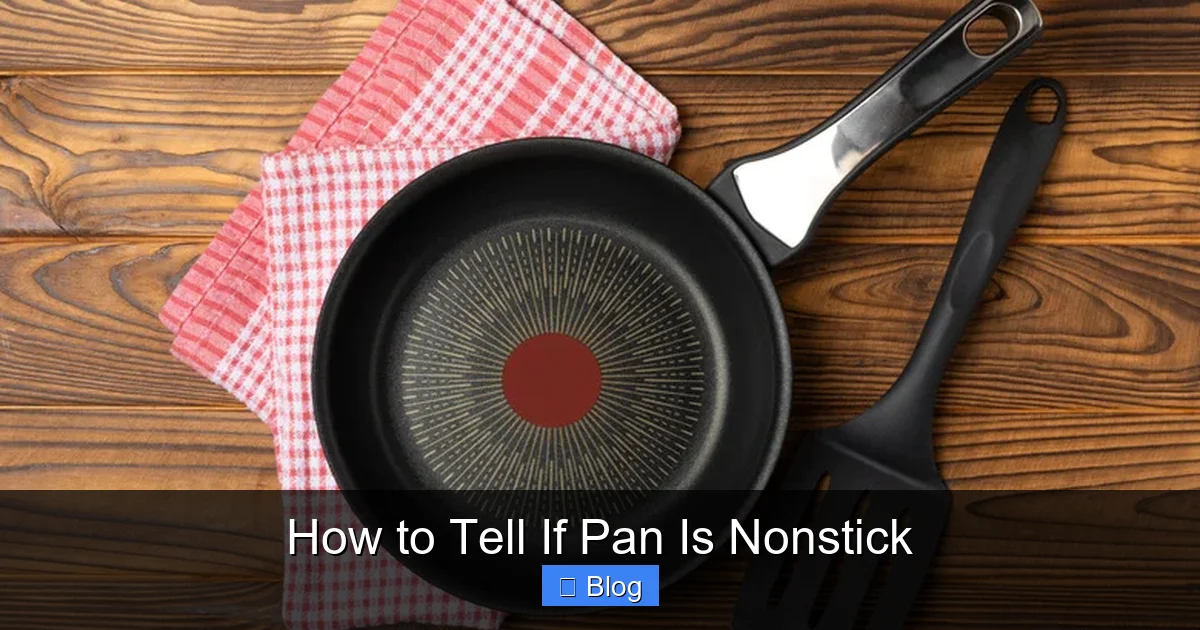
Traditional PTFE-based nonstick pans (the kind often associated with the Teflon brand) are almost always a very distinctive, uniform color. The most classic is a deep, matte black or dark gray. You might also see bronze, copper, or even white. The finish is smooth and has a slight sheen, but it’s not mirror-polished like stainless steel. It’s more of a soft, satin luster. This coating is applied in a factory and is consistent across the entire cooking surface and often up the sides a few inches.
What it’s NOT: It will not look metallic or have a brushed texture like stainless steel. It won’t have the grainy, pebbled look of a seasoned cast iron pan. If you see a pan that’s silver and shiny, that’s almost certainly not a PTFE nonstick surface—it’s likely stainless steel or aluminum.
The Tell-Tale Signs of a seasoned surface vs. a synthetic coating
Here’s where it gets tricky for many people. A well-seasoned cast iron or carbon steel pan can develop a dark, smooth, somewhat nonstick patina that looks deceptively similar to a nonstick coating at first glance. So how do you tell the difference?
- Pattern & Uniformity: A synthetic nonstick coating is perfectly uniform in color and texture across the entire designated cooking area. A seasoned surface is an organic, built-up layer of polymerized oil. It often has slight variations in darkness, subtle streaks, or a more “lived-in” appearance. It might be darker in the center where food cooks most.
- The “Scratch” Test (Gentle!): This is a careful visual inspection, not a destructive test. Look very closely at the surface under good light. A PTFE coating, if intact, will be flawlessly smooth. A seasoned surface, while smooth to the touch, often reveals a microscopic landscape of the pan’s actual metal grain beneath the oil layer. You might see faint hints of the iron or steel structure.
- The Edge: Check where the cooking surface meets the pan’s rim. On a nonstick pan, the coating usually stops abruptly at a defined line, often with a slight lip. On a seasoned pan, the seasoning continues up the sides, gradually thinning out, because you season the entire interior.
Practical Example: Think of a synthetic nonstick coating like a factory-applied layer of paint—smooth, even, and consistent. A seasoned surface is more like a well-worn leather jacket—unique, with a patina that tells a story, and not perfectly uniform.
The Practical Tests: Simple At-Home Experiments to Confirm Nonstick Properties
Looks can be deceiving. The real test of a nonstick pan is in its performance. These are simple, safe experiments you can do in your own kitchen to see if that pan truly has nonstick properties. They require nothing more than what you already have in your pantry.
Visual guide about How to Tell If Pan Is Nonstick
Image source: chowhound.com
The Water Drop Test (The “Bead Test”)
This is the easiest, quickest first test. It works on the principle that a true nonstick surface is hydrophobic, meaning it repels water.
- Make sure your pan is completely clean and dry. Any oil or soap residue will skew the results.
- Place the pan on a level surface.
- Using a spoon or your finger, place a single drop of water (about the size of a pea) onto the pan’s surface.
What you’re looking for: On a nonstick surface, the water drop should form a perfect, tight bead and roll around freely if you tilt the pan. It will not spread out or soak into the surface. It behaves like mercury on a table. On a regular pan (stainless, unseasoned cast iron), the water will flatten out and spread, creating a wet spot. On a seasoned pan, the behavior can be in-between; it might bead slightly but will often spread more than on PTFE.
Caveat: This test only works for hydrophobic surfaces. Some newer ceramic nonstick coatings can be somewhat hydrophilic (water-attracting) and may not bead perfectly, even though they are nonstick for food. So a failed bead test doesn’t *always* mean it’s not nonstick, but a passed test is a very strong indicator.
The Egg Test (The Ultimate Real-World Check)
There is no substitute for cooking. The egg test is the gold standard because it uses the very food that nonstick pans are designed for: something inherently sticky.
- Heat the pan on medium-low for about 2 minutes. You want it warm, not scorching hot.
- Add a *tiny* amount of oil or butter—just enough to lightly coat the surface (about 1/4 teaspoon). A true nonstick pan often requires very little to no added fat.
- Crack an egg directly into the center of the pan.
What you’re looking for: After about 30 seconds, gently nudge the egg with a spatula. On a functioning nonstick surface, the egg white should slide freely. The entire egg should lift from the pan without sticking or tearing. You should be able to flip it easily. If the egg immediately sizzles aggressively (a sign of too much heat) or, worse, glues itself to the pan, the nonstick properties are severely compromised or the pan was never nonstick to begin with.
Pro Tip: Do this test with the pan you *think* is nonstick. If it fails, you’ve just saved yourself from a lifetime of stuck pancakes and scrubbing.
Understanding the Materials: What “Nonstick” Actually Means
Knowing how to identify a nonstick pan is easier when you understand what’s making it nonstick. Not all nonstick is created equal, and the material dictates its look, feel, and lifespan.
Visual guide about How to Tell If Pan Is Nonstick
Image source: cycookery.com
PTFE (Polytetrafluoroethylene): The Classic “Teflon” Type
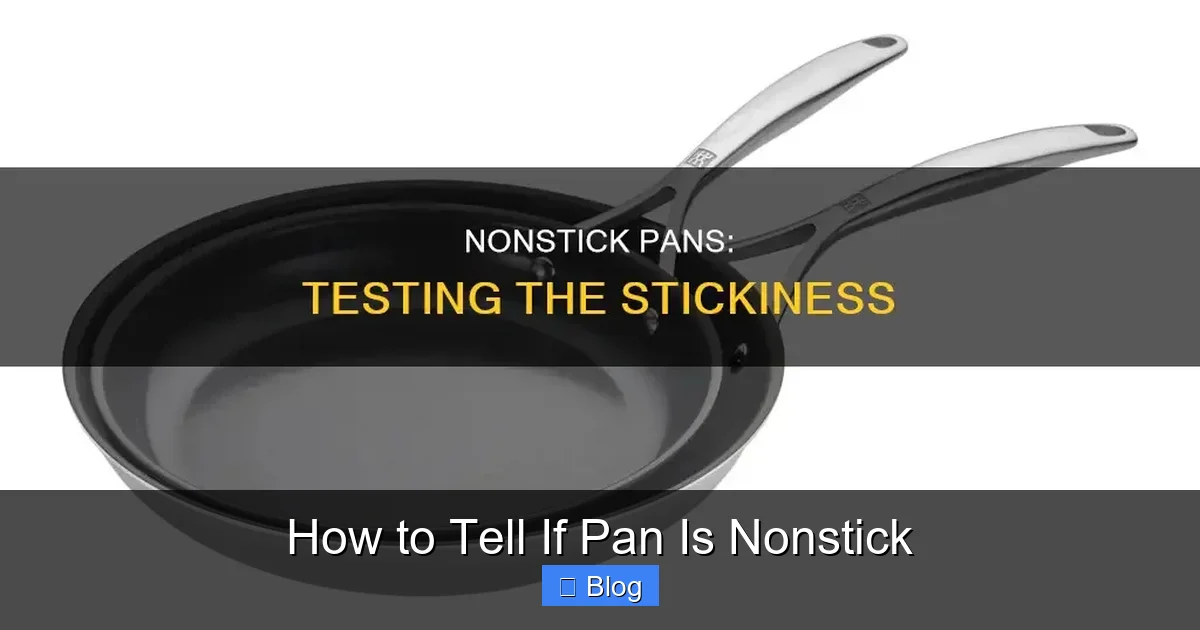
This is what most people picture. Brand names like Teflon, but many manufacturers have their own proprietary PTFE formulas (e.g., Granite, Diamond, etc.). It’s a plastic-based coating applied in several layers to an aluminum or sometimes stainless steel base.
- Visual ID: Almost always black, dark gray, or bronze. Very smooth, uniform, soft matte finish.
- Pros: Excellent food release, easy to clean, affordable, lightweight.
- Cons: Can be scratched by metal utensils, degrades at high temperatures (never heat an empty PTFE pan on high—it can release harmful fumes above 500°F/260°C), coating eventually wears off.
Ceramic Nonstick: The “Natural” Alternative
These coatings are typically made from a sol-gel process derived from silica (sand). They are marketed as PTFE-free and more environmentally friendly.
- Visual ID: Often comes in white, cream, or colorful speckled finishes. The surface can feel slightly more textured or “grainy” compared to PTFE, like a very fine sandpaper. It’s usually harder and more rigid-feeling.
- Pros: PTFE-free, can handle higher heats (though still not for searing), often dishwasher safe (check manufacturer), no risk of PTFE fumes.
- Cons: Can lose its nonstick properties faster than quality PTFE, especially with frequent use. The “ceramic” is actually a brittle coating that can chip. Food release can be good initially but may require a bit more oil over time.
Seasoned Cast Iron/Carbon Steel: The “Natural Nonstick”
This isn’t a synthetic coating but a layer of polymerized oil that creates a natural, durable, and increasingly nonstick surface with proper use and care.
- Visual ID: Dark, uneven black or brown patina. Not a uniform color. You can often see the metal’s texture beneath the sheen.
- Pros: Extremely durable, develops better nonstick over time, can handle very high heat, oven-safe, adds iron to food.
- Cons: Requires specific maintenance (no soap, must be dried and oiled), heavy, acidic foods can strip seasoning, initial learning curve.
Quick Reference Table: How to Tell Them Apart
| Feature | PTFE Coating | Ceramic Coating | Seasoned Iron/Steel |
|---|---|---|---|
| Typical Color | Black, Gray, Bronze | White, Cream, Speckled | Uneven Black/Brown Patina |
| Surface Feel | Smooth, soft matte | Slightly textured, harder | Smooth but with metal grain feel |
| Water Bead Test | Excellent, tight beads | Poor to Fair (spreads) | Fair (may spread slightly) |
| Heat Limit | Medium (max ~500°F) | Medium-High | Very High |
| Utensil Safety | Wood, silicone, plastic only | Wood, silicone, plastic (cautious) | Metal is fine (once seasoned) |
Red Flags: When Your Nonstick Pan is on Its Last Legs
A nonstick pan isn’t nonstick forever. The coating degrades with use. Knowing the signs of failure is crucial for safety and effectiveness. Continuing to use a damaged nonstick pan is pointless and, in the case of PTFE, can become a health concern if the coating is flaking into your food.
Visual Damage: Scratches, Stains, and Peeling
This is the most obvious indicator. Run your fingernail lightly over the surface.
- Light Surface Scratches: Minor, hairline scratches from nylon utensils or normal use are mostly cosmetic on quality PTFE. Performance may not be affected immediately.
- Deep Gouges & Scratches: If you can feel a definite groove with your fingernail, the coating is compromised. Food will stick in these grooves, and they will only get worse.
- Discoloration: A rainbow-like stain (heat tint) from overheating is usually just cosmetic. However, brown or dark rust-colored stains that won’t wash off indicate the coating has broken down, exposing the metal base underneath, which is now rusting.
- Peeling or Flaking: This is the final warning. If you see pieces of the coating lifting or flaking off into your food, stop using the pan immediately. It’s dead. Ingesting flaked PTFE isn’t considered highly toxic, but it’s certainly not intended for consumption, and the pan’s nonstick performance is zero.
Performance Failure: When Food Sticks Like It’s 1999
Sometimes the coating fails invisibly. The ultimate test is cooking performance.
- Eggs and pancakes stick immediately. This is the classic symptom.
- You need a ton of oil or butter to prevent sticking, defeating the purpose of a nonstick pan.
- Food forms a stubborn, burnt-on layer that requires soaking and scrubbing. A healthy nonstick surface releases food with a gentle nudge.
- Sticking occurs in specific spots. This often points to localized damage, probably from using metal utensils or overheating one area.
If your pan fails the egg test consistently, it’s time to retire it, regardless of what it looks like.
Pro-Tips for Verifying and Preserving Your Nonstick Investment
Now that you know how to identify a nonstick pan and its health, let’s talk about verification tricks and long-term care. A little knowledge goes a long way in extending your pan’s life.
The “Hot Pan, Cold Water” Trick
This is a neat party trick and a good confirmatory test. Heat the pan on medium for a few minutes. Carefully hold your hand a few inches above to feel it’s hot. Now, flick a few tiny droplets of water onto the surface.
What happens: On a nonstick surface, the droplets will dance and skitter around on a layer of steam (the Leidenfrost effect). They will not sizzle and evaporate immediately. On a regular pan, they will sizzle and evaporate on contact. This demonstrates the surface’s ability to create a vapor layer, which is part of what makes nonstick surfaces work. It’s a cool visual confirmation.
Care That Counts: How to Make Your Nonstick Last
Identifying your pan is step one. Keeping it performing is step two. The rules are simple but often ignored.
- Never use metal utensils. Wood, silicone, and nylon are your friends. Metal is the number one cause of scratches.
- Never use high heat. Preheat on low or medium. PTFE coatings begin to break down at temperatures above 500°F (260°C). Empty pans can hit that temperature in minutes on high. Always add food or oil before the pan gets too hot.
- Hand wash only. Even if the manufacturer says “dishwasher safe,” the harsh detergents and agitation are brutal on nonstick coatings. Use warm, soapy water and a soft sponge. Avoid abrasive scouring pads.
- Store carefully. Don’t stack pans inside each other without a protective layer (like a paper towel or pan protector) between them. Scratching from another pan’s bottom is a common cause of damage.
- Don’t use cooking sprays. Aerosol sprays contain propellants and emulsifiers that create a stubborn, baked-on residue that is nearly impossible to remove and ruins the nonstick surface over time. Use a drizzle of oil or butter instead.
Anecdote: I once ruined a beautiful, expensive nonstick skillet by thinking I could quickly deglaze it with a metal whisk after making a pan sauce. One tiny scratch from the wire became a big streak of sticking within weeks. It was a costly lesson in utensil choice.
The Final Word: Embracing Your Pan’s True Identity
So, you’ve done the visual scan, performed the water bead test, maybe even cooked an egg. You know if your pan is a PTFE wonder, a ceramic alternative, a seasoned iron beast, or just a regular old pan in disguise. That knowledge is power. It means you’ll use it correctly, care for it appropriately, and have realistic expectations about its lifespan.
Nonstick pans are fantastic tools for specific jobs: eggs, pancakes, delicate fish, and reheating sticky foods. They are not meant for high-heat searing, broiling, or use with metal tools. Recognizing that limitation is key to happy cooking.
If your tests revealed that a pan you thought was nonstick is actually something else—like a stainless steel pan you need to properly heat and oil—that’s a win too! You’ve just leveled up your culinary knowledge. You’ll no longer fight with your cookware; you’ll work with it.
Ultimately, the question “How to tell if pan is nonstick” is about more than just a surface coating. It’s about understanding the tool in your hand, respecting its design, and using it in a way that brings you joy in the kitchen, not frustration. Now go forth, test those pans, and may your eggs always slide free.
Frequently Asked Questions
How can I visually identify a nonstick pan?
Look for a smooth, dark gray or black interior surface that appears slightly waxy or plastic-like. Unlike stainless steel or cast iron, a nonstick coating is uniform in color and lacks visible grain or pores.
What is the water test for a nonstick pan?
Put a few drops of water on the pan’s surface; on a true nonstick surface, the water will bead up into tight droplets and roll around easily. On a regular pan, the water will spread out into a flat, connected film.
Does a scratched surface mean my pan isn’t nonstick?
Yes, significant scratching that reveals a different metal underneath, like silver or copper, means the nonstick coating has worn off. Light surface scratching is normal over time, but deep gouges indicate the nonstick property is compromised.
Can I use the oil test to check for nonstick?
You can. Heat the pan and add a small drop of oil; on a nonstick surface, the oil will form a perfect, round bead and move freely. On other surfaces, the oil will flatten and spread out quickly.
Is a shiny, silver pan nonstick?
No, a shiny, mirror-like silver surface is typically stainless steel or aluminum, which are not nonstick. True nonstick coatings are almost always dark-colored (black, gray, or sometimes bronze/copper-toned).
How does food behavior indicate a nonstick surface?
Food like eggs or pancakes will slide around with minimal oil and release easily without sticking. If food consistently bonds to the surface and requires vigorous scraping, the pan likely lacks a functional nonstick coating.