Not all glass can handle oven heat. To stay safe, always look for the clear oven-safe symbol on the bottom of your dish, understand that “tempered” glass is different from standard glass, and never subject cold glass to a hot oven. When in doubt, consult the manufacturer or use a different pan—shattering glass is a real danger that can cause serious injury.
Key Takeaways
- Look for the official oven-safe symbol: A simple drawing of an oven is the universal sign that the manufacturer has tested the piece for oven use.
- Know your glass type: Borosilicate glass (like old Pyrex) has excellent thermal shock resistance, while newer soda-lime glass (common in most bakeware) is more prone to shattering from sudden temperature changes.
- Temperature limits are not universal: Even oven-safe glass has a maximum temperature, usually between 350°F and 450°F (175°C and 230°C). Exceeding it risks breakage.
- Avoid thermal shock at all costs: Never place cold glass on a hot surface or under a broiler, and never pour hot liquid into a cold glass container.
- Age and damage matter: Scratched, chipped, or very old glassware, even if marked oven-safe, has a weakened structure and is much more likely to fail.
- “Microwave safe” does not mean “oven safe”: These are separate tests. Glass that reheats food in a microwave may not withstand dry, direct oven heat.
- When unsure, leave it out: If there’s no marking, the glass is decorative, or it’s a vintage piece, assume it is not oven-safe and use metal or ceramic instead.
📑 Table of Contents
- The Critical Question: Is My Glass Dish Really Oven-Safe?
- Understanding the Beast: Types of Glass and Their Heat Tolerance
- Decoding the Clues: How to Read Manufacturer Markings and Symbols
- Temperature Limits and the Silent Killer: Thermal Shock
- Practical Tests and Safety Checks You Can Do at Home
- Common Myths, Mistakes, and How to Use Glass Safely
- Conclusion: Safety First, Always
The Critical Question: Is My Glass Dish Really Oven-Safe?
You’ve just pulled out a beautiful glass baking dish, ready to make a lasagna or roast some vegetables. You pop it in the oven, set the timer, and walk away. But an unsettling thought might creep in: Is this actually safe? The terrifying reality is that using the wrong glass in a hot oven can lead to a sudden, violent shattering. This isn’t just a ruined dish; it’s a potential safety hazard with sharp glass shards and scalding food flying everywhere. Knowing how to tell if glass is oven safe isn’t just a kitchen tip—it’s essential knowledge for preventing accidents. This guide will walk you through every method, from reading symbols to understanding the science of glass, so you can cook with confidence and safety.
Understanding the Beast: Types of Glass and Their Heat Tolerance
Before we look for markings, we need to understand what we’re dealing with. Not all glass is created equal. The two primary types used in consumer cookware have vastly different relationships with heat. This fundamental knowledge is your first line of defense in determining oven safety.
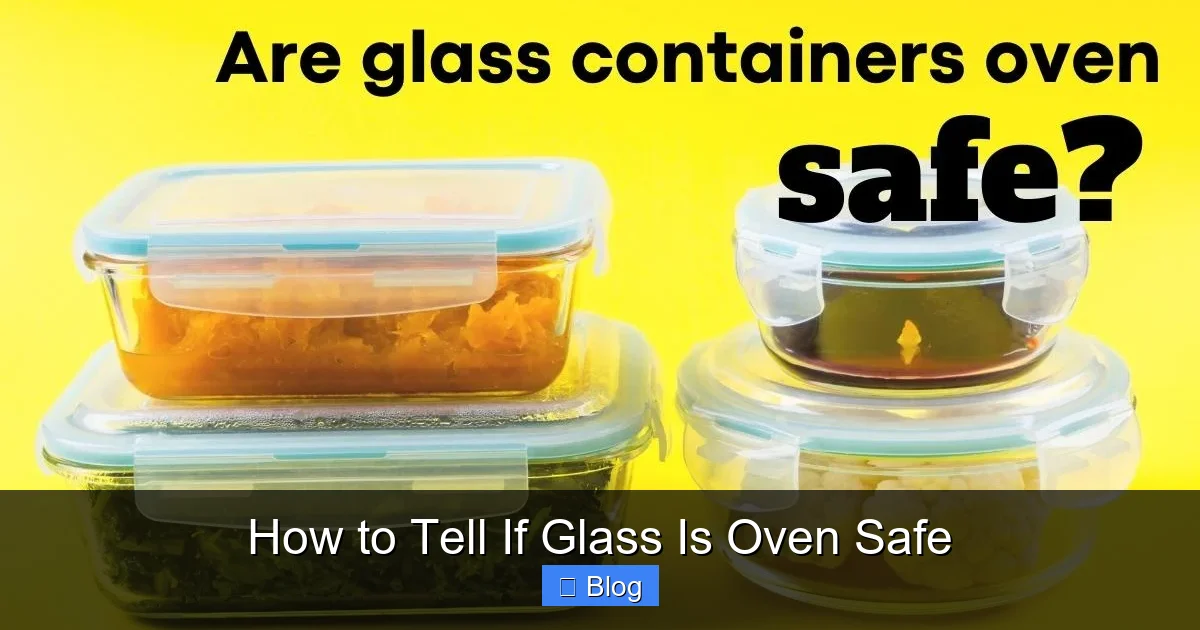
Visual guide about How to Tell If Glass Is Oven Safe
Image source: projectperfecthome.com
Borosilicate Glass: The Thermal Champion
Borosilicate glass is the gold standard for thermal shock resistance. It’s made by adding boron trioxide to the standard silica mixture. This special ingredient gives the glass a very low coefficient of thermal expansion, meaning it doesn’t expand or contract much when heated or cooled. Think of it like a relaxed, unflappable friend. You can take a borosilicate dish from the fridge and put it directly into a hot oven (though preheating is still recommended) with minimal risk of it saying, “I’ve had enough.” Vintage Pyrex and Anchor Hocking bakeware from the mid-20th century were often made from this robust material. You might still find heirloom pieces that are incredibly durable. However, most U.S. manufacturers switched to a cheaper alternative in the 1980s and 1990s.
Soda-Lime Glass: The Common, But Cautious, Choice
Today, the vast majority of glass bakeware you buy new is made from soda-lime glass. As the name suggests, it’s made from sodium carbonate (soda) and lime (calcium oxide), along with silica. It’s less expensive to produce and perfectly fine for many kitchen tasks. Its major drawback? A high coefficient of thermal expansion. It expands and contracts significantly with temperature changes. This makes it much more susceptible to thermal shock—the stress caused by uneven heating or rapid temperature shifts. A soda-lime glass dish can be perfectly oven-safe when used correctly (preheated oven, no stovetop, no broiler), but it becomes a ticking time bomb if you treat it like its borosilicate cousin. It cannot handle the same level of abuse. Most modern “oven-safe” labels on new glass bakeware refer to this type of glass, with strict usage conditions.
Why the Switch Happened and Why It Matters to You
The shift from borosilicate to soda-lime was a business decision, not a safety conspiracy. Soda-lime glass is cheaper and easier to mold into complex shapes. The key takeaway for you is this: just because your grandmother’s Pyrex could seemingly do anything doesn’t mean your new, similar-looking glass dish can. You must read the instructions and markings for your specific modern piece. Assuming all glass is created equal is the most common mistake that leads to shattered dishes.
Decoding the Clues: How to Read Manufacturer Markings and Symbols
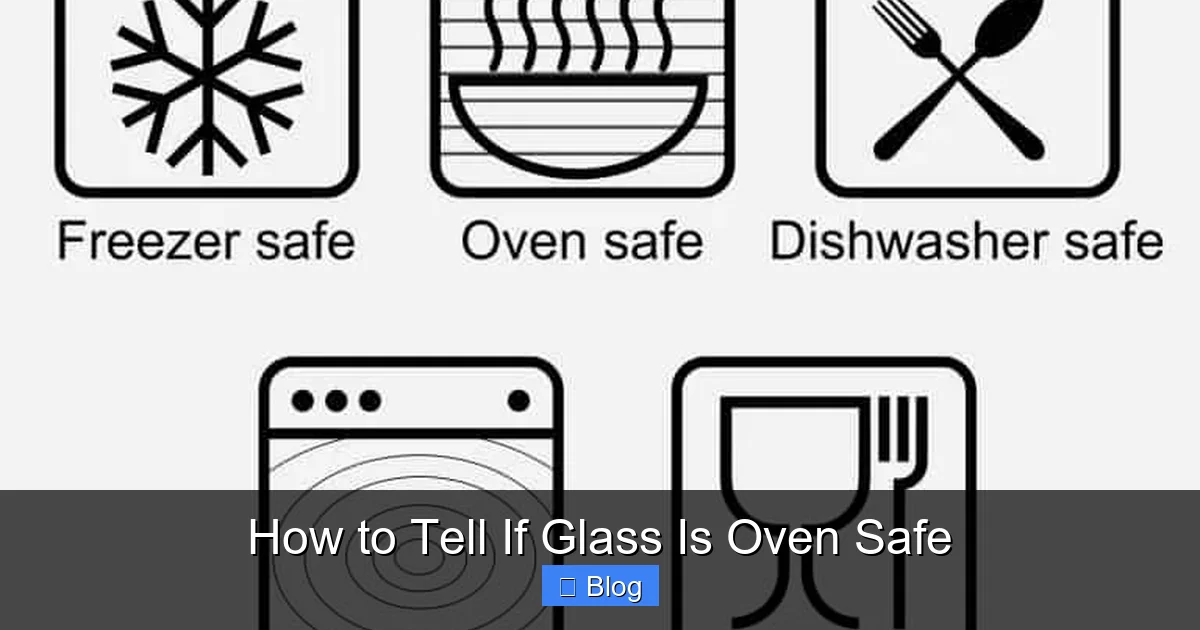
This is your primary, most reliable method. Manufacturers who have tested their products for oven use are required (in most regions) to mark them clearly. These markings are usually on the bottom of the dish. Here’s your decoder ring.
Visual guide about How to Tell If Glass Is Oven Safe
Image source: kitchenseer.com
The Universal Oven-Safe Symbol
Look for a simple, graphic icon. It’s typically a square or rectangle with wavy lines at the bottom, representing an oven cavity, and sometimes a few lines above representing heating elements or heat radiating. It looks like this:  . This symbol means the item has been tested and approved for use in a conventional oven. It does not automatically mean it’s safe for the stovetop, broiler, or toaster oven unless those symbols are also present.
Other Important Symbols and Words
- “Oven Safe” or “For Oven Use”: Plain text is just as good as a symbol. It’s a direct statement from the manufacturer.
- Temperature Limits: Some glassware will list a maximum safe temperature, like “Oven safe to 425°F” or “Max 220°C.” This is critical. Never exceed this limit, even if your recipe calls for a higher temperature. Find an alternative.
- “Tempered” or “Toughened”: This refers to a thermal or chemical process that strengthens the glass. Tempered glass is stronger against impact, but it does not inherently make it more resistant to thermal shock. A tempered soda-lime glass dish can still shatter from rapid temperature changes. The word “tempered” alone is not a guarantee of oven safety.
- Broiler Symbol: A series of parallel lines, often at the top of an oven icon. If this is missing, assume the dish is NOT broiler-safe. The direct, intense heat of a broiler is a common cause of glass failure.
- Stovetop Symbol: A flame or series of flames. If this is absent, the glass is absolutely not for direct flame or electric coil use. Using glass on a stovetop is a guaranteed way to destroy it.
What to Do If There Are No Markings
This is your red flag. If the bottom of the dish is completely blank, or only has a brand logo with no other symbols, you must assume it is not oven-safe. This is common with decorative glass bowls, imported items, or very old/vintage pieces where standards were different. In this case, do not use it in the oven. Use it for serving, cold storage, or microwave use (if confirmed) only.
Temperature Limits and the Silent Killer: Thermal Shock
Even with the correct symbol, there are hard limits. Understanding thermal shock is understanding why glass breaks in the oven.
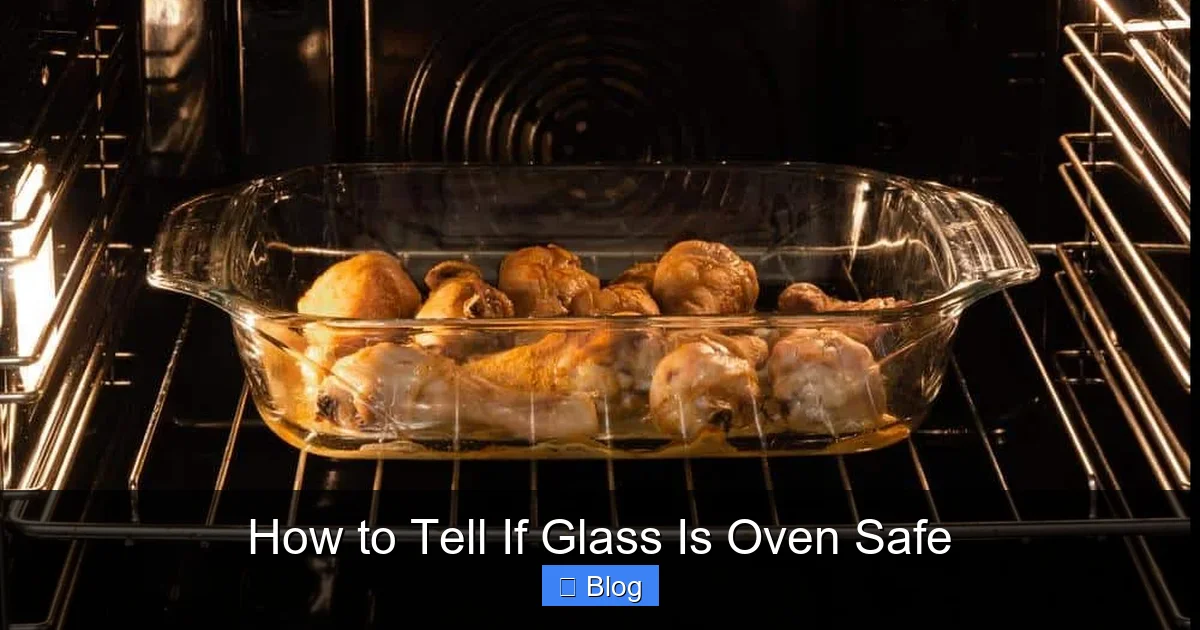
Visual guide about How to Tell If Glass Is Oven Safe
Image source: bigtimekitchen.com
The Science of Stress
When glass heats up, the outer layer expands before the inner layer. If this expansion happens too quickly or unevenly, different parts of the glass are under different amounts of stress. When that stress exceeds the glass’s tensile strength, it cracks. This is thermal shock. The most common scenarios:
- Cold to Hot: Placing a cold (or even room temperature) glass dish directly into a preheated oven. The bottom heats up and expands rapidly while the top and sides are still cool and contracted.
- Hot to Cold: Taking a hot glass dish out of the oven and placing it on a cold countertop, in cold water, or under cold running water.
- Localized Heat: Using glass on a stovetop, under a broiler, or in a toaster oven where heat is intensely focused on one spot.
- Contact with Hot Elements: Letting the dish touch the oven’s heating elements.
Reading the Fine Print: Maximum Temperatures
Always check your cookware’s documentation. If you don’t have it, search online for the brand and product name. A typical safe range for modern soda-lime glass bakeware is 350°F to 425°F (175°C to 220°C). Some are rated higher. Never assume “high heat” or “broil” is safe. The broiler setting can easily exceed 500°F (260°C). If your recipe requires a high temperature (like 450°F+ for a crispy crust), you must use a metal or ceramic pan.
Practical Tests and Safety Checks You Can Do at Home
While manufacturer info is king, there are some observational tests you can perform. Remember, these are secondary checks and not substitutes for proper markings.
The Tap Test
Gently tap the side of the glass dish with your fingernail or a utensil. A clear, high-pitched ring suggests the glass is well-made and likely homogeneous (like borosilicate or good soda-lime). A dull, thudding thump can indicate imperfections, stresses, or that it’s a different, less resilient material. This is not foolproof, but a very dull sound on a dish with no markings is another warning sign.
The Visual Inspection
Under good light, hold the glass up and look through it. Do you see:
- Bubbles, seeds, or inclusions? Tiny imperfections trapped in the glass during manufacturing. These create weak points.
- Waviness or distortion? This can be a sign of improper annealing (the cooling process) and internal stress.
- Deep scratches, chips, or cracks? Any damage, no matter how small, compromises the structural integrity. A dish with a chip is a candidate for catastrophic failure under heat. Discard it.
The Water Test (Use with Extreme Caution)
Warning: This test can weaken or break a marginally safe piece of glass. Only perform this on a piece you are already suspicious of and are willing to sacrifice. Fill the dish with cold water and place it in a cold oven. Set the oven to a low temperature, say 300°F (150°C). Turn it on and observe. If the glass survives a slow, even heat from cold, it’s a good sign it has some thermal shock resistance. However, this does not guarantee it’s safe for a preheated oven or higher temperatures. The safest approach is to rely on markings, not this test.
Common Myths, Mistakes, and How to Use Glass Safely
Let’s clear up dangerous misconceptions.
Myth 1: “If it’s Microwave Safe, It’s Oven Safe.”
False. Microwave safety tests for how well a material allows microwaves to pass through without heating up itself or sparking. Oven safety tests for resistance to dry, radiant heat and thermal shock. A microwave-safe bowl can melt or shatter in an oven.
Myth 2: “All Glass Can Go in the Oven If I Preheat It.”
Preheating is essential for soda-lime glass, as it allows the entire dish to warm gradually. But if the glass is not designed for oven use at all (e.g., decorative glass, drinking glasses), preheating won’t help—it will still break from the heat.
Myth 3: “A Little Scratch is No Big Deal.”
A scratch is a flaw that concentrates stress. Under thermal cycling, that flaw can propagate into a crack. Discard any oven-safe glass that becomes deeply scratched, especially on the bottom or interior where stress is highest.
Best Practices for Safe Oven Use
- Always preheat the oven first before inserting a glass dish. Place it on a middle rack, away from heating elements.
- Never use glass under a broiler unless explicitly marked for it.
- Never place a hot glass dish on a cold surface. Use a trivet, wooden cutting board, or towel. Let it cool on the stovetop or in the oven with the door slightly ajar.
- Never add liquid to a hot, dry glass pan (like when deglazing). The sudden change can cause immediate shattering.
- Follow temperature guidelines strictly. When in doubt, set the oven 25°F lower than the recipe calls for and increase cooking time slightly. The insulating nature of glass may cook food faster than metal.
- Inspect your glassware regularly. Before each use, check for new chips, cracks, or crazing (fine surface cracks).
Conclusion: Safety First, Always
Knowing how to tell if glass is oven safe boils down to a few non-negotiable steps: find and trust the manufacturer’s markings, understand the limitations of soda-lime versus borosilicate glass, and rigorously avoid thermal shock. Your beautiful glass dishes are wonderful tools for baking and serving, but they demand respect. They are not indestructible. By taking a moment to check for that little oven symbol, by never subjecting cold glass to sudden heat, and by retiring any piece that is damaged, you protect yourself, your family, and your kitchen from a potentially dangerous and messy disaster. When in absolute doubt, reach for a metal pan. It’s a small trade-off for complete peace of mind. Cook safely!
Frequently Asked Questions
Can I put a glass dish with a plastic lid in the oven?
No. The plastic lid is almost certainly not oven-safe and will melt, warp, or release toxic fumes. Even if the dish itself is oven-safe, you must remove any plastic, silicone (unless specifically marked oven-safe), or wooden components before putting it in the oven.
My glass dish says “tempered.” Is that the same as oven-safe?
Not necessarily. “Tempered” refers to a process that makes the glass stronger against impacts and scratches. It does not guarantee the glass can withstand the rapid temperature changes of an oven. You still need to look for the specific oven-safe symbol or wording.
Why did my brand-new, oven-safe glass dish shatter in the oven?
>The most likely cause is thermal shock. This could happen if the dish had a pre-existing flaw or microchip, if you placed it in a preheated oven instead of starting with a cold oven (some brands require this), if it touched the oven wall or heating element, or if you used it under the broiler. Always follow the manufacturer’s specific instructions for your model.
Is Pyrex oven-safe?
Modern Pyrex bakeware sold in the United States is made from soda-lime glass and is marked as oven-safe, typically to 425°F (218°C). It is safe for oven use when used correctly: preheat the oven first, avoid extreme temperature changes, and never use on stovetop or under broiler. Vintage Pyrex made from borosilicate is more thermally shock-resistant but should still be used with care and inspected for damage.
Can I use a glass measuring cup in the oven?
Most standard glass measuring cups (like Pyrex brand) are designed for microwave and oven use, but they have strict limits. They are usually not for broiling or stovetop use. They can also be prone to thermal shock if used for tasks like melting butter directly in the cup in the oven. Always check for the oven-safe symbol on the bottom and follow any temperature guidelines.
What should I do if I suspect my glass dish is cracked after being in the oven?
Immediately turn off the oven and let it cool completely with the door closed. Do not try to move the dish while it’s hot. Once cool, carefully dispose of the entire dish and its contents. Do not attempt to salvage food that was near the crack, as glass shards could be present. Clean the oven thoroughly before next use, as tiny glass particles can remain.
Pingback: Pyrex Glass Cookware How to Thaw - kitchenandhouseware.com