Distinguishing aluminum from stainless steel cookware is crucial for performance, durability, and safety. The easiest methods are the magnet test (stainless steel is often magnetic, aluminum is not), weight (aluminum is lighter), and color/finish (aluminum is silvery-gray, stainless steel is brighter). Listening for a dull thud versus a high-pitched ring when tapped also provides a clear clue. Understanding these differences prevents cooking mishaps, ensures compatibility with your cooktop, and helps you care for your pots and pans correctly.
Walk into any kitchen supply store or browse online, and you’ll be met with a dazzling array of shiny pots and pans. Two of the most common and popular materials are aluminum and stainless steel. But here’s a practical problem: they often look somewhat similar to the untrained eye. Knowing how to tell aluminum from stainless steel cookware isn’t just a party trick—it’s essential knowledge for any home cook. The material dictates how your food cooks, how long the pan lasts, what cooktops it works on, and how you need to clean it. Making the wrong assumption can lead to burnt food, damaged cookware, or even a pan that doesn’t work on your induction stove. This guide will turn you into an expert identifier, using simple, hands-on tests you can perform right in your own kitchen or at the store.
Key Takeaways
- The Magnet Test is Your First Tool: A strong magnet will stick to most magnetic stainless steel (especially 400-series) but will never stick to bare aluminum. This is the quickest, most reliable initial check.
- Weight Gives It Away: Aluminum is significantly lighter than stainless steel for the same size pan. If it feels surprisingly light for its construction, it’s likely aluminum or an aluminum core.
- Color and Finish Differ: Bare aluminum has a uniform, soft matte or brushed silvery-gray look. Stainless steel has a brighter, cooler, more “chromed” silver appearance and often features a polished or satin finish.
- Sound Matters: Tap the pan. A deep, dull “thud” suggests aluminum. A higher-pitched, resonant “ring” or “ping” indicates stainless steel.
- Check the Edges and Handles: Look at the rim and where the handle attaches. Aluminum often shows a softer, more rounded metal edge. Stainless steel edges are sharper, more defined, and the handle attachment points are usually more robust.
- Consider Construction, Not Just Surface: Many “stainless steel” pans have an aluminum or copper core (clad) for better heating. The magnet test on the *side* or *bottom* will reveal the exterior stainless layer, but the core material affects weight and performance.
- Performance Clues: Aluminum heats up very quickly but also cools down fast. Stainless steel heats more slowly but retains heat longer and is far less prone to hot spots in quality multi-ply construction.
📑 Table of Contents
- Why It’s Crucial to Know the Difference
- Visual and Tactile Inspection: The First Clues
- The Magnet Test: Your Most Reliable Diagnostic
- The Sound Test: Listen to the Metal
- Heat Response and Cooking Performance: Real-World Evidence
- Caring for Your Cookware: Maintenance Tells a Story
- Making an Informed Purchase: A Buyer’s Checklist
- Conclusion: Knowledge is Power in the Kitchen
Why It’s Crucial to Know the Difference
Before we dive into the “how,” let’s establish the “why.” Aluminum and stainless steel are fundamentally different metals with distinct properties. Confusing them can have real consequences.
The Performance Gap
Aluminum, particularly when bare, is an exceptional thermal conductor. It heats up incredibly fast and evenly, which is great for tasks like sautéing where you need quick temperature response. However, it’s also a poor heat retainer. Remove it from the heat, and it cools down just as fast. More importantly, raw aluminum is reactive. It can discolor light-colored foods (like sauces) and impart a metallic taste, especially with acidic ingredients like tomatoes or wine. This is why most cookware-grade aluminum is either anodized (a hardened, non-reactive surface) or clad inside a non-reactive metal.
Stainless steel is a thermal poor conductor but a champion of durability and non-reactivity. It won’t rust, stain, or interact with your food. On its own, a thick stainless steel pan would have terrible hot spots. That’s why premium stainless cookware is almost always “clad”—layered with a core of aluminum or copper (the good conductor) sandwiched between layers of stainless steel (the durable, non-reactive exterior and cooking surface). This combination seeks to give you the best of both worlds: even heating and robust, easy-to-clean longevity.
Safety and Compatibility Concerns
There’s also the issue of induction cooktop compatibility. Induction stoves use magnetic energy to heat the pan directly. For a pan to work, its base must be ferromagnetic (attracted to a magnet). Bare aluminum is non-magnetic and will not work on induction. Most stainless steel, especially the common 18/10 or 18/8 varieties (austenitic grades), is also non-magnetic. However, many cookware manufacturers use a magnetic stainless steel (400-series) for the base layer specifically to ensure induction compatibility. This is a key detail the magnet test can reveal.
Lastly, there are outdated health concerns about aluminum. While the link between aluminum cookware and neurological diseases is not conclusively proven in healthy individuals, anodized aluminum eliminates any direct food contact with the bare metal. Stainless steel is inherently non-reactive and requires no special treatment. Knowing what you’re using provides peace of mind.
Visual and Tactile Inspection: The First Clues
Your eyes and fingers are your first line of defense. A careful look and feel can often give you a strong indication before you even break out the tools.
Visual guide about How to Tell Aluminum from Stainless Steel Cookware
Image source: healthyceramiccookware.com
Color, Luster, and Surface Texture
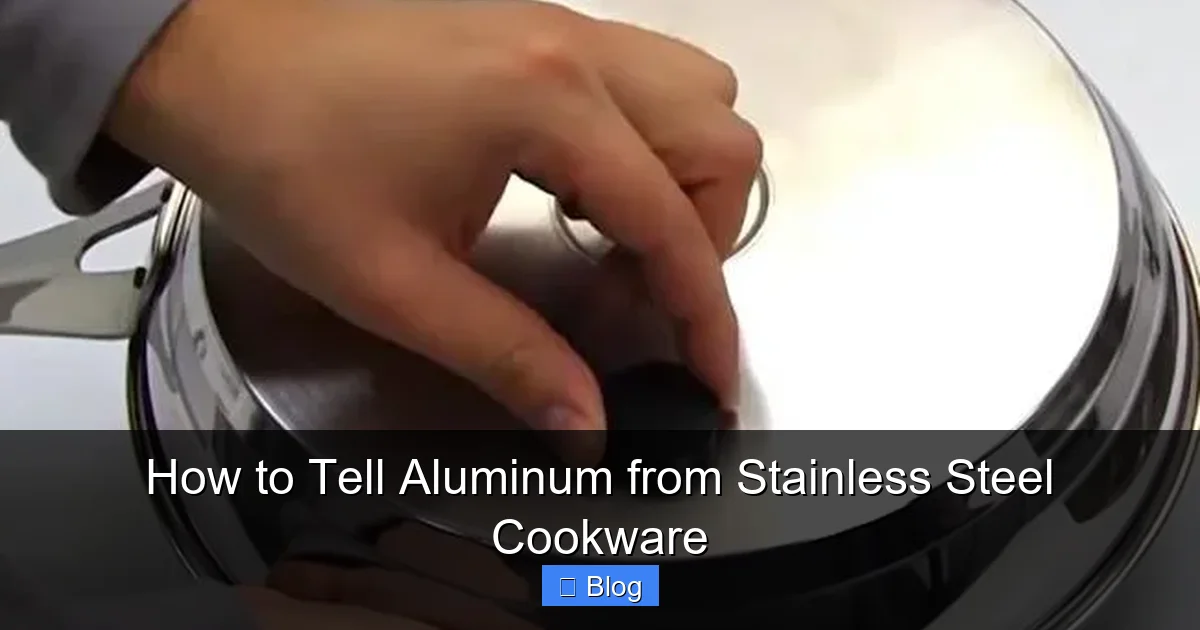
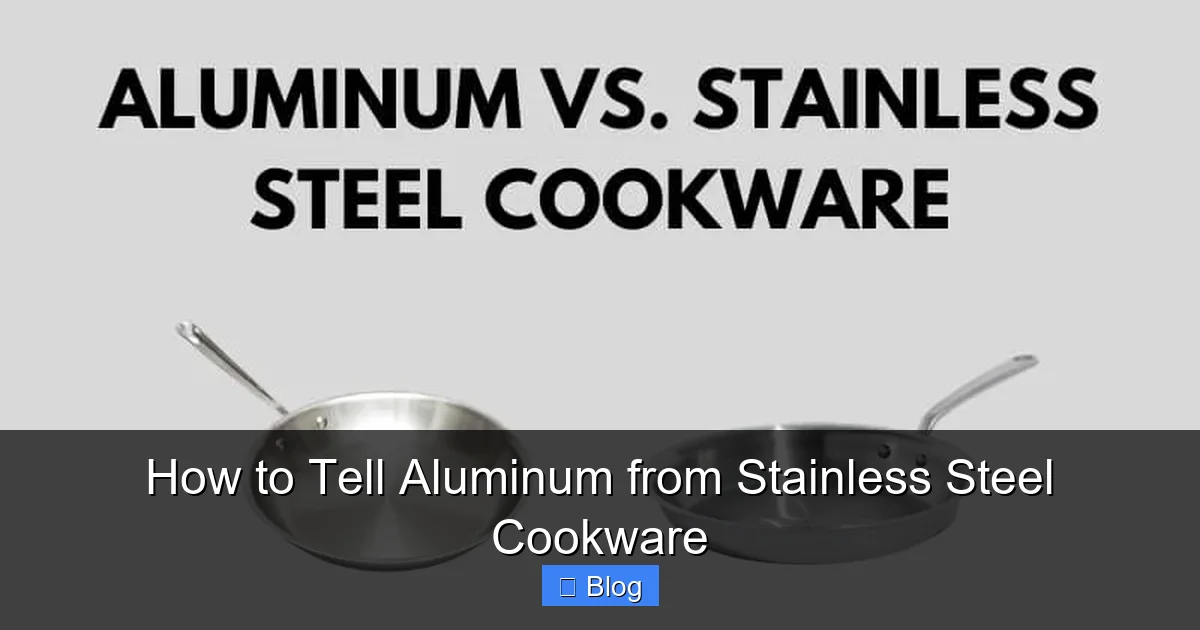
Bare Aluminum: Has a characteristic soft, silvery-gray appearance. It’s often brushed or have a slightly matte finish. The color is uniform and warm. You might see minor scuff marks or a “brushed” grain pattern from manufacturing. It doesn’t have the cool, bright, almost “chromed” look of stainless.
Stainless Steel: Possesses a brighter, cooler, more polished silver luster. High-quality stainless has a very clean, sharp reflection. It can be polished to a mirror shine or have a satin (brushed) finish, but even the satin finish looks sharper and more defined than aluminum’s. The color is a true, cool silver. Look for any branding or model numbers stamped into the metal; these are often clearer on stainless.
Anodized Aluminum: This is a wild card. Anodization electrochemically hardens the surface and can dye it colors like black, bronze, or gold. It looks completely different from bare aluminum. However, the interior cooking surface is usually a dark gray (if hard-anodized) or a different color. The exterior color is your clue it’s not stainless.
Feel the Weight and Thickness
This is one of the most reliable giveaways. Pick up the pan. Aluminum is light. For a given size (say, a 10-inch skillet), an all-aluminum pan will feel notably lighter than an all-stainless pan. If it feels substantial and heavy, it’s likely stainless steel or a multi-ply pan with a heavy stainless exterior.
Now, press on the base or sidewall with your thumb. Aluminum is softer. You can often flex a thin aluminum pan slightly with pressure. Stainless steel is rigid and resistant to bending. Tap your fingernail on the side; a soft “thud” is aluminum, a sharper “tap” is stainless. Be careful not to dent someone’s merchandise!
Examine the Edges, Rim, and Handle Attachment
Look closely at the rim of the pan where the side meets the base. Aluminum, being softer, is often rolled or formed with a smoother, more rounded lip. The metal might look slightly compressed or less sharp. Stainless steel edges are crisper, more precise, and can be sharp enough to cut. The handle is usually riveted or welded on. On aluminum pans, the rivets or weld points might look a bit simpler. On stainless, especially higher-end brands, the handle attachment is often very robust, with multiple rivets or a seamless welded look. The handle material itself (bakelite, stainless, etc.) isn’t a definitive clue, as both materials use similar handle types.
The Magnet Test: Your Most Reliable Diagnostic
If you only learn one test, make it this one. It’s fast, definitive, and requires only a simple refrigerator magnet.
Visual guide about How to Tell Aluminum from Stainless Steel Cookware
Image source: missvickie.com
How to Perform the Test Correctly
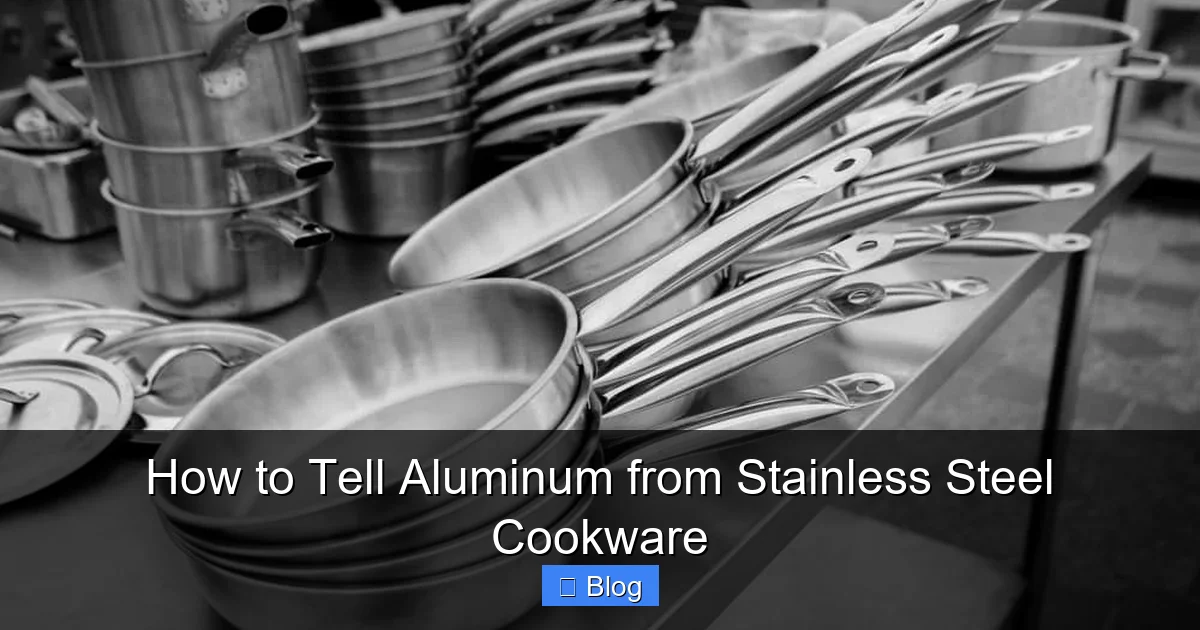
Use a strong magnet—the kind that holds notes on a fridge is perfect. A weak magnet might not give a clear result. Test the entire exterior surface: the bottom, the sidewalls, and the handle base. Roll the magnet across the surface. Don’t just hold it at one spot.
Interpreting the Results
If the magnet sticks firmly: You have a ferromagnetic stainless steel. This is typically from the 400-series (like 430 stainless). This is a clear indicator of stainless steel. Most “magnetic stainless” cookware uses this for the base layer to ensure induction compatibility, even if the interior cooking surface is non-magnetic 300-series stainless.
If the magnet does NOT stick at all: This is where it gets interesting. You could have:
- Bare Aluminum: It will never attract a magnet. A clean, strong non-stick is your sign.
- Non-Magnetic Stainless Steel (300-series): Common 18/10 or 18/8 austenitic stainless is non-magnetic. So a magnet won’t stick to a high-end all-clad pan’s sides or interior. But here’s the crucial part: most multi-ply stainless pans designed for induction will have a magnetic stainless steel outer layer or a magnetic disk bonded to the base. So, if the magnet sticks to the *bottom* but not the *sides*, you have a multi-ply stainless pan with a magnetic base. If it doesn’t stick *anywhere*, it’s either non-induction stainless (rare for cookware) or, more likely, aluminum.
- Anodized Aluminum: The anodized layer itself is non-magnetic, so the magnet won’t stick.
Key Insight: The magnet test tells you about the *exterior* ferromagnetic material. A pan that is non-magnetic everywhere is almost certainly aluminum (or copper, but that’s rare/expensive). A pan that is magnetic on the bottom but not the sides is a telltale sign of a multi-layer stainless steel construction with an aluminum core.
The Sound Test: Listen to the Metal
This old-school trick is surprisingly effective. It’s like a wine glass ring test, but for pans.
Visual guide about How to Tell Aluminum from Stainless Steel Cookware
Image source: kitchenany.com
How to Do It
Hold the pan by the handle or with one hand on the side. With your other hand, use a wooden spoon, your knuckle, or another pan’s metal utensil to gently tap the *sidewall* of the pan, not the base. Listen to the resulting tone.
What the Sounds Mean
Aluminum (or pans with a thick aluminum core): Produces a lower-pitched, dull, “thud” or “thunk.” The sound is short and doesn’t resonate much. The metal absorbs the vibration quickly because aluminum is softer and less elastic.
Stainless Steel: Produces a brighter, higher-pitched “ring,” “ping,” or “ting.” The sound is clearer, rings out longer, and has more resonance. The harder, more elastic stainless steel vibrates more freely. A multi-ply pan with a stainless exterior will ring like stainless, even with an aluminum core, because the vibrating surface you hear is the stainless.
Practice Tip: Tap a known aluminum soda can (high-pitched ring due to thinness, but different from thick cookware) and then a known stainless steel mixing bowl. You’ll hear the difference in sustain and pitch. Now try it on cookware.
Heat Response and Cooking Performance: Real-World Evidence
If you already own the cookware, you can observe its behavior on the stove. This is the ultimate test of its material properties.
Heating Speed and Temperature Control
Place an empty pan (or one with a thin layer of oil) on a medium burner. Aluminum heats up blisteringly fast. You’ll see the oil shimmer or start to smoke in 30-60 seconds. It responds immediately when you turn the heat up or down. This is great for delicate sauces or quick sears where you need to stop cooking fast.
Stainless steel (especially multi-ply) heats more slowly and evenly. It might take 2-3 minutes to reach the same temperature. The key is that it heats *across the entire base and up the sides* more uniformly. When you turn the heat down, it doesn’t plummet in temperature as fast as aluminum. It holds heat superbly, making it ideal for simmering sauces, frying, and tasks where steady, even heat is critical.
The Hot Spot Test
This is a classic way to see the difference. Heat a pan with a thin layer of oil on medium-high heat. If the oil forms bubbles *only* in the center circle where the burner flame or element is, you likely have a single-layer aluminum or a thin, poor-quality stainless pan with terrible heat distribution—a hot spot.
If the oil bubbles in a uniform, concentric circle across the entire base of the pan, you have a well-constructed multi-ply pan (whether stainless-clad or hard-anodized aluminum with a conductive core). Single-layer stainless steel will show severe hot spots. High-quality aluminum (like a thick, heavy saucepan) will distribute heat very well on its own due to aluminum’s superior conductivity.
Caring for Your Cookware: Maintenance Tells a Story
How a pan is built determines how you must care for it. Observing care instructions or damage patterns can be a retrospective clue.
Dishwasher Safety
Stainless steel is virtually indestructible in the dishwasher. It can handle harsh detergents, high heat, and repeated cycles without issue. You might get water spots, but the metal itself is unaffected.
Aluminum (bare): Will absolutely ruin in the dishwasher. The harsh detergents and alkaline environment cause oxidation, turning the metal dark gray or black. It can also pit and degrade. Anodized aluminum
Scratch Resistance and Surface
Use a metal utensil on the cooking surface (don’t do this on a non-stick you want to keep!). Stainless steel will get fine scratches but the metal itself is not damaged. It develops a “seasoned” patina over time that can improve food release. Bare aluminum will scratch easily and can be gouged. It also oxidizes (forms a dull gray layer) very quickly with use and washing. This oxide layer is actually protective, but it changes the appearance permanently. If a pan has a permanently dull, gray, uneven interior, it’s likely aluminum that has oxidized from use and detergent.
Making an Informed Purchase: A Buyer’s Checklist
Armed with this knowledge, you can now shop smarter. Here’s your action plan.
At the Store or Unboxing
1. Magnet First: Always do the magnet test on the bottom and side. Note where it sticks and where it doesn’t.
2. Heft It: Compare pans of the same size. Weight is a massive indicator.
3. Tap and Listen: Don’t be shy. A quick tap on the side tells you volumes.
4. Inspect the Rim: Look at the lip. Is it sharp and crisp (stainless) or slightly rounded/softer (aluminum)?
5. Read the Labels: Look for terms like “tri-ply,” “multi-ply,” “clad,” “aluminum core,” “copper core,” “stainless exterior.” These are honest descriptions of construction. “Hard-anodized aluminum” is a specific, high-quality type of aluminum cookware. “18/10 Stainless Steel” refers to the chromium/nickel ratio of the stainless.
6. Ask Directly: “Is the cooking surface pure stainless steel, or is it aluminum/clad?” “Is this pan induction compatible?” A reputable brand or salesperson will know and tell you the truth.
Matching Material to Your Needs
Choose Aluminum/Hard-Anodized if: You want fast heating, excellent conductivity, and often a more affordable price. Ideal for quick-cook tasks, pancakes, eggs. Best for gas or electric stoves (not induction unless specified). Requires more care (hand wash preferred for longevity).
Choose Stainless Steel (Multi-Ply) if: You want maximum durability, oven-to-table versatility, induction compatibility, and worry-free dishwasher cleaning. You value even, retained heat for searing, frying, and sauces. You’re willing to pay more upfront for a pan that can last a lifetime. You’re comfortable with a slight learning curve for food release (proper preheating and fat are key).
The Hybrid Winner: Most high-end cookware today is a hybrid: a stainless steel exterior (for durability and induction) with an aluminum or copper core (for heating). The magnet test will confirm the stainless exterior, but the weight and heat response will hint at the conductive core. This is often the best all-around choice.
Conclusion: Knowledge is Power in the Kitchen
Distinguishing aluminum from stainless steel cookware is a blend of simple science and practical observation. You now have a toolkit of five reliable methods: the definitive magnet test, the telling weight check, the revealing sound test, the visual inspection of color and edges, and the behavioral observation of heat response and care needs. No single test is perfect in every scenario—especially with modern multi-ply constructions—but using them in combination gives you a near-certain diagnosis.
This knowledge empowers you. It prevents you from buying a pan that won’t work on your induction cooktop. It helps you understand why your food is cooking unevenly. It guides you to the right care routine so your investment lasts for decades. The next time you’re in a kitchen store or evaluating your own cabinet, put these techniques to the test. You’ll look at your cookware not just as a tool, but as a precisely engineered piece of equipment you truly understand. And that, ultimately, makes you a more confident and effective cook.
Frequently Asked Questions
Can I always rely on the magnet test?
Yes, for a quick first check. If a magnet sticks, it’s definitely magnetic stainless steel. If it doesn’t stick, it’s likely aluminum or non-magnetic stainless. However, some high-end stainless pans are non-magnetic but still stainless. In that case, the weight and sound test will confirm it’s not aluminum.
What about hard-anodized aluminum? It looks dark, not silvery.
Excellent point. Hard-anodized aluminum is a specific, durable type of aluminum cookware. The dark (usually black or dark gray) exterior is your biggest clue it’s not stainless steel. The magnet test will also fail (no stick). If the pan is dark gray/black and the magnet doesn’t stick, you have anodized aluminum.
Is stainless steel cookware always better than aluminum?
Not necessarily—it depends on your needs. Stainless steel excels in durability, non-reactivity, and induction compatibility. Aluminum (especially anodized) excels in heat conductivity and is often more affordable. Many consider a multi-ply pan with an aluminum core and stainless exterior to be the best compromise, offering excellent heating with stainless’s benefits.
My pan is dishwasher safe and doesn’t rust. Is it stainless steel?
Likely yes. Stainless steel’s defining feature is corrosion resistance. However, high-quality hard-anodized aluminum is also dishwasher safe and won’t rust (it can still oxidize/darken). Combine this clue with the magnet test and weight for certainty.
Why is my “stainless steel” pan so light?
It’s almost certainly not solid stainless steel. It’s either a thin, single-layer stainless pan (which performs poorly) or, more likely, an aluminum pan with a very thin stainless steel exterior coating (sometimes misleadingly marketed). A properly constructed multi-ply stainless pan has significant weight due to its layered metal construction.
Can stainless steel and aluminum look identical?
They can be made to look similar, especially with a polished satin finish. However, upon close inspection, stainless steel has a cooler, brighter, sharper luster, while aluminum has a warmer, slightly softer, more matte appearance. The weight difference is usually the most obvious visual giveaway when you pick them up.