Damascus steel knives are stunning, layered masterpieces that require specific care to prevent rust and maintain their iconic patterns. Unlike standard stainless steel, they are prone to corrosion due to their high-carbon core. The golden rules are simple: hand-wash only, dry immediately and thoroughly, and apply a protective coat of food-safe oil regularly. Proper storage away from moisture and other metals is also non-negotiable. Following these steps ensures your knife remains a functional heirloom for generations.
Key Takeaways
- Hand-Wash Exclusively: Never use a dishwasher. Use mild soap, warm water, and a soft cloth to clean, then rinse and dry instantly.
- Dry With Military Precision: After washing, dry every surface, including the tang and handle scales, with a lint-free towel. No air-drying.
- Oil Is Your Best Friend: Apply a thin layer of food-safe mineral oil to the blade after each use or at least weekly to create a moisture barrier.
- Store Isolated & Upright: Use a knife block, magnetic strip, or blade guard. Never store loose in a drawer where it can knock against other tools.
- Never Let It Air: The biggest danger is ambient humidity. Always return your clean, dry, oiled knife to its storage spot promptly.
- Use the Right Cutting Surface: Always cut on wood, plastic, or composite boards. Avoid glass, stone, or ceramic to protect the delicate edge.
- Understand the Patina: A dark, uneven patina is a natural, protective layer. Don’t scrub it off aggressively; gentle cleaning is key.
📑 Table of Contents
- The Allure and Responsibility of Damascus Steel
- The Cardinal Sins: What Never to Do With Your Damascus Blade
- The Sacred Ritual: Cleaning and Drying Your Damascus Knife
- The Protective Shield: Oiling and Long-Term Maintenance
- Smart Storage: Keeping Your Knife Safe and Sound
- Sharpening and Honing: Preserving the Edge
- Troubleshooting: Dealing with Rust and Discoloration
- Conclusion: A Partnership Forged in Care
The Allure and Responsibility of Damascus Steel
You’ve done it. You’ve acquired a piece of functional art—a Damascus steel knife. The mesmerizing, wavy patterns on the blade tell a story of ancient forging techniques, of layers upon layers of steel folded and hammered together. It’s not just a tool; it’s a conversation piece, an heirloom in the making. But with great beauty comes great responsibility. That stunning blade, while incredibly strong, is also more vulnerable to its environment than your average stainless steel kitchen knife. Caring for it isn’t a burden; it’s a ritual that deepens your connection to the craft. This guide will walk you through every step, transforming maintenance from a chore into a satisfying practice that ensures your Damascus steel knives perform brilliantly and turn heads for decades.
The core truth you must internalize is this: Damascus steel is not stainless steel. The modern “Damascus” you buy is typically a pattern-welded steel, where a high-carbon steel core (for a sharp, hard edge) is forge-welded to a more corrosion-resistant stainless steel. The beautiful layers are created by this welding process and often enhanced by acid etching. The high-carbon layers are what make the edge possible, but they are also the parts that will rust if neglected. Your care routine is all about protecting those vulnerable carbon layers from moisture and oxygen.
The Cardinal Sins: What Never to Do With Your Damascus Blade
Before we dive into the “do’s,” let’s cement the critical “don’ts.” Avoiding these pitfalls will solve 90% of potential problems.
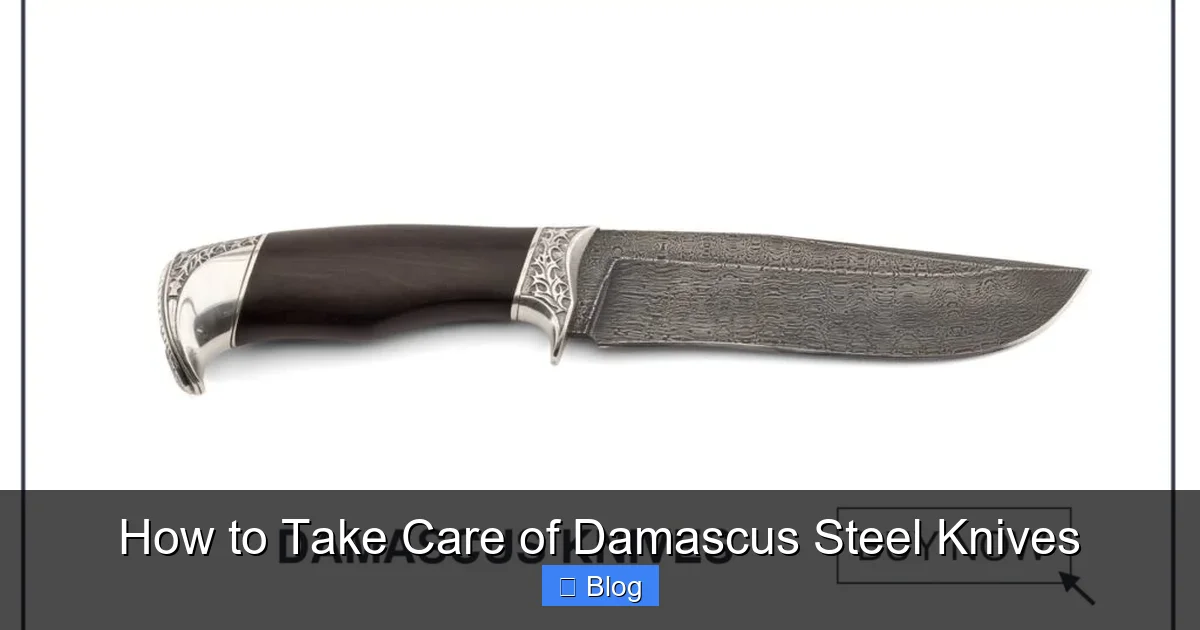
Visual guide about How to Take Care of Damascus Steel Knives
Image source: nobliecustomknives.com
The Dishwasher: A One-Way Ticket to Disaster
This cannot be stressed enough. The dishwasher is the arch-nemesis of any fine knife, but for Damascus steel, it’s catastrophic. The combination of brutal detergents, prolonged high heat, and aggressive water jets will strip away any protective oils, promote rapid oxidation (rust), cause microscopic damage to the edge, and can even warp the blade or handle. The vibration can also loosen the handle scales. There is no scenario where a dishwasher is acceptable. Ever.
Air-Drying: An Open Invitation for Rust
Water is the enemy. Simply rinsing and leaving the knife on the counter to air-dry is like leaving a glass of water out for rust to party in. Water droplets will bead in the microscopic crevices of the pattern and at the blade’s spine and heel, leading to pinpoint rust spots that can spread. Drying must be immediate, deliberate, and complete.
Harsh Scrubbers and Abrasive Cleaners
Steel wool, abrasive sponges, or gritty cleansers will scratch the beautiful surface of your blade and can damage the delicate acid-etched pattern. They can also remove the nascent, protective patina that naturally forms on high-carbon steel. Stick to soft cloths and non-abrasive tools.
Improper Storage: The Silent Killer
Tossing your knife into a crowded drawer is a recipe for a nicked edge, scratched blade, and potential contact with moisture from other washed utensils. Storing it in a leather sheath that isn’t 100% dry is also dangerous, as leather can trap humidity against the steel.
The Sacred Ritual: Cleaning and Drying Your Damascus Knife
This is the most frequent interaction you’ll have with your knife. Done correctly, it takes less than a minute and preserves everything you love about it.
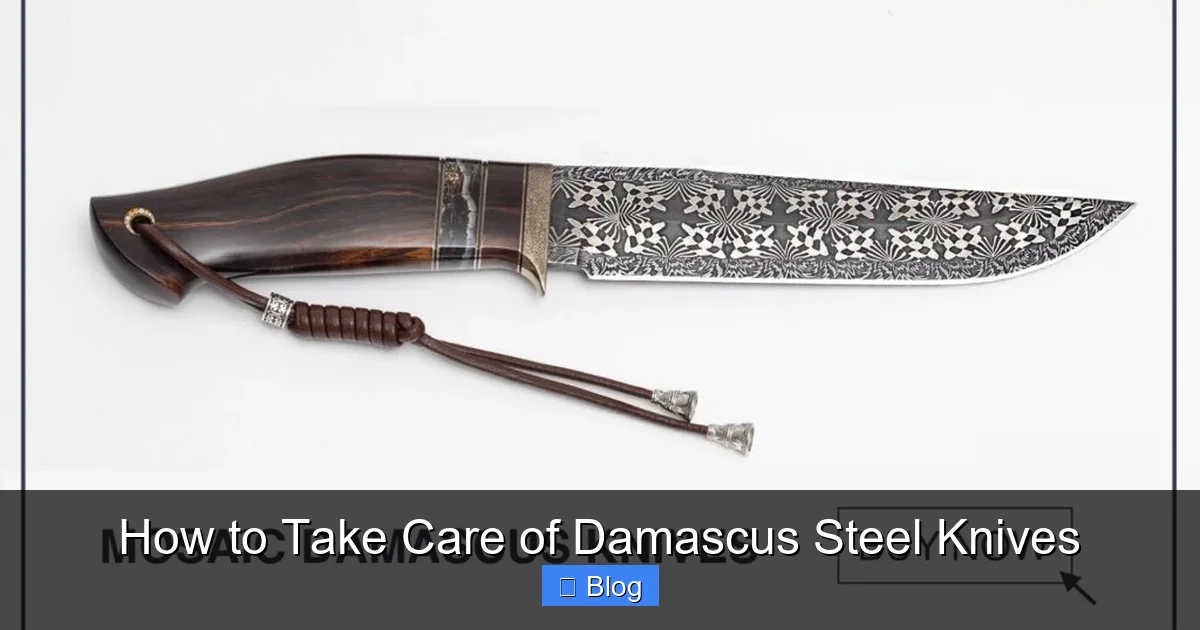
Visual guide about How to Take Care of Damascus Steel Knives
Image source: nobliecustomknives.com
Step 1: Immediate Post-Use Rinse
As soon as you’re done cutting, especially with acidic foods (tomatoes, citrus, onions) or proteins, rinse the blade under cool or warm running water. This removes food particles and acidic juices that can promote corrosion. Don’t let food debris cake on; it’s harder to clean later and more damaging.
Step 2: Gentle Washing
Use a drop of mild dish soap on a soft sponge or cloth. Gently wipe down the entire blade, paying attention to the edge and the area where the blade meets the handle. For the handle, use the same cloth. If your knife has a wooden handle, avoid soaking it. Wipe it clean with a damp cloth.
- Pro Tip: Use the back of your thumb (the part opposite the nail) to feel along the edge and spine for any stuck-on particles. Your sense of touch is a better detector than your eyes in many cases.
Step 3: Thorough Rinse
Rinse all soap residue away completely. Even a tiny film of soap can interfere with the next step—drying—and potentially trap moisture.
Step 4: The Military-Grade Dry
This is the most crucial step. Have a clean, dry, lint-free microfiber or cotton cloth ready. Immediately after rinsing, wipe the entire blade, from tip to heel, spine to edge. Don’t just pat; wipe with a firm, sweeping motion. Then, use the dry part of the cloth to go over it again. Finally, hold the knife by the handle and gently wave it in the air for a few seconds to evaporate any remaining trace moisture from the microscopic pores. Inspect the blade in good light to ensure it’s bone-dry. Don’t forget to wipe the tang (the part of the blade that extends into the handle) and the bolster if your knife has one.
The Protective Shield: Oiling and Long-Term Maintenance
Drying is step one. Oiling is the essential follow-up that creates a sacrificial barrier against humidity. Think of it as moisturizer for your knife’s skin.
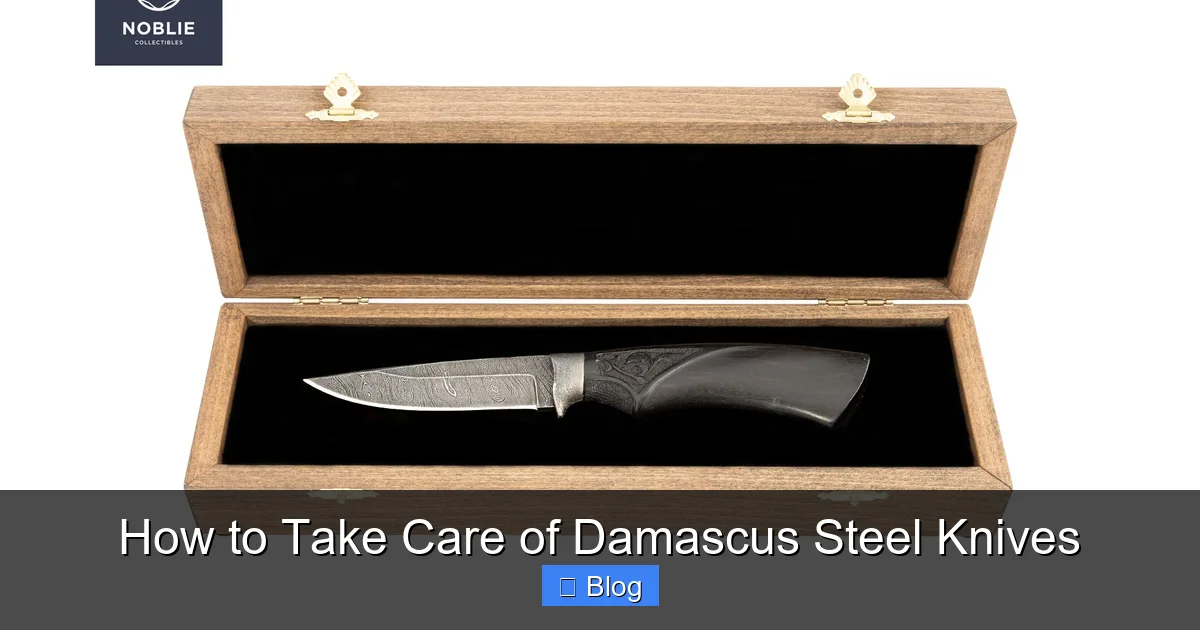
Visual guide about How to Take Care of Damascus Steel Knives
Image source: nobliecustomknives.com
Choosing the Right Oil
This is important. Not all oils are created equal.
- Best Choice: Food-Safe Mineral Oil. This is the gold standard. It’s odorless, tasteless, colorless, and won’t go rancid. You can buy it at pharmacies or online. A small bottle lasts forever.
- Excellent Alternatives: Camellia oil (traditional Japanese knife oil) or specialized knife maintenance oils like “Gunderson’s Knife Oil” or “Tsubaki Oil.”
- Acceptable in a Pinch: A very light vegetable oil (like canola) can work short-term, but it can turn rancid and sticky over time, attracting dust and grime.
- Never Use: Motor oil, WD-40 (it’s a water displacer and lubricant, not a protective coating for food), olive oil (goes rancid quickly), or any oil with a strong scent or flavor.
How to Apply Oil Properly
Put a drop or two of oil on a soft cloth or directly onto the blade. Using light pressure, rub the oil along the length of the blade, covering every surface—the flat, the edge, the spine. You want a thin, even, invisible film. Wipe off any excess with a clean, dry part of the cloth. The blade should not feel greasy or look wet. It should just have a slight sheen. For knives used daily, do this after every wash. For occasional-use knives, a weekly oiling is a safe habit.
- Pro Tip: Keep a small cloth with a dab of mineral oil in your knife block or drawer. It takes 10 seconds to give your blade a quick wipe-down before putting it away, even if you haven’t used it that day, just to replenish the barrier.
The Natural Patina: Your Friend, Not Foe
As you use your Damascus steel knife, you’ll notice the high-carbon layers begin to darken, often unevenly. This is a patina—a thin layer of oxidation that actually protects the steel from further, more damaging rust. It’s a sign of use and character. Do not try to scrub this off with abrasives. Your gentle cleaning routine will maintain it. Embrace it as part of the knife’s story.
Smart Storage: Keeping Your Knife Safe and Sound
Where your knife lives when not in use is almost as important as how you clean it. The goal is to protect the edge, prevent physical damage, and minimize exposure to ambient humidity.
The Top-Tier Options
- Magnetic Wall Strip: Excellent. It holds the knife securely by the spine, keeping the edge clear and allowing for air circulation. Ensure the magnet is strong and the knife is fully seated.
- Knife Block (with Horizontal Slots): Good, provided the block is kept in a dry location (not next to the stove or sink) and the slots are clean and dry. Insert the knife by the handle, letting the blade rest gently in the slot. Avoid forcing it in.
- Blade Guards / Saya (Sheaths): Very good for drawer storage or travel. Use a plastic or wooden guard that covers the edge and spine. Critical: The knife must be 100% clean and dry before inserting it into any guard or saya, and the guard itself must be dry. Never store a damp knife in a sheath.
What to Avoid
- Loose in a Drawer: The worst option. The blade will knock against other utensils, dulling and chipping the edge. It will also rub against moisture and salts from other items.
- Leather Sheaths for Long-Term Storage: Leather can absorb and hold moisture against the blade, promoting rust. Only use for short-term transport if the knife is bone-dry and the sheath is clean.
- Near Heat or Steam Sources: Don’t store your knife block or strip right next to the dishwasher, oven, or sink. Constant humidity and heat accelerate corrosion.
Sharpening and Honing: Preserving the Edge
A sharp Damascus steel knife is a safe and joy to use. A dull one is dangerous and frustrating. Proper sharpening is part of care, but it’s done less frequently than cleaning.
Honing: Your Weekly Friend
Use a honing steel (ceramic or fine diamond is best) regularly—even after a few uses—to realign the microscopic edge. This is not sharpening; it’s straightening. Use a gentle, consistent angle (usually 15-20 degrees per side for a German/European angle, 10-15 for Japanese). Apply light pressure and do 5-10 strokes per side. This maintains sharpness between true sharpenings.
Sharpening: The Occasional Necessity
When honing no longer restores sharpness, it’s time to sharpen. Due to the layered nature of Damascus, you must use a sharpening system that allows for a consistent, precise angle.
- Best for Beginners/Consistency: A guided pull-through system (like a Chef’sChoice or Work Sharp with angle control) or a fixed-angle sharpener (like a Tormek or Edge Pro). These ensure you don’t accidentally change the knife’s factory angle, which can damage the blade and weaken the edge.
- For the Skilled: A whetstone system. If you go this route, practice on a cheap knife first. Use a medium grit (800-1000) for sharpening and a fine grit (3000-6000) for polishing. Maintain your angle religiously. The layered pattern may make it slightly harder to see your progress, so feel for a consistent, burr-free edge.
- Critical Warning: Never use a cheap, unguided pull-through sharpener or a power tool like a Dremel or bench grinder. The uncontrolled angles and heat will destroy the Damascus pattern and ruin the temper of the steel, making the edge soft and prone to rolling.
When to Seek a Professional
If you’re not 100% confident in your sharpening skills, send your knife to a reputable sharpening service that specializes in Japanese or high-end knives. It’s a small investment to protect a much larger one. Tell them it’s a pattern-welded Damascus blade so they use appropriate, fine abrasives.
Troubleshooting: Dealing with Rust and Discoloration
Even with the best care, a tiny spot of rust might appear, especially in humid climates. Don’t panic. Act fast.
Identifying the Problem
- Surface Rust (Orange/Brown Spots): The early, easy-to-remove stage. Caused by moisture sitting on the carbon steel.
- Deep Pitting: More advanced corrosion where the steel has been eaten away, leaving tiny holes. This is more serious and may require professional polishing to remove.
- Blue/Black Discoloration (Tarnish): This is often just a patina or heat tint from cooking. It’s usually not rust and is generally harmless and protective.
The Gentle Rust Removal Protocol
For surface rust only:
- Make a Paste: Mix a non-abrasive cleanser like Bar Keepers Friend (the liquid or powder, without ammonia) with a tiny amount of water to form a thick paste. Alternatively, use a paste of baking soda and water.
- Apply Gently: Using a soft cloth or your finger, apply the paste ONLY to the rust spots. Do not rub it onto the surrounding, pristine pattern.
- Let it Sit: Allow it to sit for 1-2 minutes. Do not let it dry completely.
- Wipe & Rinse: Wipe gently with a soft, damp cloth. Rinse the blade immediately and thoroughly with clean water.
- Dry & Oil: Dry the entire blade meticulously with a cloth, then apply a fresh coat of mineral oil. Inspect.
- Important: If the rust is heavy or pitted, or if you are uncomfortable, take it to a professional knife smith or sharpener. Aggressive scrubbing will destroy the beautiful Damascus pattern.
Conclusion: A Partnership Forged in Care
Caring for Damascus steel knives is not a complex set of rules, but a mindful practice. It’s the quiet moment of wiping down the blade after a meal prep, the weekly ritual of applying a whisper of oil, the conscious choice to use a wooden board. These small acts are how you honor the centuries-old craft that went into forging that blade. You’re not just maintaining a tool; you’re stewarding a piece of art. By committing to the simple, non-negotiable routine of hand-washing, immediate drying, and regular oiling, you create a protective environment where your knife can thrive. The stunning patterns will remain vivid, the edge will stay hair-splitting sharp, and your Damascus knife will be ready for its next task, whether that’s slicing a delicate piece of fish or being passed down to the next generation. It’s a partnership. Treat it with respect, and it will serve you beautifully for a lifetime.
Frequently Asked Questions
Can I put my Damascus steel knife in the dishwasher?
Absolutely not. The dishwasher’s harsh detergents, high heat, and prolonged water exposure will cause rapid corrosion, damage the handle, dull the edge, and can even warp the blade. Always hand-wash and dry immediately.
Why is my Damascus knife developing dark spots or rust?
Dark spots are usually a natural, protective patina on the high-carbon steel layers. Rust (orange/brown) forms when moisture is left on the carbon steel. Prevent rust by drying the knife instantly after washing and applying a thin coat of food-safe mineral oil regularly to create a moisture barrier.
What oil should I use on my Damascus knife?
Use a food-safe mineral oil (available at pharmacies) or a dedicated knife/camellia oil. These are odorless, tasteless, and won’t go rancid. Avoid vegetable oils like olive oil, which can spoil, and never use WD-40 or motor oil.
How often should I sharpen my Damascus knife?
It depends on use. For a home cook using it daily, you may need to hone it on a ceramic steel weekly and professionally sharpen it 1-2 times per year. The key is to hone often to realign the edge and only sharpen when honing no longer restores sharpness.
Is it normal for the Damascus pattern to fade or disappear?
The pattern is created by the layered steel and acid etch. It won’t “fade,” but it can become less visible if the blade is aggressively polished or if a thick layer of rust or mineral buildup forms on the surface. Proper cleaning and oiling maintain the contrast. Do not scrub the pattern with abrasive pads.
Can I use my Damascus knife to cut through bones or frozen foods?
No. Damascus steel, while strong, is designed for precision cutting of meat, fish, and vegetables. Using it on bones, frozen foods, or hard shells can chip or roll the delicate edge. Use a dedicated cleaver for those tasks to preserve your investment knife.