Storing quinoa properly is essential for maintaining its nutty flavor, nutritional value, and preventing spoilage or pest infestations. For short-term storage, keep uncooked quinoa in a cool, dark pantry in an airtight container. For long-term storage beyond 6 months, the freezer is your best friend to lock in freshness. Cooked quinoa must be refrigerated and consumed within 5-7 days for safety and quality.
Key Takeaways
- Always use airtight containers: Whether glass jars, food-grade plastic, or heavy-duty freezer bags, oxygen and moisture are quinoa’s biggest enemies, leading to rancidity and staleness.
- Store in a cool, dark, and dry place: Heat, light, and humidity accelerate oil degradation and attract pantry pests. A pantry or cupboard away from the stove or dishwasher is ideal.
- Freeze for long-term storage: For storage longer than 6 months, freezing is the most effective method to preserve flavor and nutrients and kill any potential insect eggs.
- Label and date everything: Use a permanent marker to note the purchase or “best by” date on your containers. This simple habit prevents mystery grains and ensures rotation.
- Refrigerate cooked quinoa promptly: After cooking, cool quinoa to room temperature within two hours, then store it in an airtight container in the fridge for 3-5 days.
- Check for signs of spoilage before use: Discard quinoa if it has a sour, musty, or “off” smell, visible mold, insect activity, or a noticeably bitter or rancid taste.
- Keep it away from strong odors: Quinoa can absorb odors from nearby foods like onions, spices, or cleaning supplies, so store it separately in a sealed container.
📑 Table of Contents
- Why Proper Quinoa Storage is Non-Negotiable
- Storing Uncooked Quinoa: The Pantry Method
- Long-Term Storage: The Freezer is Your Best Friend
- The Critical Rules for Storing Cooked Quinoa
- Common Storage Mistakes (And How to Avoid Them)
- Troubleshooting: What If My Quinoa Smells or Tastes Odd?
- Conclusion: A Simple Habit for Big Rewards
Why Proper Quinoa Storage is Non-Negotiable
You’ve bought that beautiful bag of quinoa—maybe it’s fluffy white, vibrant red, or a mix of tri-color. It’s touted as a superfood, packed with complete protein and fiber. But here’s the thing: all those wonderful nutrients and that delicate, nutty flavor are incredibly fragile. Improper storage doesn’t just make quinoa taste old; it can lead to rancidity from its natural oils going bad, attract weevils and moths, and cause it to lose its texture and nutritional punch. Think of your quinoa not as a static product, but as a living seed with a shelf life. Learning how to store quinoa correctly is the single most important step in ensuring every spoonful is as delicious and healthy as the day you bought it. It’s a simple habit that saves money, reduces food waste, and guarantees your recipes turn out perfectly.
The Science Behind Spoilage
Quinoa, like many whole grains and seeds, contains a small amount of natural oil. When exposed to oxygen, light, and warmth, these oils undergo oxidation, a chemical process that leads to rancidity. You’ll recognize this by a sharp, bitter, or “painty” smell. Furthermore, quinoa can harbor microscopic insect eggs (like weevils) that are often present from the processing facility. In a warm, humid pantry, these eggs can hatch, leading to a full-blown infestation that can spread to other dry goods. Proper storage tackles both problems: it slows oxidation and creates an environment where pests cannot survive or reproduce.
Storing Uncooked Quinoa: The Pantry Method
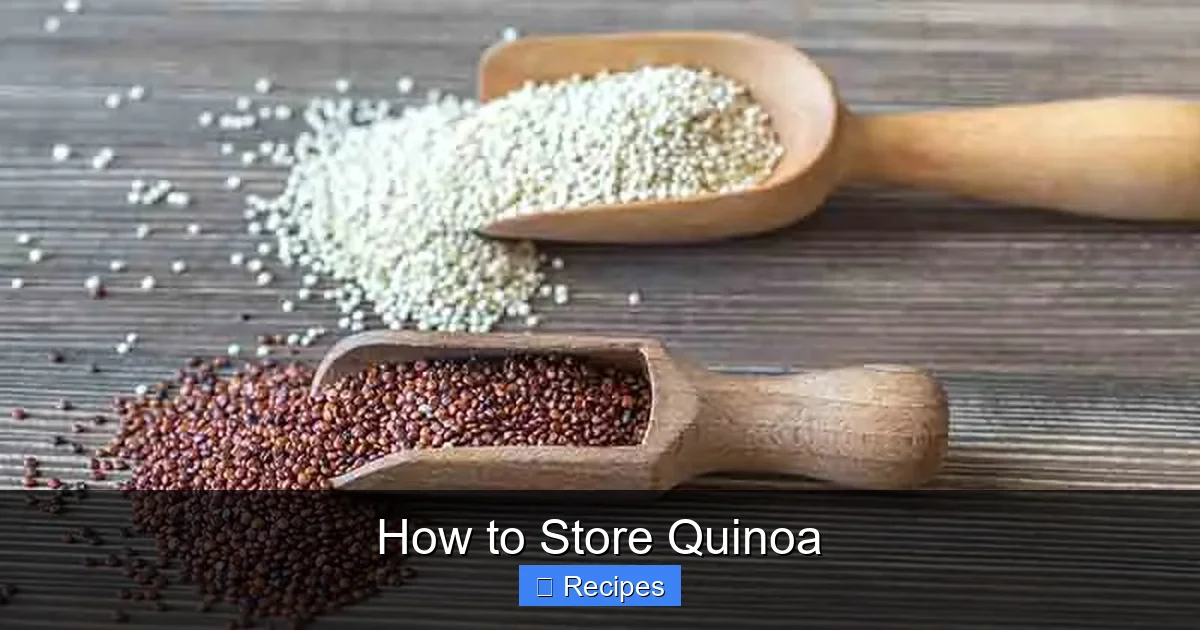
For most of us, quinoa doesn’t sit in the pantry for years. We buy it, use it in salads and bowls, and replenish the supply. This makes short-term pantry storage the most common method. The goal here is simple: create a fortress against air, moisture, and pests. The original packaging—usually a thin paper or plastic bag—is simply not up to the task. It’s porous, offers no barrier to oxygen, and tears easily.
Visual guide about How to Store Quinoa
Image source: primalsurvivor.net
Step 1: Transfer to an Airtight Container
The first rule of storing quinoa is to immediately decant it from its store-bought bag. Your best friends are:
- Glass Mason Jars: The gold standard. They are completely airtight, non-porous (won’t absorb odors), and you can easily see the contents. Wide-mouth jars are easiest for scooping.
- Food-Grade Plastic Containers: Look for containers with a locking lid and a rubber gasket for a true airtight seal. BPA-free is a must.
- Heavy-Duty Freezer Bags: A great space-saver. Use the quart or gallon size, press out all the air before sealing, and then place that bag inside a secondary container or another bag for extra protection.
Whatever you choose, ensure it is clean and completely dry. Any residual moisture is a fast track to mold.
Step 2: Find the Perfect Spot
Location is everything. Your quinoa container should live in a spot that is:
- Cool: Ideally below 70°F (21°C). Heat speeds up oil degradation. Avoid cabinets above the dishwasher, next to the oven, or near the refrigerator’s heat exhaust.
- Dark: Light, especially direct sunlight, accelerates rancidity. A closed pantry, cupboard, or drawer is perfect.
- Dry: Humidity is the enemy. Do not store quinoa near the sink or in a basement prone to dampness.
A consistent temperature is also key. Fluctuations between hot and cold can cause condensation inside the container, introducing moisture.
Shelf Life in the Pantry
When stored correctly in a cool, dark pantry in an airtight container, most sources agree that uncooked quinoa will maintain its best quality for 6 to 12 months. The “best by” date on the package is a good guide, but your storage conditions are the real determinant. After a year, it may still be safe but will likely have lost some of its pleasant, nutty aroma and may taste somewhat flat or stale. It’s best to use it within 6 months for peak flavor and nutrition.
Long-Term Storage: The Freezer is Your Best Friend
If you buy quinoa in bulk—from a warehouse club or a bulk bin—or simply want to guarantee freshness for up to two years, freezing is the ultimate solution. Freezing does two critical things: it completely halts the oxidation process, and it kills any insect eggs or larvae that might be present, making it a foolproof method.
Visual guide about How to Store Quinoa
Image source: primalsurvivor.net
How to Freeze Quinoa Correctly
The process is straightforward but requires attention to detail to prevent freezer burn.
- Start with Dry Quinoa: Ensure your quinoa is completely dry and at room temperature. Any moisture will form ice crystals.
- Portion it Out: Decide how much quinoa you typically use for a meal (e.g., 1 cup dry). Portioning prevents you from having to repeatedly open and close a large container, which introduces air and humidity.
- Package Airtight: Use freezer-specific bags or containers. For bags, use a vacuum sealer if you have one. If not, use the water displacement method: place quinoa in a freezer bag, seal almost all the way, then slowly lower the bag into a bowl of water to push out all the air before sealing completely. For containers, fill them nearly to the top to minimize headspace.
- Label and Date: This is non-negotiable. Write “Quinoa” and the date on the bag or container with a permanent marker.
Using Frozen Quinoa
You can use frozen quinoa directly from the freezer. Simply measure out the portion you need and let it sit on the counter for 10-15 minutes while you prepare other ingredients. It will thaw quickly at room temperature. There is no need to thaw it in the fridge first. The texture and flavor will be identical to freshly opened quinoa. Frozen quinoa can last for 24-36 months with no loss of quality, though for optimal taste, aim to use it within 2 years.
The Critical Rules for Storing Cooked Quinoa
This is where many people go wrong. Cooked quinoa is a perishable food, and its storage rules are more like those for cooked rice or pasta. The moist, warm environment of cooked grains is a perfect breeding ground for bacteria like Bacillus cereus, which can cause food poisoning if left at room temperature too long.
Visual guide about How to Store Quinoa
Image source: echohillcountrystore.com
The 2-Hour Rule is Law
After your quinoa finishes cooking, you have a two-hour window to get it into the refrigerator. This is a food safety guideline from the USDA. If your kitchen is very warm (above 90°F/32°C), that window shrinks to just one hour. Do not let a big pot of cooked quinoa sit out to cool on the counter all afternoon.
Cooling and Storage Technique
To cool it quickly and safely:
- Spread the cooked quinoa out on a large baking sheet in a thin layer. This exposes maximum surface area to the air, speeding up cooling.
- Alternatively, transfer it to several smaller, shallow containers rather than one deep bowl.
- Stir it occasionally as it cools.
- Once it has reached room temperature (no longer warm to the touch), transfer it to an airtight container and immediately place it in the refrigerator.
Shelf Life and Reheating
Properly stored cooked quinoa will last in the refrigerator for 3 to 5 days. Always use your senses: if it smells sour, funky, or looks slimy, throw it out. When reheating, only take out the portion you plan to eat. Reheat it thoroughly to an internal temperature of 165°F (74°C), either in the microwave with a splash of water (covered), steamed, or quickly sautéed. Do not reheat the entire container multiple times. Cooked quinoa can also be frozen for up to 3 months in portioned, airtight containers or bags. Thaw in the refrigerator overnight before reheating.
Common Storage Mistakes (And How to Avoid Them)
Even with the best intentions, it’s easy to slip up. Let’s troubleshoot the most frequent quinoa storage errors.
Mistake 1: Storing in the Original Bag
That thin bag is a sieve for air and a magnet for pantry moths. Fix: Always, always transfer to an airtight container the moment you open the package.
Mistake 2: Storing Near Heat or Moisture
The cabinet next to the stove or above the sink is a humidity and heat trap. Fix: Choose a dedicated, interior shelf in a pantry or cupboard far from any heat source or water source.
Mistake 3: Not Labeling and Dating
“How long has this been here?” is a dangerous question. Fix: Make labeling a ritual. Use a dry-erase marker on the lid of your jar or a piece of masking tape. The 5 seconds it takes saves you from eating rancid grains.
Mistake 4: Letting Cooked Quinoa Cool Slowly
Leaving a hot pot out for hours is a bacterial growth party. Fix: Implement the “spread on a baking sheet” cooling method religiously. Set a timer if you need to!
Mistake 5: Storing with Strong-Smelling Foods
Quinoa is neutral and will absorb the aroma of nearby coffee, spices, or onions. Fix: Store quinoa separately in its own sealed container, not in a shared bin with other grains and strong spices.
Troubleshooting: What If My Quinoa Smells or Tastes Odd?
Despite your best efforts, you might open a container and get a whiff of something not quite right. Here’s your diagnostic guide.
Rancid Odor (Sharp, Bitter, “Painty”)
This is oxidation of the natural oils. It’s not necessarily unsafe in tiny amounts, but it’s unpleasant and indicates nutrient loss. Action: Discard the batch. Do not try to mask it with sauces. In the future, ensure your storage spot is truly cool and dark, and consider freezing if you won’t use it within 3 months.
Musty or Stale Smell
This is usually from long-term exposure to low levels of oxygen and humidity, not full rancidity. The flavor will be flat. Action: You can often salvage this by toasting the quinoa before cooking. Rinse it, then dry-toast it in a pan over medium heat for 3-5 minutes until fragrant. This can revitalize some of the lost flavor. If it still tastes flat after toasting, it’s best to compost it.
Insect Activity (Live bugs, webbing, tiny holes in kernels)
This means insect eggs hatched. Action: Immediately discard the entire infested container. Thoroughly clean the storage area and any adjacent containers with hot, soapy water. To prevent this, your first line of defense is the freezer method for new purchases—freezing for 72 hours kills any eggs before you even store it.
Sour or Fermented Smell on Cooked Quinoa
This is bacterial growth. Action: Discard immediately. Do not taste it. This is a food safety risk. Re-evaluate your cooling and refrigeration timeline.
Conclusion: A Simple Habit for Big Rewards
Mastering how to store quinoa transforms it from a sometimes-finicky ingredient into a consistently reliable pantry staple. The core principles are universal: airtight, cool, dark, and dry. For the home cook who uses quinoa weekly, a simple glass jar in a deep cupboard is perfect. For the bulk buyer or occasional user, a few minutes spent portioning and freezing pays dividends in flavor and peace of mind. And never, ever underestimate the importance of the two-hour rule for cooked quinoa—it’s a small step that protects your health. By treating this humble seed with the storage respect it deserves, you ensure that every quinoa salad, pilaf, or breakfast bowl you make is bursting with the fresh, nutty, wholesome goodness that made you fall in love with it in the first place. Your future self, pulling out perfectly preserved quinoa months from now, will thank you.
Frequently Asked Questions
Can you store quinoa in the fridge without cooking it first?
Yes, you can store uncooked quinoa in the refrigerator to extend its shelf life beyond pantry storage, but it’s not the most efficient method. The fridge is cool and dark, but it’s humid. You must use an exceptionally airtight container to prevent moisture absorption. Freezing is still superior for long-term storage.
How can you tell if quinoa has gone bad?
How can you tell if quinoa has gone bad?
Use your senses. Rancid quinoa will have a sharp, bitter, or “off” smell, often described as paint or nail polish remover. It may also taste bitter if you cook a small amount. Discard it if you see any live insects, webbing, or mold. A stale or flat smell indicates age but may be salvageable by toasting.
Is it necessary to wash quinoa before storing it?
No, do not wash quinoa before storing it. The natural saponin coating on the outside actually helps protect it from moisture and pests during storage. Always rinse quinoa *just before cooking* to remove the saponin, which can cause a bitter taste.
Can you store quinoa and rice together in the same container?
It’s not recommended. They have slightly different optimal storage conditions and shelf lives. More importantly, if one batch develops a pest problem, it will quickly spread to the other. Keep different grains and seeds in separate, sealed containers.
What’s the best container for storing quinoa in the pantry?
A glass mason jar with a tight-sealing lid is the best choice. It’s completely airtight, non-porous (won’t absorb odors), and you can easily see the contents. High-quality plastic containers with locking lids and gaskets are a good second choice.
How long does cooked quinoa last in the refrigerator?
When cooled quickly and stored in an airtight container, cooked quinoa will last for 3 to 5 days in the refrigerator. Always reheat it thoroughly to 165°F (74°C) before eating and discard it if it develops a sour smell or slimy texture.