Storing Banh Tet correctly is essential to preserve its unique texture, flavor, and safety. For short-term storage, refrigeration in an airtight container is key, while freezing is ideal for long-term preservation. Always ensure it’s completely cool before storing and wrap it tightly to prevent freezer burn or spoilage.
Key Takeaways
- Cool Completely First: Never store warm or hot Banh Tet, as condensation will make it soggy and promote mold growth.
- Refrigerate for Short-Term: Store in an airtight container in the fridge for up to 5-7 days for best quality and safety.
- Freeze for Long-Term: Wrap individual portions tightly in plastic wrap and foil, then place in a freezer bag for storage up to 2-3 months.
- Avoid Direct Sunlight & Heat: Never leave Banh Tet at room temperature for more than 2 hours, as the perishable mung bean filling can spoil quickly.
- Reheat Gently: Steam or microwave from frozen or refrigerated state to restore its soft, sticky texture without drying it out.
- Check for Spoilage: Always inspect for off smells, visible mold, or a sour taste before consuming, especially after storage.
- Traditional vs. Modern Wrapping: Banana leaf wrapping adds flavor but requires different storage care than plastic-wrapped commercial versions.
📑 Table of Contents
- The Sacred Cake: Why Proper Banh Tet Storage Matters
- Understanding Your Banh Tet: The Foundation of Good Storage
- Method 1: Refrigeration for Short-Term Freshness (Up to 1 Week)
- Method 2: Freezing for Long-Term Preservation (2-3 Months)
- Method 3: Room Temperature & Pantry Storage (Very Short-Term Only)
- The Do’s and Don’ts: Common Storage Mistakes to Avoid
- Reviving the Magic: Best Practices for Reheating Stored Banh Tet
The Sacred Cake: Why Proper Banh Tet Storage Matters
Banh Tet, the beloved pyramid-shaped Vietnamese sticky rice cake, is more than just food—it’s a cultural symbol, a family tradition, and a delicious labor of love. Wrapped in banana leaves and filled with sweet mung bean paste and fatty pork, its preparation for Tết (Lunar New Year) is a ritual in itself. But all that effort can be wasted if you don’t know how to store Banh Tet correctly. Improper storage leads to a sad, moldy, or dried-out cake, wasting both ingredients and sentiment. This guide will walk you through every method, from the traditional banana leaf wrap to modern plastic packaging, ensuring your Banh Tet stays perfect from the first bite to the last. Whether you made a batch yourself or received them as gifts, mastering storage is the final, crucial step in enjoying this iconic treat.
Understanding Your Banh Tet: The Foundation of Good Storage
Before we dive into storage methods, it’s vital to understand what you’re dealing with. Banh Tet is a complex, high-moisture food consisting of three main components: the outer layer of glutinous rice, the sweet mung bean filling, and often a savory center of marinated pork belly. Each component has different storage needs and spoilage risks. The rice provides a starchy, sticky matrix that can dry out or become overly soggy. The mung beans are sugary and moist, a perfect breeding ground for mold if not kept cool. The pork, if present, is a protein that must be refrigerated to stay safe. The wrapping—traditional banana leaves or modern plastic/banana leaf composite—also plays a role, affecting breathability and moisture retention. Knowing this helps you understand why the storage rules exist.

Visual guide about How to Store Banh Tet
Image source: as1.ftcdn.net
The Role of the Banana Leaf Wrapper
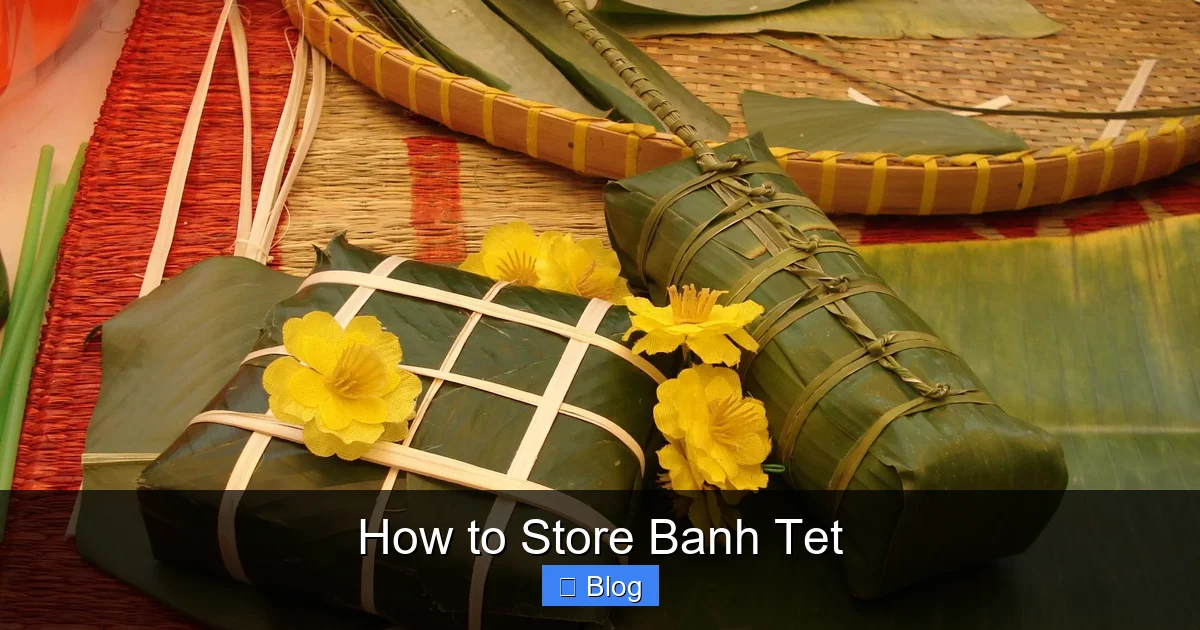
Traditional Banh Tet is steamed inside a double layer of fresh banana leaves, which impart a subtle, grassy aroma and help the rice cook evenly. These leaves are permeable, allowing some steam to escape during cooking. After cooking, they act as a natural, breathable packaging. This is a double-edged sword for storage: the leaf protects the cake but also allows it to “breathe,” which can lead to drying out in the fridge or absorption of odors. Modern commercial versions often use plastic wrap or a banana leaf-plastic hybrid, which creates a more airtight seal. Your storage method should adapt to your wrapper type.
Critical Pre-Storage Step: The Cooling Phase
This is the #1 rule, and skipping it ruins everything. You must allow your Banh Tet to cool completely to room temperature before any storage. This means letting it sit, unwrapped or loosely wrapped, for at least 2-3 hours after steaming. Why? Because placing a warm cake into a sealed container or bag traps steam. This condensation creates a damp, humid environment inside the packaging—a paradise for mold and bacteria. Furthermore, the heat will accelerate spoilage of the filling. Patience here is non-negotiable for food safety and quality. Place the cooled cakes on a wire rack or clean kitchen towel to allow air circulation on all sides.
Method 1: Refrigeration for Short-Term Freshness (Up to 1 Week)
Refrigeration is your go-to for enjoying Banh Tet within the next few days. It slows microbial growth and keeps the cake fresh. However, the cold, dry air of a refrigerator can be harsh, so proper technique is essential to prevent the rice from hardening and the cake from absorbing other food smells.
Visual guide about How to Store Banh Tet
Image source: comvietnam.com
Step-by-Step Refrigeration Guide
First, ensure your Banh Tet is completely cool. If it’s still warm, leave it out. Once cool, you have two main options based on its wrapper:
- For Banana Leaf-Wrapped Banh Tet: Gently brush the outside of the leaves with a tiny bit of water to prevent them from drying out and cracking. Then, place the whole cake (leaves on) into a large, airtight plastic container. If you don’t have a container large enough, wrap the leaf-wrapped cake tightly in a layer of plastic wrap, followed by a layer of aluminum foil, to create a barrier against fridge odors and moisture loss.
- For Plastic-Wrapped Banh Tet: If the commercial plastic is intact and airtight, you can leave it as is and place it directly into a resealable freezer bag for an extra layer of protection against odors. If the plastic is loose, rewrap it tightly in fresh plastic wrap, ensuring no air pockets, then place in a container or bag.
Label the container with the date. Store it in the main body of the refrigerator, not the door, for a more consistent temperature. Properly stored, it will maintain good quality for 5-7 days.
Reheating from the Refrigerator
A refrigerated Banh Tet will be firm. The goal is to gently rehydrate the rice and warm the filling through without cooking it further or drying it out. The best method is steaming. Remove any outer plastic/foil but keep the banana leaves on if present. Place the cake in a steamer basket over boiling water, cover, and steam for 15-20 minutes until piping hot throughout. Alternatively, you can microwave it. unwrap it, place it on a microwave-safe plate, cover it with a damp paper towel, and heat on medium power in 30-second bursts, checking and rotating, until heated through (about 1-2 minutes total). The damp towel provides crucial moisture.
Method 2: Freezing for Long-Term Preservation (2-3 Months)
Freezing is the ultimate method for preserving Banh Tet for months, locking in flavor and texture almost perfectly when done right. The key is protecting against freezer burn, which occurs when air reaches the food’s surface, dehydrating and oxidizing it. This requires a multi-layer barrier and portioning.

Visual guide about How to Store Banh Tet
Image source: kampatour.com
Portioning and Wrapping: The Freezer’s Golden Rules
Never freeze a whole, large Banh Tet if you plan to eat it gradually. Thawing and refreezing ruins it. Instead:
- Slice or Divide: Once completely cool, cut the large pyramid into 1- to 2-inch thick slices or wedges. This creates manageable portions.
- Wrap Individually: This is the most critical step. Wrap each portion tightly in a layer of plastic wrap, pressing out as much air as possible. Then, wrap that package in a layer of aluminum foil. The plastic wrap creates a moisture barrier against the ice crystals, and the foil provides an airtight outer shield.
- Bag and Label: Place the individually wrapped portions into a large, sturdy resealable freezer bag. Squeeze out all air before sealing. Label the bag with the date and contents (“Banh Tet – Pork & Mung Bean”).
For banana leaf-wrapped cakes, you can freeze them whole, but you must first wrap the entire leaf-wrapped cake in plastic wrap and then foil as described above to protect the leaves from freezer burn and prevent them from imparting a “frozen” taste.
Thawing and Reheating from Frozen
For best results, do not thaw Banh Tet at room temperature, as the outer layers can become soggy while the center remains frozen. Reheat it directly from frozen using the steaming method. Place the frozen, foil-wrapped portion (or the leaf-wrapped cake) in a steamer over boiling water. Steam for 25-35 minutes, or until thoroughly heated. Check the center with a skewer or knife to ensure it’s hot. You can also use the microwave method from frozen, but use lower power and longer time (medium power for 2-4 minutes, with damp paper towel), checking frequently to avoid uneven cooking.
Method 3: Room Temperature & Pantry Storage (Very Short-Term Only)
This method is for immediate consumption only. Due to its high moisture content and perishable filling, Banh Tet should never be left at room temperature for more than 2 hours (1 hour if the ambient temperature is above 90°F/32°C). The “danger zone” for bacterial growth is between 40°F and 140°F (4°C and 60°C), and Banh Tet sits right in it. If you are serving it for a Tết celebration, you can keep it unwrapped on a platter for a couple of hours, but any leftovers must be refrigerated immediately after the meal. For unopened, commercially packaged Banh Tet with preservatives, always check the “best by” date and follow the manufacturer’s instructions, but the 2-hour rule is a safe general guideline.
The Traditional “Hanging” Method: A Cultural Note
In some rural Vietnamese traditions, particularly in cooler northern climates, cooked Banh Tet might be hung in a well-ventilated, cool, dry area (like a loft or under a roof) for a day or two to allow the flavors to meld and the exterior to firm up slightly before consumption. This is not a modern storage recommendation for food safety. It relies on specific, cool ambient temperatures and is practiced for cultural reasons, not for long-term preservation. For today’s kitchens, stick to refrigeration or freezing.
The Do’s and Don’ts: Common Storage Mistakes to Avoid
Even with the best intentions, common errors can ruin your Banh Tet. Here’s what to watch out for.
Don’t: Store While Warm
As emphasized, this is the cardinal sin. It guarantees sogginess and rapid spoilage. Always, always cool completely.
Don’t: Skip the Airtight Barrier
Whether in the fridge or freezer, exposure to air is the enemy. It causes freezer burn, dries out the rice, and allows fridge odors (like onions or fish sauce) to seep into the subtle flavor of your cake. Use containers, bags, and wraps that seal well.
Don’t: Refreeze Thawed Banh Tet
The freeze-thaw cycle damages the texture irreparably, making the rice grainy and watery. Only thaw the portion you plan to eat immediately. That’s why individual wrapping is so important.
Don’t: Ignore the Filling
If your Banh Tet has a savory pork belly filling, treat it with extra caution. Pork is more perishable than rice and beans. Smell it before reheating. If it has any sour, rancid, or “off” odor, discard it immediately. When in doubt, throw it out.
Reviving the Magic: Best Practices for Reheating Stored Banh Tet
Proper storage is only half the battle; reheating is where you bring the Banh Tet back to life. The goal is to restore the original soft, sticky, and cohesive texture of the glutinous rice without drying it out or making it mushy.
Steaming: The Gold Standard
Steaming is the most authentic and effective method. It gently heats the cake using moist heat, which rehydrates the rice perfectly. Whether your portion is refrigerated or frozen, keep the banana leaves on if possible—they help retain moisture. Place the cake in a bamboo or metal steamer over boiling water. Cover and steam for the times mentioned previously (15-20 min from fridge, 25-35 min from frozen). You’ll know it’s ready when the leaves are pliable and hot to the touch, and the rice has a glossy, sticky sheen.
Microwaving: The Quick Fix (With a Caveat)
The microwave is faster but trickier. It can easily over-dry the edges while leaving the center cold. To succeed:
- Unwrap the portion completely.
- Place it on a microwave-safe plate.
- Drape a damp (not wet) paper towel over the top. This is your moisture source.
- Heat on medium (50-70%) power in 30-second increments.
- After each burst, check the temperature and feel the texture. Rotate the cake if your microwave has hot spots.
- Once heated, let it sit covered for a minute to allow heat to distribute.
While not as perfect as steaming, this method yields a decent, edible result for a quick snack.
What to Avoid: The Oven and Stovetop
Do not use a conventional oven or try to reheat it in a pan. The dry, direct heat will desiccate the rice, turning it into a hard, crumbly mass. The unique sticky texture of Banh Tet is destroyed by these methods. Stick to moist-heat techniques.
Frequently Asked Questions
Can I store Banh Tet at room temperature overnight?
No, you should not. Due to its high moisture content and perishable fillings like mung beans and pork, Banh Tet is considered a perishable food. Leaving it out at room temperature for more than 2 hours creates a risk for bacterial growth and mold. Always refrigerate or freeze leftovers promptly.
How long does Banh Tet last in the freezer?
When properly wrapped in plastic wrap and foil to prevent freezer burn and stored in a freezer bag, Banh Tet will maintain its best quality for 2 to 3 months. While it will remain safe to eat beyond that if kept constantly frozen, the texture and flavor may gradually degrade, with the rice becoming slightly grainy upon reheating.
Is it okay to reheat Banh Tet in the microwave without a damp paper towel?
It’s not recommended. Microwaving without a moisture source will quickly dry out the sticky rice, making it tough and crumbly. The damp paper towel provides the steam needed to gently reheat and rehydrate the cake, mimicking the effect of steaming and preserving its authentic texture.
How can I tell if my stored Banh Tet has gone bad?
Trust your senses. Signs of spoilage include a sour, rancid, or unpleasant odor (different from its normal fermented, leafy smell), visible mold (white, green, or black fuzz) on the rice or filling, a slimy texture, or an unexpected sour or bitter taste. If any of these are present, discard the entire cake immediately.
Does the type of filling (sweet mung bean vs. savory pork) change the storage rules?
The core storage rules are the same: cool completely, then refrigerate or freeze. However, the savory pork filling is more perishable and prone to spoilage than the sweet mung bean paste. Be extra vigilant with pork-filled Banh Tet, smelling it carefully before reheating and adhering strictly to the 5-7 day refrigerator limit.
Can I thaw frozen Banh Tet on the countertop before steaming?
For the best texture, it’s better to steam it directly from frozen. Thawing on the countertop allows the outer layers to become warm and potentially enter the “danger zone” for bacteria while the center remains frozen. Steaming from frozen ensures even, safe heating throughout and prevents the rice from becoming waterlogged from condensation that occurs during a slow thaw.
