Rust on a carbon steel knife is a common issue due to the alloy’s high iron content and lack of stainless properties, but it’s almost always fixable. The key is acting quickly; surface rust can be removed with gentle, acidic solutions like vinegar or baking soda paste, while heavier corrosion may require more abrasive methods. After any rust removal, the critical final step is to thoroughly clean, dry, and apply a protective layer of food-grade mineral oil to season the metal and prevent future rust. Consistent maintenance—drying immediately after use and proper storage—is the ultimate defense against this manageable problem.
Key Takeaways
- Act Immediately: The moment you see rust, start the removal process. Early intervention prevents the rust from penetrating deeper into the metal, making the job easier and less invasive.
- Start Gentle: Always begin with the least abrasive method (like a vinegar soak or baking soda paste). Reserve steel wool or power tools for stubborn, pitted rust only, as they can scratch the blade.
- Neutralize and Dry Thoroughly: After using any acidic remover, you must neutralize the acid with a baking soda/water solution and then dry the knife completely with a microfiber cloth and gentle heat to stop the corrosion process.
- Seasoning is Non-Negotiable: A clean, dry blade is vulnerable. You must apply a thin coat of food-grade mineral oil to create a protective barrier. This “seasoning” is the single most important step to prevent immediate rust return.
- Prevention Trumps Cure: The best way to remove rust is to never get it. Develop a habit of hand-washing with mild soap, drying instantly and completely, and storing the knife in a dry sheath or on a magnetic strip, not in a drawer.
- Know When to Pause: If the rust has caused deep pitting or structural weakness, or if the knife is a valuable antique, stop and consult a professional sharpener or restorer to avoid irreversible damage.
📑 Table of Contents
- Understanding the Foe: Why Your Carbon Steel Knife Rusts
- Immediate Action: Your First Response to a Rust Spot
- Method 1: The Gentle Approach – Vinegar and Baking Soda
- Method 2: For Stubborn Rust – Commercial Rust Removers and Potatoes
- Method 3: The Abrasive Path – When to Use Steel Wool and Sandpaper
- The Critical Finale: Cleaning, Drying, and Seasoning
- Prevention: The Smart Owner’s Daily Ritual
- When to Worry: Recognizing Severe Damage and Seeking Help
Understanding the Foe: Why Your Carbon Steel Knife Rusts
Let’s start with the heart of the matter. Your carbon steel knife is a magnificent tool. It’s prized for its ability to take a phenomenally sharp, keen edge and its ease of sharpening. But this strength comes from a trade-off. Carbon steel is an alloy made primarily of iron and carbon, with little to no chromium—the element that makes stainless steel “stainless.” Without that chromium to form a protective passive layer, the iron in your blade is inherently vulnerable to oxidation when it meets moisture and oxygen. That oxidation is rust, scientifically known as iron oxide.
It’s not a sign of a bad knife; it’s a sign of a *carbon* steel knife. The patina, a harmless, often bluish-gray chemical coloration that can develop with use, is sometimes confused with rust. Rust is reddish-brown, flaky, and damaging. It eats away at the metal, creating pits and weak spots that can compromise both the blade’s aesthetic and its structural integrity. Knowing this helps you shift your mindset from frustration to management. You’re not fighting a defective product; you’re managing the natural chemistry of a high-performance material.
Immediate Action: Your First Response to a Rust Spot
You’re prepping your knife after a day’s work, or maybe you pull it from its sheath after a few weeks in storage, and you see it: a tell-tale orange speck or streak. Don’t panic, and don’t immediately reach for the heavy-duty sandpaper. Your first response sets the tone for the entire restoration process.
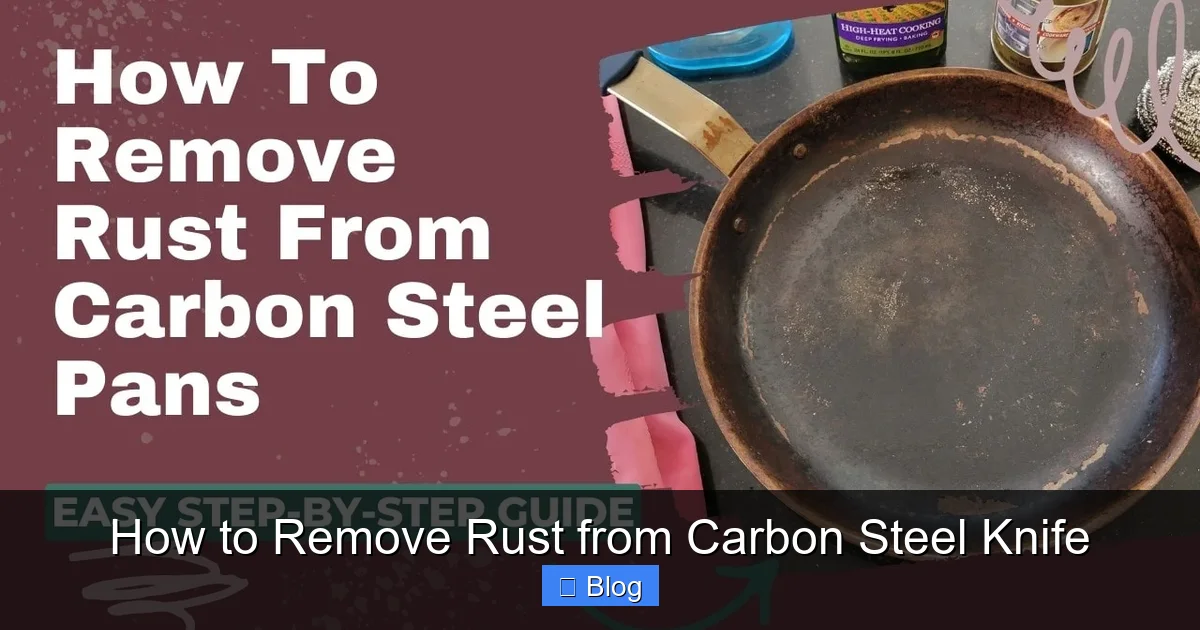
Visual guide about How to Remove Rust from Carbon Steel Knife
Image source: theskillfulcook.com
Assess the Damage
Take a close look. Is this a light, surface-level film of rust you can almost wipe away with your finger? Or is it a deeper, bumpy, pitted area that feels rough to the touch? Use a magnifying glass if needed. Surface rust is cosmetic and easy to treat. Pitting indicates the rust has begun to eat into the metal matrix, requiring more aggressive intervention. The depth of the rust will dictate your method.
Disassemble If Possible (and Safe)
For a full restoration, especially if rust has formed around the handle or tang, carefully disassembling the knife is ideal. This allows you to treat every surface—the blade, the tang, the inside of the handle scales—without damaging other materials like wood, micarta, or synthetics. Only do this if you are confident in your ability to re-assemble the knife correctly and safely. If it’s a full-tang knife with pinned or riveted scales, you may need specialized tools. For most users, cleaning the assembled blade with care is sufficient. Just be meticulous around the handle junction.
Method 1: The Gentle Approach – Vinegar and Baking Soda
For 90% of common surface rust, you don’t need anything harsher than your kitchen pantry. This method is safe, effective, and preserves your blade’s finish.
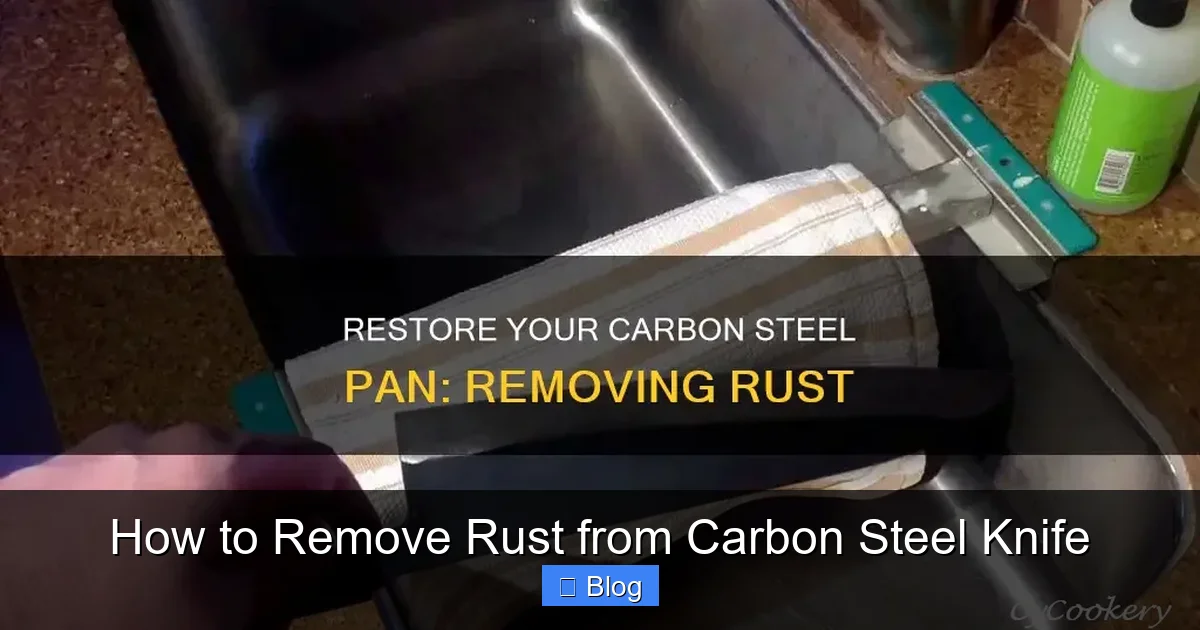
Visual guide about How to Remove Rust from Carbon Steel Knife
Image source: cycookery.com
The Vinegar Soak
White distilled vinegar is a mild acetic acid that dissolves iron oxide without attacking the underlying steel in short durations.
- What you need: A glass or plastic container (avoid metal), white vinegar, a soft cloth or non-scratch scrub pad (like a blue Scotch-Brite® pad), gloves, and safety glasses.
- The process: Submerge only the rusted portion of the blade in the vinegar. If the entire blade is rusted, that’s fine. For a knife with a rust spot on the edge, you can soak just that section by tilting the container. Set a timer. Check every 5-10 minutes. You’ll see the rust bubble and dissolve. Gently wipe the area with your cloth to see if the rust is lifting. Do not let it soak for hours unchecked, as prolonged exposure can start to etch the bare steel.
- Pro tip: For a larger blade, soak a paper towel in vinegar and wrap it around the rusted area, then wrap the whole thing in plastic wrap to keep it moist. This targets the treatment.
The Baking Soda Paste Follow-Up
After the vinegar soak, you’ll likely have some stubborn residue or a slightly etched surface. This is where baking soda (sodium bicarbonate) comes in. It’s a mild abrasive and a base, which will neutralize any remaining acid.
- Mix baking soda with a small amount of water to create a thick paste.
- Apply the paste to the blade and gently scrub with your soft cloth or pad, using small circular motions. The mild abrasion will lift the last bits of rust without scratching.
- Rinse the blade thoroughly with clean water. You must remove all baking soda residue.
Method 2: For Stubborn Rust – Commercial Rust Removers and Potatoes
When vinegar and baking soda aren’t enough, it’s time to escalate carefully.
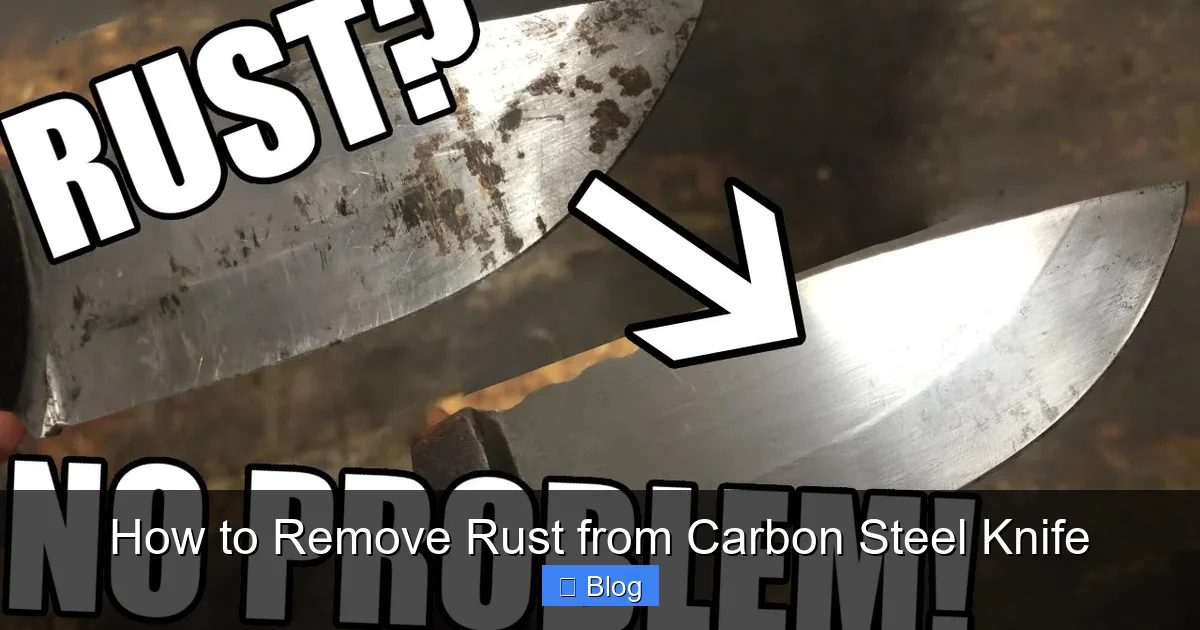
Visual guide about How to Remove Rust from Carbon Steel Knife
Image source: i.ytimg.com
Using Commercial Rust Dissolvers
Products like Evapo-Rust, Naval Jelly (phosphoric acid based), or dedicated gun bore cleaners are designed for rust removal. They are more powerful but require strict safety adherence.
- Read the label: Always follow the manufacturer’s instructions. Wear nitrile gloves and eye protection. Work in a well-ventilated area.
- Application: Apply the gel or liquid to the rusted area with a brush or cloth. Do not apply to the entire blade unless specified. Set a precise timer. These products work fast.
- Neutralization: After the stated time, immediately neutralize the chemical. For phosphoric acid-based products (like Naval Jelly), a baking soda/water scrub is essential. Rinse with copious amounts of water.
- Caution: These can darken the steel and leave a slight etch. They are for tough jobs only.
The Humble Potato Hack
This is a surprisingly effective, ultra-gentle trick for very light rust. The oxalic acid naturally present in potatoes (especially the skin) is a mild rust dissolver.
- Cut a raw potato in half. You can sprinkle the cut side with a pinch of salt or baking soda to boost abrasion.
- Rub the potato vigorously on the rusted area. The acid will work while the texture provides light scrubbing.
- Wipe clean and rinse. This is best for tiny spots or as a final polish after a harsher method.
Method 3: The Abrasive Path – When to Use Steel Wool and Sandpaper
This is your last resort for rust that has pitted the metal. The goal here is to remove rust *and* a microscopic layer of the surrounding steel to create a smooth, even surface, which inherently removes the pits. You will alter the blade’s factory finish.
Choosing Your Abrasive
- Steel Wool (0000 Super Fine): The coarsest option here. Use with light pressure and a lubricant (like mineral oil or water) to avoid deep scratches. Best for large, flat areas like a chef’s knife spine or a cleaver back. Rub along the blade’s length, not in circles.
- Sandpaper (600-1500 Grit): The professional choice. Start with 600-800 grit to remove the rust and pits, then progress to 1000-1500 grit to restore a smooth, satin-like finish. Use a sanding block to keep pressure even. Always sand with the blade’s grain (the direction of the original polish lines).
- abrasive Pads (Scoth-Brite™): The green “heavy duty” or yellow “scouring” pads are too harsh for a good finish. The blue “non-scratch” pad can be used with caution for very light work, but sandpaper is more controllable.
The Process
Work in a well-lit area. Apply your lubricant (oil or water) to both the sandpaper and the blade. Use steady, even strokes, checking your progress frequently by wiping the area clean with a rag. Your goal is to see a uniform, rust-free surface. Once the rust and pits are gone, switch to your finer grit to remove the scratches from the coarser grit. This can take time, but patience yields a better result.
The Critical Finale: Cleaning, Drying, and Seasoning
You’ve defeated the rust. The metal is clean. But if you stop now, you’ll likely have rust back within days. This final phase is the most important.
Neutralization and Deep Cleaning
After using any acid (vinegar, commercial remover) or abrasive, your blade is chemically active and has microscopic debris.
- Neutralize: If you used an acid, scrub the entire blade with a baking soda/water paste again to ensure all acidity is gone.
- Wash: Use warm water, a drop of mild dish soap, and a soft sponge or cloth. Clean every surface, including the tang and handle connection. This removes all chemical residues, abrasive grit, and dissolved rust particles.
- Rinse: Rinse thoroughly under running water.
The Absolute Dry
Water is the enemy. You must remove every single drop.
- Pat the knife dry immediately with a highly absorbent microfiber towel.
- Apply gentle heat. You can hold the blade near (not over) a stove burner for 15-30 seconds, or use a hairdryer on a warm setting. This evaporates trapped moisture in the micro-pores of the steel.
- Wipe it down one final time with a dry microfiber cloth. You should feel a completely dry, warm blade.
Seasoning: Creating a Protective Barrier
This is the sacred ritual for carbon steel. You are applying a microscopic layer of oil that displaces oxygen and moisture.
- Oil Choice: Use a pure, food-grade mineral oil. It’s odorless, tasteless, and doesn’t go rancid. Other options include camellia oil, walnut oil, or specialized knife oils like camelline. Avoid vegetable oils (they spoil) and WD-40 (it’s a water displacer and lubricant, not a long-term protectant for food tools).
- Application: Put a few drops on a clean, soft cloth or directly on the warm blade. Rub it in thoroughly, covering every square millimeter—the edge, spine, flat, and even the tang. Apply a thin, even coat. You don’t want it dripping or feeling greasy. The heat from the blade helps the oil bond.
- Buff: Use a clean part of your cloth to buff the blade until it feels dry to the touch, with just a slight sheen. The oil is there, but it’s not pooling.
Prevention: The Smart Owner’s Daily Ritual
Removing rust is a chore. Preventing it is a habit. Integrate these simple steps into your routine.
The Golden Rules of Carbon Steel Care
- Wash By Hand, Immediately: Never put your carbon steel knife in the dishwasher. The harsh detergents, prolonged moisture, and high heat are a triple threat. After each use, wash it with warm water and a mild soap. Don’t let food acids (tomato, citrus) sit on the blade.
- Dry with Intention: This cannot be overstated. After washing, dry it completely with a towel. Then, give it that brief heat treatment (hairdryer or near a burner) and a final wipe. Make it a non-negotiable step.
- Store Smart: The worst place for a carbon steel knife is a damp drawer rubbing against other utensils. Store it in a dry knife block, on a magnetic strip (ensure the magnet won’t scratch), or in a breathable leather or felt sheath. The sheath should be dry. For long-term storage, a light coat of oil is essential.
- Use It Regularly: Paradoxically, a well-used and well-maintained carbon steel knife often develops a stable, protective patina that actually helps resist rust. It’s the neglected knife that suffers most.
Building Your Maintenance Kit
Keep these items together for effortless care: food-grade mineral oil, a package of microfiber cloths, a small container of baking soda, a bottle of white vinegar, a fine grit (1000+) sharpening stone or leather strop (for touch-ups), and a hairdryer. Having the tools at your fingertips removes all excuses for neglect.
When to Worry: Recognizing Severe Damage and Seeking Help
Not all rust is created equal. Sometimes, the damage is beyond a DIY fix.
Signs of Catastrophic Rust
Look for deep, crater-like pits that you can feel with your fingernail. If the rust has created holes or has thinned the blade significantly, its structural integrity is compromised. A blade that flexes abnormally or has a “chewed” appearance along the edge has likely been weakened. If the tang inside the handle is rusted through, the knife is unsafe.
The Professional Recourse
For a valuable knife, an heirloom, or a blade with severe pitting, your best move is to take it to a professional knife sharpener or a custom bladesmith. They have industrial sandblasting, buffing wheels, and expertise to restore the blade’s geometry and finish without creating a hazardous thin spot. They can also assess if the knife is still safe to use. Sometimes, the most responsible form of rust removal is knowing when to hand it off.
Frequently Asked Questions
Can I use WD-40 to remove rust from my knife?
WD-40 can help loosen light surface rust and is excellent for displacing moisture after cleaning, but it is not a dedicated rust remover or a long-term protectant for food-safe knives. It’s best used as a temporary lubricant during disassembly or to protect the blade during storage if oil isn’t available, but you should still clean it off and apply proper mineral oil before using the knife for food.
Is it safe to use steel wool on my carbon steel knife?
It is safe but comes with a significant caveat. 0000 super-fine steel wool can be used with lubricant (oil or water) and light pressure for heavy rust on flat surfaces. However, it will leave a uniform, slightly scratched (satin) finish and can easily gouge the blade if you press too hard or get it caught on the edge. For most users, sandpaper starting at 600-grit is a more controllable and predictable abrasive.
What is the best oil to prevent rust on carbon steel?
Food-grade mineral oil is the gold standard. It is inert, odorless, tasteless, and does not spoil or become rancid like vegetable or animal-based oils. Specialized knife oils like camelline (made from camellia seeds) are also excellent. The key is to apply a thin, even coat after every thorough cleaning and drying.
How often should I season my carbon steel knife?
You should apply a protective coat of oil every single time you wash and dry it. For a knife used daily, this is part of the post-use cleaning ritual. For a knife used weekly, oil it after cleaning and before storage. For long-term storage (months), apply a slightly heavier coat and check it every few months.
Can rust form under the handle scales?
Yes, absolutely. If moisture seeps into the handle materials (wood, micarta, etc.) or gets trapped at the tang/handle junction, it can cause rust on the hidden tang and the inside of the handle. This is why full disassembly for a deep clean is periodically recommended, especially for knives used in wet environments or stored in humid conditions.
When should I just throw the knife away?
You should retire a knife from food or heavy use if the rust has created deep pits that compromise the blade’s structural strength—if it flexes excessively, feels thin in spots, or has actual holes. At this point, it’s a safety hazard. You can still keep it as a wall-hanger or a teaching tool, but it is no longer a reliable, safe cutting instrument.
Pingback: Will Coco Cola Remove Rust - kitchenandhouseware.com