Hard water buildup is a silent dishwasher killer, leaving behind mineral deposits that clog spray arms, reduce cleaning power, and damage internal components. The good news is you can often reverse this damage with common household items like white vinegar or specialized commercial descalers. Consistent, proactive maintenance is the most effective long-term strategy to keep your dishwasher running efficiently and your dishes sparkling.
Key Takeaways
- Hard water is the culprit: Mineral deposits (calcium and magnesium) from hard water accumulate over time, creating a chalky, crusty film on heating elements, spray arms, and racks.
- Vinegar is a powerful natural cleaner: A simple cycle with white vinegar effectively dissolves light to moderate mineral deposits on most dishwasher surfaces.
- Commercial descalers tackle severe buildup: For heavy, caked-on limescale, products like Affresh or Finish use stronger acids to break down deposits that vinegar cannot.
- Don’t neglect the filter and spray arms: These critical parts are the first to clog with food particles and minerals; regular manual cleaning is non-negotiable for performance.
- Prevention is always better than cure: Using a rinse aid, installing a whole-house softener, and running monthly cleaning cycles prevents the initial formation of hard water scale.
- Safety first: Always disconnect power or turn off the appliance at the breaker before performing any deep cleaning involving internal components.
📑 Table of Contents
- What is Hard Water and Why It’s Sabotaging Your Dishwasher
- The Vinegar Method: Your Natural First Line of Defense
- Commercial Descalers: When and How to Use Them
- Deep Cleaning: The Forgotten Components
- Prevention: The Long-Term Strategy for a Spot-Free Future
- Maintenance Checklist: Your Path to a Sparkling, Efficient Dishwasher
- Conclusion
What is Hard Water and Why It’s Sabotaging Your Dishwasher
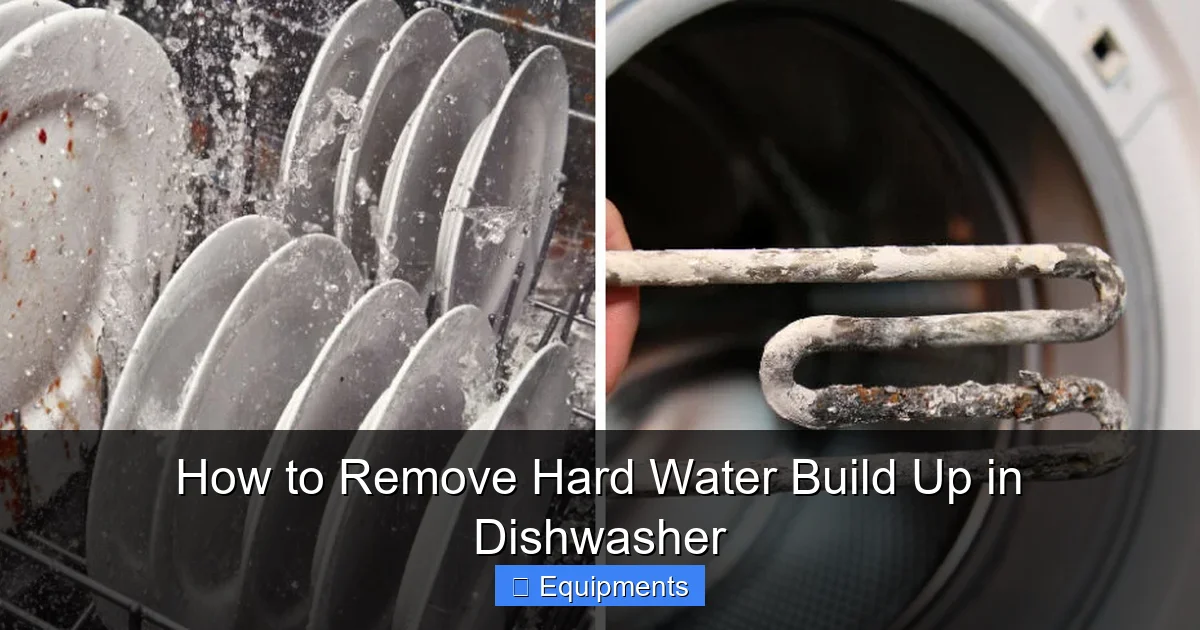
You load your dishwasher, press start, and expect pristine, spot-free dishes. Instead, you’re greeted with glasses that look foggy, plates with a white powdery film, and utensils that feel gritty. The culprit is likely a silent invader living inside your appliance: hard water buildup. But what exactly is it? Hard water is simply water that has a high mineral content, specifically dissolved calcium and magnesium. As your dishwasher heats water for the wash cycle, these minerals precipitate out of the solution and solidify onto the hottest surfaces they can find—namely, the heating element, the interior walls, the spray arm nozzles, and even your dish racks.
This isn’t just an aesthetic issue. That chalky layer acts as an insulator on the heating element, forcing your dishwasher to work harder and use more energy to dry dishes. More critically, it slowly clogs the tiny nozzles in the spray arms, dramatically reducing water pressure and coverage. Your dishes aren’t getting properly rinsed or washed because the water can’t reach them effectively. Over time, this mineral crust can also corrode metal parts and shorten the overall lifespan of your appliance. Addressing hard water buildup isn’t about vanity; it’s about efficiency, performance, and protecting your investment.
The Science of Scale: How Buildup Forms
Understanding the process helps you combat it. When cold hard water enters your dishwasher and is heated (often to 120-150°F for the main wash and even hotter for drying), the dissolved calcium bicarbonate transforms into insoluble calcium carbonate. This is the primary component of limescale. It begins as a faint film but, with repeated heating cycles, crystallizes into a hard, rock-like coating. The process is accelerated every time the dishwasher dries, as any remaining water on surfaces evaporates, leaving pure mineral deposits behind.
The Vinegar Method: Your Natural First Line of Defense
For most homes with moderately hard water, white distilled vinegar is a miracle worker. Its acetic acid content (typically 5%) is perfectly suited to dissolve alkaline mineral deposits like calcium carbonate. It’s non-toxic, inexpensive, and readily available. This method is ideal for routine maintenance (every 1-2 months) or for addressing the early stages of buildup. However, it’s important to manage expectations: vinegar will not remove thick, concrete-like limescale that has been accumulating for years. For that, you’ll need a commercial descaler.

Visual guide about How to Remove Hard Water Build Up in Dishwasher
Image source: thekitchenix.com
Step-by-Step: The Vinegar Wash Cycle
This is the simplest and safest method to start with. First, ensure your dishwasher is empty of all dishes and utensils. Remove the bottom rack to expose the interior. Place a sturdy, dishwasher-safe bowl or cup (like a Pyrex measuring cup) on the bottom rack, away from the heating element if possible. Fill it with 1 to 2 cups of plain white vinegar. Do not add any detergent. Run a full, hot cycle—preferably the longest and hottest one your machine offers, often labeled “Heavy” or “Sanitize.” The vinegar will mix with the hot water during the cycle, circulating and dissolving light scale from the interior walls, door, and (to a lesser extent) the spray arms. After the cycle finishes, you may notice a vinegar smell; this will dissipate quickly. Wipe down the interior with a damp cloth to remove any loosened residue.
Targeting the Spray Arms and Nozzles
While the vinegar cycle helps, the spray arm nozzles often need direct attention because they are the most critical and easily clogged parts. After running the vinegar cycle (or before, if buildup is severe), remove the lower spray arm. It usually twists off or has a simple clip. Inspect each nozzle hole. If you see mineral specks or the water flow from individual holes seems weak, use a thin, flexible tool like a toothpick, a paperclip, or a specialized spray arm cleaning tool to gently poke through each hole and dislodge the blockage. Run water through the arm’s central water inlet to flush out debris. Do the same for the upper spray arm if your model allows access. Reattach firmly before your next use.
Commercial Descalers: When and How to Use Them
When vinegar just isn’t cutting it, it’s time to bring in the heavy artillery. Commercial dishwasher cleaners and descalers are formulated with stronger acids (like citric acid or sulfamic acid) and specialized agents designed to aggressively dissolve thick, baked-on limescale. Brands like Affresh, Finish, and Finish Booster are widely available and specifically designed for dishwasher use. They are safe for stainless steel interiors and plastic components when used as directed.
Visual guide about How to Remove Hard Water Build Up in Dishwasher
Image source: thekitchenix.com
Choosing the Right Product and Following Protocol
Read the label carefully. Some products are powders you pour into the bottom of an empty dishwasher, others are tablets placed in the detergent cup, and some are liquids for the bottom rack. Always use the product in an empty dishwasher with no dishes or silverware. Select the hottest, longest cycle available, often “Heavy Wash” or a dedicated “Cleaning” cycle if your machine has one. The intense heat and extended wash time are crucial for the descaler to work effectively. Do not add any regular dishwasher detergent during this cycle, as it can interfere with the chemical action. After the cycle completes, you may want to run a short rinse cycle to flush out any lingering chemical residue, especially if you have a new baby or sensitive skin.
A Critical Safety Note
Never mix vinegar and commercial descalers or bleach. The chemical reactions can create dangerous gases or neutralizes the cleaning action. If you’ve recently run a vinegar cycle and want to use a commercial cleaner, run a full rinse cycle first to flush out all vinegar residue. Always ensure your dishwasher is completely empty before starting a cleaning cycle with any descaler.
Deep Cleaning: The Forgotten Components
Removing hard water scale isn’t just about the tub and heating element. The efficiency of your entire system depends on a few key, often-neglected parts that trap debris and minerals.
Visual guide about How to Remove Hard Water Build Up in Dishwasher
Image source: activerain.com
The Dishwasher Filter: Your First Defense
Almost all modern dishwashers have a filter system to catch large food particles. This filter is a prime spot for gunk and mineral paste to accumulate, creating a sludge that impedes drainage and recirculates dirty water. Locate your filter—it’s typically at the bottom of the tub, under the lower spray arm, and may twist or slide out. Consult your owner’s manual for specific removal instructions. Once removed, rinse it thoroughly under hot running water. Use a soft brush (an old toothbrush works perfectly) to scrub away any trapped debris and mineral film. Soak it in a vinegar solution for 15-20 minutes for a deeper clean. This should be done monthly as part of routine maintenance.
Door Gasket and Edges
The rubber gasket that seals the dishwasher door is another hotspot for mold, mildew, and mineral deposits. Wipe it down weekly with a damp cloth. Once a month, inspect it closely. Use a cotton swab dipped in vinegar or a diluted bleach solution (1 part bleach to 10 parts water) to clean the groove where the gasket meets the tub. A compromised seal allows water (and minerals) to leak and can also cause leaks. Look for any cracks or brittleness in the gasket; if found, it needs replacement to maintain a proper seal.
Detergent and Rinse Aid Dispensers
Mineral-rich water and detergent can create a pasty, clogging residue in the detergent cup and rinse aid dispenser. Remove the dispenser lids if possible and soak them in warm vinegar water. Use a small brush or a straightened paperclip to clear any clogged holes in the dispensers. Wipe the compartments clean. A clogged rinse aid dispenser is a major cause of poor drying and spotting on dishes.
Prevention: The Long-Term Strategy for a Spot-Free Future
Cleaning up existing buildup is only half the battle. The real victory comes from preventing its return. An ounce of prevention saves you from hours of scrubbing and a failing appliance.
The Non-Negotiable Rinse Aid
Rinse aid is not a luxury; it’s a necessity, especially with hard water. Its primary job is to reduce surface tension, causing water to sheet off dishes rather than bead up. This directly combats water spots and mineral film left behind as water evaporates. More importantly for your machine, it helps water drain more completely from the tub and internal surfaces, leaving less standing water to evaporate and deposit minerals. Always keep your rinse aid reservoir filled. Experiment with a higher setting (e.g., “4” or “5”) if you have very hard water and still see spotting after cleaning.
Consider a Water Softener
This is the ultimate solution for hard water problems, not just for your dishwasher but for your entire home. A whole-house water softener uses ion exchange to remove calcium and magnesium from your water supply before it ever reaches your pipes, fixtures, or appliances. This eliminates scale formation at the source. While it’s an investment, it protects your water heater, plumbing, faucets, and all water-using appliances, often paying for itself in extended appliance lifespans and reduced soap/detergent usage. For a dishwasher-specific solution, an in-line softener can be installed on the water line feeding the appliance.
Smart Detergent Choices
Use a high-quality detergent specifically formulated for hard water. These often contain builders like phosphates (where allowed) or zeolites that bind to calcium and magnesium ions, preventing them from depositing as scale. Pods and powders are generally more effective than gels in hard water conditions. Store your detergent in a cool, dry place to prevent it from clumping and losing effectiveness.
Maintenance Checklist: Your Path to a Sparkling, Efficient Dishwasher
Consistency is key. Integrate these tasks into your monthly and quarterly routine to keep hard water at bay.
- Weekly: Wipe down the door gasket and the interior door edge with a damp cloth. Check and empty the filter if your model requires frequent cleaning.
- Monthly: Run a cleaning cycle. Use white vinegar for light maintenance or a commercial dishwasher cleaner for a more thorough job. Clean the filter thoroughly. Inspect and clean spray arm nozzles if water flow seems weak.
- Quarterly: Perform a deep clean of all dispensers (detergent and rinse aid). Check the heating element for heavy scale; if present, a commercial descaler cycle is needed. Visually inspect the spray arms for any cracks or damage that could affect performance.
- As Needed: Manually descale any heavily affected dish racks (soak in vinegar solution). Replace the rinse aid with a product that has a built-in drying agent if spotting persists.
Conclusion
Hard water buildup doesn’t have to be a death sentence for your dishwasher’s performance. By understanding the enemy—mineral scale—you can deploy the right weapons. Start with the gentle, natural approach of vinegar for regular upkeep. escalate to commercial descalers for stubborn, entrenched deposits. But remember, the most powerful tool in your arsenal is prevention. Keep that rinse aid topped up, maintain a rigorous cleaning schedule for filters and spray arms, and consider a water-softening solution if your water is extremely hard. A little proactive care will not only restore your dishwasher’s cleaning power and ensure spot-free, sanitary dishes but will also add years to the life of this essential kitchen workhorse. Don’t let invisible minerals dictate the performance of your appliance; take control today.
Frequently Asked Questions
How often should I deep clean my dishwasher to combat hard water?
For routine maintenance in moderately hard water areas, run a cleaning cycle with vinegar or a commercial cleaner once a month. If you have very hard water, you may need to do this every two weeks. Always manually clean the filter at least once a month.
Is white vinegar safe for all parts of my dishwasher?
Yes, white distilled vinegar is generally safe for stainless steel tubs, plastic interiors, seals, and spray arms when used in a normal cycle. However, avoid using it on natural stone or certain delicate finishes, and never use it on rubber gaskets that are already cracked or brittle, as the acid could accelerate degradation.
What are the telltale signs of hard water damage in my dishwasher?
Look for a white, chalky film on the interior walls, door, or heating element. Notice if your dishes come out with a gritty film or persistent water spots, even after using rinse aid. Hear unusual noises or notice that dishes aren’t getting fully clean or dry. Poor drying performance is a classic sign of scale insulating the heating element.
Are commercial dishwasher cleaners safe for stainless steel interiors?
Yes, all major brands like Affresh and Finish are specifically formulated and tested to be safe for stainless steel dishwasher interiors when used according to the package directions. They are a safe and effective option for removing heavy scale.
Can I prevent hard water buildup without using rinse aid?
Rinse aid is the single most effective product for minimizing the visible effects of hard water (spots and film) and reducing the amount of water left to evaporate as scale. While you can use more detergent or try a salt-based system in some European models, consistently using rinse aid is the simplest and most reliable prevention method.
My dishwasher has a built-in water softener. Do I still need to clean for hard water?
Even dishwashers with built-in ion exchange water softeners (common in European brands) require periodic cleaning. The softener resin needs to be regenerated with special salt, and mineral scale can still form in areas not treated by the softener system, like the spray arms and filter. Continue with your regular monthly cleaning routine.