Got a microwave door that won’t close, sticks, or makes weird noises? You don’t need to replace the whole unit. This guide walks you through diagnosing common door problems, gathering the right tools, and fixing the issue yourself—all in plain language and with safety first.
Key Takeaways
- Safety first: Always unplug the microwave and discharge the capacitor before starting any repair.
- Identify the problem: Most door issues are caused by hinges, latch, door seal, or broken screws.
- Simple tools work: A screwdriver set, pliers, a multimeter, and a replacement latch are usually enough.
- Replacement parts are cheap: OEM or universal microwave door hinges and latches cost under $20.
- Test before re‑assembly: Verify the door locks and the microwave runs before you put everything back together.
- When to call a pro: If the door interlock module is damaged or the microwave shows error codes, professional service is safest.
- Maintenance tip: Keep the door seal clean and check screws quarterly to prevent future problems.
📑 Table of Contents
- Introduction: Why a Microwave Door Matters
- 1. Safety First: Preparing Your Workspace
- 2. Diagnosing Common Door Problems
- 3. Replacing the Door Latch
- 4. Fixing Hinge Issues
- 5. Restoring or Replacing the Door Seal
- 6. Preventive Maintenance and When to Call a Professional
- Conclusion: You’re Ready to Fix That Door
Introduction: Why a Microwave Door Matters
We all rely on the microwave for quick meals, reheated leftovers, and even a fast cup of coffee. The door is the unsung hero that keeps the heat inside and protects you from microwave radiation. When the door sticks, won’t close, or makes a clicking sound, the whole appliance becomes useless. The good news? Most door problems are simple mechanical issues that you can solve at home.
This article shows you how to fix a microwave door without spending a fortune on a new unit. We’ll cover safety basics, how to diagnose the most common faults, the tools you’ll need, step‑by‑step repair instructions, and tips for keeping the door in top shape.
1. Safety First: Preparing Your Workspace
Unplug and discharge
Before you touch anything, pull the plug from the wall outlet. Microwaves store high voltage in a capacitor even after they’re unplugged. To discharge it safely:
Visual guide about How to Fix a Microwave Door
Image source: i.ytimg.com
- Locate the capacitor (usually a metal cylinder near the transformer).
- Using an insulated screwdriver, short the capacitor terminals together. You’ll hear a small pop—this means the charge is gone.
- If you’re uncomfortable, skip the discharge step and let a professional handle it.
Gather the right tools
Having the correct tools makes the job faster and reduces the chance of damaging parts. Here’s a basic kit:
- Phillips and flat‑head screwdrivers (sizes #1 and #2).
- Tri‑wing screwdriver (some microwaves use this for interior screws).
- Pliers and needle‑nose pliers.
- Multimeter (to test the door interlock).
- Replacement door latch or hinge (ordered using your model number).
- Soft cloth and mild detergent (for cleaning the seal).
2. Diagnosing Common Door Problems
Problem #1: Door won’t close or is stuck
This is usually caused by:
Visual guide about How to Fix a Microwave Door
Image source: hometechowa.com
- Loose or missing screws on the hinge.
- Bent hinge pins.
- Debris caught in the door seal.
Check the alignment by opening the door fully and looking at the hinge plates. If the plates are misaligned, the door will bind.
Problem #2: Door closes but the microwave won’t start
The microwave’s safety system uses a door interlock switch. If the switch is faulty, the appliance thinks the door is open and refuses to run.
Test the interlock with a multimeter:
- Set the meter to continuity (Ω).
- Touch the probes to the two terminals on the interlock.
- A reading of “0 Ω” (or a beep) means the switch is closed—good. Infinite resistance means the switch is open—replace it.
Problem #3: Door makes a loud click or bang
A worn latch or broken latch spring can cause a sudden snap when the door tries to lock. Listen carefully: a soft “click” is normal; a loud “bang” signals a broken component.
Problem #4: Microwave leaks heat or makes a buzzing sound
Inspect the door seal (the rubber gasket around the edge). Cracks, tears, or missing sections let microwaves escape, which is a safety hazard.
3. Replacing the Door Latch
When to replace
If the latch is broken, corroded, or the spring has lost tension, replacement is the easiest fix. Most manufacturers sell a universal latch that fits multiple models.
Visual guide about How to Fix a Microwave Door
Image source: i.ytimg.com
Step‑by‑step guide
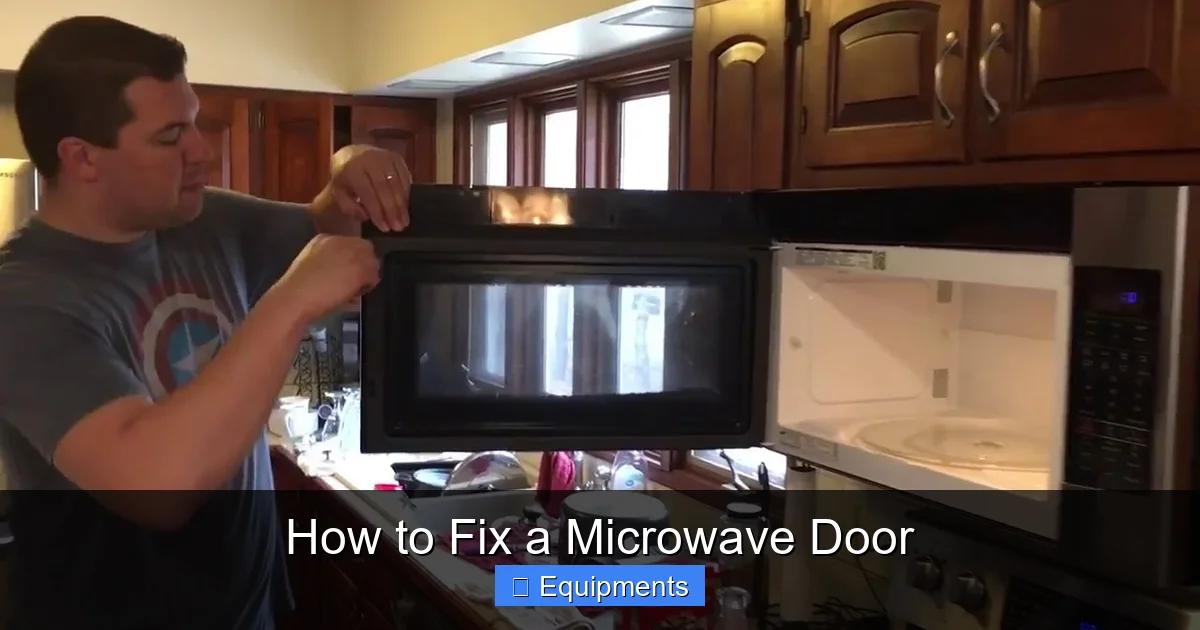
Step 1: Remove the outer cabinet. Most microwaves have four screws on the back and two on the bottom. Use a Phillips screwdriver to remove them and slide the outer shell forward.
Step 2: Locate the latch assembly. It’s attached to the door frame near the bottom edge. You’ll see two small wires connected to it.
Step 3: Disconnect the wires. Gently pull the plastic connectors apart. If they’re stubborn, use a flat‑head screwdriver to pry them a little.
Step 4: Unscrew the old latch. There are usually two screws holding it in place. Remove them and take the latch out.
Step 5: Install the new latch. Align the holes, insert the screws, and tighten them snugly—not overtightened, as that can strip the plastic.
Step 6: Reconnect the wires. Click the connectors back together. Make sure they’re seated fully.
Step 7: Reassemble the cabinet. Slide the outer shell back, replace the screws, and tighten.
Step 8: Test the door. Close it gently. You should hear a clean click, and the microwave should start when you press a button.
4. Fixing Hinge Issues
Identifying a faulty hinge
Open the door fully and look at the hinge plates. Common signs of trouble:
- Loose screws (the plate wobbles).
- Bent hinge pins (the metal rod that connects the two plates).
- Cracked plastic housing.
Replacing a hinge
Step 1: Remove the door. Most doors are held by two hinges. Unscrew the top hinge first, then the bottom. Support the door with one hand so it doesn’t fall.
Step 2: Take off the old hinge. Use a screwdriver to remove the screws from the cabinet side and the door side.
Step 3: Install the new hinge. Align the holes, insert the screws, and tighten. If the hinge uses a spring, make sure it’s seated correctly.
Step 4: Re‑hang the door. Align the hinge pins, insert them, and tighten the screws. Move the door back and forth a few times to ensure smooth motion.
Step 5: Check alignment. Close the door slowly. The latch should engage without forcing. If it still sticks, re‑tighten the hinge screws or adjust the door position by loosening the screws slightly and repositioning.
5. Restoring or Replacing the Door Seal
Why the seal matters
The rubber gasket creates a barrier that keeps microwaves inside. A compromised seal can cause uneven cooking and, more importantly, exposure to microwave radiation.
Cleaning a dirty seal
Mix a few drops of mild dish soap with warm water. Dampen a soft cloth and wipe the seal gently. Avoid abrasive cleaners that can damage the rubber.
Replacing a cracked seal
Most seals are sold as a single strip that fits around the entire door frame.
- Pull the old seal away from the door. It’s usually held by a thin metal clip or a snap‑fit.
- Clean the groove where the seal sits to remove old adhesive or debris.
- Slide the new seal into the groove, starting at the top and working around the edge. Press firmly to ensure a tight fit.
- If the seal uses an adhesive backing, apply a thin layer of heat‑resistant silicone before seating the new strip.
Testing the new seal
Close the door and run the microwave on low power for 30 seconds. Stand a few inches away; you should not feel any warmth from the front panel. If you do, re‑check the seal alignment.
6. Preventive Maintenance and When to Call a Professional
Routine checks
Spend a few minutes each month inspecting the door:
- Look for loose screws and tighten them.
- Wipe the seal to prevent buildup of food particles.
- Listen for unusual clicks or rattles when you close the door.
Common signs that need a pro
Even with the best DIY skills, some issues are best left to certified technicians:
- Persistent error codes (e.g., “F4” or “E7”) that reference the door interlock.
- Visible damage to the door interlock module or control board.
- Water damage inside the cavity that has reached the electronics.
- Any sign of sparks or burning smells when the door is closed.
Cost comparison
Replacing a door latch or hinge typically costs $10‑$20 for parts plus a few hours of your time. A professional repair, including labor, usually runs $70‑$120. If the microwave is more than 8‑10 years old, weigh the repair cost against buying a new, energy‑efficient model.
Conclusion: You’re Ready to Fix That Door
Fixing a microwave door is one of the most rewarding DIY projects in the kitchen. With a few basic tools, a little patience, and the safety steps outlined above, you can restore your microwave to full functionality without a costly replacement. Remember to always unplug the unit, test the interlock, and keep the door seal clean. If you encounter a problem that feels beyond your skill level, don’t hesitate to call a professional—your safety comes first.
Now that you know how to fix a microwave door, you can enjoy quick meals again, confident that the appliance is safe and reliable. Happy repairing!
Frequently Asked Questions
Why won’t my microwave door stay closed?
The most common reasons are a loose hinge, a broken latch, or debris in the door seal. Tightening the hinge screws or replacing the latch usually solves the problem.
Is it safe to use a microwave with a cracked door seal?
No. A cracked seal can let microwave energy escape, which is a health hazard. Replace the seal before using the appliance again.
How do I know if the door interlock is faulty?
Use a multimeter set to continuity. If the interlock shows infinite resistance when the door is closed, the switch is bad and needs replacement.
Can I replace the microwave door latch myself?
Yes. Most latches are held by two screws and a few plastic clips. Follow the step‑by‑step guide above, and the job takes about 15‑20 minutes.
What tools do I need to fix a microwave door?
A set of Phillips and flat‑head screwdrivers, a tri‑wing screwdriver (for interior screws), pliers, a multimeter, and a replacement latch or hinge are usually enough.
When should I call a professional instead of DIY?
If the door interlock module, control board, or any internal wiring is damaged, or if you see error codes related to the door, it’s safest to have a certified technician handle the repair.