Decorate above kitchen cabinets with high ceilings by embracing the vertical space with intentional, scaled designs. Avoid the “floating” look by using tall, substantial pieces and strategic lighting to bridge the gap. Create visual balance with groupings, textures, and personal collections while prioritizing easy maintenance. The key is treating the area as a true design zone, not an afterthought, to enhance your kitchen’s overall height and style.
So, you have beautiful, soaring ceilings in your kitchen. It’s a fantastic architectural feature that makes the space feel grand and open. But then you look at the 3, 4, or even 5 feet of empty wall above your upper cabinets, and a little panic sets in. What in the world do you put up there? That expanse can feel like a design black hole—easy to ignore but impossible to forget once you notice it. Decorating this zone with high ceilings is a common challenge, but solving it correctly can become one of your kitchen’s most stunning signature elements. It’s about turning dead space into a deliberate design layer that celebrates your home’s height.
The mistake most people make is treating this area like a regular shelf. They plop a few small ceramic pieces or a single picture frame up there, and it looks lost, like a tiny island in a vast ocean. With height, you must think in terms of scale, proportion, and verticality. Your goal is to create a visual bridge between the top of your cabinets and the ceiling, making the entire wall feel intentionally designed rather than accidentally empty. This isn’t about filling every square inch; it’s about making thoughtful statements that draw the eye upward and complement your kitchen’s style. Let’s dive into the strategies that will help you master this lofty space.
Key Takeaways
- Measure & Plan First: Understand the exact height and depth of your cabinet gap before buying anything. This dictates scale and safety.
- Scale is Everything: Use tall, substantial items (vases, art, plants) that fill vertical space without looking dwarfed. Avoid small, cluttered collections.
- Lighting Defines the Zone: Incorporate uplights, pendant lights, or LED strips to illuminate the space, add drama, and prevent a “dark void” effect.
- Create Cohesive Groupings: Style in odd-numbered clusters (3, 5, 7) with a unifying element like color, material, or theme for a curated look.
- Texture & Dimension Matter: Mix smooth ceramics, woven baskets, metal finishes, and greenery to add depth and prevent a flat, dusty display.
- Prioritize Practicality: Choose items that are easy to dust and access. Avoid heavy, fragile, or frequently used objects in hard-to-reach places.
- Personalize with Purpose: Showcase meaningful collections, travel souvenirs, or family heirlooms to make the space uniquely yours, but edit ruthlessly for impact.
📑 Table of Contents
Understanding Your Unique Vertical Canvas
Before you buy a single item, you need to become an expert on your specific “above cabinet” zone. This space varies dramatically from home to home, and your solution must be tailored to its exact dimensions and your kitchen’s overall vibe.
Precise Measurement is Non-Negotiable
Grab a tape measure and note two critical numbers: the vertical height from the top of the cabinet to the ceiling (or crown molding, if you have it), and the horizontal depth of your cabinet uppers. Depth is crucial because it determines how far objects can safely project forward without being a head-bonking hazard. For standard cabinets, this is usually 12-15 inches. If your cabinets are shallower (like 10 inches), your decor must be more compact. If they’re deeper (18+ inches), you have more room for dimensional pieces. Also, measure the total width of the cabinet run. A long, continuous run calls for a different approach than a short section above a sink or range.
Assess Your Kitchen’s Architectural Personality
Is your kitchen modern with clean lines and flat-panel cabinets? A traditional space with raised panel doors and corbels? A cozy farmhouse with beadboard and open shelves? Your decor should echo and enhance this style. A modern kitchen might suit a single, dramatic sculptural piece or a grid of identical minimalist vases. A traditional kitchen could handle a symmetrical arrangement of urns, a classic clock, or a small oil painting in an ornate frame. A farmhouse kitchen begs for woven baskets, galvanized metal, and simple pottery. Let your cabinet style and overall kitchen aesthetic guide your choices.
The “Ceiling Height” Reality Check
Not all “high ceilings” are created equal. A 9-foot ceiling is a delight, but a 10, 11, or 12-foot ceiling is a different beast. The higher the ceiling, the taller and more substantial your decor elements need to be. In a very tall room, a single 18-inch vase will look like a speck. You might need pieces that are 3, 4, or even 5 feet tall to have any presence. Conversely, in a kitchen with a modest 8.5-foot ceiling, you’ll want to keep things lower to avoid competing with crown molding or feeling top-heavy. Always step back and view the space from the main kitchen floor. Does your proposed decor feel proportional, or does it get lost in the height?
Core Design Principles for High Spaces
With your measurements and style in mind, it’s time to apply some universal design rules that make high spaces feel balanced and intentional.
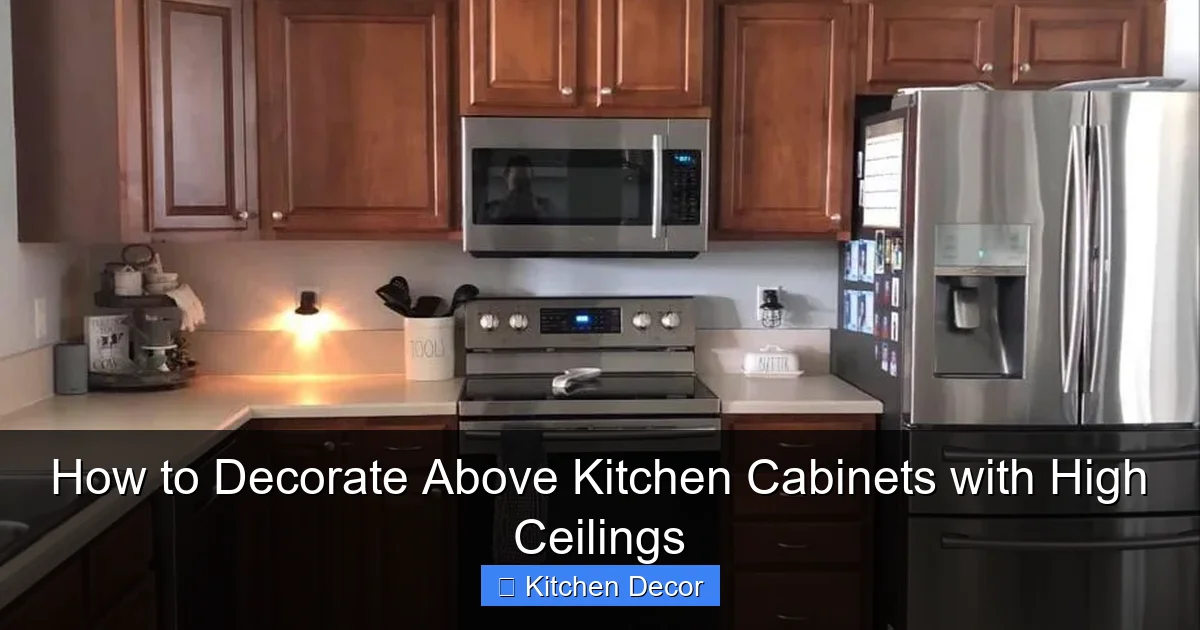
Visual guide about How to Decorate Above Kitchen Cabinets with High Ceilings
Image source: i.pinimg.com
The Law of Vertical Scale
This is the golden rule. Items must have height to match the height. Forget small figurines and tiny picture frames. You need objects with a strong vertical presence. Think floor vases (used on their side or upright if secure), tall glass cylinders, architectural columns, long branches, or tall, narrow artwork that spans a good portion of the available space. A common trick is to use a “tall, thin” object paired with a “shorter, wider” one to create an interesting silhouette. For example, a tall, slender bamboo pole next to a low, wide ceramic bowl. The variety in shape prevents monotony while maintaining necessary scale.
The Power of Odd Numbers & Groupings
Symmetry can work, but often an asymmetrical grouping of 3, 5, or 7 items feels more dynamic and collected. The key is to vary the heights within the group. Create a “high-low-high” rhythm. Your tallest item should be centrally placed or at one end, with shorter pieces cascading down. Use a common thread—a color palette (e.g., all whites and naturals, or a pop of blue), a material (all ceramics, all woods), or a theme (all travel souvenirs, all botanicals)—to tie the disparate pieces together into a cohesive vignette. This prevents it from looking like random clutter.
Creating a Visual Anchor
In a wide, long run of cabinets, one large statement piece can serve as an anchor. This could be a large, narrow mirror that reflects light and creates the illusion of more space, a substantial piece of art or a carved wooden panel, or a tall, sculptural vessel. Place this anchor slightly off-center (following the rule of thirds) and then build a smaller, complementary grouping beside or in front of it. The anchor gives the eye a place to rest and defines the start of your decorative zone.
Embrace Negative Space
Just because the space is big doesn’t mean you must fill it completely. In fact, leaving pockets of empty wall can be very powerful, especially in modern or minimalist kitchens. It creates breathing room and makes the pieces you do display feel more special. Consider a single, perfect object placed on one end of the cabinet run, leaving the rest of the expanse clean and open. This is a bold, confident choice that says you understand restraint.
Styling Ideas & Practical Examples
Now for the fun part—what to actually put up there! Here are categorized ideas that work beautifully in high spaces.
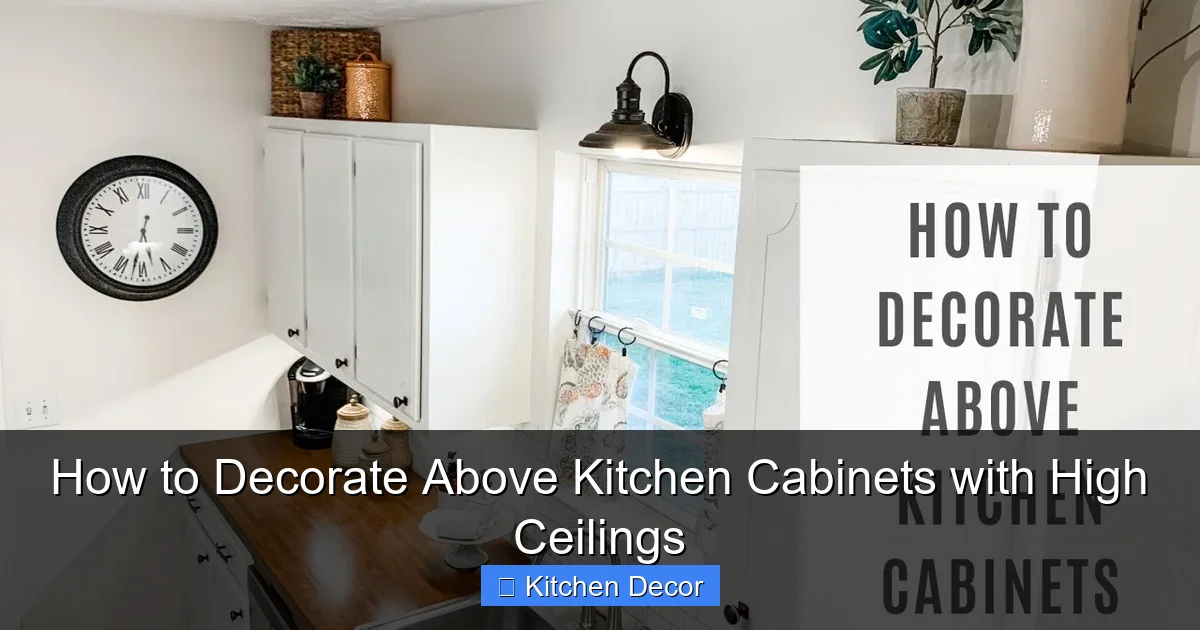
Visual guide about How to Decorate Above Kitchen Cabinets with High Ceilings
Image source: i.ytimg.com
Botanical & Natural Elements
This is a perennial favorite for good reason. Greenery adds life and softness to a hard architectural space.
- Tall, Striking Branches: Use dramatic, bare branches (like pussy willow, curly willow, or sculptural twigs) in a heavy, tall vase or urn. They add incredible height and texture with zero maintenance.
- Forced Bulbs in Bulk: A cluster of 5-7 hyacinth or amaryllis bulbs in simple pots creates a lush, seasonal display that’s low to the ground but visually dense.
- Hanging & Trailing Plants: If you can secure it safely, a trailing plant like a spider plant or string of pearls in a hanging basket can soften the cabinet edge and cascade down beautifully. Ensure it’s out of the way of traffic and won’t drip water.
- Preserved & Dried Botanicals: Eucalyptus, pampas grass, or dried palms in tall vases offer height, texture, and last for years with zero care. They’re perfect for high, dusty spots.
Art, Mirrors & Architectural Elements
For a more curated, sophisticated look, think two-dimensional and structural.
- Oversized, Narrow Art: Look for vertical paintings, prints, or photographs. A single piece that’s 2-3 feet tall but only 12-18 inches wide can make a huge impact. Consider a series of 2-3 matching narrow frames in a row.
- Large, Leaner Mirrors: A tall, narrow mirror (leaning against the wall on top of the cabinet or secured to the wall above) is a game-changer. It reflects light, makes the space feel bigger, and adds glamour. Ensure it’s securely anchored if leaning.
- Architectural Salvage: An old window frame, a section of decorative corbel, a vintage iron grille, or a piece of carved wood can add immense character and history. These are often substantial in size and weight, perfect for high spaces.
- Shadow Boxes & Deep Frames: Create depth by using deep shadow boxes to display small collections (like seashells, vintage keys, or small figurines). The depth protects the items from dust and adds a third dimension to your display.
Collections & Curiosities
This is where your personality shines. But remember: edit, edit, edit.
- The “Single-Type” Collection: Display 5-7 of the same object (e.g., white ceramic pitchers, wooden spoons, brass candlesticks, vintage books) in varying heights. The repetition is elegant and easy on the eye.
- Themed Travel Grouping: Group souvenirs from a favorite trip—a small textile, a pottery piece, a framed photo, a carved figurine. Keep the color palette unified.
- Industrial & Metallic: A collection of antique scales, vintage lanterns, or brass binoculars can add a masculine, industrial edge. The metallic finishes will catch light beautifully.
- Family Heirlooms: A single, meaningful heirloom (a great-grandmother’s vase, a child’s clay creation) can be the sole focus. Let its story be the decoration.
Functional & Storage-Inspired
- Woven Baskets & Bins: A tall, narrow basket (for magazines, remote controls, or kids’ art supplies) adds great texture and provides hidden storage. Look for baskets with a tall, vertical profile.
- Decorative Ladders: A small, decorative wooden ladder leaning against the cabinet can be a charming place to drape a blanket or hang a few small plants.
- Antique Crates & Boxes: Stack 2-3 vintage crates (securely!) to create a stepped platform for a single beautiful object on top. The crates themselves become part of the display.
The Critical Role of Lighting
You cannot overestimate the importance of lighting in this zone. A dark, shadowy cavity above cabinets feels neglected and can make the ceiling seem even higher and more daunting. Lighting brings the space to life, highlights your decor, and creates atmosphere.
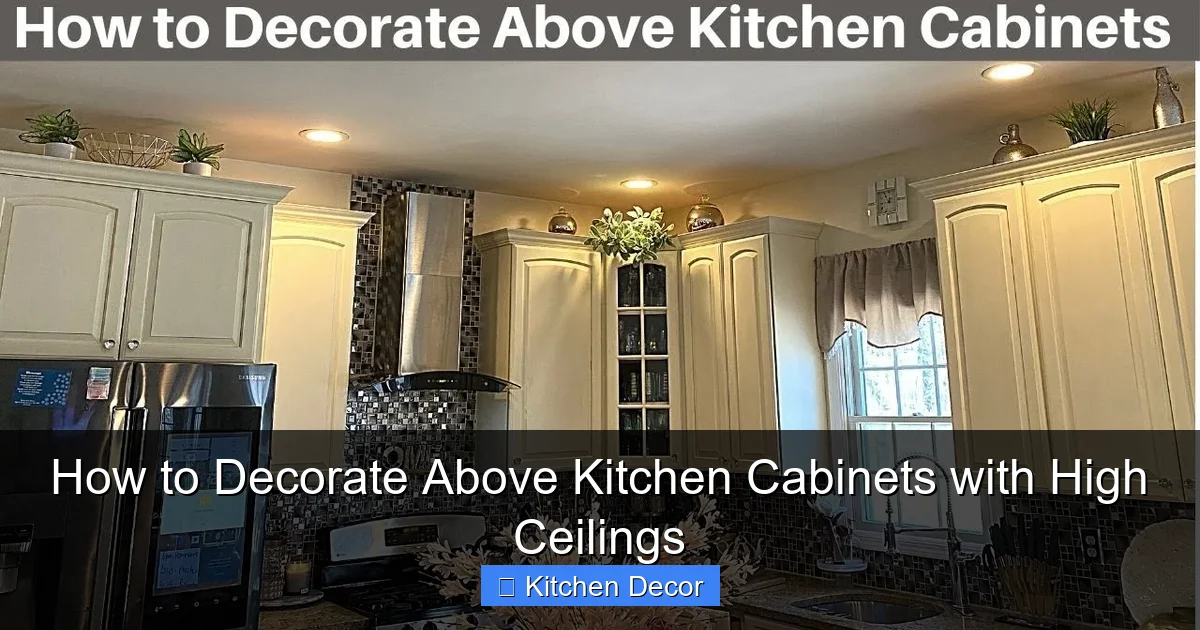
Visual guide about How to Decorate Above Kitchen Cabinets with High Ceilings
Image source: i.ytimg.com
Uplights & Spotlights
If you have crown molding, this is the perfect place to install small, discreet LED uplights. They shoot a soft beam upward, washing the wall and any decor in a warm glow. This instantly makes the space feel intentional and luxurious. Alternatively, small, adjustable spotlight cans in the ceiling aimed down at your display can provide focused, gallery-style lighting. Use a dimmer switch to control the intensity.
Pendant Lights & Chandeliers
If your cabinet run is over an island or peninsula, consider suspending a row of small pendants or a long, linear chandelier. The bottom of the fixture should hang at least 18-24 inches above the countertop, but its light will beautifully illuminate the space above the cabinets as well, creating a cohesive lighting “column” from ceiling to counter. This is a more involved (and expensive) solution but has a huge impact.
Integrated LED Strips
For a seamless, modern look, install a continuous LED strip light along the top edge of your upper cabinets, facing upward. This creates a soft, ambient wash of light that bounces off the ceiling. It’s fantastic for task lighting on the counters below while also defining the cabinet line and illuminating the decor above. Choose a warm white (2700K-3000K) for a cozy feel.
Candles & Plug-in Lamps
For a quick, no-wiring solution, place a few tall, dramatic pillar candles in sturdy holders on the cabinet. Their flickering light is warm and inviting. Similarly, a small, plug-in swing-arm wall lamp or a tiny table lamp (on a deep cabinet) can add a cozy, layered light source. Just ensure any electrical cords are safely tucked away.
Common Mistakes to Avoid at All Costs
Even with great ideas, it’s easy to slip up. Here are the pitfalls to steer clear of.
The “Dust Trap” Dilemma
Anything you put up there will collect dust. A lot of it. Avoid open-weave baskets that become dust filters, intricate carvings that are impossible to clean, or collections of tiny, delicate figurines that will become a cleaning nightmare. Prioritize smooth surfaces (glass, metal, glazed ceramic) and items you can easily wipe down with a duster or microfiber cloth. If you love textiles, choose ones that can be shaken out or gently vacuumed.
Ignoring Safety & Stability
This is paramount. Anything placed on a cabinet must be stable and unlikely to be bumped. Do not place heavy items near the edge. If you have small children or pets, avoid anything that could be pulled down. For tall items, consider using museum gel or non-slip pads under the base to prevent sliding. For anything you are attaching to the wall (mirrors, art), use appropriate hardware for your wall type (drywall anchors, plaster hooks, etc.) and weight. When in doubt, consult a professional. A falling object from that height is dangerous.
Clutter vs. Collection
There is a fine line. A collection is a focused, edited group of like or complementary items. Clutter is a random assortment of everything. If you find yourself saying “I need something for that space” and buying a bunch of unrelated small things, you’re heading toward clutter. Instead, start with one core piece you love and build around it slowly. It’s better to have one stunning, tall vase than five mediocre knick-knacks.
Forgetting the “Why”
Why are you decorating this space? Is it to add warmth? To display a hobby? To make the ceiling feel lower? To add storage? Start with your intention. If your goal is warmth, incorporate wood and textiles. If it’s to showcase a hobby like model ships or vinyl records, build a dedicated display case or shelf system for that collection. Decorating without a purpose often leads to a disjointed look.
Maintenance & Long-Term Care
This space is out of sight and out of mind, which means it can quickly become neglected. Build a simple maintenance plan into your routine.
The Quarterly Dusting Ritual
Set a calendar reminder every 3 months to dust this area. Use a long-handled duster (like a feather duster or a lambswool duster on an extendable pole). For deeper cleaning, carefully remove items one by one, wipe them down, and wipe the cabinet top and wall behind. This prevents the thick, ingrained dust layer that’s hard to remove later.
Seasonal Refreshes
This is the perfect spot for seasonal decor swaps. In spring, use fresh branches and pastel ceramics. In fall, bring in wheat, small gourds, and deep orange candles. In winter, use evergreen boughs (secure them well!), pinecones, and silver or gold accents. A seasonal change keeps the space feeling alive and gives you a reason to interact with it regularly.
Assessing for Damage
During your dusting, inspect your items and the cabinet finish. Is the sun from a nearby window causing fading on a piece of art or fabric? Is moisture from cooking causing condensation on metal objects, leading to tarnish? Adjust your decor placement seasonally if needed, or choose UV-protective glass for art and more moisture-resistant materials for very humid kitchens.
Editing Over Time
Tastes change. What looked great five years ago might feel dated now. Every year or so, take a critical look at your above-cabinet display. Is it still you? Does it feel fresh? Don’t be afraid to remove entire groupings and start over with a new concept or a single, more powerful object. This zone should evolve with your home.
Frequently Asked Questions
How high is too high to safely decorate above cabinets?
If you need a ladder or step stool to safely place or remove an item, it’s too high for anything that needs regular interaction. Reserve this area for static, lightweight displays that can be dusted with a long handle. Heavier items or anything requiring frequent adjustment should be kept within comfortable, safe reach.
What if my cabinets have crown molding? Can I still decorate above them?
Absolutely, but you must work within the new “ceiling” created by the molding. Measure from the bottom of the crown molding to the actual ceiling. This smaller vertical space often calls for shorter, wider objects or a single horizontal piece of art that sits on the cabinet and rests against the molding. Tall vases may now be too tall.
I hate clutter. How can I decorate without it looking messy?
Embrace single-object statements or very tight, themed groupings of 3 or 5 items. Use a unifying color palette (e.g., all white ceramics) or material (all natural wood). Leave intentional negative space. A single, perfect tall vase or a large, lean mirror is infinitely less cluttered than a collection of 10 small things.
Is it okay to attach things directly to the wall above the cabinets?
Yes, and it’s often the best solution for very tall spaces. You can hang a tall, narrow piece of art, a mirror, or even a lightweight shelf (like a floating shelf) on the wall above the cabinet line. This creates a true “wall gallery” effect that isn’t dependent on the cabinet depth. Ensure you use proper anchors for your wall type and the weight of the object.
How do I deal with the awkward slope of a vaulted ceiling above my cabinets?
Work with the slope, not against it. Use the wall’s angle as your guide. Hang a long, horizontal piece of art or a series of frames that follow the slant of the ceiling. Alternatively, use tall, vertical items that stand straight up, ignoring the slope above them. Avoid placing anything that tries to “fill” the triangular gap, as it will likely look unstable.
What’s the easiest, lowest-maintenance option for this space?
Go with preserved botanical elements like dried grasses, pampas plumes, or bare branches in a heavy vase. They require no water, sunlight, or pruning. A single, large, smooth ceramic vessel or a substantial piece of architectural metal (like a bronze or iron sculpture) is also extremely low-maintenance—just an occasional dusting. Avoid anything organic that needs water or light.