Connecting a Bosch dishwasher is easier than you think. Follow this friendly, step‑by‑step guide to handle water lines, power, and setup so your new appliance works perfectly from day one. All the tools, tips, and safety checks are right here.
Key Takeaways
- Safety first: Turn off water and electricity before you start.
- Tools you need: A few basic tools—wrench, screwdriver, and a level—are enough.
- Plumbing connection: Use a dishwasher supply hose and a drain hose with a high loop.
- Electrical hookup: Connect to a dedicated 120 V, 15‑amp circuit with a grounded outlet.
- Leveling matters: Properly level the unit to avoid leaks and noisy operation.
- First‑run cycle: Run an empty wash to clear debris and set the default settings.
- Troubleshooting basics: Know the common error codes and quick fixes.
📑 Table of Contents
- Introduction: Why a Proper Connection Matters
- 1. Gather Your Tools and Prepare the Space
- 2. Unbox and Position the Dishwasher
- 3. Connect the Water Supply
- 4. Set Up the Drain Hose
- 5. Electrical Hookup
- 6. Level, Secure, and Finish Installation
- 7. First‑Run Cycle and User Settings
- Conclusion: You’ve Mastered the Connection
Introduction: Why a Proper Connection Matters
Getting a new Bosch dishwasher installed can feel like a big project, but it doesn’t have to be overwhelming. A solid connection protects your kitchen from water damage, saves electricity, and guarantees that the dishwasher cleans your dishes the way Bosch promises—quietly and efficiently. In this guide we’ll walk you through every step, from opening the box to running the first cycle.
Think of it as a friendly chat with a neighbor who’s already done the job. We’ll cover the tools you’ll need, safety checks, plumbing and electrical hookups, and the final touches that make your appliance look like it belongs there. By the end, you’ll be confident that you know how to connect Bosch dishwasher without calling a technician.
1. Gather Your Tools and Prepare the Space
Essential tools
Before you lift the dishwasher out of its box, make sure you have these items on hand:

Visual guide about How to Connect Bosch Dishwasher
Image source: dishwasherfixer.com
- Adjustable wrench (or a set of open‑ended wrenches)
- Phillips and flat‑head screwdrivers
- Level (preferably a 4‑inch torpedo level)
- Bucket and towels for any stray water
- Electrical tester or multimeter
- Dishwasher supply hose (usually included)
- Drain hose clamp
- Plumber’s tape (Teflon tape)
Clear the installation area
Remove any cabinet doors, kick‑plates, or trim that block access to the spot where the dishwasher will sit. Keep the floor clean and dry; a wet floor can be slippery when you’re handling heavy parts.
Safety first
Turn off the water supply at the shut‑off valve under the sink. Then, switch off the circuit breaker that powers the kitchen outlet. Use a voltage tester to confirm the outlet is dead before you touch any wires.
2. Unbox and Position the Dishwasher
Take the dishwasher out
With the help of another person, lift the dishwasher upright and slide it out of the box. Keep the protective foam and cardboard; you’ll need them when you move the unit back for final adjustments.
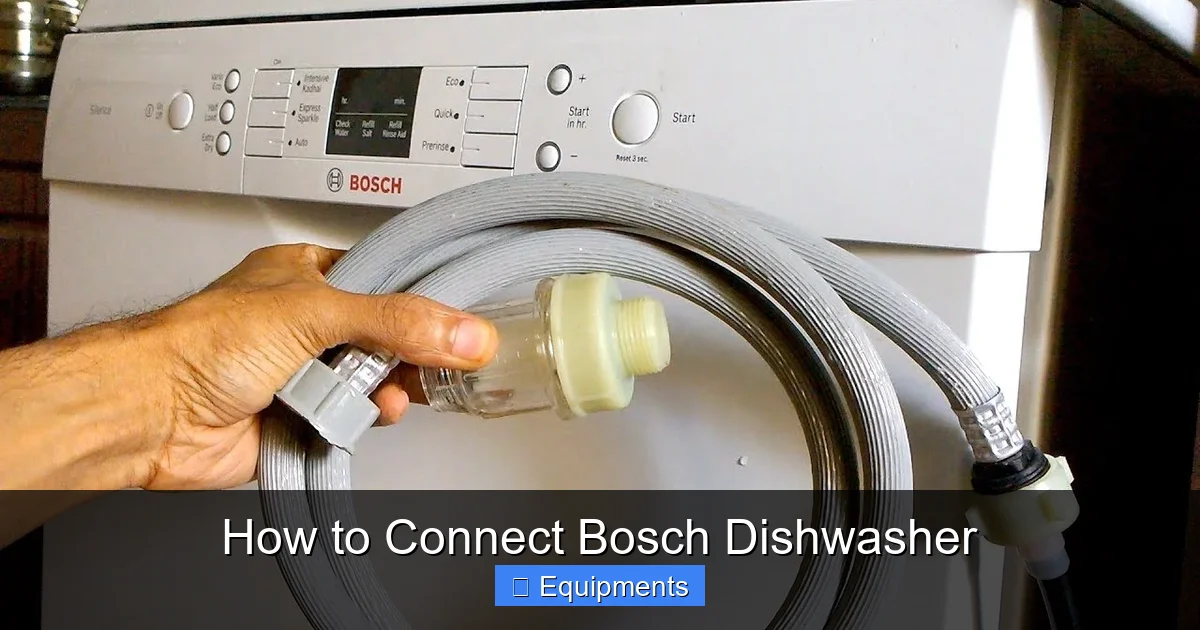
Visual guide about How to Connect Bosch Dishwasher
Image source: i.ytimg.com
Check the dimensions
Measure the height, width, and depth of the opening. Bosch dishwashers are typically 24 inches wide, but the exact model may be a little taller or shorter. Make sure there is at least 1‑inch clearance on each side for airflow.
Rough‑in placement
Slide the dishwasher gently into the cabinet opening. Leave a small gap (about ½ inch) at the front so the door can open fully. At this stage, the unit is not yet connected—just positioned for the next steps.
3. Connect the Water Supply
Locate the supply valve
Under the sink you’ll find a ¾‑inch shut‑off valve. This is where the dishwasher’s supply hose will attach. If you don’t have a dedicated dishwasher valve, you can install a “T‑valve” that splits the existing hot‑water line.

Visual guide about How to Connect Bosch Dishwasher
Image source: media3.bosch-home.com
Attach the supply hose
1. Wrap plumber’s tape around the valve threads.
2. Screw the dishwasher’s supply hose onto the valve by hand.
3. Tighten with the adjustable wrench—don’t over‑tighten, a quarter turn past hand‑tight is enough.
4. Open the valve slowly and watch for leaks. Use a bucket to catch any drips.
Secure the hose
Most Bosch models come with a short metal bracket that clips the supply hose to the side of the cabinet. This prevents the hose from moving when the dishwasher vibrates during cycles.
4. Set Up the Drain Hose
High‑loop vs. air gap
Two common methods keep dirty water from back‑flowing into the dishwasher:
- High loop: Route the drain hose up under the countertop and secure it with a zip tie. The loop should be higher than the sink’s flood level.
- Air gap: A separate device mounted on the countertop that creates a physical barrier. Some local codes require an air gap.
Connecting to the sink drain
Insert the drain hose into the dishwasher tailpiece (a small fitting on the sink’s drain pipe). Secure it with the hose clamp that came with the dishwasher. Make sure the hose is snug but not crushed.
Check for kinks
Run a finger along the entire length of the hose. If you feel a bend tighter than a finger’s width, straighten it. A kink can cause slow draining or water backup.
5. Electrical Hookup
Dedicated circuit requirement
Bosch dishwashers need a 120 V, 15‑amp circuit with a grounded three‑prong outlet. The outlet should be located directly behind the unit, within the cabinet space.
Wiring the power cord
Most Bosch models arrive with a pre‑installed power cord that ends in a plug. If your model has a hard‑wired cord, follow these steps:
- Strip about ½ inch of insulation from each wire.
- Connect the black (hot) wire to the brass screw, the white (neutral) to the silver screw, and the green/bare (ground) to the green screw on the terminal block.
- Tighten each screw securely.
- Place the terminal block back into the dishwasher’s access panel.
Test the connection
Turn the breaker back on. Use a voltage tester on the plug—both hot and neutral should read 120 V. If the tester shows no voltage, double‑check the wiring and the breaker.
6. Level, Secure, and Finish Installation
Level the dishwasher
Place a level on the top edge of the door. Adjust the front leveling legs (usually located near the bottom corners) by turning them clockwise to raise or counter‑clockwise to lower. Do the same with the rear legs, which are accessed from underneath the cabinet.
Secure the dishwasher
Most Bosch units have two mounting brackets on the top edge of the door. Open the cabinet door, align the brackets with the pre‑drilled holes in the side panels, and screw them in place. This stops the dishwasher from moving when the door is opened.
Final checks
- Make sure the door closes fully without rubbing.
- Run a quick water flow test: turn the water on, let the dishwasher fill, then shut off and watch for any leaks at the supply and drain connections.
- Check that the electrical cord is not pinched or stretched.
7. First‑Run Cycle and User Settings
Run an empty wash
Place a cup of white vinegar on the top rack and select the “Heavy” or “Sanitize” cycle. This clears any manufacturing residues and primes the spray arms.
Program the controls
Refer to the user manual for default settings—delay start, child lock, and energy‑saving options. Most Bosch models have a “Start” button that lights up when the door is properly latched.
Maintenance tips
Clean the filter after each use, wipe the door gasket weekly, and run a rinse‑aid cycle once a month. These habits keep the dishwasher performing like new.
Conclusion: You’ve Mastered the Connection
Connecting a Bosch dishwasher is a manageable DIY task when you break it down into simple steps: prepare, hook up water, set the drain, wire the power, level the unit, and run a test cycle. By following this guide, you’ve saved time, avoided costly service calls, and ensured a leak‑free, efficient appliance in your kitchen.
Enjoy sparkling dishes, quieter operation, and the satisfaction of a job well done. If anything feels off after the first few washes, revisit the key takeaways—especially the water and electrical connections—and you’ll be back on track in no time.
Frequently Asked Questions
Do I need a plumber to install a Bosch dishwasher?
No, most homeowners can handle the installation with basic tools. Only call a plumber if you need to add a new water line or if local codes require a licensed professional.
Can I use the existing kitchen outlet for the dishwasher?
Only if the outlet is a dedicated 120 V, 15‑amp, grounded circuit. Sharing the outlet with other high‑draw appliances can trip the breaker.
What is a “high loop” and why is it important?
A high loop raises the drain hose above the sink’s flood level, preventing dirty water from siphoning back into the dishwasher. It’s a simple, code‑approved method for most homes.
My dishwasher is leaking after installation. What should I check?
Inspect the supply hose connection, the drain hose clamp, and the door gasket. Tighten any loose fittings and ensure the unit is level—an unlevel dishwasher can cause water to pool at the front.
How often should I run an empty cycle?
Run an empty cycle with vinegar or a dishwasher cleaner once a month. This removes mineral buildup and keeps the spray arms clear.
Can I connect the dishwasher to a dishwasher air gap?
Yes, if your local plumbing code requires it. The air gap mounts on the countertop and connects between the dishwasher drain hose and the sink’s drain pipe.
