Unlock the secrets of your juicer! This guide breaks down exactly how centrifugal, masticating, and triturating juicers extract juice in 2026. You’ll learn the core mechanics behind each type, discover practical tips for choosing the right model for your needs, and get expert advice on maximizing juice yield, preserving nutrients, and maintaining your machine for years. Stop guessing and start juicing with confidence.
Key Takeaways
- Juicer Type Dictates Mechanism: Centrifugal juicers use high-speed spinning, masticating (slow) juicers grind and press, and triturating (twin-gear) juicers crush with immense pressure.
- Speed vs. Quality Trade-off: Faster centrifugal models are great for hard produce but generate heat, while slower masticating/triturating models preserve more nutrients and handle leafy greens better.
- Prep is Paramount: Proper washing, correct sizing of produce, and alternating soft/hard ingredients significantly impact juice yield and machine performance.
- Pulp is a Feature, Not Just Waste: The leftover pulp contains fiber and can be creatively used in recipes, composted, or dried, reducing overall waste from your juicing habit.
- Maintenance is Non-Negotiable: Immediate and thorough cleaning after each use prevents clogs, odors, and mold, directly extending your juicer’s lifespan and efficiency.
- 2026 Tech Focuses on Smart Features: Newer models integrate app connectivity for recipe guidance, yield tracking, and automatic cleaning cycle optimization.
- Read the Manual & Terms: Always review your specific model’s guide and the manufacturer’s terms and conditions for warranty specifics and safe usage parameters to avoid voiding coverage.
📑 Table of Contents
- The Juicing Revolution: Why Understanding Your Machine Matters in 2026
- Inside the Machine: A Breakdown of Modern Juicer Types
- The Science of Extraction: From Produce to Glass in Seconds
- Choosing Your Ideal Juicer: A 2026 Buyer’s Practical Guide
- Maximizing Your Juice: Pro Tips for Yield, Flavor, and Nutrition
- Maintenance & Troubleshooting: Keeping Your Juicer Running in 2026
- The Future is Now: Smart Juicing Trends in 2026
- Conclusion: Your Knowledge is the Most Important Ingredient
The Juicing Revolution: Why Understanding Your Machine Matters in 2026
Juicing has firmly moved from a niche health trend to a daily ritual for millions worldwide. Walk into any modern kitchen in 2026, and you’re likely to find a sleek appliance dedicated to transforming fruits and vegetables into nutrient-dense liquids. But how much do you truly know about the workhorse sitting on your countertop? Understanding how a juicer works is the single most important step to becoming a more efficient, effective, and successful juicer. It’s the difference between a frustrating, low-yield mess and a joyful, productive ritual.
This knowledge empowers you. It helps you select the perfect machine for your favorite kale and apple recipes, troubleshoot a sudden drop in performance, and even extend the life of your investment. Whether you’re a complete beginner or a seasoned pro looking to optimize, this comprehensive guide will demystify the inner workings of today’s juicers, complete with actionable tips and insights tailored for 2026.
Inside the Machine: A Breakdown of Modern Juicer Types
Not all juicers are created equal. The fundamental “how” changes dramatically based on the technology inside. In 2026, the market is dominated by four primary types, each with a distinct philosophy for separating juice from pulp.
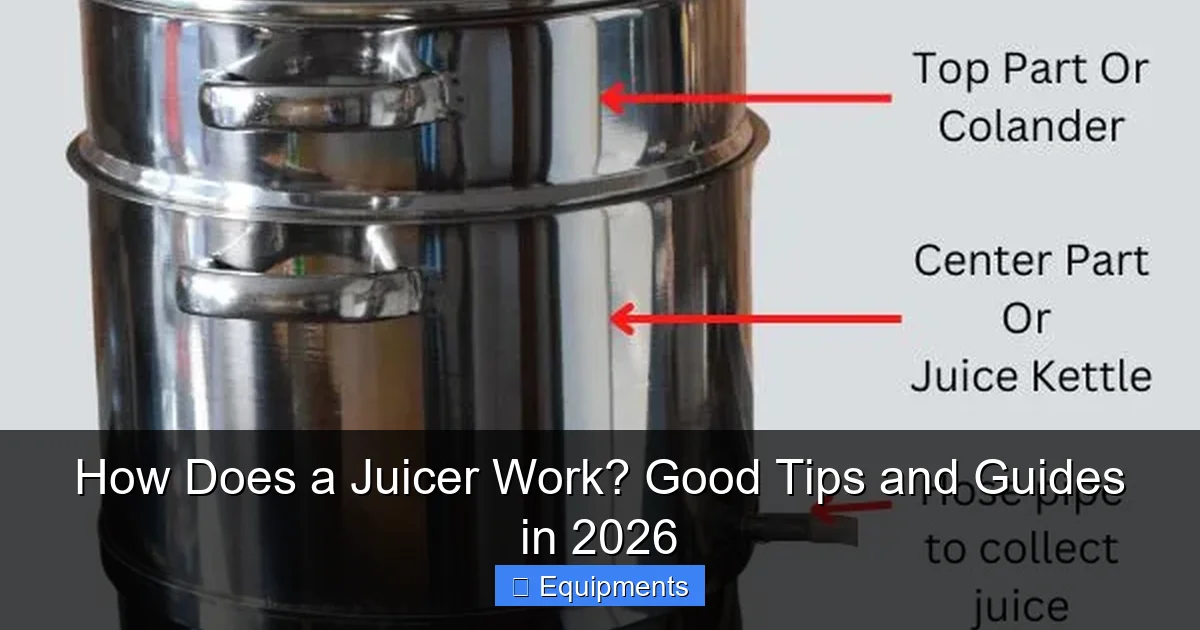
Visual guide about How Does a Juicer Work? Good Tips and Guides in 2026
Image source: juicerdiary.com
1. The Centrifugal Force Champion: High-Speed Spinning Juicers
This is the classic, often most affordable, and loudest juicer on the market. Its name comes from its core operating principle: centrifugal force.
- How it Works: A flat, rapidly spinning metal basket (with tiny micro-perforations) grates the produce against a stationary blade. The grated pulp is flung outward against the basket walls by centrifugal force. The juice is then forced through the mesh holes and into a collection jug, while the dry pulp is ejected into a separate container.
- Best For: Hard fruits and vegetables like apples, carrots, beets, and celery. It’s fast and efficient for these items.
- 2026 Tip: Look for models with stainless steel baskets and powerful motors (800+ watts) for durability. Be aware that the high speed (10,000-15,000 RPM) introduces heat and oxygen, which can slightly degrade sensitive enzymes and vitamins compared to slower methods.
2. The Gentle Worker: Masticating (Slow/Cold Press) Juicers
These have surged in popularity for health-conscious users. They are often called “slow juicers” or “cold press” juicers, though “masticating” is the most accurate technical term.
- How it Works: A single, auger (screw) made of tough plastic or stainless steel turns slowly (40-110 RPM) inside a conical mesh screen. It masticates (chews) and crushes the produce, squeezing the juice out under gentle pressure. The juice is forced through the screen, while the dry pulp is pushed out the other end. The slow speed minimizes heat buildup and oxidation.
- Best For: Leafy greens (kale, spinach, wheatgrass), soft fruits, and even making nut butters or baby food. It yields more juice and a denser, often sweeter-tasting product with longer shelf life (can last 48-72 hours refrigerated).
- 2026 Tip: Newer models feature wider feed chutes (3-inch+) to reduce prep time. Some now have automatic pulp ejection and self-cleaning cycles. Always feed soft produce first, then harder items to aid flushing.
3. The Industrial Powerhouse: Triturating (Twin-Gear) Juicers
The top tier of home juicing technology, prized by serious enthusiasts and small juice businesses.
- How it Works: Two interlocking, stainless steel gears (augers) rotate in opposite directions at very slow speeds (80-120 RPM). They triturate (crush and grind) the produce with immense pressure between the gears, then press the juice through a fine screen. This is the most thorough extraction method available.
- Best For: Maximum yield from *any* produce, especially wheatgrass, herbs, and fibrous vegetables. It produces the driest pulp and the highest quality, most nutrient-rich juice.
- 2026 Tip: These are investment pieces. Look for models with powerful motors and durable, all-stainless steel construction. They require more careful feeding and cleaning but offer unparalleled results. Some 2026 models include adjustable pressure settings for different produce types.
4. The Specialist: Citrus Juicers
Simple, effective, and often standalone.
- How it Works: Uses a motorized reamer (a ridged cone) that spins inside a citrus half, pressing and tearing the pulp to release juice. The juice flows through a strainer, while seeds and pulp are left behind.
- Best For: Oranges, grapefruits, lemons, and limes. Nothing else.
- 2026 Tip: Consider a “press” style for the highest yield and least bitterness from the pith. Some smart models now have sensors to automatically stop when the fruit is fully juiced.
The Science of Extraction: From Produce to Glass in Seconds
Now that we know the *who* (the juicer types), let’s examine the *what* and *how* of the extraction process itself. Regardless of the machine, the goal is to rupture the plant cells to release their liquid contents while separating out the fibrous solid matter (pulp).

Visual guide about How Does a Juicer Work? Good Tips and Guides in 2026
Image source: juicerdiary.com
The Critical Role of the Mesh Screen
The mesh screen is the unsung hero of every juicer. Its hole size determines two things: what gets through and how much pressure is needed. A centrifugal juicer has a fine, flat screen with thousands of tiny holes. A masticating juicer has a conical screen with slightly larger holes. A twin-gear juicer often has the finest screen. A finer screen captures more pulp (resulting in clearer juice) but can slow down extraction and require more power. A coarser screen is faster but may leave more pulp in the juice.
Pulp Ejection: Continuous vs. Batch Processing
This is a major practical differentiator. Continuous pulp ejection (common in centrifugal and many modern masticating models) means the machine automatically ejects dry pulp into a bin as you feed produce. This allows for juicing large quantities without stopping. Batch processing requires you to stop, disassemble, and empty the pulp from the internal chamber every few minutes. While often yielding slightly better results, it interrupts the flow. For a family making several glasses, continuous ejection is a game-changer in 2026.
The Heat and Oxidation Factor
This is the “why” behind the slow juicer craze. Heat and oxygen are the enemies of delicate nutrients like vitamin C, certain enzymes, and antioxidants. High-speed centrifugal action agitates the juice violently, incorporating air (oxidation) and generating frictional heat. Slow masticating and triturating methods produce minimal heat and less aeration. The result? Juice that not only tastes fresher but retains its vibrant color and nutritional potency for longer. A 2026 study from a major food science institute confirmed that slow-pressed juice retained up to 30% more vitamin C after 24 hours compared to centrifugal juice.
Choosing Your Ideal Juicer: A 2026 Buyer’s Practical Guide
Armed with mechanical knowledge, you can now match a machine to your lifestyle. Don’t just buy the most expensive or fastest model. Buy the one that fits your answer to these questions.
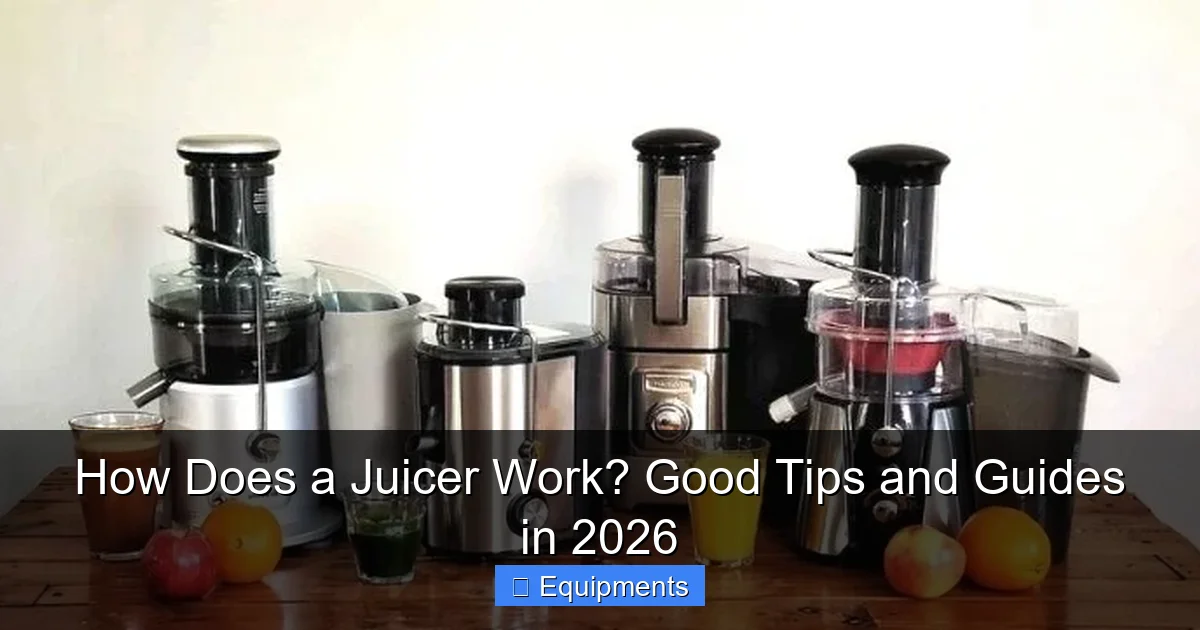
Visual guide about How Does a Juicer Work? Good Tips and Guides in 2026
Image source: kitchenrank.com
What Will You Juice Most Often?
This is your starting point. Create a mental list of your top 5 ingredients.
- Primarily Hard Fruits/Veggies (Apples, Carrots, Celery): A quality centrifugal juicer is efficient, affordable, and fast. Ideal for a quick morning glass.
- Lots of Leafy Greens & Wheatgrass: You need a masticating or triturating juicer. A centrifugal will yield almost nothing from kale and will quickly clog.
- Everything, Including Soft Fruits & Nuts: A versatile masticating model with a wide chute is your best all-around bet for 2026.
- Only Citrus: A dedicated citrus press is simplest and most effective.
Consider Your Priorities: Speed, Noise, or Nutrient Density?
- Speed & Convenience: Centrifugal wins. You can juice a pound of carrots in under 30 seconds.
- Quiet Operation: Masticating and triturating juicers are whisper-quiet compared to the roar of a centrifugal model. Crucial for early mornings in open-plan homes.
- Maximum Nutrition & Shelf Life: Slow pressing is key. Juice from these machines can often be stored for 2-3 days with minimal degradation.
- Ease of Cleaning: This is huge. Look for models with dishwasher-safe parts (baskets, screens, augers) and minimal nooks and crannies. Some 2026 premium models boast “one-touch” self-cleaning modes that flush water through the mechanism.
Budget and Long-Term Value
Centrifugal: $50 – $300. Masticating: $200 – $600. Triturating: $400 – $2000+. Consider the long-term cost of replacement parts (screens, augers wear out). A higher upfront cost often means better durability, longer warranties, and cheaper long-term maintenance. Always check the terms and conditions of the warranty before purchase to understand what is covered and for how long.
Maximizing Your Juice: Pro Tips for Yield, Flavor, and Nutrition
Knowing how the machine works lets you work *with* it, not against it.
The Art of Strategic Prep
Size matters. Most juicers have a feed chute diameter. Cut your produce to fit *through* it, not *into* it. Forging a large apple into a small chute will strain the motor and reduce efficiency. For leafy greens, roll them into tight bundles or balls before feeding to prevent them from slipping past the auger without being juiced. For very soft produce like tomatoes or strawberries, alternate with a hard item like a carrot to help push the soft pulp through.
Order of Operations: Feed Smart
When making a mixed juice, follow this general sequence for optimal flushing: 1) Start with a hard, watery vegetable like a cucumber or celery stalk to lubricate the mechanism. 2) Add your leafy greens. 3) Add your hard roots (carrots, beets). 4) Finish with soft fruits (apples, pears, berries). This sequence helps push all residues through and minimizes mixing of flavors in the pulp chamber.
Understanding and Using the Pulp
The pulp is not waste; it’s fiber-rich food gold. In 2026, the zero-waste kitchen is a goal. Use your leftover pulp in:
- Vegetable broths and stocks
- Soups, stews, and sauces (adds body)
- Baking (carrot pulp in muffins, zucchini pulp in bread)
- Composting (excellent “green” material)
- Dehydrating into veggie chips or powder
This mindset dramatically increases the value you get from every fruit and vegetable you buy.
Storing Your Juice Like a Pro
Even the best juice degrades. For maximum nutrition:
- Use airtight, opaque glass jars or BPA-free plastic bottles.
- Fill to the very top to eliminate air space.
- Refrigerate immediately. Slow-pressed juice lasts 48-72 hours. Centrifugal juice is best consumed within 20 minutes.
- For longer storage, freeze in ice cube trays for future smoothie boosts.
Maintenance & Troubleshooting: Keeping Your Juicer Running in 2026
Neglect is the number one cause of juicer failure. A clean machine is an efficient machine.
The Golden Rule: Clean Immediately After Use
Pulp, especially from sugary fruits, dries and hardens into a cement-like substance. Clean within 5-10 minutes of finishing. Disassemble all parts that touched produce. Rinse the mesh screen under low-pressure water (never use a jet that could tear it). Use the provided cleaning brush—or a soft toothbrush—to scrub every hole in the screen. Soak sticky parts in warm, soapy water.
Weekly Deep Clean and Sanitizing
Once a week, give your juicer a spa day. Soak all removable plastic and metal parts (except motors!) in a solution of 1 part white vinegar to 4 parts warm water for 30 minutes. This dissolves mineral buildup and sanitizes. Rinse thoroughly. For stainless steel parts, a baking soda paste can remove any stubborn stains.
Common Issues and Quick Fixes
- Juicer is Clogging/Jamming: You’re feeding too fast or too much soft produce. Stop, reverse (if your model has a reverse function), dislodge the blockage, and feed more slowly in smaller batches.
- Juice Yield is Low: The screen is likely clogged with dried pulp. It needs a deep soak and scrub. Also, check if your produce is fresh; older, softer produce yields less.
- Unusual Noise or Vibration: Immediately stop. Check that all parts are assembled correctly and locked in place. A misaligned screen or auger will cause damage. If the noise persists, consult your manual’s troubleshooting section.
- Juice is Pulpy: Your screen may be worn or damaged, or you’re using the wrong screen setting (if adjustable). Inspect for holes or warping.
The Future is Now: Smart Juicing Trends in 2026
The humble juicer is getting a high-tech upgrade. When shopping in 2026, look for these emerging features that enhance the “how”:
- App Integration & Recipe Guidance: Bluetooth or Wi-Fi connected juicers that sync with an app. The app can suggest recipes based on the produce you have, guide you through assembly, and even track your nutritional intake from each juice.
- Automated Cleaning Cycles: Beyond a simple rinse, some models have a dedicated chamber where you add water and a cleaning tablet. The machine runs a program that agitates and flushes the internal mechanism automatically.
- Variable Speed & Pressure Control: Advanced masticating and triturating models now offer dials or digital settings to adjust auger speed or gear pressure, allowing you to customize extraction for delicate herbs versus dense roots.
- Material Science: More screens and augers are being made from ultra-durable, food-safe polymers or titanium-coated stainless steel for longer life and easier cleaning.
- Sustainability by Design: Brands are focusing on energy efficiency, fully recyclable packaging, and modular designs where you can buy replacement parts instead of a whole new machine.
Conclusion: Your Knowledge is the Most Important Ingredient
Understanding how a juicer works transforms it from a mysterious appliance into a precise tool in your wellness toolkit. You now know that the whir of a centrifugal juicer is a trade-off for speed, while the quiet hum of a masticating model is a promise of nutrient preservation. You understand that the mesh screen is the gatekeeper of clarity, that pulp is a resource, and that immediate cleaning is the secret to longevity.
As you evaluate your needs in 2026, let this knowledge guide you. Choose a machine that aligns with your favorite recipes, your daily schedule, and your commitment to health. Invest in its care. And most importantly, enjoy the vibrant, living results of your informed choice. Here’s to many glasses of perfectly extracted, delicious juice in the years to come.
Frequently Asked Questions
What’s the single biggest difference between centrifugal and masticating juicers?
The core difference is speed and method. Centrifugal juicers use high-speed spinning (like a blender) to grate and strain produce quickly, which generates some heat and oxidation. Masticating juicers use a slow-turning auger to crush and press, minimizing heat and oxidation, which better preserves nutrients and allows for juicing leafy greens.
Can I juice soft fruits like strawberries or tomatoes in any juicer?
You can, but with caution. Soft, pulpy fruits can clog the fine mesh screens of centrifugal and some masticating juicers. The best practice is to alternate feeding soft fruits with a hard, fibrous item like a carrot or celery stalk to help push the soft pulp through. Citrus and very soft berries are best handled by models with wider chutes or specific soft-produce settings.
Does juicing remove all the fiber from fruits and vegetables?
No, but it removes most of the insoluble fiber. The juicer separates the liquid (juice, containing soluble fiber, vitamins, and minerals) from the solid fibrous pulp (insoluble fiber). You still get beneficial soluble fiber in your juice, which aids digestion and nutrient absorption. For full fiber benefits, you should consume the pulp separately in recipes like soups or baked goods.
How often do I really need to deep clean my juicer?
You should do a quick rinse of all parts after every single use. For a thorough deep clean with soaking and scrubbing of the mesh screen, once a week is the minimum for regular juicers. If you juice daily or use sugary fruits (like apples or beets), aim for a deep clean every 3-4 days to prevent dried-on residue and microbial growth.
Which type of juicer is the quietest?
Masticating (slow) and triturating (twin-gear) juicers are significantly quieter than centrifugal models. Their motors run at low RPMs (40-120) and produce a gentle hum, comparable to a food processor. Centrifugal juicers operate at 10,000+ RPM and are as loud as a blender, which can be disruptive, especially early in the morning.
Can I put frozen fruits or vegetables in my juicer?
Generally, no. Most juicers are designed for fresh, room-temperature or cold produce. Frozen items are extremely hard and can damage the auger, gears, or screen, and will likely stall the motor. The only exception is if your specific model’s manual explicitly states it can handle frozen items for sorbet-like textures. Always check your manufacturer’s guidelines first.