Yes, several blenders are comparable to Vitamix in power and performance, often at lower prices. Brands like Blendtec, Ninja, and Breville offer professional-grade motors and versatility for smoothies, soups, and nut butters. The “best” alternative depends on your specific needs, budget, and desired features like noise level, pre-programmed settings, or container design. While Vitamix sets the gold standard, excellent competitors provide exceptional value.
So, you’ve heard the buzz about Vitamix. Maybe a friend swears by theirs, or you’ve watched those mesmerizing smoothie videos where the blender turns frozen fruit and spinach into silky liquid in seconds. It’s the blender that sits at the top of every “best of” list, the undisputed king of the countertop. But here’s the million-dollar question that brings you here: Are there any blenders comparable to Vitamix? The short answer is a resounding yes. The longer, more helpful answer is that the world of high-performance blenders is rich with excellent contenders that can give the legendary Vitamix a serious run for its money, often at a significantly lower cost. This isn’t about finding a “cheap” blender; it’s about finding the right powerful, versatile tool for your kitchen that delivers on your specific needs without necessarily paying the premium Vitamix tax. Let’s dive in and break down the landscape.
Key Takeaways
- Power & Performance: Several competitors match Vitamix’s high-wattage motors (1500+ watts) for crushing ice and blending tough ingredients smoothly.
- Value Proposition: Brands like Ninja and some Breville models often provide 90% of Vitamix’s performance for 50-70% of the price.
- Feature Trade-offs: Competitors may excel in specific areas (noise reduction, preset programs, container design) but can lack Vitamix’s legendary durability or fine-texture results.
- Use-Case Matters: The best “comparable” blender for you depends on primary use—daily smoothies, hot soups, nut butters, or frozen desserts.
- Warranty as a Signal: Vitamix’s 7-10 year warranty is unmatched; shorter warranties (2-5 years) on competitors indicate expected lifespan differences.
- Container Design: Vitamix’s tall, narrow containers excel at vortex creation; some rivals use wider jars that may require more liquid.
- Noise is a Factor: Many high-performance blenders are loud; some brands (like certain Ninja models) incorporate significant noise-dampening technology.
📑 Table of Contents
- Why Vitamix Sets the Benchmark (And What “Comparable” Really Means)
- The Top Tier Contenders: True High-Performance Rivals
- The Mid-Range Powerhouses: Exceptional Performance for Less
- Budget-Friendly Power: Surprising Alternatives Under $200
- Specialty & Niche Competitors: For Specific Jobs
- How to Choose YOUR Comparable Blender: A Practical Guide
- Conclusion: The Verdict on Vitamix Competitors
Why Vitamix Sets the Benchmark (And What “Comparable” Really Means)
First, we must acknowledge the giant in the room. Vitamix has earned its reputation through decades of engineering. Their blenders are built like tanks, with powerful, commercial-grade motors that are designed to last for decades, not years. The classic two-part container design with a tamper is iconic for a reason—it creates a powerful vortex that pulls ingredients down to the blades, allowing you to blend everything from whole fruits and vegetables to frozen desserts and hot soups without stopping the motor. The results are consistently smooth, with minimal texture. Their warranties are the stuff of legend, often spanning 7 to 10 years, which speaks volumes about their confidence in durability.
So, when we ask for blenders comparable to Vitamix, we’re not just looking for something that *says* it’s powerful. We’re looking for machines that can replicate that core Vitamix experience: transformative blending power. This means:
- Horsepower: A strong, continuous motor (typically 2+ peak horsepower) that doesn’t bog down with frozen ingredients or thick nut butters.
- Blade Design & Container Shape: A design that creates an effective vortex, minimizing the need for a tamper or stopping to scrape.
- Versatility: The ability to perform a wide range of tasks—smoothies, soups, dips, frozen desserts, nut flours—with excellent results.
- Build Quality & Longevity: Solid construction that can withstand daily use for many years.
No single competitor ticks every box in the exact same way as a Vitamix. Instead, they offer different combinations of power, features, and price that make them “comparable” for specific users. The key is identifying which trade-offs you’re willing to make.
The Top Tier Contenders: True High-Performance Rivals
This first category of blenders goes head-to-head with Vitamix on raw power and versatility. They are built for serious blending and are priced accordingly, though often still under a Vitamix’s sticker shock.
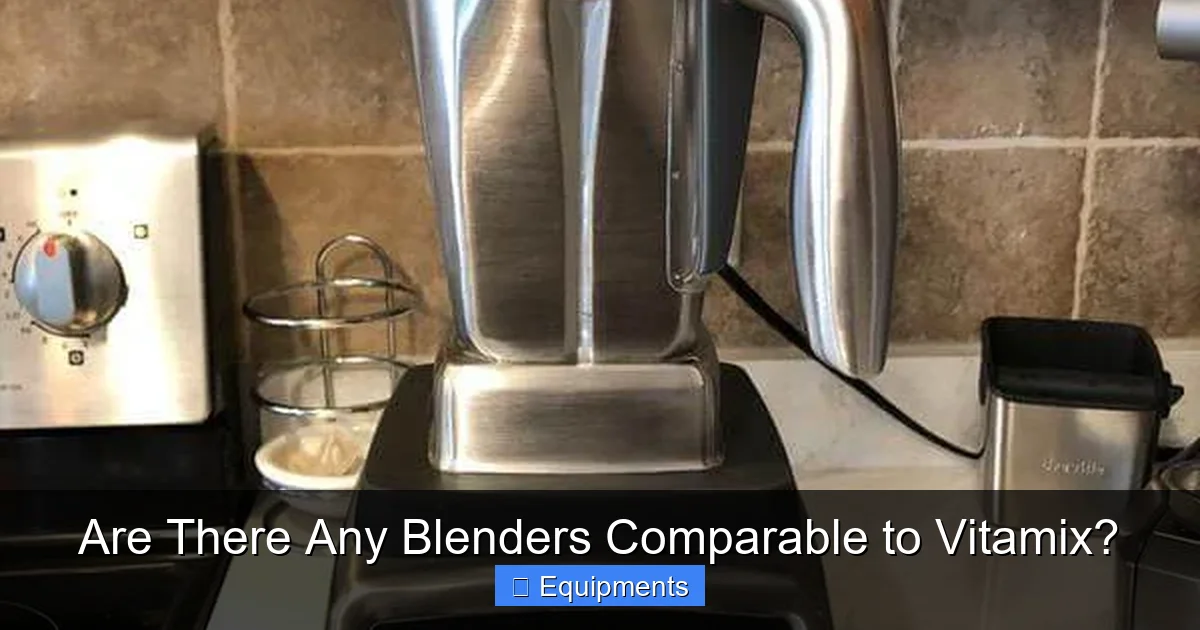
Visual guide about Are There Any Blenders Comparable to Vitamix?
Image source: vibranthappyhealthy.com
Blendtec: The Powerhouse with Smarts
Blendtec is Vitamix’s oldest and most direct rival. Their engines are famously brutal, often boasting even higher peak horsepower numbers. The experience is different, though. Blendtec uses a “wild side” jar—a wider, shorter container that’s easier to clean and fit under cabinets. This design change means it sometimes requires a bit more liquid to get the vortex going compared to Vitamix’s tall, narrow jar. However, for many, this is a minor trade-off. Blendtec’s big differentiator is its intuitive, one-touch pre-programmed cycles (smoothie, soup, ice crush, etc.) and its completely sealed jar system. No central shaft means no gunk buildup around a bearing—a common complaint point on Vitamix containers. Models like the Blendtec Designer 725 or the Total Classic are exceptional. They pulverize with the best of them, make fantastic hot soups via friction heat, and their jars are nearly indestructible. If you want a “set it and forget it” experience with commercial-grade power and a more modern, sealed design, Blendtec is a phenomenal, and often slightly less expensive, alternative.
Breville (or Sage): The Feature-Packed Luxury Option
If you like gadgets and precision, Breville (sold as Sage in some markets) is your brand. Their Breville Control™ Blender (or Sage models) is a masterpiece of engineering. It uses a dual-stage blade system that first chops and then liquefies, mimicking a food processor’s action. The result is notoriously fine textures, especially for things like nut butters and frozen desserts that can sometimes be grainy in other blenders. It’s also incredibly quiet for its power class, thanks to an enclosed motor housing. The controls are a sleek LCD screen with variable speed and specific programs. The build feels ultra-premium. However, this sophistication comes at a price that can rival or even exceed Vitamix. The Breville is less of a workhorse brute and more of a precision instrument. If your priority is absolute smoothness for delicate tasks and you appreciate thoughtful design, it’s a top-tier comparable.
Cleanblend: The Value-Powered Challenger
Here’s where the value proposition gets serious. Cleanblend burst onto the scene offering a 3.5 peak horsepower motor for a fraction of the cost of a Vitamix or Blendtec. The motor is impressively strong, handling frozen fruit and ice with ease. The design is clearly inspired by the Blendtec “wild side” jar—wide, BPA-free, and with a simple, two-blade assembly. It’s a no-frills, high-power workhorse. The trade-offs are in the finer details: the overall build quality and plastic components feel less premium than Vitamix or Blendtec, the jar can be prone to leaks if not seated perfectly (a common issue with wide-mouth jars), and the warranty (5 years) is solid but not Vitamix-tier. For someone who wants 95% of the blending power for about 40% of the price and doesn’t mind a slightly less refined feel, Cleanblend is a fantastic, comparable choice.
The Mid-Range Powerhouses: Exceptional Performance for Less
This is where the sweet spot for most home cooks lies. These blenders offer tremendous power and versatility, often including features that their more expensive rivals don’t, at prices that are much easier to swallow.
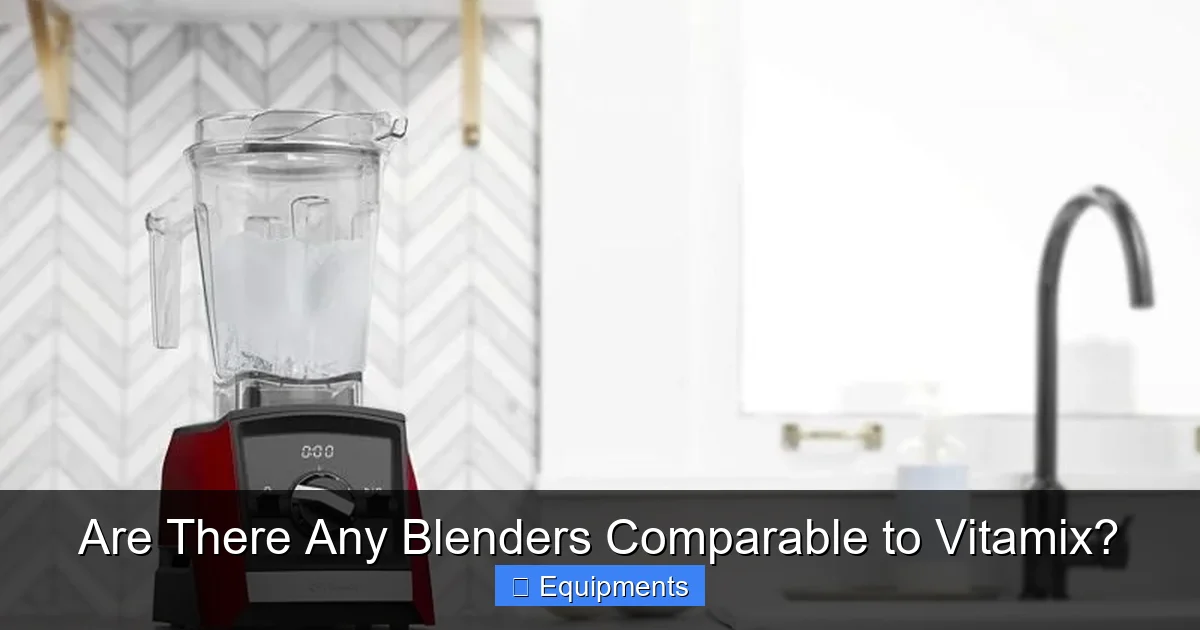
Visual guide about Are There Any Blenders Comparable to Vitamix?
Image source: chefsresource.com
Ninja Professional Plus / Nutri-Ninja Auto-iQ Series
Do not sleep on Ninja. They have completely redefined what a “mid-range” blender can do. The Ninja Professional Plus with its Auto-iQ pre-programmed settings is a bestseller for a reason. It boasts a 1100-1500 watt motor (depending on model) and uses a unique stacked blade assembly that extends throughout the jar, eliminating the need for a tamper in most cases. This design is brilliant for getting every last bit of ingredient blended without stopping. The result? Smooth smoothies, decent nut butters, and capable soups. The included single-serve cups with blade assemblies are a huge bonus for making personal portions without cleaning the big jar. While it may not achieve the same ultra-fine, velvety texture as a Vitamix on the toughest tasks (like very fibrous greens or the finest nut flours), for 90% of daily kitchen tasks, it’s remarkably close. The build is sturdy, the price is fantastic, and the versatility with the multiple containers is unmatched. For a family that wants pro-level smoothies and shakes without the pro-level price, Ninja is arguably the best comparable value on the market.
KitchenAid Professional 600 Series
KitchenAid brings its iconic design and robust build to the blender arena. The Professional 600 (and its siblings) features a potent 1.5 HP motor and a unique diamond-shaped, stainless steel blade that’s designed to pulverize. It has a simple, elegant control panel with a pulse and 5 speeds. The performance is excellent—it handles ice, frozen fruit, and tough vegetables with authority. The jar is large (56 oz) and made of sturdy glass, which many prefer over plastic for taste and durability. It doesn’t have the smart programs of a Blendtec or Ninja, but its straightforward power is reliable. The main drawback is noise; it’s a loud blender. Also, its vortex isn’t quite as aggressive as a Vitamix, so you might need to use the tamper more often for very thick mixes. But if you want a powerful, straightforward blender from a trusted brand with a gorgeous, durable glass jar, the KitchenAid is a superb and comparable workhorse.
Budget-Friendly Power: Surprising Alternatives Under $200
Can you get “Vitamix-comparable” power for under $200? Not in the absolute, decade-lasting sense. But you can get blenders with motors powerful enough to mimic the *performance* for many tasks. These are the “best of the rest” that punch far above their weight class.
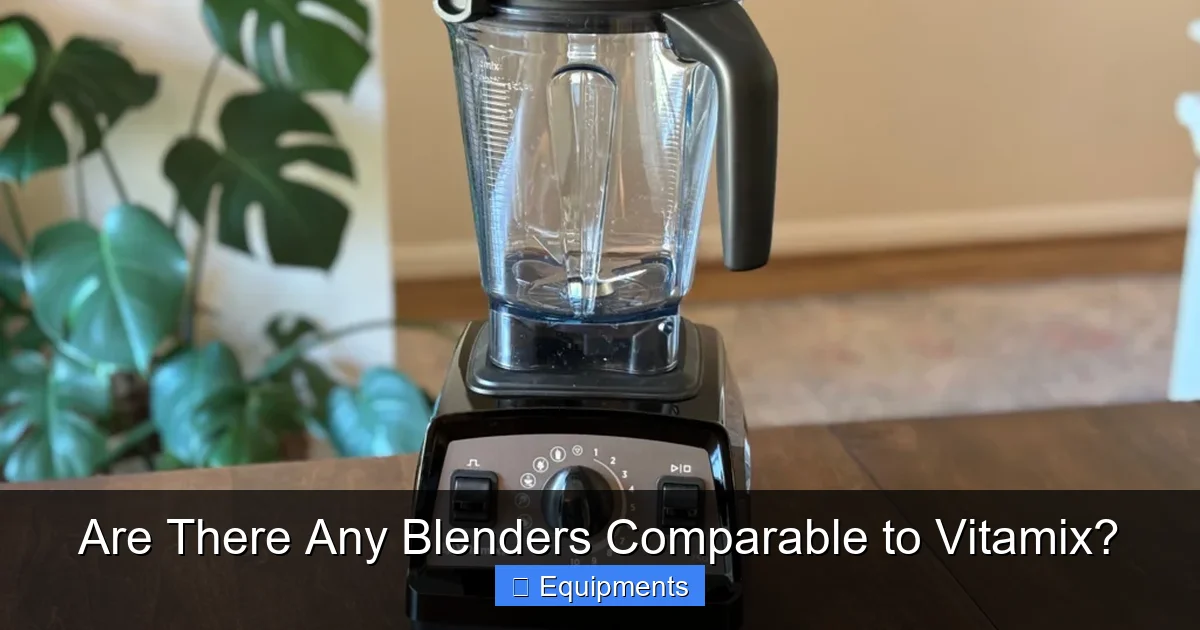
Visual guide about Are There Any Blenders Comparable to Vitamix?
Image source: worldofblenders.com
Ninja Mega Kitchen System / Nutri-Blender Duo
Look for older or sale models of Ninja’s larger systems. The Ninja Mega Kitchen System often dips into the $150-$200 range. It comes with a massive 72-oz pitcher, a smaller jar, and single-serve cups, all with the stacked blade technology. Its motor is powerful (around 1500 watts) and, while not as refined as the Professional Plus, it absolutely crushes ice and blends smoothies to a satisfying smoothness. For making large batches of frozen drinks, sauces, or dips, it’s shockingly capable for the price. The build is entirely plastic and feels less premium, and the long-term durability is a question mark compared to the 7-year warranties up north. But for a budget-conscious buyer who wants serious power and a ton of accessories, this is the closest you’ll get to a Vitamix’s output at this price point.
Hamilton Beach Professional 1500W
Another dark horse in the budget power category. The Hamilton Beach Professional frequently appears on “best value” lists. It boasts a true 1500-watt motor, a simple two-speed/pulse control, and a durable polycarbonate jar. Independent tests show it has the grunt to handle frozen ingredients and make smooth smoothies. It’s a bare-bones, no-frills machine. There are no smart programs, no fancy design—just a powerful motor and blades. It’s loud, and the jar design is basic. But if your primary goal is “will this blend my frozen fruit and kale into oblivion without dying?” and your budget is tight, the answer is a confident yes. It’s a utilitarian tool that gets the core job done with impressive power.
Specialty & Niche Competitors: For Specific Jobs
The “comparable” conversation gets interesting when we consider blenders built for specific purposes that Vitamix also excels at.
For Noise Sensitivity: Decibels Matter
If a loud blender is a deal-breaker, look at brands like Blendtec (which is quieter than Vitamix) or the premium Breville. Some newer Ninja models also incorporate better sound-dampening enclosures. However, a note of caution: true high-performance blending is inherently loud because you’re moving massive amounts of material at high speed. Any blender claiming to be both whisper-quiet and Vitamix-strong is likely exaggerating one of those claims. You can find “quiet” blenders, but they often sacrifice significant power.
For Single-Serve Simplicity: The Personal Blender Niche
For making one smoothie and running out the door, the convenience of a personal blender is hard to beat. The Ninja Nutri-Ninja Auto-iQ system is the champion here. Its stackable blades and blending/cycling cups mean you blend right in the cup you drink from. The power is sufficient for single-serve smoothies, protein shakes, and dips. It won’t make hot soup or large batches of nut butter, but for its intended purpose, it’s incredibly effective and a great “comparable” if your use case is exclusively small, quick blends.
The Immersion Blender Wild Card
This is a different tool entirely, but for hot soups and sauces directly in the pot, an immersion blender (like those from Breville or Cuisinart) can outperform a countertop blender. It’s safer, easier to clean, and you can blend hot liquids without risk of pressure buildup or spills. It won’t make frozen desserts or nut butters well, but for soups and purees, it’s a specialized tool that does one job exceptionally well and is worth considering alongside your countertop options.
How to Choose YOUR Comparable Blender: A Practical Guide
Now that you’ve seen the field, how do you pick? Forget the spec sheet for a moment and ask yourself these questions.
What’s Your #1 Task? (The “Primary Use” Filter)
Be brutally honest. Is it daily green smoothies with kale and frozen fruit? Then vortex power and tamper access are key—Vitamix or Blendtec style. Is it making large batches of frozen margaritas for parties? Look for a wide-mouth jar like Blendtec or Ninja. Is it creamy nut butters or frozen desserts? The Breville’s dual-stage blades might be worth the premium. Is it mostly soups and sauces? Consider if an immersion blender might suffice, or if you want the countertop option for versatility. Match the blender’s strength to your most frequent need.
What’s Your Realistic Budget?
Set a hard limit. Remember, a $300 Ninja or Cleanblend will feel like a monumental upgrade over a $100 blender and deliver 90% of a $600 Vitamix’s performance. The jump from $300 to $600 buys you finer texture on the hardest tasks, a dramatically longer warranty, and a more refined overall feel. Decide if that last 10% is worth the extra $300 to you.
Features vs. Simplicity: Do You Want Buttons or a Dial?
Are you a “set it and forget it” person who loves pre-programmed smoothie cycles? Blendtec or Ninja Auto-iQ are your friends. Do you prefer the control and tactile feel of a simple variable speed dial? Vitamix, KitchenAid, or Cleanblend will appeal more. More programs mean more potential points of failure (electronics) and often a higher price.
Consider the Hidden Costs: Warranty & Repairability
Check the warranty length and what it covers. Vitamix’s 7-10 year full warranty is the gold standard. Most competitors offer 3-7 years on the motor and 1-2 years on parts. This is a direct indicator of the manufacturer’s confidence in longevity. Also, research if replacement parts (containers, blades, gaskets) are readily available and affordable. A blender that can be repaired is a better long-term investment.
Read, Watch, and Taste Test
Don’t just trust this article (though we appreciate it!). Read verified customer reviews on retail sites, focusing on 3-5 year ownership reports. Watch YouTube comparison videos where people blend the same tough ingredients (like a whole carrot, frozen mango, or chickpeas for hummus) side-by-side. See the texture difference. If possible, visit a store like Williams Sonoma or Sur La Table where you can often demo Vitamix, Blendtec, and Breville models. Bring a piece of ginger or a frozen berry bag and ask for a test blend. The feel and sound in person are invaluable.
Conclusion: The Verdict on Vitamix Competitors
So, are there blenders comparable to Vitamix? Absolutely. The market is more competitive than ever, and that’s great news for you, the consumer. The Vitamix remains an exceptional, heirloom-quality appliance that is worth its price for the serious home chef who values ultimate durability and flawless texture above all else.
However, for the vast majority of people, a “comparable” blender exists that will deliver outstanding results for a more accessible price. The Blendtec offers similar power with smarter programs and a sealed jar. The Ninja Professional Plus provides staggering versatility and tamper-free blending for a family on a budget. The Breville is a precision-engineered luxury option for texture perfectionists. And the Cleanblend brings raw, brute-force power to the value-conscious.
Your choice ultimately boils down to your personal blend of priorities: maximum power, best value, specific features, noise tolerance, and design. By understanding what makes Vitamix great and where its rivals excel or compromise, you can confidently choose a blender that won’t just be comparable on paper, but will feel like the perfect, powerful partner in your kitchen for years to come. The best blender for you is the one you’ll actually use, that fits your life, and that makes the delicious, healthy food you want to eat. Happy blending!
Frequently Asked Questions
Can a cheaper blender really achieve the same smooth texture as a Vitamix?
For most everyday tasks like smoothies and shakes, yes—blenders from Ninja, Blendtec, and Breville achieve nearly identical smoothness. For the most challenging tasks (e.g., turning whole grains into fine flour or achieving a completely seedless berry puree), Vitamix’s refined blade and vortex design may still hold a slight edge.
Is the warranty difference between Vitamix and its competitors a deal-breaker?
It depends on your perspective. Vitamix’s 7-10 year warranty signals extreme durability and is a major selling point for long-term investment. Competitors with 3-5 year warranties are still solid machines, but the shorter coverage suggests a different expected lifespan or component quality. For occasional use, it may not matter; for daily, heavy use, it’s a significant consideration.
Do I need a tamper? Is it a sign of inferior design?
Not at all. A tamper is a tool to safely push ingredients down without stopping the blender. Vitamix and KitchenAid rely on a tall, narrow jar that creates a strong vortex, often requiring a tamper for thick mixes. Blendtec and Ninja use wider jars with different blade designs that frequently eliminate the need for a tamper. It’s a design choice, not an indicator of quality.
Can these alternative blenders make hot soups from cold ingredients?
Yes, both Blendtec and Vitamix are famous for this due to their powerful motors generating enough friction heat in 5-6 minutes. Most high-wattage competitors (Cleanblend, Breville, high-end Ninja) can also heat soups to a steaming temperature, though it may take slightly longer or not get quite as piping hot. Always follow manufacturer guidelines for hot liquids.
Is a glass jar better than plastic?
Glass (like on some KitchenAid models) is non-porous, won’t scratch or absorb odors, and is generally more durable against scratches. However, it’s much heavier and can shatter if dropped. Most high-performance blenders use BPA-free, impact-resistant Tritan plastic, which is lightweight, very tough, and designed not to cloud or stain. For countertop use, quality plastic is perfectly safe and practical.
Should I buy a refurbished Vitamix or a new competitor?
This is a great value question. A refurbished Vitamix (from their official site) comes with a full 7-year warranty at a 20-30% discount and is a fantastic way to get the brand’s durability at a lower price. A new competitor offers a full warranty from day one and new features. Compare the specific refurbished price to the new competitor’s price and warranty. If the price gap is small, the new competitor with its full warranty might be preferable. If the refurbished Vitamix is a much better deal, it’s a hard offer to beat.
Pingback: Vitamix E320 Review - kitchenandhouseware.com