Unlock the power of vibrant, nutrient-dense beet celery carrot juice with our ultimate 2026 guide. We cut through the hype to bring you practical, equipment-focused advice on selecting the best produce, choosing the right juicer for your needs—from smart models to sustainable designs—and mastering the perfect blend. Discover futuristic tips like AI-assisted extraction and zero-waste pulp usage to elevate your home juicing routine. Whether you’re a beginner or a seasoned pro, this article provides everything you need to create delicious, health-boosting juice consistently.
Remember that first time you tasted a really great vegetable juice? That deep, earthy sweetness from a beet, the clean, salty snap of celery, and the sunny sweetness of carrot, all dancing together in a glass? It feels like drinking pure, liquid sunshine. Making beet celery carrot juice at home is one of the most rewarding things you can do for your health and your taste buds. But here’s the thing they don’t always tell you: the magic isn’t just in the vegetables. A huge part of that vibrant, delicious, nutrient-packed result comes down to your equipment and your technique. As we move into 2026, juicing technology is smarter, faster, and more efficient than ever. This guide isn’t just a recipe; it’s your complete equipment-focused masterclass. We’ll walk you through everything from picking the perfect produce at the market to choosing the juicer that will become your kitchen’s best friend, all while sharing the forward-thinking tips that will define home juicing in the coming year.
Think of this as your friendly, no-nonsense conversation about getting the absolute most out of your vegetables. We’ll talk about the real differences between a $50 and a $500 juicer, why your prep work might be sabotaging your juice, and how to turn leftover pulp into gold instead of garbage. The goal? For you to walk away knowing exactly how to make a stunning, glass-of-goodness beet celery carrot juice every single time, with minimal fuss and maximum benefit. Let’s dive in.
Key Takeaways
- Produce Selection is Paramount: In 2026, prioritize organic, fresh, and crisp vegetables. Look for firm beets with smooth skins, vibrant green celery stalks, and bright, firm carrots for the sweetest, most nutrient-rich juice.
- Juicer Technology is Key: The best juicer for beet celery carrot juice is a slow masticating (auger) or twin-gear model. They extract more juice, handle leafy celery leaves, and preserve delicate nutrients better than old centrifugal models.
- Prep Matters More Than You Think: Always wash thoroughly. For beets, trim greens to avoid bitterness. For celery, remove strings if your juicer struggles. Cutting produce to fit your juicer’s feed chute prevents jams and ensures efficiency.
- Layer Strategically for Efficiency: Feed hard vegetables (carrots, beets) first to push through softer celery. This technique maximizes juice yield and prevents clogging, a timeless tip updated for 2026’s advanced juicers.
- Embrace the “Pulp Revolution”: 2026’s trend is zero-waste juicing. Use the leftover fiber-rich pulp in crackers, soups, or as a garden compost booster, boosting sustainability and your nutrition.
- Smart Juicers Are Here: Look for 2026 models with app connectivity for recipes, nutrient tracking, and maintenance alerts. Self-cleaning functions and quieter motors are now standard in premium equipment.
- Drink Fresh, Store Smart: For peak nutrition, drink immediately. If storing, use airtight, UV-protective bottles and consume within 24 hours. Adding a squeeze of lemon prevents oxidation and preserves color.
📑 Table of Contents
- Why This Trio? The Unbeatable Health Power of Beets, Celery & Carrots
- Equipment Essentials: Choosing Your 2026 Juicer
- Step-by-Step: The Perfect Beet Celery Carrot Juice Process
- Pro Tips for 2026: Beyond the Basic Recipe
- Maintenance & Longevity: Caring for Your 2026 Investment
- Storage, Meal Prep & Making It a Habit
- Conclusion: Your Journey to Perfect Juice Starts Now
Why This Trio? The Unbeatable Health Power of Beets, Celery & Carrots
Before we talk machines, let’s talk about the stars of the show. Combining beets, celery, and carrots isn’t just a colorful accident; it’s a nutritional symphony. Each vegetable brings a unique set of compounds to the glass, and together, they create something greater than the sum of its parts.
The Earthy Sweetness of Beets
Beets are nutritional powerhouses packed with betalains, the potent antioxidants that give them their deep crimson color. These compounds are celebrated for their anti-inflammatory and detoxification support. They’re also rich in nitrates, which in 2026 continue to be studied for their potential to support healthy blood pressure and athletic endurance. The key with beets is their earthiness. A small to medium beet is perfect; too large and it can overpower the blend with a dirt-like flavor. Choosing fresh, firm beets with smooth skin is your first step to a sweet, not earthy, juice.
The Hydrating Crunch of Celery
Often called a “negative calorie” food (though that’s a bit of a myth), celery is about 95% water, making it the ultimate hydrator and natural electrolyte booster. It’s loaded with vitamin K, potassium, and phthalides, compounds that may help relax blood vessels. The flavor is uniquely herbal and salty. The trick with celery is in the stalks. The outer, darker green stalks are more fibrous and bitter, while the inner, lighter stalks are sweeter and juicier. For the best yield and flavor, a mix is great, but be prepared for your juicer to work a bit harder on those tough outer ribs.
The Sweet Foundation of Carrots
Carrots are the sweet, familiar anchor of this juice. They provide a familiar, palatable sweetness that balances the earthiness of beets and the saltiness of celery. They’re famous for beta-carotene (vitamin A), crucial for eye health and immune function. When selecting carrots, look for vibrant orange color and firmness. Avoid any that are limp or have large, green “shoulders,” as these can be bitter. Carrots also have a high water content and relatively low fiber density compared to celery, making them juicing workhorses that help push other produce through the machine.
Equipment Essentials: Choosing Your 2026 Juicer
This is the most critical section. The wrong juicer will leave you with a pulpy, low-yield mess and a chore you dread. The right juicer makes the process effortless and the result sublime. In 2026, the market is dominated by a few key technologies, each with its own personality. Let’s break them down for your specific beet, celery, and carrot needs.
Visual guide about How to Make Beet Celery Carrot Juice? Good Tips in 2026
Image source: yummadeeasy.com
Masticating (Slow) Juicers: The Nutrient Preservation Champion
Also called cold press or slow juicers, these use a single auger (screw) that crushes and presses produce at a low RPM (typically 40-100). This is our top recommendation for beet celery carrot juice. Why? The slow, squeezing action generates minimal heat, which protects delicate enzymes and nutrients from oxidation. It also produces a much drier pulp, meaning you get more juice from your expensive organic vegetables—a huge cost savings over time. Crucially, masticating juicers excel with leafy greens (like celery leaves) and fibrous vegetables (celery stalks, beets). They handle the tough fibers of celery and the dense texture of beets without complaint. Brands like Omega, Hurom, and Tribest lead this category, and their 2026 models feature even quieter motors, improved pulp ejection, and sleeker designs.
Twin-Gear (Triturating) Juicers: The Ultimate Extraction Engine
This is the professional-grade option. It uses two interlocking, stainless steel gears that literally grind and press the produce into a fine pulp before extracting every last drop of juice. The extraction is unparalleled—you’ll see a dramatically drier pulp than with a single-auger masticating juicer. This is especially valuable for beets, which can be expensive. However, they are the most expensive, often the heaviest, and can be slightly slower to assemble and clean. If you are a serious juicer who makes large batches daily and values maximum yield above all else, a twin-gear model from a brand like Greenstar or Super Angel is a 2026 investment that will pay off in juice volume.
Centrifugal (Fast) Juicers: The Speed Demon (With Caveats)
These are the traditional, high-RPM models you see in many stores. They use a spinning basket with grated teeth to shred produce, and centrifugal force throws the juice through a mesh filter. Their main advantage is speed and a lower initial cost. However, for our trio of vegetables, they have significant drawbacks. The high speed generates heat and oxygen, degrading nutrients quickly. The spinning action isn’t as effective at extracting juice from fibrous celery or dense beets, leading to wetter pulp and lower yield. They also struggle with leafy celery leaves, often ejecting them unjuiced. While fine for quick apple-carrot juices, for a nutrient-dense daily ritual like this, a centrifugal juicer is a step behind 2026’s best technology.
What to Look For in a 2026 Model: Smart Features & Sustainability
The juicers of 2026 aren’t just motors and gears. Look for these emerging and now-standard features:
- Self-Cleaning Systems: Rinse-free cycles that reverse the auger to eject trapped fibers, cutting cleanup time in half.
- App Connectivity: Bluetooth or Wi-Fi enabled juicers that sync with an app to track usage, suggest recipes based on your produce, and send maintenance reminders for part replacements.
- Pulp Control Adjustments: Some advanced masticating models allow you to adjust the pressure of the pulp plug, letting you customize for wetter (more juice) or drier (more fiber) output.
- Ultra-Quiet Motors: New brushless motor technology makes even powerful juicers whisper-quiet, a blessing for early morning routines.
- Sustainable Materials: Brands are increasingly using recycled plastics and BPA-free components. Look for durable, stainless steel internal parts that will last a decade.
Step-by-Step: The Perfect Beet Celery Carrot Juice Process
Alright, you’ve got your beautiful organic produce and your shiny new masticating juicer. Let’s make magic. The process is simple, but the details matter.

Visual guide about How to Make Beet Celery Carrot Juice? Good Tips in 2026
Image source: tastynfree.com
Step 1: The Mise en Place (Your Prep Station)
Gather everything. You’ll need your vegetables, a large bowl for pulp, a glass for juice, and a cleaning brush nearby. Wash everything thoroughly. Even if you’re peeling (more on that next), a good scrub under cool running water is non-negotiable to remove dirt and potential pesticides. Have a compost bin or trash can ready for the trimmings.
Step 2: To Peel or Not to Peel? The 2026 Verdict
This is a classic debate. For carrots, peeling is traditional to remove any bitter, woody outer layer and potential pesticide residue. In 2026, with the rise of organic produce and high-quality washing, the trend is to NOT peel. The skin of the carrot contains a wealth of nutrients and fiber. If your carrots are organic and you scrub them well, leave the skin on for maximum nutrition. For beets, peeling is more common. The skin can be a bit tough and earthy. Use a vegetable peeler or a paring knife. A pro tip: wear gloves! Beet juice stains are legendary and will turn your hands pink for days. For celery, you never peel. You want the whole stalk, strings and all (though some premium celery varieties have fewer strings).
Step 3: The Strategic Cut
This is the #1 tip for preventing jams and ensuring smooth operation. Your goal is to cut pieces that are slightly smaller than your juicer’s feed chute. For most vertical masticating juicers, that’s a 1-2 inch chunk. For horizontal models, you can often do longer, thinner strips. Cut your beets into quarters or eighths depending on size. Cut celery into 2-3 inch pieces. Cut carrots into similar-sized chunks or thick batons. Uniform sizing helps the auger grip and process evenly.
Step 4: The Layering Technique (The Secret Weapon)
This is the professional trick that makes a huge difference. Start the juicer. Feed your produce in this order:
- Hard, dense first: Toss in a couple of carrot chunks. This helps “prime” the machine and creates a initial pulp plug.
- Follow with beets: Add your beet pieces. The carrots help push the denser beets through the gears.
- Finish with celery: This is key. Celery is the most fibrous and stringy. By feeding it last, the carrots and beets that are already being processed help pull the celery through, preventing it from packing into the auger and causing a backup.
Alternate this sequence throughout your batch. A good ratio to start with is: 1 medium beet : 3 large celery stalks : 2 large carrots. Adjust to your taste—more carrot for sweetness, more beet for earthiness and color, more celery for a salty, hydrating kick.
Step 5: Enjoy Immediately or Store with Care
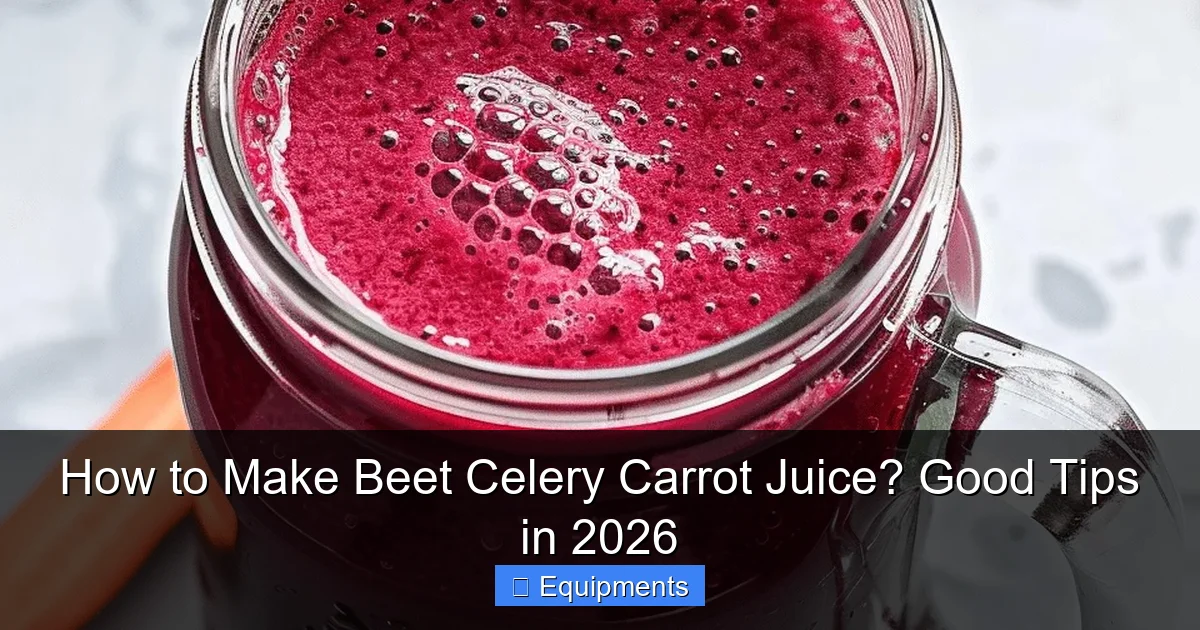
The moment of truth! Pour your fresh juice into a glass. It will likely have some foam on top—that’s normal, a sign of good, live juice. Give it a gentle stir. For peak flavor and nutrient retention, drink it within 15-30 minutes. If you must store it, use an airtight, dark glass bottle (like a swing-top bottle), fill it to the top to minimize oxygen exposure, and refrigerate. Consume within 24 hours. A squeeze of fresh lemon juice (about 1/4 of a lemon per serving) is a brilliant addition—it enhances flavor and its vitamin C helps prevent oxidation, keeping your juice bright and fresh-tasting longer.
Pro Tips for 2026: Beyond the Basic Recipe
Now that you have the foundation, let’s get clever. Juicing in 2026 is about efficiency, sustainability, and customization. These tips will turn you from a juice-maker into a juice-artist.

Visual guide about How to Make Beet Celery Carrot Juice? Good Tips in 2026
Image source: plantbasedu.com
Flavor Layering & Balancing
Your base ratio is a starting point. If your juice is too earthy, add another carrot or a small chunk of apple (not in the classic trio, but a perfect 2026 addition). Too sweet? Add an extra celery stalk or a small knob of ginger (peeled). Ginger adds a warming, spicy note and incredible anti-inflammatory benefits. A sprig of fresh mint can add a refreshing, cooling finish. Think of your juice as a cocktail—balance is everything.
The Zero-Waste Pulp Revolution
That beautiful, colorful pulp in your bowl is not trash. It’s a fiber-rich superfood byproduct. In 2026, the “pulp revolution” is in full swing. Here’s how to use it:
- Dehydrate for Crisps: Toss pulp with a little olive oil, salt, and nutritional yeast. Spread on a dehydrator sheet and make veggie crackers.
- Boost Soups & Stews: Stir a few tablespoons into tomato soup, minestrone, or vegetable stock for instant body and hidden veggie nutrition.
- Add to Baked Goods: Incorporate into veggie burgers, meatloaf, or even banana bread for moisture and fiber.
- Compost, of Course: It’s pure, organic matter for your garden.
Juicing for Specific Goals
Tailor your recipe based on what you need:
- For Energy & Focus: Stick to the classic trio. The natural nitrates from beets can support blood flow to the brain.
- For Post-Workout Recovery: Add a small potato (peeled) or a banana to the juice. The potassium helps replenish electrolytes.
- For a Gentle Detox: Ensure your celery is dominant. Its natural salts and hydration are fantastic for supporting the body’s natural cleansing systems.
- For Immunity: Add a thumb-sized piece of fresh turmeric root (peeled) and black pepper (a pinch) to enhance curcumin absorption.
Maintenance & Longevity: Caring for Your 2026 Investment
A $400 juicer that lasts 10 years is a better investment than a $100 juicer that breaks in two. Proper maintenance is non-negotiable. Here’s your 2026 care protocol.
The Immediate Post-Juicing Ritual
Do not let pulp dry in the machine. As soon as you finish juicing, disassemble your juicer. Most modern parts are top-rack dishwasher safe, but hand-washing with the provided brush is gentler and ensures no tiny fibers get trapped. Pay special attention to the mesh screen/filter—this is where most clogs happen. Use the small cleaning brush (often included) to scrub every hole. Rinse all parts under strong, warm water.
Deep Cleaning & Sanitizing (Monthly)
Once a month, give your juicer a spa day. Soak all plastic parts (not the motor base!) in a solution of warm water and a tablespoon of white vinegar or a drop of mild dish soap for 15-20 minutes. This breaks down any oily residue and sanitizes. Scrub again, rinse thoroughly, and let air-dry completely before reassembling.
Troubleshooting Common 2026 Issues
- “My juicer is jammed!”: Unplug it immediately. Disassemble and gently clear the blockage from the auger area with a plastic tool (never metal). This is often caused by feeding produce too fast or not cutting small enough.
- “The juice is pulpy/cloudy.”: You might be feeding too fast, not pressing the pulp plug firmly enough (some models have a stomper), or your produce might be too soft/overripe. Ensure you’re using fresh, crisp veggies.
- “It’s leaking from the top.”: The seal between the hopper and the juicing bowl is likely misaligned or has a piece of pulp trapped. Reassemble carefully, ensuring a tight, even seal.
- “The motor sounds strained.”: You’re probably overloading it or feeding something too hard/frozen. Always feed slowly. Never put frozen produce into a masticating juicer unless the manual explicitly states it’s capable.
Storage, Meal Prep & Making It a Habit
Consistency is where the real health benefits happen. Making juice every day can feel daunting, but smart prep makes it a 5-minute routine.
Batch Prep Your Produce
On a weekend afternoon, wash, peel (if desired), and chop all your vegetables for the week. Store them in separate airtight containers in the fridge. Carrots and beets will last 5-7 days pre-cut. Celery is best cut the day of, as it can lose crispness. Having everything ready to go means you can assemble your juice in the time it takes to make coffee.
Juice in Batches, Drink Fresh
While you can store juice, the nutrient degradation is real. A better strategy: juice your base vegetables (beets and carrots) in a larger batch, store that concentrated, darker juice in a sealed bottle in the fridge for 2-3 days. Each morning, pour a portion into your juicer’s “mix” chute (if it has one) or a blender, and juice fresh celery right into it. This gives you the best of both worlds: convenience and peak freshness from the celery.
Your Juice, Your Rules
This recipe is a template. Your taste buds are the final judge. Keep a simple juice journal for a week. Note the ratios you used (e.g., 1 small beet, 2 carrots, 4 celery stalks). Rate the taste and how you feel afterward. You’ll quickly discover your perfect, personalized formula. Maybe you love the earthy punch of a full beet. Maybe you prefer the lighter, more hydrating celery-forward version. Own it.
Conclusion: Your Journey to Perfect Juice Starts Now
Making incredible beet celery carrot juice is a delightful blend of science, art, and habit. It starts with understanding the unique gifts of each vegetable and respecting them with the right tool—a slow, efficient masticating juicer suited for 2026 and beyond. It’s perfected by the small acts: the strategic layering of produce, the decision to leave a carrot skin on, the creative use of every last bit of pulp. This isn’t about buying the most expensive gadget; it’s about making a mindful investment in your health that pays dividends in energy, clarity, and vitality every single morning.
The tips we’ve covered—from the fundamental layering technique to the forward-looking ideas of app-connected juicers and zero-waste living—are your toolkit. Start simple with a basic ratio and a reliable juicer. Master that. Then experiment. Add ginger. Try leaving the beet skin on. Make pulp crackers. Transform this daily ritual from a chore into a cherished moment of self-care. In a world of complex wellness trends, the simple act of drinking fresh, homemade vegetable juice remains one of the most powerful things you can do. Here’s to your first (or next) perfect glass. Cheers to your health!
Frequently Asked Questions
Can I make this juice without a juicer, using a blender?
You can, but the result and process are very different. Blending will create a thick, smoothie-like consistency with all the fiber intact. You’ll need to strain it through a nut milk bag or fine mesh sieve to get a clear juice, which is an extra, messy step. A dedicated juicer is far more efficient, yields more liquid, and produces a cleaner, crisper juice with less foam.
My juice is too bitter or earthy. How do I fix it?
Bitterness usually comes from overdoing the beet or using old, large beets with woody cores. Next time, use a smaller, fresher beet. Earthiness can also be from unwashed produce or a dirty juicer. Ensure a thorough wash. To balance an already-made bitter juice, blend in a sweet element like a green apple, a bit of pineapple, or an extra carrot. A squeeze of lemon or lime also brightens flavors and masks bitterness.
Is it safe to drink this juice every single day?
For most healthy people, yes. This is a nutrient-dense, whole-food drink. However, if you have specific health conditions like kidney issues (beets are high in oxalates) or are on blood pressure medication (beet nitrates can enhance effects), consult your doctor first. It’s also very high in natural sugars from the carrots, so those managing diabetes or insulin resistance should monitor their intake and perhaps use more celery and fewer carrots.
What’s the best time of day to drink vegetable juice?
The ideal time is on an empty stomach, first thing in the morning. This allows for maximum nutrient absorption without interference from other foods. It provides a gentle, hydrating energy boost to start your day. Avoid drinking it right before bed, as the natural sugars and nutrients can provide an unwanted energy surge.
How do I prevent so much foam from forming in my juice?
Foam is natural, especially from celery. To minimize it: 1) Juice your vegetables when they are very cold from the fridge. 2) Feed them slowly and steadily, not in huge chunks. 3) Use a masticating juicer, which produces less foam than centrifugal models. 4) After juicing, let it sit for a minute and skim off the top layer with a spoon, or stir it in—it’s harmless and contains beneficial air-infused nutrients.
Can I use the pulp from my beet celery carrot juice in smoothies?
Absolutely! The pulp is a fantastic source of insoluble fiber. It will thicken your smoothie and add a subtle vegetable flavor. Start with a small handful (2-3 tablespoons) blended into your favorite fruit smoothie. It’s a great way to boost the fiber content without changing the taste too much. You can also freeze pulp in ice cube trays and add a cube to future smoothies.