Storing potatoes and onions the right way can prevent spoilage, save money, and keep your pantry organized. This guide reviews the best storage containers for potatoes and onions, compares features, and shares practical tips so you can choose the perfect option for your kitchen.
If you have ever opened a bag of potatoes only to find sprouts, soft spots, or a weird smell, you already know how fast things can go wrong. The same goes with onions that turn mushy or sprout green shoots. Choosing the right home for these staples is one of the easiest ways to cut food waste and save money.
In this guide, we will walk through the best storage containers for potatoes and onions. You will learn what features to look for, which styles work in different kitchens, and how to keep your spuds and bulbs fresh for weeks instead of days.
Key Takeaways
- Ventilation is critical: Good airflow prevents moisture buildup, which helps stop sprouting, mold, and faster spoilage.
- Keep potatoes and onions separate: Onions release gases that speed up potato spoilage, and vice versa.
- Choose the right material: Breathable baskets, mesh bins, or vented plastic containers each have pros depending on your space.
- Dark, cool storage helps: Containers that block light and fit in pantries or cabinets extend shelf life.
- Size and stackability matter: Pick containers that fit your storage area and can be stacked without crushing produce.
- Easy cleaning and durability: Containers that are easy to wash and resist cracking make long-term use simpler.
- Match containers to your habits: Frequent cooks may prefer countertop baskets, while bulk buyers may need larger bins.
📑 Table of Contents
- Why Proper Storage Matters for Potatoes and Onions
- What to Look for in Storage Containers
- Best Types of Storage Containers for Potatoes
- Best Types of Storage Containers for Onions
- How to Store Potatoes and Onions Together (Safely)
- Top Features to Prioritize When Choosing Containers
- Maintenance, Cleaning, and Long-Term Use
- Conclusion: Choosing the Best Storage Containers for Potatoes and Onions
Why Proper Storage Matters for Potatoes and Onions
How potatoes and onions spoil
Potatoes and onions are living foods. They breathe, release moisture, and give off gases. When they sit in the wrong environment, a few things happen fast:
- Too much moisture leads to mold, slime, and rot.
- Too little airflow traps ethylene and humidity, speeding up sprouting.
- Too much light makes potatoes turn green and onions sprout.
- Wrong neighbors (like storing onions with potatoes) can shorten shelf life because of the gases they release.
That is why choosing the best storage containers for potatoes and onions is not just about tidiness. It is about controlling air, light, and humidity so your produce lasts longer and tastes better.
The ideal storage conditions
In general, both potatoes and onions prefer:
- Cool temperatures (around 45–55°F / 7–13°C is ideal, but room temperature works if it is not hot).
- Darkness to block light and slow sprouting.
- Good airflow to prevent moisture buildup.
- Dry conditions without direct contact with water or condensation.
Your container choice is the easiest way to create these conditions in a regular kitchen, even if you do not have a root cellar.
What to Look for in Storage Containers
Ventilation and airflow
Airflow is the most important feature in the best storage containers for potatoes and onions. Look for:
- Holes, slits, or mesh panels in the sides or lid.
- Open or semi-open tops that still block light.
- Containers that do not seal completely airtight unless they are designed for long-term cold storage.
Good ventilation keeps humidity from turning your potatoes and onions into a soggy mess.
Material options
Common materials include:
- Wire or metal mesh: Very breathable, sturdy, and often stackable.
- Woven baskets (wood, willow, or seagrass): Attractive and breathable, but less durable if they get wet.
- Plastic bins with vents: Lightweight, easy to clean, and often stackable.
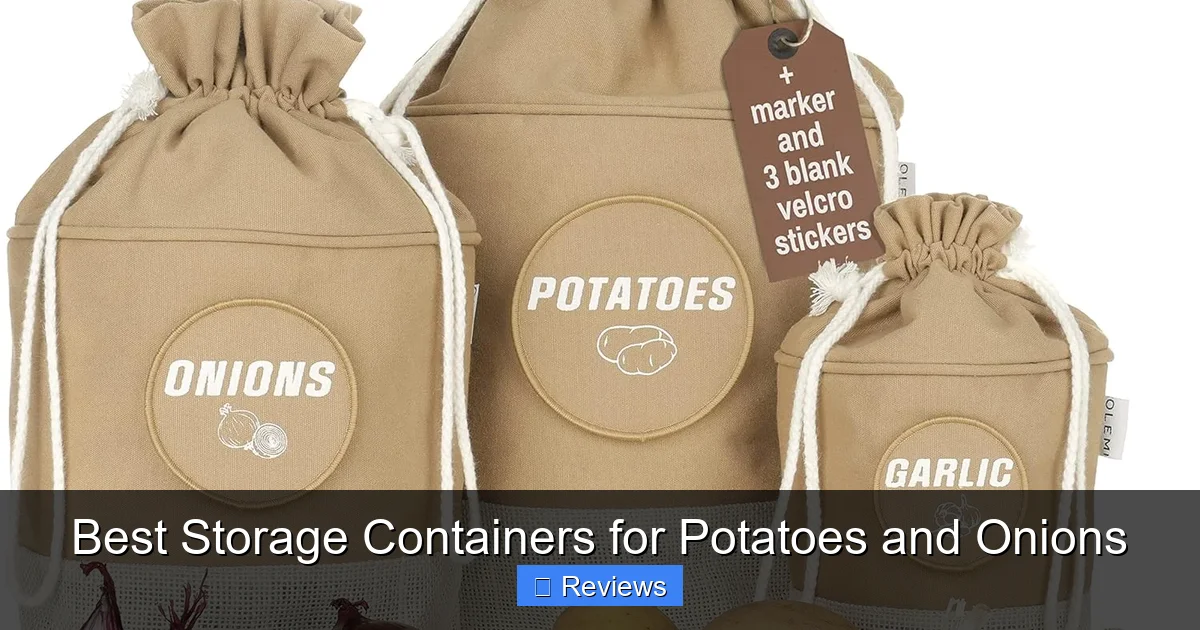
- Fabric or canvas bins: Foldable and breathable, but offer less structure.
Each has trade-offs. Metal and plastic last longer and are easier to wipe down. Baskets look nice on counters but may need a liner or extra care to avoid moisture damage.
Size and capacity
Think about how many potatoes and onions you usually keep on hand:
- Small households: 1–2 gallon containers per item may be enough.
- Medium households: 3–5 gallon bins give room for a week or two of groceries.
- Bulk buyers or big families: 5–10 gallon stackable bins or multiple containers work better.
It is better to use several smaller containers than one giant one. This makes it easier to separate potatoes from onions and to rotate stock.
Light protection
Containers that block light help prevent green potatoes and premature sprouting. Look for:
- Opaque walls or lids.
- Dark-colored materials.
- Bins that fit inside cabinets or pantries.
If you like the look of open baskets, store them in a dark pantry or cover them with a clean cloth.
Ease of cleaning and durability
Potatoes and onions often bring in dirt. Choose containers that:
- Wipe clean easily.
- Can be rinsed without rusting or warping.
- Hold up to regular use without cracking.
This is one reason many people prefer plastic or coated metal options for everyday kitchen use.
Best Types of Storage Containers for Potatoes
Ventilated plastic bins
Ventilated plastic bins are one of the most popular choices. They usually have:
- Small holes or slits in the sides.
- Snap-on lids that still allow some airflow.
- Stackable shapes that save space.
They are lightweight, easy to move, and simple to wash. For potatoes, look for bins with solid bottoms to catch dirt and with enough depth to avoid crushing the bottom layer.
Wire or metal mesh baskets
Metal mesh baskets give excellent airflow. They work well if you store potatoes in a cool, dark pantry. Benefits include:
- Very strong ventilation.
- Sturdy structure that holds heavy loads.
- Stackable designs for small spaces.
On the downside, they can let in more light and may scratch delicate surfaces. Placing a clean cloth or paper towel inside helps catch loose dirt.
Wooden crates and boxes
Wooden crates offer a classic look and decent airflow. They are great if you:
- Store potatoes in a cool basement or pantry.
- Prefer natural materials.
- Do not mind occasional wiping or airing out.
Wood can absorb moisture, so avoid placing them on damp floors. Put a tray or mat underneath to protect both the crate and your shelf.
Fabric or canvas bins
Fabric bins are lightweight and foldable. They work best for:
- People who want something easy to store when not in use.
- Smaller quantities of potatoes.
- Adding a breathable option inside a cabinet.
They are not as sturdy as plastic or metal, but they are a nice choice if you want something simple and portable.
Best Types of Storage Containers for Onions
Mesh bags and hanging baskets
Onions love airflow. Mesh bags and hanging baskets keep air moving all around them. They are ideal for:
- Storing medium to large amounts of onions.
- Using vertical space in a pantry or kitchen wall.
- Keeping onions visible so you use older ones first.
Just make sure they are not hanging in direct sunlight or near the stove where it is too warm.
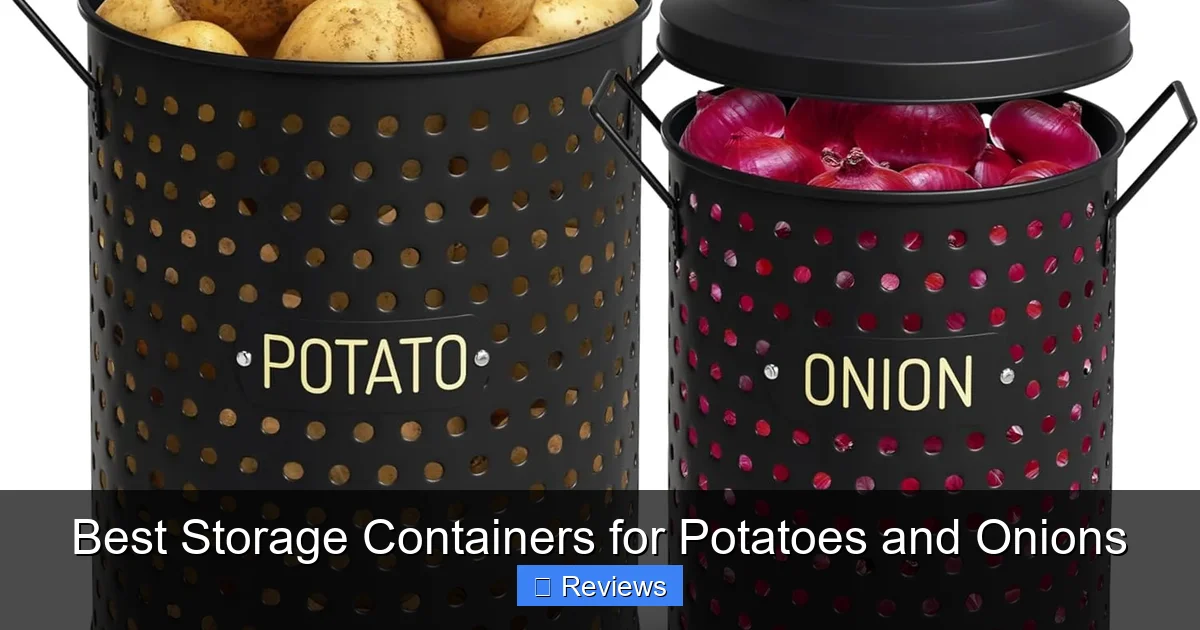
Perforated plastic containers
Perforated plastic containers with small holes are another solid choice. They:
- Offer good ventilation.
- Keep onions contained and tidy.
- Are easy to stack in a cabinet.
Choose containers with lids that still allow some airflow. A fully sealed lid can trap moisture and lead to faster spoilage.
Open weave baskets
Open weave baskets, such as those made from wire or woven plant fibers, also work well for onions. They:
- Look attractive on a counter or open shelf.
- Provide plenty of airflow.
- Make it easy to grab what you need.
As with potatoes, keep them in a dark or shaded area to extend shelf life.
How to Store Potatoes and Onions Together (Safely)
Why you should separate them
Onions and potatoes need similar conditions: cool, dark, and dry. But they do not store well in the same container. Onions release gases and moisture that can:
- Speed up potato sprouting.
- Cause potatoes to rot faster.
For the longest shelf life, store them in separate containers, even if they are near each other in the same pantry.
Using combo units with dividers
Some storage systems include multiple compartments or stackable bins. These can be a smart solution if you:
- Have limited space.
- Want a single storage station for root vegetables.
- Like the look of a matched set.
Look for units where each section has its own ventilation and where you can keep potatoes in one bin and onions in another.
Organizing by frequency of use
Think about how often you cook with each:
- Keep the container you use most at eye level or within easy reach.
- Store bulk or backup supplies on higher or lower shelves.
- Label containers if you tend to forget which is which.
This simple system helps you use older produce first and reduces waste.
Top Features to Prioritize When Choosing Containers
Stackability and space saving
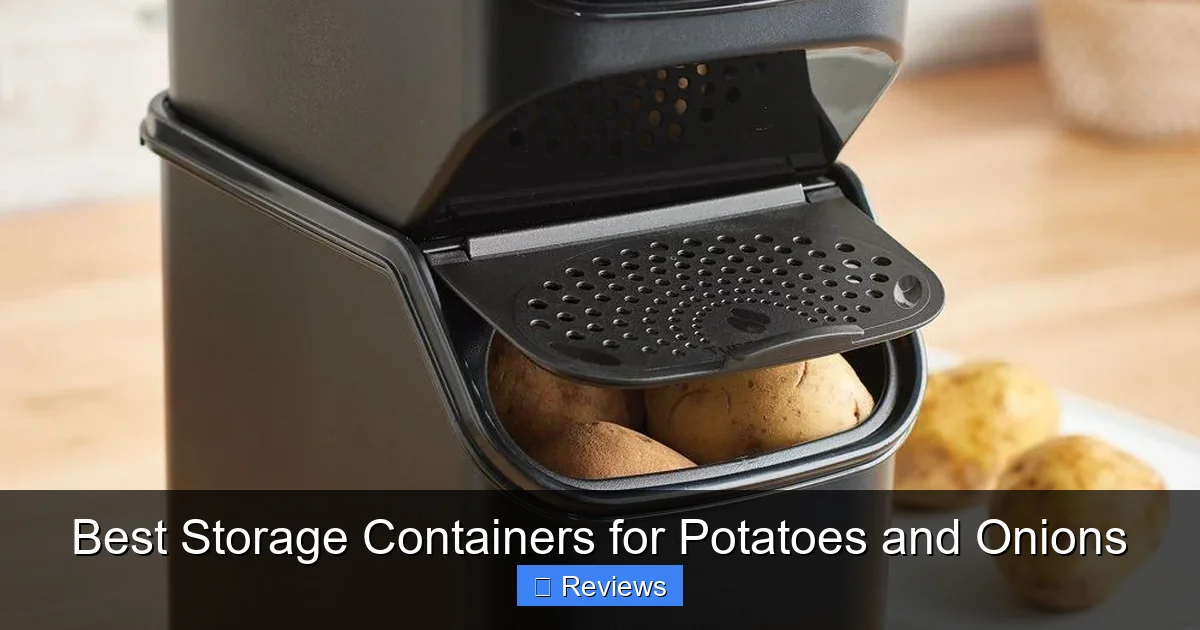
If you have a small kitchen, stackable containers can be a game changer. They:
Visual guide about Best Storage Containers for Potatoes and Onions
Image source: i.pinimg.com
- Make use of vertical space.
- Keep your pantry neat.
- Allow you to expand storage without taking over countertops.
Look for uniform shapes and lids that lock securely so stacks do not topple.
Portability and handles
Handles make it easy to move containers around. This is helpful when you:
- Bring bags of potatoes or onions home from the store.
- Need to clean shelves or rotate stock.
- Want to move containers between pantry and counter while cooking.
Some containers have built-in cut-out handles. Others have full grip handles. Choose what feels comfortable when the bin is full and heavy.
Lids, covers, and accessibility
Containers with lids keep out light and some pests. But lids should:
- Be easy to remove with one hand.
- Not block all airflow.
- Fit tightly enough to stay on if bumped.
If you access your potatoes and onions daily, consider open tops or lids that stay attached when lifted.
Maintenance, Cleaning, and Long-Term Use
How to clean storage containers
Regular cleaning prevents mold and odors. A simple routine is:
Visual guide about Best Storage Containers for Potatoes and Onions
Image source: m.media-amazon.com
- Empty the container completely.
- Wipe with a damp cloth and mild soap.
- Rinse (if the material allows) and dry fully before refilling.
For baskets or fabric bins, occasional airing out in a dry room helps prevent musty smells.
Checking for spoilage
Even with the best storage containers for potatoes and onions, you should:
- Check your produce at least once a week.
- Remove any soft, sprouting, or moldy items right away.
- Keep one bad potato or onion from affecting the rest.
Think of it like checking your fridge: a quick look can save the whole batch.
Extending shelf life with smart habits
Your containers are only part of the equation. Pair them with good habits:
- Buy only what you can use in a few weeks.
- Keep containers in the coolest, darkest spot you have.
- Avoid storing them near heat sources like ovens or dishwashers.
Small changes in where and how you store potatoes and onions can add days or even weeks to their life.
Conclusion: Choosing the Best Storage Containers for Potatoes and Onions
The best storage containers for potatoes and onions are the ones that fit your kitchen, your shopping habits, and your style. Start with the basics: good airflow, darkness, and separation of potatoes from onions. From there, choose a material and size that make your life easier.
Visual guide about Best Storage Containers for Potatoes and Onions
Image source: m.media-amazon.com
Whether you prefer sleek plastic bins in a pantry, wire baskets on a shelf, or woven baskets on a counter, the right containers can keep your produce fresh, your kitchen tidy, and your grocery budget under control. By investing a little thought now, you will waste less food and enjoy better meals later.
Frequently Asked Questions
Can I store potatoes and onions in the same container?
It is better to store them separately. Onions release gases that can speed up potato spoilage, and potatoes can add extra moisture that affects onions. Use two containers in the same area instead of one shared bin.
Do potatoes and onions need airtight containers?
No. They need ventilation, not airtight seals. Containers with holes, mesh, or breathable lids help reduce moisture and slow sprouting or mold.
What is the best place in the kitchen to store these containers?
A cool, dark pantry or cabinet works well. Avoid spots near the stove, oven, or windows where it is too warm or bright.
How long can potatoes and onions last in proper containers?
With good containers and conditions, potatoes can last several weeks to a few months, and onions can last a few weeks to a couple of months. Check them regularly and remove any that are softening or sprouting.
Can I use regular plastic bins if they do not have holes?
You can, but they may trap too much moisture. If you use non-vented bins, leave the lid slightly open or add your own small holes to improve airflow.
Do I need different containers for different types of potatoes or onions?
You do not need completely different containers, but it helps to separate waxy and starchy potatoes and to keep sweet onions apart from regular onions if you store large quantities. This makes it easier to use the right type for your recipes.