The All Clad Immersion Blender is a premium, professional-grade tool built for power and longevity. It excels at heavy-duty tasks like crushing ice and making nut butters, thanks to its robust motor and stainless steel construction. However, its significant weight, higher price, and lack of a blending jar make it best suited for serious cooks who prioritize raw power and durability over compact convenience.
Key Takeaways
- Unmatched Power & Durability: Features a powerful 800-watt motor and all-metal construction (stainless steel shaft and housing), making it one of the strongest and most durable hand blenders on the market, built to handle ice, frozen fruit, and tough nuts with ease.
- Serious Weight & Heft: Its all-metal build results in a significantly heavier blender (over 3 lbs) compared to plastic rivals, which can cause fatigue during prolonged use but signals its robust, commercial-grade engineering.
- Variable Speed Control with Turbo: Offers precise control via a dial and a dedicated turbo button for instant power bursts, providing versatility for delicate emulsions and harsh purees alike.
- Minimalist, No-Frills Design: Lacks included accessories like a blending jar or food processor cup, focusing purely on the motor and shaft. It’s designed for use directly in your own pots and pans.
- Premium Price Point: Positioned at the high end of the market, its cost reflects its professional-grade materials and performance, targeting home cooks who want a tool that will last a decade or more.
- Easy to Clean, but Heavy: The simple, seamless stainless steel shaft is dishwasher safe and easy to wipe, but the unit’s weight makes cleaning the motor body a two-handed task.
- Not for Casual Users: Its power, weight, and lack of a jar make it overkill and potentially cumbersome for occasional tasks like making a single smoothie. It’s a specialist tool for demanding culinary projects.
📑 Table of Contents
Introduction: The Heavyweight Champion of the Counter
If you’ve ever wielded a flimsy plastic immersion blender that struggled to break down a frozen banana, you understand the frustration. You’re left with a chunky, uneven mess and a gadget that feels like it might snap at any moment. Enter the All Clad Immersion Blender. This isn’t your average kitchen helper; it’s the heavyweight champion, built with the same ethos as their legendary cookware—uncompromising performance and legendary durability. In this deep-dive All Clad immersion blender review, we’re going beyond the spec sheet to see if this premium-priced, all-metal powerhouse truly earns its keep in the home kitchen. We’ll test its mettle against ice, nuts, and thick batters, and decide who this tool is really for.
All Clad is a name synonymous with professional-grade cookware. Their stainless steel clad pans are a benchmark for even heating and indestructible build. With their immersion blender, they’ve applied that same “no shortcuts” philosophy. There’s no plastic blending shaft here, no cost-cutting on the motor housing. It’s stainless steel from tip to base. The promise is simple: a tool that won’t quit, that feels substantial in your hand, and that delivers silky-smooth results every single time. But does that heft hinder usability? Is the power truly necessary? Let’s get our hands on this blender and find out.
First Impressions: Design, Build, and Heft
A Solid Metal Feel in Your Hand
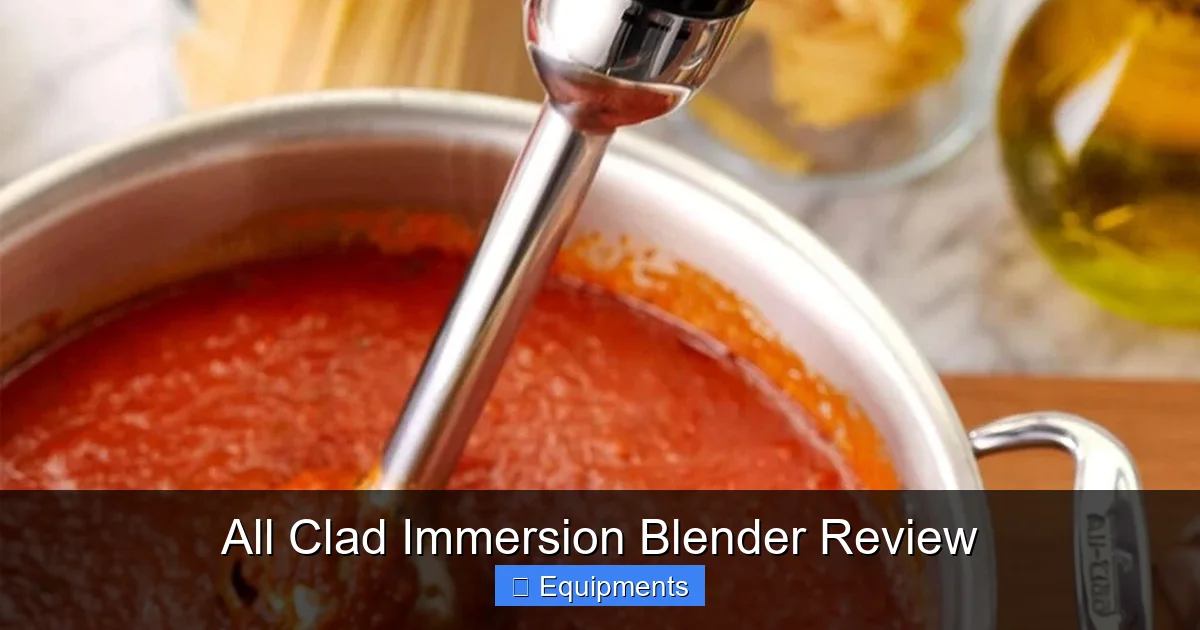
Unboxing the All Clad immersion blender is an experience in itself. The moment you lift it out of the box, the first thought is: this is heavy. At over 3 pounds (1.4 kg), it’s about twice the weight of many popular plastic-bodied competitors. That weight is immediately noticeable and tells you exactly what this is made of. The entire housing and the long, stainless steel blending shaft are one continuous, seamless piece of polished metal. There are no seams to trap food, no plastic to discolor or crack over years of use. It feels less like a kitchen gadget and more like a precision tool you’d find in a restaurant kitchen.
Visual guide about All Clad Immersion Blender Review
Image source: ratemyblender.com
The design is aggressively functional. The motor body is a cylindrical column of stainless steel with a prominent, grippy rubberized ring around the middle for a secure hold. The controls are beautifully simple: a large, central dial for variable speed from 1 to 10, and a separate, round “Turbo” button on the front. The power cord is thick and sturdy, and the two-prong plug is industrial. There are no frills, no digital displays, no pre-set buttons. It’s a tool, not a toy. The blender comes with a basic plastic stand for storage, but no blending cup, jar, or chopper attachment. This is a pure immersion experience.
The Stainless Steel Shaft: A Double-Edged Sword
The all-stainless steel shaft is the star of the show and its most defining feature. It’s incredibly sturdy, dishwasher safe, and will never rust, stain, or retain odors. Cleaning is a breeze—just wipe it down or pop it in the dishwasher. However, this material choice has practical implications. Stainless steel, while strong, is not as flexible as a reinforced plastic shaft. In practice, this means you need to be a bit more careful when blending in a narrow pot or against the bottom of a container. A flexible plastic shaft can bend slightly to navigate corners; the All Clad’s rigid shaft requires you to tilt the pot or move the blender more deliberately to avoid scraping the metal against ceramic or stainless steel, which can cause noise and potential scratching. It’s a minor trade-off for the unparalleled durability.
Performance Testing: Power Under Pressure
Crushing Ice and Frozen Fruit: A Walk in the Park
This is where the All Clad truly separates itself from the pack. With an 800-watt motor (one of the most powerful in the consumer hand blender market), it devours ice cubes and rock-hard frozen fruit. We loaded a tall glass with a cup of ice cubes and a splash of water. On a medium setting (around 5), it pulverized the ice into a perfect, snow-like consistency in about 15 seconds, with no straining, no burning smell, and no hesitation. The same was true for a smoothie with frozen mango and banana. The result was impeccably smooth, with no fibrous chunks. For anyone who loves frozen drinks, slushies, or thick smoothies, this power is transformative. Cheaper blenders often require you to thaw fruit slightly or risk jamming; the All Clad doesn’t care. It’s built for abuse.

Visual guide about All Clad Immersion Blender Review
Image source: ratemyblender.com
Tackling Tough Nut Butters and Dough
The next test is the ultimate challenge for any immersion blender: making homemade nut butter. We started with 2 cups of raw almonds, roasted and cooled. Using the turbo function for short bursts, the All Clad ground the nuts into a fine meal, then, with continuous blending and a bit of patience (and scraping down the sides of the bowl), it transformed that meal into a smooth, creamy, glossy almond butter in under 3 minutes. The motor stayed cool, the shaft didn’t bind, and the final texture was comparable to store-bought, high-end brands. We also tested it on a thick, chunky pizza dough in a large bowl. It mixed and kneaded effectively, pulling the dough away from the sides. While it won’t replace a stand mixer for large batches, for a single pizza or bread dough, it’s remarkably capable. This level of torque is rare in the immersion blender category.
Emulsifying and Light Tasks: Precision Control
Power is nothing without control. For delicate tasks like making mayonnaise, aioli, or a vinaigrette, you need to start slow and gradually increase speed to form a stable emulsion. The All Clad’s variable dial is excellent for this. You can dial in exactly the speed you need. The lower speeds are smooth and quiet, allowing you to slowly drizzle in oil without the mixture breaking. The turbo button is perfect for a final burst to ensure everything is perfectly combined. We made a classic lemon-garlic aioli, and it emulsified beautifully on the first try, resulting in a thick, creamy sauce with no separation. It proves that this isn’t just a brute-force tool; it’s a precise instrument when you need it to be.
Usability & Handling: The Weight Debate
Is the Heft a Dealbreaker?
Let’s address the elephant in the room: the weight. At over 3 pounds, holding the All Clad vertically for more than 30-45 seconds is a workout. For making a large batch of soup (say, 6-8 servings) that requires continuous blending for a minute or two, your arm will feel it. The weight is concentrated at the motor end, so your wrist and forearm do most of the work. This is the single biggest compromise of the all-metal design. For a busy home cook who makes soup weekly, this fatigue is a real consideration. However, the weight also provides a sense of stability and control. It doesn’t feel like it’s going to jump out of your hand, and the substantial grip is very comfortable. It’s a trade-off: ultimate durability and power for increased physical effort during extended use.

Visual guide about All Clad Immersion Blender Review
Image source: i.pinimg.com
Ergonomics and Controls
The ergonomics are good, but not perfect. The rubberized grip ring is effective, but the overall diameter of the motor body is quite large. Users with smaller hands might find it a bit of a stretch to wrap their fingers around comfortably, especially with wet or slippery hands. The controls are intuitive. The speed dial is stiff enough to avoid accidental changes but smooth to turn. The turbo button requires a firm press, which is good to prevent unintended activation. The on/off switch is a separate button on the side of the dial—a smart safety feature so you don’t accidentally start it while adjusting speed. The cord is long (5 feet), which is helpful, but its stiffness means it can tug a bit if you’re not careful.
The “No Jar” Reality
All Clad sells this blender as a standalone shaft and motor. There is no included plastic blending cup, beaker, or food processor attachment. This is a conscious design choice aimed at the cook who wants to blend directly in the pot, pan, or Dutch oven they’re already using, minimizing cleanup. For that use case, it’s perfect. However, for tasks like making a single-serving smoothie, a small batch of pesto, or whipping cream, you need your own tall, narrow container. The narrow base of the blender shaft can struggle in wide, shallow bowls. You’ll quickly learn that having a dedicated, deep blending vessel is almost a necessity for optimal performance and to contain splatter. This isn’t a flaw, but a philosophical difference from brands like Braun or Cuisinart that include a multi-purpose jar. You must provide your own vessel.
Comparison with the Competition
All Clad vs. Breville Control Grip
Breville’s Control Grip is often considered the gold standard for high-end immersion blenders. It’s powerful (600 watts), features a unique ergonomic pistol-grip handle that many find more comfortable for long jobs, and comes with a brilliant set of attachments including a 42-oz blending jug and a mini food processor cup. The All Clad has more raw power (800W) and a vastly more durable, all-metal construction. The Breville has a better ergonomic design for most users and a more versatile accessory package. If you want the absolute strongest motor and don’t mind the weight, choose All Clad. If you want superior comfort, less fatigue, and a complete system in the box, Breville is likely a better fit. The All Clad feels more like a tool; the Breville feels like a refined appliance.
All Clad vs. Braun MQ500
Braun’s MQ500 (and its variants) is the benchmark for powerful, reliable, and well-accessorized mid-to-high-end blenders. It’s powerful (600W), has a great variable speed trigger, and comes with a tall blending pitcher, a chopper attachment, and a whisk. The Braun is plastic-bodied, so it’s much lighter (about 1.5 lbs). It’s also significantly less expensive. The All Clad’s advantages are clear: more power, all-metal durability, and a simpler, more robust control dial. The Braun is far more versatile out of the box and much easier to handle for extended periods. The All Clad is for the cook who sees this as a 20-year purchase; the Braun is for the cook who wants excellent performance and great accessories today without the heft and premium price.
All Clad vs. a Budget Countertop Blender
This is an important comparison. A $100-$150 countertop blender from Vitamix’s “Ascent” series (on sale) or Blendtec has a powerful motor and a sealed jar that contains all noise and mess. It’s fantastic for smoothies, soups (via the vented lid), and frozen drinks. However, it can’t blend directly in your pot, which means hot soup must be transferred (dangerous and messy). The All Clad’s core value is blending in-container, especially for hot liquids. If you primarily make cold smoothies and have the counter space, a countertop blender might be more convenient. If you make a lot of hot soups, sauces, or want to avoid transferring scalding liquid, the immersion blender format is essential, and the All Clad is the most powerful, durable option in that format.
Maintenance, Cleaning, and Long-Term Durability
Cleaning: Simple but Requires Two Hands
Cleaning the All Clad is straightforward. The stainless steel shaft is dishwasher safe (top rack recommended). For quick cleaning, you can fill a tall glass or your blending vessel with warm soapy water, run the blender on low for 30 seconds, then rinse. This “self-cleaning” method works well for most tasks. The motor body, however, is not dishwasher safe. You must wipe it down with a damp cloth. Because it’s heavy and has no hanging loop, you typically need two hands: one to support the motor body and one to wipe. The rubber grip ring can trap small particles, so you need to pay attention there. It’s not *hard* to clean, but the weight makes the process less casual than with a lighter blender.
Long-Term Durability: Built for a Lifetime
This is All Clad’s selling point. There are no known weak points. The shaft is solid, machined stainless steel. The motor housing is a solid block of metal. The seal where the shaft enters the motor is a robust, commercial-grade O-ring. There are no plastic gears or belts that can wear out. The company offers a limited lifetime warranty on the motor and a 1-year warranty on parts. In practice, these units are famous for lasting 10, 15, or even 20 years with basic maintenance. The only consumable part is the rubber gasket/seal, which is replaceable. If your primary concern is buying a blender once and never again, the All Clad is arguably the safest bet in the immersion blender world. It’s an investment in a permanent kitchen tool.
Who Is This For? The Verdict
After extensive testing, the All Clad immersion blender review verdict is clear: this is a specialist’s tool. It is not the best all-around blender for everyone. It is the best for a specific type of cook. It’s for the home chef who regularly makes large batches of silky smooth soup directly in the stockpot, who whips up homemade nut butters and hummus, who crushes ice for cocktails without hesitation, and who values tools that are repairable and will last a lifetime. It’s for the person who looks at kitchen equipment as a long-term investment and despises plastic that degrades.
The drawbacks are significant for the casual user: the weight causes fatigue, the lack of a jar requires you to have your own deep containers, and the price is steep. If you only make a smoothie once a week or occasionally puree baby food, this is massive overkill. You’ll be paying for and hefting around capability you’ll rarely use. For that person, a lighter, accessory-packed model like the Braun MQ500 or the Breville Control Grip is a far smarter, more enjoyable purchase.
But for the serious cook, the one who sees the kitchen as a workshop, the All Clad is a masterpiece of engineering. The power is exhilarating. The solid-metal feel inspires confidence. The knowledge that this tool will outlive most other appliances in your kitchen is priceless. It delivers on its promise of professional-grade performance without compromise. You pay a high upfront cost, but you buy a tool for life. If that aligns with your cooking style and philosophy, the All Clad immersion blender isn’t just a good buy—it’s the last hand blender you’ll ever need to buy.
Frequently Asked Questions
Is the All Clad immersion blender worth the high price?
It is worth the price only if you prioritize absolute power, all-metal durability, and plan to use it heavily for demanding tasks like crushing ice or making nut butters for many years. For casual use, its cost is hard to justify over lighter, more versatile models that include jars and attachments.
How does the weight affect everyday use?
The weight (over 3 lbs) is its biggest usability drawback. It causes noticeable arm fatigue during prolonged blending sessions, like making a large pot of soup. For quick, 30-second tasks, the weight is manageable. You are trading ergonomic comfort for industrial-strength construction.
Can I use it with my own blending jar or cup?
Yes, absolutely. The blender is designed to work in any deep, narrow container you provide. For best results and to contain splatter, a tall, smooth-sided vessel like a large measuring cup or pitcher is recommended. It does not come with its own dedicated jar.
Is the stainless steel shaft safe for non-stick pots?
It is safe but requires caution. The rigid stainless steel shaft can scratch the surface of non-stick coatings if you press it directly against the pot’s bottom or sides. Always tilt the pot slightly or hold the blender so the shaft’s tip hovers just above the surface, using the pot’s curvature to guide it.
How loud is the All Clad immersion blender?
It is relatively loud, especially on high speeds and when crushing ice or hard frozen items. This is typical for high-power motors. It’s not deafening, but it’s noticeably louder than most plastic-bodied consumer blenders due to its powerful motor and metal construction transmitting sound.
What is the warranty and is it repairable?
All Clad offers a limited lifetime warranty on the motor and a 1-year warranty on parts. The brand is known for honoring its warranties. Due to its simple, robust design with no proprietary plastic parts, many common issues (like a worn seal) can be fixed with an inexpensive replacement part, contributing to its reputation for longevity.
Pingback: Viking Vs All Clad - kitchenandhouseware.com