Defrosting tortillas in the microwave is the fastest method to get them pliable and ready for your favorite recipes in under a minute. The key is using low power and a damp paper towel to create gentle steam, which prevents the tortillas from drying out, cracking, or becoming rubbery. By following a simple, controlled process, you can transform frozen tortillas into soft, warm wrappers perfect for tacos, burritos, or quesadillas without any hassle.
Key Takeaways
- Low Power is Essential: Always use 30-50% microwave power to gently thaw tortillas. High power cooks the edges while the center remains frozen, leading to toughness and cracks.
- Moisture is Your Friend: Covering tortillas with a lightly dampened paper towel provides the necessary steam to keep them flexible and prevent them from drying out into brittle sheets.
- Defrost in Short Bursts: Use 10-15 second intervals, checking and separating tortillas between bursts. This prevents overheating and allows for even thawing.
- Separate Immediately: Once thawed, separate the tortillas right away. Leaving them stacked while warm creates steam that makes them soggy and prone to tearing.
- Corn vs. Flour Matters: Corn tortillas are more prone to cracking and require extra care (often more moisture, slightly longer time). Flour tortillas are more forgiving but can become gummy if overheated.
- No Direct Heat: Never microwave tortillas without a cover or on a dry plate. Direct heat will dehydrate them instantly.
- Use Immediately: Microwave-defrosted tortillas are best used right away. They don’t reheat or store as well as ones warmed from room temperature.
📑 Table of Contents
- Why the Microwave is Your Best Friend for Frozen Tortillas
- Step-by-Step: The Foolproof Microwave Defrosting Method
- Common Mistakes That Ruin Your Tortillas (And How to Avoid Them)
- Special Considerations: Corn vs. Flour Tortillas
- Beyond the Microwave: Other Defrosting Methods (And Why They’re Second Best)
- Storage and Reheating: Making Your Defrosted Tortillas Last
- Conclusion: Warm, Soft Tortillas in 60 Seconds Flat
Why the Microwave is Your Best Friend for Frozen Tortillas
Let’s be honest: having a stack of frozen tortillas in the freezer is a brilliant move for meal prep and avoiding waste. But that moment of panic when you need them for dinner and they’re frozen solid? We’ve all been there. You might be tempted to just leave them on the counter, but that can take 30 minutes to an hour—an eternity when hunger strikes. You might even consider the oven or a skillet, but for sheer speed and convenience, the microwave is the undisputed champion. However, there’s a right way and a very wrong way to do it. Do it wrong, and you’ll end up with a pile of cracked, rubbery, or soggy discs that are more useful as coasters than dinner wrappers. This guide will walk you through the precise, foolproof method to defrost tortillas in the microwave so they come out perfectly soft, warm, and pliable, ready to be filled with whatever deliciousness you have in mind.
The Science of Tortilla Thawing: It’s All About Gentle Steam
Tortillas, whether made from wheat flour or masa corn, are essentially a type of flatbread. Their structure relies on a balance of moisture and gluten (in flour) or starch (in corn). When frozen, ice crystals form within that structure. Rapid, high-heat thawing does two bad things: it melts the ice too quickly, creating pockets of water that turn the tortilla soggy, and it evaporates surface moisture before the interior has a chance to soften, leaving the tortilla tough and brittle. Our goal is to apply gentle, even heat that melts the ice crystals slowly while simultaneously reintroducing moisture to the surface. That’s where the damp paper towel comes in. It acts as a mini-steam chamber, bathing the tortilla in just enough humidity to soften the starches and proteins without drowning it. Coupling this with low microwave power gives the heat time to penetrate evenly from the outside in.
Step-by-Step: The Foolproof Microwave Defrosting Method
Ready for the magic? Grab your frozen tortillas and a paper towel. This process takes less than a minute for a few tortillas and under two minutes for a larger stack. The golden rule: low and slow with moisture.
Visual guide about How to Defrost Tortillas in Microwave
Image source: foodwine.com
Preparation: The Damp Towel Technique
Take a standard paper towel and run it under your kitchen faucet. Wring it out thoroughly until it is only barely damp—think “misty,” not “sopping.” You should not be able to squeeze any water out of it. A towel that’s too wet will transfer too much liquid, making the bottom tortilla in the stack soggy. Lay this damp towel flat on a microwave-safe plate.
The Layering and Microwaving Process
Place your frozen tortillas in a neat stack directly on the damp paper towel. If you have a very large stack (more than 10-12), it’s best to split it into two smaller batches for more even results. Now, take a second, similarly damp (but well-wrung) paper towel and lay it gently on top of the tortilla stack. This top layer helps trap steam from both sides. Place the plate in the microwave.
Set your microwave to 30% power (or the “defrost” setting if your microwave has one). Start with a 15-second burst. After it beeps, carefully flip the entire stack of tortillas over. The bottom is now on top. This ensures even exposure to heat and steam. Give it another 10-15 seconds on 30% power. For a small stack (1-4 tortillas), this might be enough. For a larger stack, you may need a third 10-second burst.
The key is to check after each interval. Carefully peel apart the top one or two tortillas. They should be soft, warm, and flexible. If the center of the stack is still cold and rigid, continue with another short burst. Remember, you can always add more time, but you can’t undo overcooking.
Final Check and Separation
Once the tortillas are pliable throughout, immediately remove them from the plate. Do not let them sit on the warm, damp towel. Gently separate each tortilla from the stack. Lay them out on a clean kitchen towel or a dry plate in a single layer. If you leave them stacked, the residual heat and steam will make them soggy and they will stick together, tearing when you try to pull them apart. If you’re not using them right away, let them cool completely on the single layer, then store them in an airtight bag or tortilla keeper at room temperature for a day or two.
Common Mistakes That Ruin Your Tortillas (And How to Avoid Them)
Even with the best intentions, a few missteps can sabotage your microwave defrosting. Let’s troubleshoot the most frequent errors.
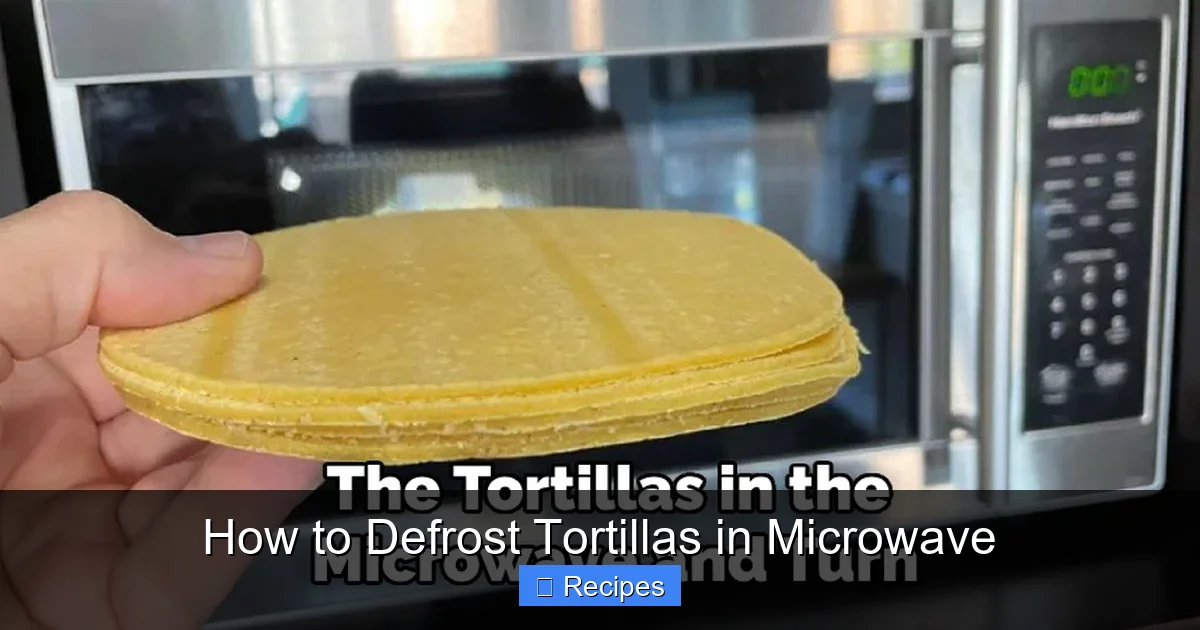
Visual guide about How to Defrost Tortillas in Microwave
Image source: thekitchenix.com
Mistake 1: Using 100% Power
This is the #1 sin. Blasting your tortillas on high for 30 seconds will cook the edges into crispy, brittle shards while the center remains a frozen brick. The high energy agitates water molecules violently, causing them to escape as steam too quickly from the edges. The Fix: Always default to 30-50% power. If your microwave doesn’t have a percentage setting, use the “defrost” button, which typically cycles power on and off to achieve a lower average heat.
Mistake 2: Skipping the Moisture
Placing dry, frozen tortillas on a plate and microwaving them is a recipe for disaster. They will desiccate, becoming hard, cracker-like, and unusable. The Fix: Never skip the damp paper towel. It’s non-negotiable for successful thawing.
Mistake 3: Overcrowding and Not Flipping
Piling 20 frozen tortillas in a heap and microwaving them will result in a frozen center and a steamed, soggy outer layer. The heat can’t penetrate evenly. The Fix: Keep stacks reasonable (under 12). More importantly, flip the stack halfway through. This simple act ensures the bottom, which heats more slowly on the plate, gets direct exposure to the microwave’s energy and the top towel’s steam.
Mistake 4: Forgetting to Separate Immediately
You’ve done everything right, and your tortillas are perfectly soft. Now you leave them in a pile on the plate to go answer the door. When you return, they’ve essentially re-steamed themselves into a sticky, soggy, inseparable mass. The The Fix: As soon as the microwaving is done, separate every single tortilla and lay them out to cool separately. This is the final, critical step.
Special Considerations: Corn vs. Flour Tortillas
While the core method is the same, the two main types of tortillas have slightly different personalities that require minor adjustments.
Visual guide about How to Defrost Tortillas in Microwave
Image source: thekitchenix.com
Defrosting Corn Tortillas: The Delicate Ones
Corn tortillas, made from masa harina, have less gluten and are more brittle, especially when frozen. They are notorious for cracking when bent if not thawed properly. They also have a tendency to dry out faster. For corn tortillas: Use a slightly more damp paper towel (still well-wrung). You may need one extra 5-second burst of microwave time compared to flour. Handle them with extra care when separating, as they can be more fragile even when perfectly thawed. If a small crack appears, it’s often still usable for tacos but might not be ideal for burritos that require a tight wrap.
Defrosting Flour Tortillas: The Forgiving Ones
Flour tortillas contain gluten, which gives them more elasticity and strength. They are less likely to crack but more susceptible to becoming gummy or chewy if overheated. For flour tortillas: You can often get away with slightly less moisture—a towel that is merely damp, not misty. They also tolerate a slightly higher power setting (up to 50%) for a marginally faster thaw. The immediate separation step is crucial for them to avoid that unpleasant gummy texture.
Beyond the Microwave: Other Defrosting Methods (And Why They’re Second Best)
The microwave is the speed king, but it’s good to know your options, especially if you’re feeding a crowd or don’t have a microwave.
The Refrigerator Method: The Slow & Safe Choice
Transfer your frozen tortillas to a sealed bag or airtight container and place them in the refrigerator. They will thaw slowly over 8-12 hours. This is the best method for maintaining optimal texture and flavor, as it’s a gradual, cold thaw that mimics the natural state. The tortillas will be perfectly soft and pliable, just as if they were never frozen. The downside is the time commitment—you need to plan ahead.
The Steamer Method: The Restaurant-Quality Approach
This is a fantastic method that yields incredibly soft, pliable, and “fresh” results. Set up a steamer basket over a pot of simmering water (the water should not touch the basket). Place a damp kitchen towel in the bottom of the steamer basket. Stack your frozen tortillas on the towel, cover the basket with its lid, and steam for 2-4 minutes, depending on the stack size. Check frequently. The tortillas absorb moisture beautifully and become wonderfully flexible. The drawback is it’s slower than the microwave and requires more equipment and cleanup.
The Skillet/Comal Method: The Direct Heat Danger
You can place frozen tortillas directly on a dry, preheated skillet or comal over medium-low heat. You must flip them every 15-20 seconds. The heat will thaw and warm them through. However, this method is extremely easy to mess up. The exterior will cook and potentially crisp or brown before the interior is fully thawed, leading to a hard/tough exterior and a cold center. It also requires constant attention. It’s better suited for reheating already-thawed tortillas than for defrosting from frozen.
Storage and Reheating: Making Your Defrosted Tortillas Last
You’ve successfully defrosted your tortillas. Now, how do you keep them perfect if you’re not using them all at once? And what’s the best way to reheat them for serving?
Storing Defrosted Tortillas Correctly
Once your microwave-defrosted tortillas have cooled completely on a single layer (to prevent condensation), store them in an airtight container or a resealable plastic bag. Push out as much air as possible. They will stay soft and pliable at room temperature for 2-3 days. For longer storage (up to a week), keep them in the refrigerator. They may firm up slightly, so a quick 5-second zap in the microwave (with a damp towel!) will revive them before serving.
The Ultimate Reheating Method: The Steam Basket
For the absolute best texture—soft, warm, and slightly moist—reheating with steam is unbeatable. Use the same steamer setup described earlier. Place your room-temperature or refrigerated tortillas in the damp towel-lined steamer basket for just 60-90 seconds. They will come out restaurant-perfect. This is the preferred method for serving a family dinner.
Quick Reheating Alternatives
If you only need one or two tortillas, the microwave is still a great reheating tool. Use the same damp-towel, low-power method for 5-10 seconds. For a slightly toasted flavor, you can use a dry skillet over medium heat for 15-30 seconds per side, but this will dry them out faster and they should be consumed immediately.
Conclusion: Warm, Soft Tortillas in 60 Seconds Flat
Mastering the art of defrosting tortillas in the microwave is a tiny kitchen skill with a massive payoff. It transforms a potential dinner-time frustration into a 60-second triumph. The formula is beautifully simple: low power + damp paper towel + short bursts + immediate separation. By respecting the tortilla’s delicate structure and using gentle, moist heat, you guarantee a perfect result every single time—no cracks, no sogginess, no rubbery bites. Whether you’re making quick tacos on a Tuesday or preparing for a big burrito bowl dinner, this method ensures your tortilla foundation is flawless. So go ahead, keep that freezer stocked with confidence. Your future, hungry self will thank you.
Frequently Asked Questions
Can I defrost tortillas in the microwave without a paper towel?
No, you should not. The paper towel provides essential moisture (steam) to prevent the tortillas from drying out and becoming brittle. Without it, the microwave’s heat will dehydrate them almost instantly, resulting in tough, cracker-like tortillas that will shatter when you try to bend them.
My tortillas are sticking together after microwaving. What went wrong?
You likely did not separate them immediately after defrosting. The residual heat and steam trapped in the stack causes them to fuse together. Always separate each tortilla and lay them out in a single layer to cool as soon as they are flexible. If they are already stuck, a few seconds under a gentle stream of warm running water can sometimes loosen them, but they may be damaged.
Is it safe to refreeze tortillas after I’ve defrosted them in the microwave?
While it is technically safe from a food safety perspective (if kept cold), it is not recommended for quality reasons. Microwave-defrosted tortillas have already undergone a partial cook and moisture loss. Refreezing them will further degrade their texture, making them much more likely to become dry, crumbly, or develop ice crystals. It’s best to defrost only what you plan to use immediately.
Why are my corn tortillas cracking even when I follow the method?
Corn tortillas are more fragile. Ensure your damp paper towel is not too wet, which can make them gummy, but also not too dry. You might need a slightly more damp towel. Also, handle them very gently when separating. If they still crack, try reducing the microwave power to 30% or even 20% and using one more, very short (5-second) burst to allow for a gentler, more gradual thaw.
Can I defrost a whole pack of tortillas at once?
You can, but for best results, it’s better to split a very large pack (e.g., 20+ tortillas) into two smaller stacks. This allows heat and steam to penetrate more evenly. If you must do a large stack, you will need more time and must be very diligent about flipping the stack and checking the center tortillas for even thawing.
My microwave doesn’t have a % power setting. How do I use the defrost button?
The “defrost” button on most microwaves is designed to cycle the power on and off, effectively providing a lower average heat. This is perfect for tortillas. Use the defrost setting and input the weight if prompted (for a stack of tortillas, estimate 8-12 oz). Start with the minimum suggested time, usually 1-2 minutes, but be prepared to stop it early and check. The goal is softness, not a full cook cycle.