Reheating rice in your rice cooker is the secret weapon for reviving leftover rice to its original, fluffy perfection. This method uses gentle, even steam to rehydrate the grains without making them mushy or dry. Simply add a splash of water, use the “Reheat” or “Keep Warm” function, and let the cooker work its magic. It’s the easiest, most reliable way to transform cold, hard rice into a delicious base for a new meal, all while ensuring food safety.
Key Takeaways
- Always add moisture: Sprinkling 1-2 tablespoons of water over cold rice before reheating is non-negotiable for restoring steam and preventing dryness.
- Use the correct function: If your cooker has a dedicated “Reheat” or “Warm” button, use it. If not, the standard “Cook” cycle works, but unplug it as soon as it’s done.
- Fluff immediately: Once reheated, use a rice paddle to gently fluff the rice right in the pot to release excess steam and separate the grains.
- Practice safe food handling: Refrigerate cooked rice within 2 hours and only reheat it once. Discard any rice left at room temperature for longer.
- Quantity matters: Reheat only the portion you plan to eat. Reheating and cooling rice multiple times degrades texture and increases food safety risks.
- Adjust for rice type: Sticky rice (like sushi or jasmine) may need less added water; fluffy rice (like basmati or long-grain) may need the full 2 tablespoons.
- Clean the pot: Ensure the inner pot is completely dry before adding cold rice and water to prevent the cooker’s sensors from malfunctioning.
📑 Table of Contents
- Why Your Rice Cooker is the Ultimate Tool for Reheating Rice
- Step-by-Step: How to Reheat Rice in a Rice Cooker
- Troubleshooting Common Reheating Problems
- Beyond the Basics: Advanced Tips and Variations
- Food Safety: The Non-Negotiable Rules
- Is a Rice Cooker Really Better? Comparing Reheating Methods
- Creative Ways to Use Your Perfectly Reheated Rice
- Conclusion: Mastering the Art of Rice Revival
Why Your Rice Cooker is the Ultimate Tool for Reheating Rice
Let’s be honest: reheating rice can be a disaster. The microwave often turns it into a rubbery, unevenly heated clump. The stovetop can easily scorch the bottom if you’re not constantly stirring. But your trusty rice cooker, the appliance designed specifically to cook rice to fluffy perfection, is also secretly the best tool for bringing it back to life. Its gentle, enveloping steam works wonders on cold grains, restoring moisture and separating them with minimal effort on your part.
The principle is beautifully simple. A rice cooker’s primary job is to heat water to create steam, which then cooks the rice from the inside out. When you use it to reheat, you’re essentially giving the rice a quick, targeted steam bath. The key is adding just enough water to generate the necessary steam without boiling the rice again. This process reactivates the starch molecules gently, making the grains tender and separate once more. It’s not just about heat; it’s about the *right kind* of heat and humidity.
The Science of Starch and Steam
Cooked rice contains gelatinized starch. As it cools, this starch retrogrades, or realigns, causing the rice to harden and become dry. Reheating with moisture (steam) helps reverse this process. The steam penetrates the grain, rehydrating the starch network and restoring its original, softer structure. A rice cooker provides a closed, humid environment that’s far superior to the dry heat of a microwave or the direct contact of a pan. It’s a full-circle moment for your appliance: it cooks the rice, and now it can perfectly un-cook the chill out of it.
Step-by-Step: How to Reheat Rice in a Rice Cooker
Ready for the method? It’s so straightforward, it barely qualifies as a recipe. But the small details make all the difference between decent rice and incredible, just-cooked rice. Follow these exact steps for consistently great results.
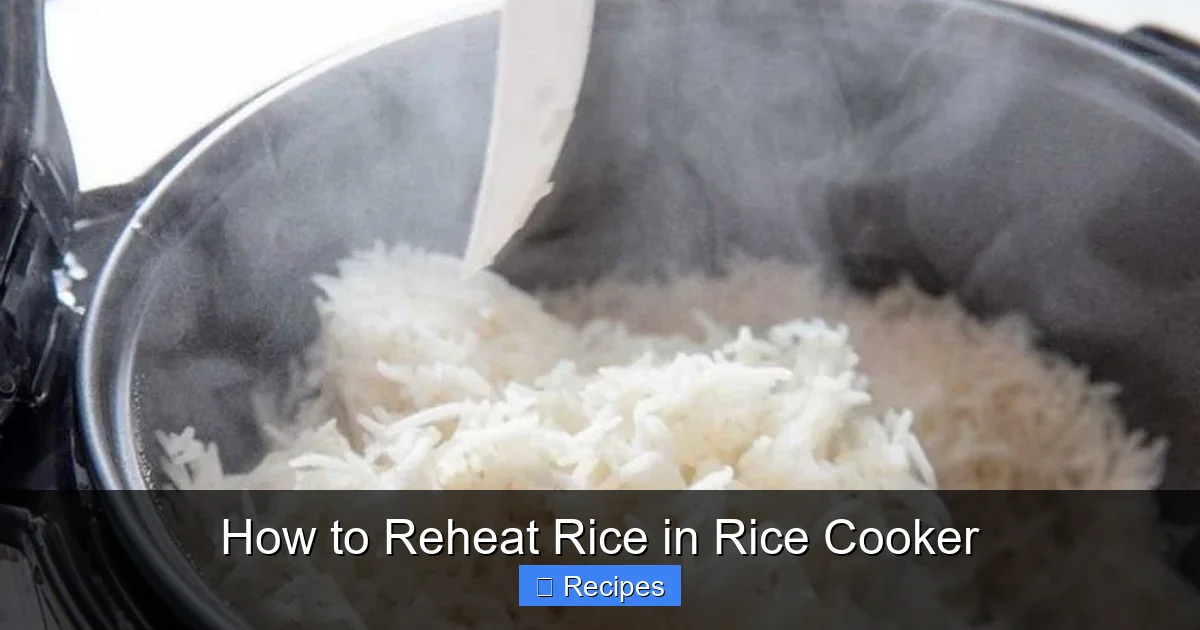
Visual guide about How to Reheat Rice in Rice Cooker
Image source: foodreadme.com
Gather Your Tools and Rice
You’ll need: your rice cooker, the inner cooking pot, a rice paddle or fork, and your cold, cooked rice from the fridge. Important: Only reheat rice that has been stored properly in an airtight container in the refrigerator and has not been left out at room temperature for more than 2 hours. If it smells off or has a strange texture, discard it—safety first.
The Process: Add, Splash, Start, Wait, Fluff
Step 1: Transfer the Rice. Scoop your cold, refrigerated rice into the clean, dry inner pot of your rice cooker. Break up any large, solid clumps with your paddle or fingers as you add it. This helps the steam penetrate more evenly.
Step 2: Add the Magic Liquid. This is the most critical step. Drizzle 1-2 tablespoons of cool or room-temperature water over the top of the rice. For a standard cup of cooked rice, start with 1 tablespoon. For larger quantities (2-3 cups), use 2 tablespoons. The goal is to create steam, not to simmer the rice. If you add too much water, you’ll end up with soggy rice; too little, and it won’t rehydrate properly.
Step 3: Select the Function. Place the pot back into the rice cooker. If your model has a specific “Reheat”, “Warm”, or “Leftover” button, press that. It’s usually a shorter, gentler cycle designed for this exact purpose. If your cooker only has a standard “Cook” or “Start” button, you can use that, but you must watch it carefully. The “Cook” cycle is designed to bring water to a boil and then transition to “Keep Warm.” For reheating, you want to avoid a full, rolling boil if possible.
Step 4: The Heating Cycle. If using a “Reheat” function, simply let it run its course (usually 10-15 minutes). If using “Cook,” listen for when the cooker switches from actively cooking to the “Keep Warm” mode. This switch often happens when the temperature in the pot rises above a certain point, indicating the water has mostly evaporated/steamed. As soon as you hear that switch, unplug the cooker or manually turn it off. Leaving it on “Keep Warm” for more than a minute or two will continue to dry the rice out from the bottom.
Step 5: Rest and Fluff. Immediately after turning off the cooker, leave the lid on and let the rice sit for 3-5 minutes. This allows the residual steam to finish its work and the temperature to even out. Then, remove the lid and use your rice paddle to gently fluff the rice, turning it from the bottom up. This separates the grains, releases any trapped steam pockets, and stops the cooking process. Serve immediately.
Troubleshooting Common Reheating Problems
Even with a simple method, things can occasionally go awry. Here’s how to diagnose and fix the most common issues when you reheat rice in a rice cooker.
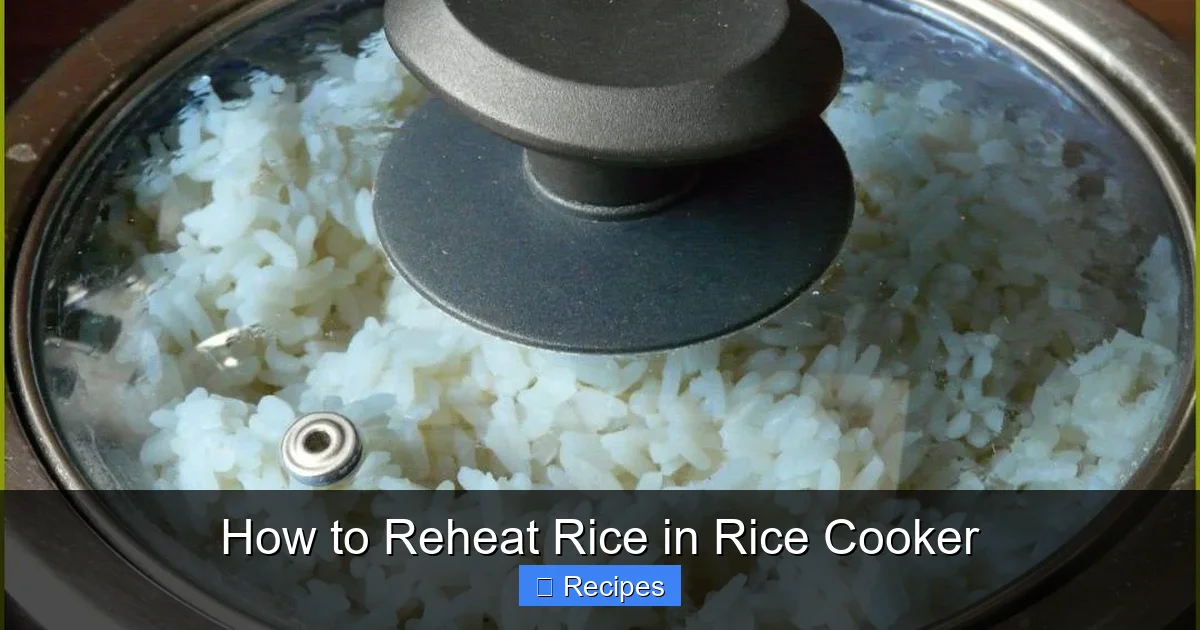
Visual guide about How to Reheat Rice in Rice Cooker
Image source: ovenspot.com
Problem: The Rice is Still Cold or Clumpy
Diagnosis: Not enough water was added, or the reheating cycle was too short. The steam didn’t have enough time or moisture to penetrate the dense, cold mass of rice.
Solution: Next time, ensure you add at least 1 tablespoon of water per cup of rice. If using the “Cook” function, don’t unplug it the *instant* it switches to “Warm.” Let it stay on “Warm” for just 60-90 seconds to allow a final burst of gentle heat, then unplug. You can also stir in the water more thoroughly before starting, ensuring it’s distributed.
Problem: The Rice is Soggy, Mushy, or Wet
Diagnosis: Too much water was added, or the cooker was left on too long, essentially re-boiling the rice.
Solution: Reduce the amount of added water. Remember, you’re creating steam, not adding cooking liquid. If your rice is just slightly wet, remove the lid and let it sit on “Keep Warm” for 2-3 minutes to allow excess moisture to evaporate, fluffing halfway through. For future batches, use the minimum water needed.
Problem: The Bottom Layer is Dry or Crunchy
Diagnosis: The rice was not fluffed immediately after reheating, or the pot has hot spots. The grains at the bottom were exposed to the direct heat of the element for too long without moisture.
Solution: Fluffing is not optional; it’s essential. As soon as you turn off the cooker, fluff thoroughly from the bottom up. If this is a persistent issue, your rice cooker’s non-stick coating may be wearing thin, causing sticking. Ensure the pot is completely dry before adding rice, and consider using a tiny bit more water next time. For very old rice cookers, the heating element might be uneven.
Problem: The Rice Has an Odd, “Reheated” Smell
Diagnosis: This is often a food safety issue, not a cooking one. Rice can harbor Bacillus cereus spores. If rice is cooled slowly or left at room temperature too long, these spores can multiply and produce toxins that cause a stale, unpleasant odor. Reheating kills the bacteria but not the toxins.
Solution: This rice should be discarded. Prevention is key: always cool cooked rice quickly (spread it on a tray to cool before refrigerating), store it in a shallow airtight container in the fridge, and use it within 3-4 days. Never reheat rice more than once.
Beyond the Basics: Advanced Tips and Variations
Master the basic method? Let’s level up. These tips and variations will help you customize the process for different rice types and culinary goals.
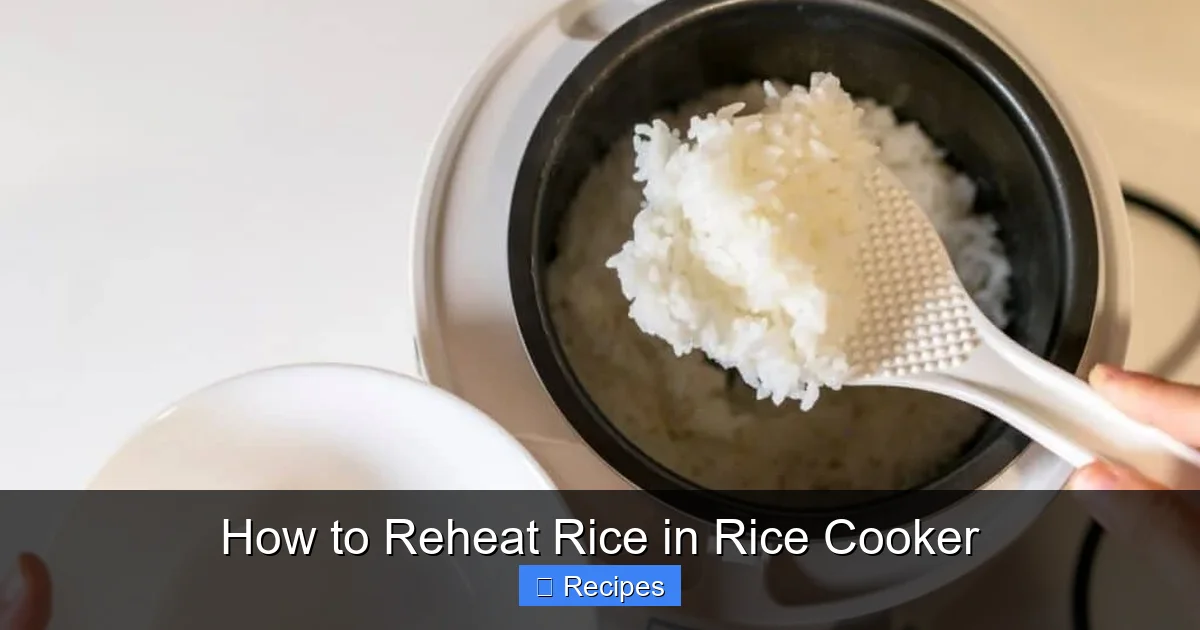
Visual guide about How to Reheat Rice in Rice Cooker
Image source: ovenspot.com
Reheating Different Types of Rice
Not all rice is created equal. Here’s how to adjust:
- Short-Grain & Sticky Rice (Sushi, Jasmine, Calrose): These are naturally moister and stickier. They often need less added water—start with just 1/2 to 1 tablespoon per cup. They reheat very quickly and can become gummy if overdone. Fluff with a gentle, slicing motion rather than a vigorous mixing.
- Long-Grain & Fluffy Rice (Basmati, Jasmine (some), American Long-Grain): These grains are drier and more separate when cooked. They benefit from the full 1-2 tablespoons of water. They tolerate the reheating process very well and are the easiest to get perfectly fluffy again.
- Brown & Wild Rice: These heartier, whole-grain rices have more bran and fiber, which can make them drier. Use the full 2 tablespoons of water per cup. They may take 1-2 minutes longer on the “Warm” setting to fully reheat through.
- Fried Rice or Seasoned Rice: If your leftover rice is already mixed with soy sauce, oil, or other seasonings, it can stick more easily. Add only 1 tablespoon of water max, and consider giving it a quick stir halfway through the “Warm” cycle (if your cooker allows safe stirring). You may also need to break up clumps more aggressively before starting.
Adding Flavor During the Reheat
The reheating process is a perfect time to infuse your rice with a little extra flavor. Instead of plain water, try:
- A splash of chicken, vegetable, or dashi broth.
- A drizzle of sesame oil or a small pat of butter placed on top before starting.
- A pinch of salt or a sprinkle of dried herbs (like parsley or cilantro) mixed in with the water.
Caution: Avoid strongly acidic liquids (like lots of lemon juice) or very sugary sauces, as they can affect the rice cooker’s inner pot over time. Stick to small amounts of flavorful liquids.
Reheating Large Quantities
If you’re reheating more than 3-4 cups of rice, the center may stay cold. The solution is to stir the rice thoroughly after the first 5 minutes of the reheating cycle (if your cooker is off, you can briefly plug it back in on “Warm” to do this). This redistributes the rice, bringing the cold center to the outside where it can get heated. Then let it finish the cycle.
Food Safety: The Non-Negotiable Rules
Reheating rice safely is just as important as reheating it well. Cooked rice is a known potential carrier for foodborne illness due to Bacillus cereus. These bacteria spores are common in dry rice and can survive cooking. If cooked rice is cooled slowly and kept in the “danger zone” (40°F – 140°F / 4°C – 60°C), the spores can germinate, multiply, and produce toxins. These toxins are not destroyed by reheating.
The 2-Hour / 1-Hour Rule
After cooking rice, you have a 2-hour window to get it cooled and into the refrigerator. If your kitchen is very warm (above 90°F / 32°C), that window shrinks to just 1 hour. The faster you cool it, the better. Spread the cooked rice in a thin layer on a baking sheet or divide it into smaller, shallow containers before refrigerating. Never put a hot, deep pot of rice directly into the fridge, as it will raise the internal temperature and prolong the cooling time for everything else inside.
Storage and Reheating Limits
- Refrigerator Storage: Store cooked rice in a clean, airtight container. It will keep for 3-4 days. Label it with the date.
- Reheat Only Once: Take out only the portion you plan to eat. Reheating, cooling, and reheating again gives bacteria multiple opportunities to grow and degrades the rice texture significantly.
- The Smell Test is Not Enough: Bacillus cereus toxins do not always produce a strong, obvious off-smell. If rice has been left out too long or has been reheated multiple times, it’s safest to throw it out. When in doubt, throw it out.
- Reheat to Steaming Hot: The reheating process in a rice cooker should bring the entire batch to a steaming, piping-hot temperature (165°F / 74°C or higher) throughout. This kills any active bacteria (though not the pre-formed toxins, which is why the storage rules are paramount).
Is a Rice Cooker Really Better? Comparing Reheating Methods
We’ve established the rice cooker method is our favorite, but how does it stack up against the alternatives? Let’s do a quick comparison.
Rice Cooker vs. Microwave
The microwave is fast but uneven. It zaps water molecules, which can leave some parts of the rice bone-dry and others steaming hot and gummy. It requires covering (with a vented lid or paper towel) to trap steam and frequent stopping and stirring to achieve evenness. The rice cooker provides uniform, gentle heat from all sides in a humid environment, requiring no stirring and resulting in superior texture with less babysitting.
Rice Cooker vs. Stovetop (Steaming)
Steaming rice in a basket over boiling water on the stovetop is actually a very good method and closely mimics the rice cooker’s action. However, it requires more active management: you need to monitor the water level in the pot below, ensure the basket doesn’t boil dry, and time it correctly. The rice cooker automates this entire process. It’s a set-it-and-forget-it convenience that the stovetop can’t match for simple reheating.
Rice Cooker vs. Oven
Reheating rice in the oven (covered with foil and a splash of broth/water) can work well for large batches, but it’s terribly inefficient. It takes 15-20 minutes to preheat and another 15-20 minutes to reheat, using a ton of energy for a small job. It’s overkill for a cup or two of leftover rice. The rice cooker is energy-efficient and faster for typical household portions.
The Verdict
For convenience, consistent results, and energy efficiency for standard portion sizes (1-4 cups), the rice cooker is the undisputed champion. The stovetop steamer is a close second for texture, but loses on ease. The microwave is a last resort for speed when you’re willing to accept inferior texture.
Creative Ways to Use Your Perfectly Reheated Rice
Don’t just reheat rice to eat it plain! That perfectly restored, fluffy grain is a blank canvas. Here’s some inspiration to turn your leftovers into a new meal.
Instant Fried Rice
The #1 use for reheated rice is fried rice. Day-old, cold rice is actually ideal for fried rice because it’s drier and less sticky. But if you only have fresh leftovers, your reheated rice from the cooker is perfect. Heat a wok or large skillet with oil, scramble an egg, push it to the side, then add veggies and protein. Finally, add your hot, fluffy reheated rice and toss with soy sauce, sesame oil, and garlic. The rice will absorb flavors beautifully without getting mushy.
Rice Bowls & Grain Salads
Use your reheated rice as the base for a quick grain bowl. Top with a protein (grilled chicken, shrimp, tofu), roasted or raw vegetables, a creamy dressing or sauce (like avocado crema, tahini dressing, or a simple vinaigrette), and maybe some toasted nuts or seeds. For a chilled option, let the reheated rice cool completely after fluffing, then mix with chopped veggies, herbs, and dressing for a speedy rice salad.
Soup and Stew Accompaniment
A scoop of hot, fluffy rice is the perfect finishing touch for a bowl of hearty soup or stew. It thickens the broth slightly and adds satisfying texture. Think of it for chili, lentil soup, chicken noodle soup, or beef stew. Simply reheat the rice as directed and serve it on the side or stirred in.
Simple Sides and Snacks
Elevate a simple side dish. Mix the reheated rice with a handful of chopped fresh herbs (cilantro, scallions, parsley), a squeeze of lime juice, and a drizzle of olive oil. For a comforting snack, make a small onigiri (rice ball) with a salty filling like umeboshi (pickled plum) or a piece of cooked salmon, using slightly warm rice so it holds its shape.
Conclusion: Mastering the Art of Rice Revival
Reheating rice doesn’t have to be a compromise. By harnessing the gentle, steam-powered environment of your rice cooker, you can consistently transform cold, dense leftovers into light, fluffy, and delicious grains ready to be enjoyed again. Remember the golden rule: always add that tablespoon or two of water. It’s the small act of hydration that makes all the difference, leveraging the cooker’s core function to its full potential.
This method saves time, reduces food waste, and opens up a world of quick meal possibilities from your fridge staples. It’s a testament to using your kitchen tools in smarter, more versatile ways. So, the next time you have leftover rice, skip the microwave. Reach for the rice cooker, add a splash of water, and rediscover the joy of perfectly reheated rice. Your future self—and your taste buds—will thank you.
Frequently Asked Questions
Can I reheat rice in a rice cooker without the “reheat” function?
Yes, absolutely. Use the standard “Cook” or “Start” button, but you must monitor it closely. Once the cooker switches from cooking to the “Keep Warm” mode (usually indicated by a light change or a click), immediately unplug it or turn it off. Leaving it on “Keep Warm” for too long will dry the rice out from the bottom.
How much water should I add when reheating rice?
Add 1 tablespoon of water per 1 cup of cold, cooked rice. For larger quantities (2-3 cups), increase to 2 tablespoons. The goal is to create steam, not to submerge the rice. If your rice is very dry or is a fluffy, long-grain variety, lean towards the higher amount. For sticky, short-grain rice, start with the lower amount.
Is it safe to reheat rice more than once?
No, it is not safe. Cooked rice should only be reheated once. Each cycle of cooling and reheating increases the risk of bacterial growth and foodborne illness, as toxins produced by bacteria are not destroyed by heat. Always reheat only the portion you plan to eat immediately.
What types of rice reheat best in a rice cooker?
All common types reheat well, but adjustments are needed. Fluffy, long-grain rices like basmati or American long-grain respond exceptionally well. Sticky, short-grain rices like sushi or jasmine rice reheat quickly and can become gummy if overdone—use less water and fluff gently. Hearty brown and wild rice benefit from the full amount of added water.
Why does my reheated rice sometimes smell “off” even if it’s from the fridge?
This is usually a sign of improper storage or the rice being past its safe window. Bacillus cereus bacteria spores can survive cooking. If cooked rice cools too slowly or is left at room temperature for more than 2 hours, these spores can grow and produce toxins that cause a stale, unpleasant odor. If the rice smells odd, discard it—do not taste it.
Can I reheat a huge batch of rice at once in my rice cooker?
It’s not recommended. For even reheating, only reheat 1-4 cups of rice at a time in a standard home rice cooker. Larger batches will have a cold center and a potentially overdone bottom. If you must reheat a large quantity, do it in multiple smaller batches, or consider using a large steamer on the stovetop where you can stir the rice halfway through.
