Cleaning cast iron after bacon is simple and crucial for your pan’s health. The key is to act while the pan is warm, using hot water and a scrubber to remove grease and food bits without soap. Always dry it thoroughly on the stove and apply a thin layer of oil to maintain the seasoning. This routine prevents sticky residue and rust, ensuring your pan lasts generations.
There’s almost nothing better than the sound and smell of bacon sizzling in a well-seasoned cast iron skillet. That perfect crisp, the rendered fat… it’s a morning ritual. But then comes the cleanup. That same glorious fat that made your bacon delicious can turn into a stubborn, sticky nightmare if you don’t treat your pan right right after cooking. Cleaning cast iron after bacon isn’t just about getting it clean—it’s about protecting the hard-earned seasoning that makes your pan a kitchen heirloom. Get it wrong, and you’ll face rust, sticky surfaces, and a pan that loses its magic. Get it right, and your skillet will become more non-stick with every use. Let’s break down exactly how to handle this specific challenge, step by step.
Key Takeaways
- Clean While Warm, Not Hot: Let the pan cool just enough to handle safely, but keep it warm to make grease removal effortless. Never plunge a hot pan into cold water.
- Skip the Soap (Usually): For routine bacon cleanup, harsh detergents and scrub pads are the enemy. Use only hot water and a chainmail or stiff brush to preserve the polymerized seasoning layer.
- Scrape, Don’t Scrub Aggressively: A gentle, circular motion with a proper scraper or chainmail is enough. If bits are stuck, use a paste of kosher salt and water as a mild abrasive.
- Drying is Non-Negotiable: Water is cast iron’s #1 enemy. Always towel-dry immediately, then place on a warm burner for 2-3 minutes to evaporate all moisture.
- Re-season with Every Clean: After drying, apply a microscopic layer of neutral cooking oil (like canola or grapeseed) and heat it until it smokes lightly. This builds a durable, non-stick patina.
- Bacon Grease is a Double-Edged Sword: While it helps season your pan, its high fat content can leave a sticky, polymerized film if not cleaned properly. Your post-bacon routine is more important than after other foods.
- Storage Matters: Store in a dry place. For long-term storage, apply a slightly thicker coat of oil to prevent oxidation and rust.
📑 Table of Contents
- Why Bacon is Cast Iron’s Best Friend and Toughest Test
- The Golden Rule: Immediate, Gentle Action
- Essential Tools: What You Actually Need
- The Step-by-Step Cleaning Process
- Troubleshooting: What If I Made a Mistake?
- Building a Lifelong Habit: Beyond the Bacon
- Conclusion: Your Pan’s Legacy Starts With This Clean
Why Bacon is Cast Iron’s Best Friend and Toughest Test
To understand the cleaning process, you first need to appreciate what bacon does to your pan. Bacon is incredibly fatty. As it cooks, it renders a large volume of liquid fat. In a cast iron pan, this fat does two things simultaneously: it helps season the pan by polymerizing (binding to the metal), and it can leave behind a sticky, gummy residue if not managed correctly.
The Science of Sticky Residue
That sticky film you sometimes feel? It’s not burnt-on food. It’s a layer of partially polymerized oil that didn’t fully bake into the seasoning. Bacon fat, being a saturated animal fat, has a different polymerization profile than plant oils. It can become tacky if the pan is cooled too quickly or washed with soap before the residue is removed. Your goal is to scrape away any excess, un-bonded grease while leaving the good, bonded seasoning layer intact.
The Seasoning Buffer
A well-seasoned pan has a layer of hardened, slick polymerized oil. This layer protects the bare iron from rust and provides non-stick properties. Proper post-bacon cleaning aims to clean the surface without stripping this valuable layer. Soap and abrasive scrubbers are designed to break down oils and grease—exactly what your seasoning is made of. That’s why our method avoids them.
The Golden Rule: Immediate, Gentle Action
The single most important moment in cleaning cast iron after bacon is the moment you turn off the burner. Do not let the pan sit and cool completely with grease congealing on it. The process must begin while the pan is still warm, but not scalding hot. This is your window of opportunity.
Visual guide about How to Clean Cast Iron After Cooking Bacon
Image source: pastureandpearl.com
The “Warm, Not Hot” Window
As soon as you remove the last piece of bacon, turn off the heat. If you’re using a gas stove, remove the pan from the heat entirely. Let it sit for 3-5 minutes. You should be able to comfortably hold your hand a few inches above the surface and feel radiant warmth, but you wouldn’t want to touch the metal directly. This temperature keeps the grease in a soft, easily removable state. If it’s too hot, you risk burns and the grease is too fluid to scrape effectively. If it’s cold, the fat solidifies into a hard, stubborn layer that requires aggressive (and damaging) scrubbing.
Never, Ever Soak
This cannot be stressed enough. Do not let water sit in your cast iron pan. Soaking is the fastest route to rust. Cast iron is porous. Water will seep into microscopic pores and, combined with oxygen, cause rust from the inside out. The warm grease on the surface will also solidify into a concrete-like barrier if water cools it. Always clean immediately.
Essential Tools: What You Actually Need
You don’t need a arsenal of specialty products. In fact, the simpler, the better. Here’s your minimal toolkit for perfect bacon cleanup.
Visual guide about How to Clean Cast Iron After Cooking Bacon
Image source: thekitchenix.com
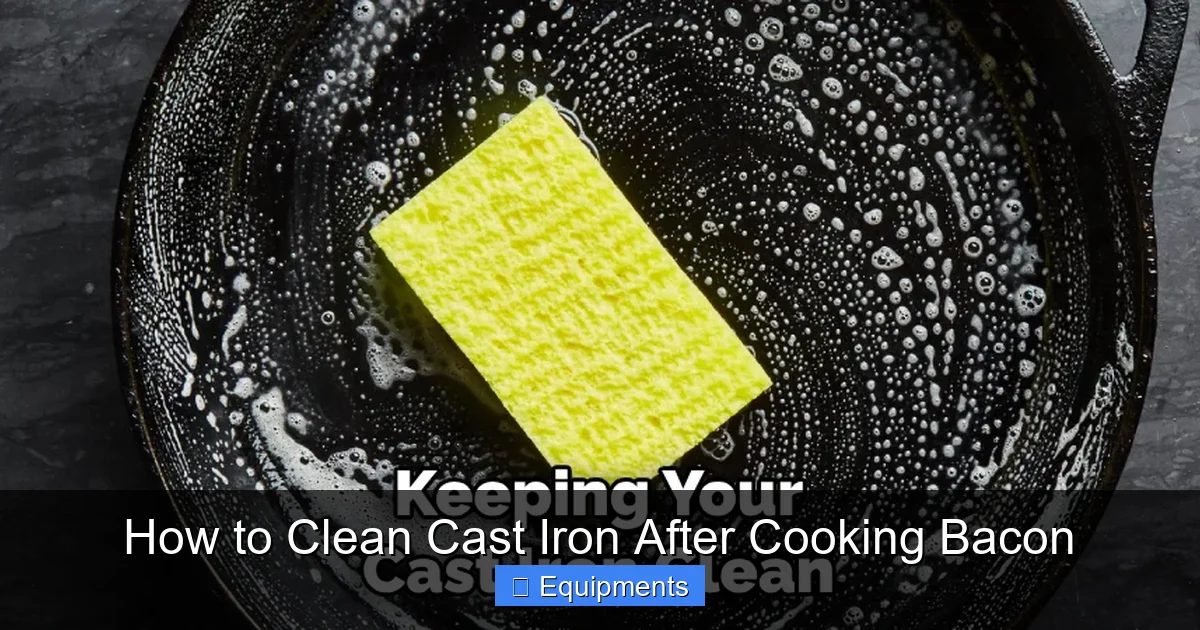
- A Chainmail Scrubber or Stiff Natural Fiber Brush: This is your workhorse. The flexible metal rings of a chainmail scrubber (like the popular “Rigg” brand) are abrasive enough to scrape away stuck bits but gentle enough not to harm seasoning. A stiff brush made of bamboo or palmyra fibers works well too. Avoid plastic scrubbers—they melt and can leave residues.
- A Metal or Bamboo Scraper: A flat, angled metal scraper (often sold with cast iron sets) or the edge of a sturdy bamboo spatula is perfect for lifting and scraping larger pools of grease without gouging the pan.
- Paper Towels or a Dedicated Lint-Free Cloth: For initial grease absorption and final drying. Use towels you’re okay with getting stained with grease.
- Your Stovetop Burner: Your best tool for drying. Low heat will evaporate any remaining moisture in seconds.
- Neutral Cooking Oil: For re-seasoning. Canola, vegetable, grapeseed, or avocado oil are excellent. Avoid extra virgin olive oil (low smoke point) and flaxseed oil (can become brittle).
What to Avoid: The “Don’t” List
Steer clear of these common pitfalls. Dish soap: While modern, mild soaps won’t instantly strip a robust seasoning, they are unnecessary and can over time degrade the polymerized layer. They also leave a scent that can affect food taste. Steel wool or harsh abrasive pads: These will scratch and remove seasoning, exposing bare iron. Dishwashers: The combination of harsh detergents, high-pressure water, and prolonged moisture is a death sentence for cast iron. Soaking in water: Repeated for emphasis. It’s the #1 cause of user-induced rust.
The Step-by-Step Cleaning Process
Now, let’s walk through the ritual. Think of it as a 4-minute routine that protects a $100+ investment.
Visual guide about How to Clean Cast Iron After Cooking Bacon
Image source: thekitchenix.com
Step 1: Cool Slightly & Pour Off Excess Grease
With the pan still warm (from the previous section), use a heat-resistant utensil or carefully tilt the pan to pour any pooled liquid fat into a jar or a disposable container. Never pour grease down the drain! It will clog your pipes. Wipe out the largest globs of solidified fat with a paper towel. This step makes the next steps much easier. You can save the bacon grease for cooking—it’s delicious—but let it cool and strain it first.
Step 2: The Hot Water & Scrape
Place the warm pan under a stream of hot tap water. The water should be as hot as you can comfortably tolerate. Using your chainmail scrubber or scraper, gently work in small circles. The combination of hot water and the physical action of the scrubber will lift away the remaining grease and any crispy bacon bits. Apply minimal pressure. If you encounter a stubborn patch, hold the scraper at a 45-degree angle and press firmly, then scrape. The heat and water will soften it. For extremely stuck bits, make a paste with a teaspoon of kosher salt and a few drops of hot water. The salt acts as a gentle abrasive. Rub this paste onto the spot with your scrubber and rinse.
Step 3: Rinse and Inspect
Rinse the pan thoroughly under hot running water. Use your fingers to feel the entire surface. It should feel smooth and slick, not greasy or gritty. If you feel any sticky patches, repeat the scraping step. The pan should feel clean to the touch, like a clean glass. This inspection is critical. Any leftover grease will bake onto the pan the next time you heat it, creating that dreaded sticky layer.
Step 4: The Ultimate Dry: Towel + Heat
This is the most critical anti-rust step. Immediately after rinsing, dry the pan thoroughly with a dedicated paper towel or lint-free cloth. Get every nook, cranny, and the handle. Don’t be shy—wipe it completely dry. Then, place the pan on a stovetop burner set to low heat. Let it sit for 2-3 minutes. You’ll see the last droplets of water evaporate instantly. You may even see a faint wisp of steam from the pan. This ensures zero moisture remains trapped in the pores of the iron. Turn off the burner.
Step 5: The Micro-Coat of Oil
While the pan is still warm (from the burner), apply your seasoning oil. Pour a teaspoon of neutral oil onto a folded paper towel. Rub this over the entire cooking surface, the sides, and the bottom. You want a microscopically thin layer. The pan should look dry, not glistening with oil. Any excess will become sticky and gummy when heated. Buff it until it looks and feels dry to the touch. This thin layer will polymerize (harden) the next time the pan is heated, adding to your seasoning.
Step 6: Store Properly
Once completely cool, store your pan in a dry cabinet. Do not store it with the lid on in a humid environment, as this traps moisture. If you live in a very humid area or are storing it long-term (over a month), apply a slightly thicker (but still thin) coat of oil and store it in a dry place with the lid slightly ajar or off.
Troubleshooting: What If I Made a Mistake?
Even with the best intentions, things happen. Maybe you let the pan cool too much, or you used soap once. Here’s how to fix common post-bacon issues.
The Sticky, Gummy Surface
Symptom: The pan feels tacky to the touch, even after cleaning. Food may stick more than usual.
Cause: A layer of un-polymerized oil (from bacon or other cooking) has built up. This often happens if the pan was cooled with grease on it or washed with soap that wasn’t fully rinsed.
Fix: This requires a deep seasoning reset, not just a clean. Preheat your oven to 450°F. Place the pan upside down on the middle rack. Put a foil-lined rack on the lower rack to catch drips. Bake the pan for 1 hour. The high heat will burn off the sticky, organic residues, leaving you with bare, clean metal. Let it cool completely in the oven. Then, perform 3-5 rounds of seasoning: rub a thin layer of oil on the surface and heat on the stovetop or in the oven until it smokes, then cool. This rebuilds a fresh, slick seasoning layer.
Rust Spots
Symptom: Orange or reddish-brown flaky spots on the cooking surface.
Cause: Exposure to moisture without proper drying or seasoning.
Fix: For light rust, use your chainmail scrubber and hot water to scour the rust away until you reach bare, gray metal. Dry immediately and thoroughly using the towel + heat method. Apply a generous coat of oil and heat on the stovetop until it smokes. Repeat this oiling and heating process 2-3 times to rebuild a protective layer. For heavy, pitted rust, you may need to use steel wool or an SOS pad to remove it all down to bare metal, then fully re-season from scratch.
Persistent Food Residue
Symptom: Black, flaky bits that look like old food stuck in the seasoning.
Cause: This is often old, burnt-on food that has become embedded in a weak seasoning layer.
Fix: Use the kosher salt paste method mentioned earlier. Scrub vigorously with the paste and your chainmail. If that fails, a brief bath in a solution of 1 part white vinegar to 4 parts water can dissolve it. Do not soak! Dip a cloth in the solution and rub the affected area for 60-90 seconds, then rinse and dry immediately. Vinegar is acidic and will eat through seasoning if left on too long, so use it sparingly and re-season afterward.
Building a Lifelong Habit: Beyond the Bacon
Cleaning cast iron after bacon sets the standard for all your cast iron care. The principles apply to everything you cook. After sautéing vegetables, you might have less grease but more caramelized bits. The same hot water and scraping method works. After searing a steak, you’ll have fond (the browned bits) which are delicious for pan sauces, but you still scrape them out while warm. The key is consistency. Every single time you cook, follow the warm-water-scrape-dry-oil routine. It takes less than 5 minutes and guarantees your pan’s performance will only improve with age. Your cast iron isn’t a delicate antique; it’s a rugged tool that thrives on simple, respectful care. The more you use it correctly, the better it gets.
Conclusion: Your Pan’s Legacy Starts With This Clean
Cleaning cast iron after cooking bacon is not a chore; it’s the most important act of preservation you can perform for your kitchen’s most versatile tool. That sizzling bacon fat is a gift—it seasons your pan. But leftover, unmanaged grease is a curse that leads to stickiness and rust. By embracing the simple ritual of warm-water scraping, immediate and thorough drying, and a whisper-thin coat of oil, you transform cleanup from a dread into a satisfying practice of stewardship. You’re not just washing a pan; you’re investing in a legacy. You’re ensuring that the pan that gave you perfect bacon today will give your grandchildren perfectly seared steaks and cornbread with a golden crust tomorrow. So heat up that skillet, enjoy the bacon, and then take those four minutes to show it some love. Your future self, cooking in a smooth, rust-free, perfectly seasoned pan, will thank you.
Frequently Asked Questions
Can I use dish soap to clean my cast iron after bacon?
No, you should avoid dish soap. Modern soaps are designed to cut grease, which will degrade the polymerized seasoning layer on your cast iron. Stick to hot water and a scrubber for routine cleaning. Soap is only necessary if you’ve used the pan for something strongly flavored or contaminated, and even then, use a tiny amount and re-season immediately after.
My pan is already sticky from bacon grease. What do I do?
A sticky pan means you have a layer of un-polymerized oil. The fix is to strip the sticky layer by heating the empty pan on the stovetop or in a 450°F oven until it stops smoking and turns gray. Once cool, scrub it with hot water and your chainmail, dry it completely, and then apply 3-5 thin coats of oil, heating to smoke each time to rebuild the seasoning.
Is it okay to use steel wool or an abrasive pad on my cast iron?
No. Steel wool and harsh abrasive pads (like the green side of a sponge) will scratch and remove your seasoning, exposing the bare iron to rust. Always use a chainmail scrubber, stiff natural fiber brush, or a nylon scraper designed for cast iron for regular cleaning.
Can I put my cast iron skillet in the dishwasher?
Absolutely not. The combination of harsh detergents, prolonged water exposure, and the high heat of the drying cycle will strip all seasoning and guarantee rust. Cast iron should always be hand-washed and dried immediately.
How do I prevent rust after cleaning?
Preventing rust is a three-step process: 1) Dry the pan thoroughly with a towel immediately after rinsing. 2) Heat the pan on a low burner for 2-3 minutes to evaporate any hidden moisture. 3) Apply a very thin layer of neutral cooking oil while the pan is still warm. Storing in a dry place completes the protection.
What’s the best oil to use for seasoning after cleaning bacon?
Use a neutral oil with a high smoke point. Excellent choices are canola, vegetable, grapeseed, or avocado oil. Avoid extra virgin olive oil (low smoke point, can become rancid) and flaxseed oil (can become brittle and flake over time). The key is a thin layer, not a puddle.
Pingback: Prime Rib Cooking Instructions Chart - kitchenandhouseware.com
Pingback: Pork+tenderloin+cooking+time+chart - kitchenandhouseware.com
Pingback: T Bone Steak Cooking Time - kitchenandhouseware.com