Storing fruit cake without alcohol requires meticulous moisture control and airtight protection, as it lacks alcohol’s natural preservative qualities. The key is to wrap it tightly in layers of parchment and foil, then place it in a truly airtight container in a cool, dark, and consistent environment like a basement or pantry. For storage beyond a few months, freezing is the most reliable method, properly wrapped to prevent freezer burn. Avoid refrigeration unless your kitchen is very humid, as fridge air can dry it out and absorb odors. Always check for signs of spoilage like mold or an off smell before consuming.
Key Takeaways
- Wrap it Tightly: Use a double layer of parchment paper followed by heavy-duty aluminum foil to create an impermeable barrier against air and moisture loss.
- Choose the Right Container: Store the wrapped cake in a rigid, airtight plastic or glass container, not just a bag, to protect it from physical damage and odor absorption.
- Mind the Temperature: A consistently cool (50-70°F / 10-21°C), dark, and dry place like a basement or pantry is ideal; avoid warm kitchens and refrigerators.
- Freeze for Longevity: For storage over 3-4 months, freezing is best. Wrap extremely well in plastic wrap and foil, then place in a freezer bag or container.
- No Moisture Allowed: Never store a slightly damp cake. Ensure it is completely cool and dry before wrapping to prevent mold and sogginess inside the wrap.
- Check Before Eating: Always unwrap and inspect the cake for any signs of mold, an alcoholic or sour smell (from spoilage), or a sticky, wet texture before serving.
- Revive Gently: If the cake seems dry, brush it sparingly with a simple syrup (sugar water) or a non-alcoholic liqueur syrup before serving to restore moisture.
📑 Table of Contents
- The Unique Challenge of Storing Alcohol-Free Fruit Cake
- Essential Pre-Storage Preparation: The First Critical Steps
- The Art of Wrapping: Creating an Impermeable Barrier
- Choosing the Perfect Storage Container
- Ideal Storage Locations: Temperature and Humidity Matter
- Long-Term Storage: The Freezing Method
- Common Mistakes and How to Avoid Them
- Reviving and Serving Your Stored Cake
- Conclusion: Patience Rewarded
The Unique Challenge of Storing Alcohol-Free Fruit Cake
Ah, the noble fruit cake. A dense, richly textured tapestry of dried fruits, nuts, and spices, often bathed in brandy, rum, or whiskey. That alcohol isn’t just for flavor; it’s a powerful preservative, a microbial deterrent, and a moisture-locking agent. When you remove that alcoholic shield, you’re left with a delicious but vulnerable baked good. Storing fruit cake without alcohol isn’t about throwing it in a tin and forgetting it for a year. It’s a deliberate practice in environmental control and barrier protection. Your goal is to replicate the stable, low-moisture, anaerobic (air-free) conditions that the alcohol once provided. This means your primary enemies are air (which causes drying and staling), ambient moisture (which invites mold), and temperature fluctuations (which accelerate spoilage). Mastering this storage is the difference between a cake that improves with age and one that becomes a sad, stale, or moldy lump. It’s absolutely possible to store an alcohol-free fruit cake successfully for many months, even a year, but it requires a little more knowledge and care than its boozy cousin.
Why Alcohol-Free Needs a Different Strategy
Let’s break down the science simply. Alcohol, typically at a high enough concentration, kills or inhibits the growth of mold and bacteria. It also has a lower vapor pressure than water, meaning it evaporates more slowly, helping the cake retain its internal moisture. Without it, the cake’s moisture content is at the mercy of the surrounding air. If the air is dry, the cake will lose moisture and become leathery. If the air is humid, the cake can absorb that moisture, creating pockets of wetness perfect for mold spores to take hold. Furthermore, the high sugar content in fruit cake is hygroscopic—it attracts and holds water molecules from the environment. This is a double-edged sword: it helps the cake stay moist in a sealed environment but can make it sticky and susceptible to spoilage if exposed to humid air. Therefore, the storage method for alcohol-free fruit cake must be a completely sealed system.
Essential Pre-Storage Preparation: The First Critical Steps
All the best storage techniques in the world will fail if your cake isn’t properly prepared beforehand. This phase is non-negotiable and sets the stage for long-term success. Rushing this step is the most common cause of early spoilage.
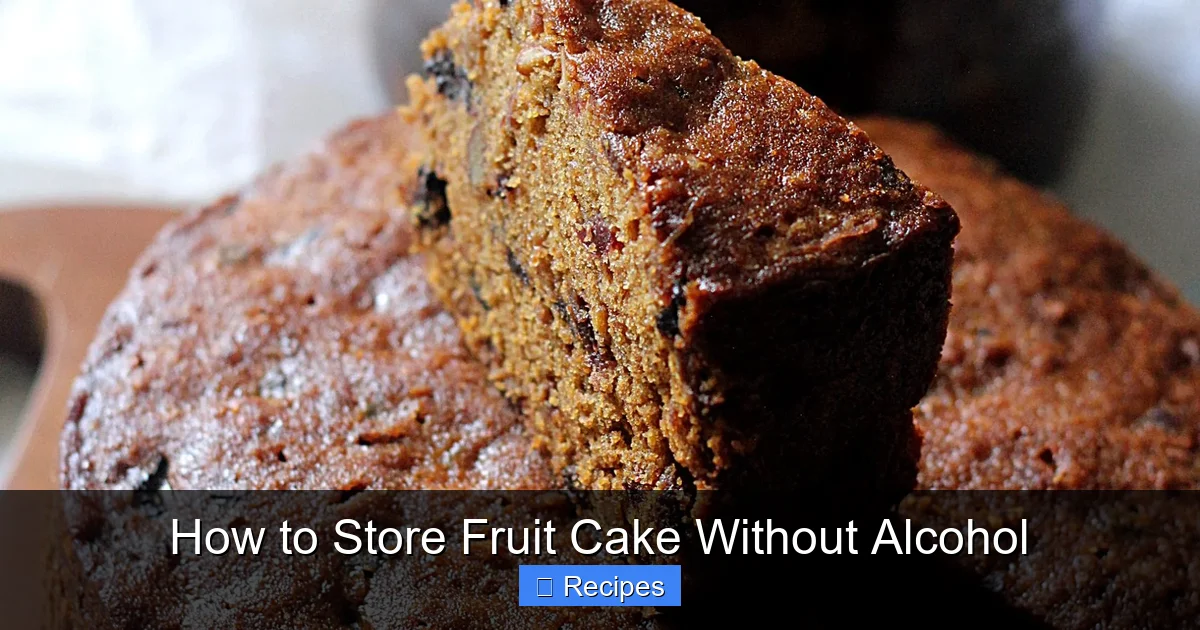
Visual guide about How to Store Fruit Cake Without Alcohol
Image source: ruchikrandhap.com
The Cake Must Be 100% Cool and Dry
This is the golden rule. After baking, allow your fruit cake to cool completely in the pan for about an hour. Then, transfer it to a wire rack and let it sit, uncovered, at room temperature for at least 24 hours, and preferably 48 hours. You are waiting for all residual heat and steam to evaporate. The surface should feel dry to the touch, and the cake should feel firm and dense throughout. Any trapped warmth or steam inside a wrap will condense, creating a wet environment that is a breeding ground for mold. Never, ever wrap a warm cake. Patience here is a literal virtue that preserves your cake.
Optional: A Non-Alcoholic “Feed” for Flavor and Moisture
If you miss the ritual of “feeding” a fruit cake but want to avoid alcohol, you can use a simple syrup or a non-alcoholic extract syrup. Boil equal parts sugar and water until sugar dissolves, then cool. Add a teaspoon of vanilla, almond, or orange extract per cup of syrup. Using a clean pastry brush, lightly brush this syrup onto the surface of the completely cooled cake. This step adds a subtle flavor boost and a tiny bit of extra moisture, but it’s not a preservative. If you do this, you must ensure the syrup is absorbed and the surface is still dry to the touch before proceeding to the wrapping stage. For long-term storage, a dry cake is safer than a slightly damp one.
The Art of Wrapping: Creating an Impermeable Barrier
Wrapping is your first and most important line of defense. The goal is to exclude air and lock in the cake’s natural moisture. A single layer of plastic wrap is insufficient; it can develop tiny punctures and allows for slow moisture migration. We use a multi-layer, overlapping technique for maximum security.
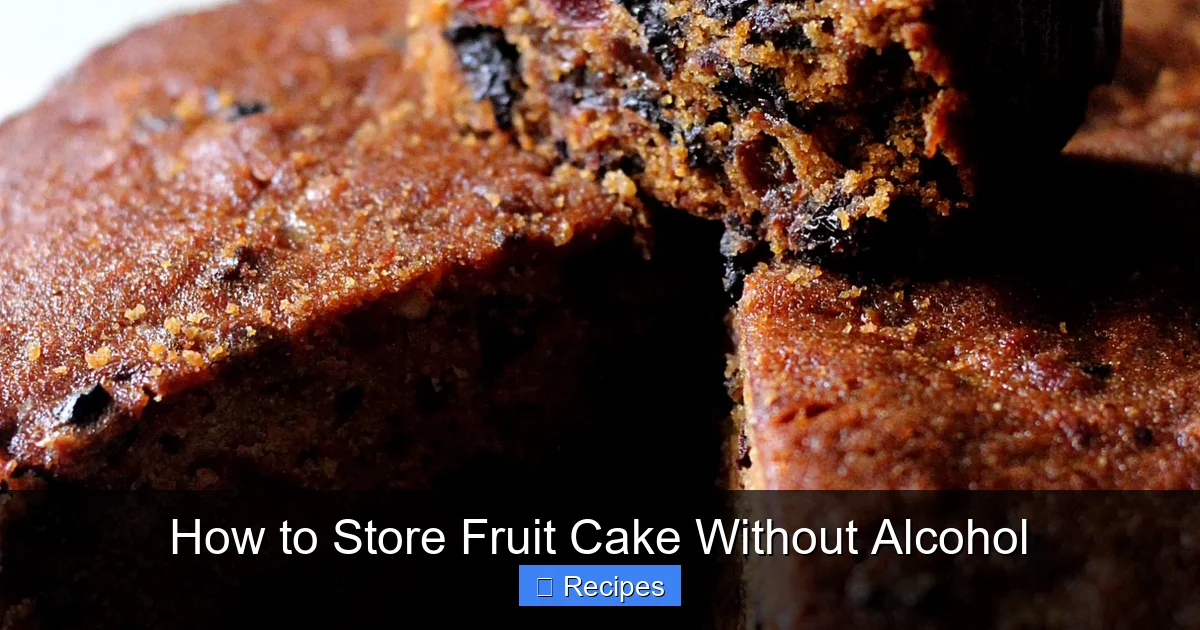
Visual guide about How to Store Fruit Cake Without Alcohol
Image source: ruchikrandhap.com
Layer 1: Parchment Paper (The Breathable Barrier)
Start with a large sheet of unbleached parchment paper. This layer serves two purposes: it provides a non-stick, food-safe surface directly against the cake, and its slight breathability helps manage any microscopic moisture without creating condensation. Place the cake in the center. Bring the sides of the parchment up and over the top, creating a snug, envelope-style wrap. Fold the edges neatly to minimize air pockets. The parchment should be in direct contact with the cake’s surface.
Layer 2: Heavy-Duty Aluminum Foil (The Airtight Seal)
Over your parchment-wrapped cake, place a sheet of heavy-duty aluminum foil. This is your primary moisture and oxygen barrier. Press the foil firmly against the parchment, smoothing it out to eliminate as many air pockets as possible. Pay special attention to the seams and edges. Fold the foil tightly over the top and underneath the cake bundle, creating a compact, rigid package. The foil should be completely sealed with no gaps. For extra security, especially for long storage, you can add a second layer of foil.
Layer 3: The Final Plastic Wrap Shield (Optional but Recommended)
For maximum protection, especially if you plan to freeze the cake, wrap the entire foil package tightly in a layer of plastic wrap. This final layer prevents the foil from getting nicked or torn and adds an extra barrier against freezer odors. Secure the plastic wrap with a piece of tape if needed. Your final wrapped cake should feel like a solid, compact block with no give.
Choosing the Perfect Storage Container
Your beautifully wrapped cake now needs a home. The container does more than just hold the cake; it provides physical protection and insulates against environmental changes. The wrong container can undo all your careful wrapping.
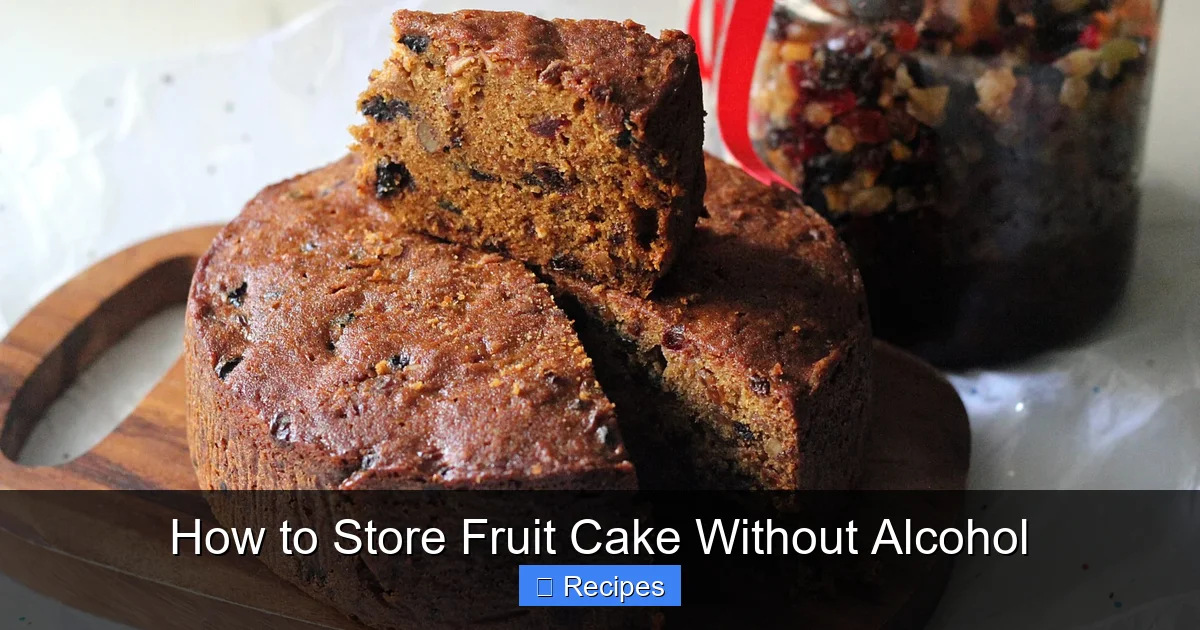
Visual guide about How to Store Fruit Cake Without Alcohol
Image source: ruchikrandhap.com
Airtight Plastic or Glass Containers Are King
The absolute best choice is a rigid, plastic or glass food storage container with a locking, airtight lid. Brands like Rubbermaid, Pyrex, or Sistema are excellent. The container must be large enough to hold the wrapped cake without forcing it to bend or compress, but not so large that there is a lot of empty space. The sealed lid creates a stable microenvironment. It protects the cake from being crushed, from absorbing other food odors in a pantry, and from light, which can degrade flavors over time. Glass has the added benefit of being non-porous and easy to inspect without opening.
What to Avoid: Plastic Bags and Cardboard
Never store your wrapped cake in a simple plastic bag, Ziploc bag, or its original cake tin alone. Plastic bags are prone to tiny punctures and can collapse, allowing air exchange. They also do nothing to protect against physical damage. The traditional decorative cake tin is great for presentation and short-term storage, but it is rarely truly airtight. Over months, air will seep in through the lid seam. If you must use a tin, first wrap the cake as described above, then place the wrapped package inside the tin for an extra layer of protection, and store the tin inside an airtight container.
Cardboard boxes are a definite no. They are not moisture-proof, can attract pests, and offer zero barrier against air. They are for transport only, not storage.
Ideal Storage Locations: Temperature and Humidity Matter
You’ve wrapped and contained your cake perfectly. Now, where you put it is half the battle. The location must provide stable, cool, and dry conditions.
The Pantry or Basement: The Gold Standard
The ideal spot is a consistently cool (between 50°F and 70°F or 10°C and 21°C), dark, and dry pantry or basement. The key word is consistent. Temperature swings are worse than a steady, slightly warmer temperature. Basements often win because they naturally stay cool and have less temperature fluctuation than a kitchen. The darkness prevents light from affecting the cake’s delicate flavors. Ensure the area is also dry; a damp basement is a mold factory. If your pantry is next to the oven or dishwasher, it’s not suitable due to heat and steam bursts.
Why You Should Almost Never Refrigerate
This is a common misconception. A standard refrigerator is a terrible place for a fruit cake, alcohol-free or not. Refrigerators are humid environments designed to keep vegetables crisp. This humidity will be absorbed by your cake, making it damp and sticky. Furthermore, refrigerators are full of strong odors from other foods, which the cake can absorb through its wrapper over time (think onions, cheese, leftovers). The only exception is if you live in an extremely hot and humid climate (e.g., a tropical region without air conditioning) where room temperature is constantly above 80°F (27°C) and very humid. In that extreme case, the refrigerator’s controlled, dry(er) cold might be preferable to a warm, wet room. But for most, the pantry is better.
Long-Term Storage: The Freezing Method
If you want your fruit cake to last for a full year or more, freezing is your most reliable tool. When frozen properly, the cake undergoes virtually no chemical change and is safe from mold indefinitely.
How to Freeze for Maximum Freshness
Follow the wrapping protocol from Section 3 with extra vigilance. You want zero air exposure. First, wrap the completely cool and dry cake in a layer of plastic wrap, pressing out all air bubbles. Then, wrap it tightly in a layer of heavy-duty aluminum foil. For ultimate protection, place this foil-wrapped package inside a heavy-duty freezer bag, squeeze out the air, and seal. Alternatively, place the foil-wrapped cake directly into a rigid, airtight freezer-safe container. Label the package with the date. When stored this way, an alcohol-free fruit cake will retain its quality for at least 12 months.
Thawing Your Frozen Fruit Cake
The thawing process is crucial. Do not thaw at room temperature, as condensation will form on the cold cake surface as it warms, making it wet. The correct method is to thaw it slowly in the refrigerator. Remove the cake from the freezer bag/container but keep it in its foil and plastic wrap. Place it on a plate in the fridge for 24-48 hours, depending on size. This allows it to come to temperature gradually without condensation forming on the cake itself. Once fully thawed in the fridge (it will still be cool), you can unwrap it, let it sit at room temperature for an hour to serve, and it will be perfectly moist and delicious.
Common Mistakes and How to Avoid Them
Even with the best instructions, pitfalls exist. Here are the most frequent errors and their solutions.
Mistake 1: Wrapping a Warm or Humid Cake
The Problem: Trapped steam condenses inside the wrap, creating a wet microclimate that guarantees mold.
The Fix: Be patient. Cool on a rack for 24-48 hours. If your kitchen is humid, run a dehumidifier or fan in the room while the cake cools.
Mistake 2: Inadequate Wrapping
The Problem: Using only one layer of plastic wrap or a loose foil wrap. Air seeps in slowly, drying the cake out.
The Fix: Use the parchment-foil-plastic wrap trio. Ensure all seams are folded tightly and there are no gaps. Treat it like packaging a valuable artifact.
Mistake 3: Storing in a Non-Airtight Container
The Problem: Using a cake tin without an inner wrap, or a container with a poor seal. Air exchange happens, leading to staleness or odor absorption.
The Fix: Always use a container with a locking gasket seal. Test it: close it with a piece of bread inside for a day; the bread should not stale quickly.
Mistake 4: Storing in the Fridge (Unnecessarily)
The Problem: The fridge’s humidity and odors ruin the cake’s texture and taste.
The Fix: Commit to the pantry. Only consider the fridge in extreme, unavoidable heat/humidity, and even then, use the airtight container method.
Mistake 5: Not Checking Before Serving
The Problem: Assuming the cake is fine because it was stored “correctly.” Mold can still develop from spores present before wrapping or from a tiny breach.
The Fix: Always unwrap the cake in a well-lit area. Look for any fuzzy spots (white, green, black). Smell it. It should smell sweet and spicy, not sour, yeasty, or alcoholic (from spoilage, not added flavor). Feel the surface; it should be firm, not sticky or wet. If in doubt, throw it out.
Reviving and Serving Your Stored Cake
After months of careful storage, your cake may benefit from a little revival before serving. This is part of the tradition of fruit cake.
The Gentle Rehydration Technique
If the cake seems slightly dry (it will be more dense and less yielding than fresh), you can restore moisture. Do not soak it. Prepare a simple syrup: combine 1/4 cup sugar and 1/4 cup water in a saucepan, heat until sugar dissolves, cool completely. For a flavor boost, add a teaspoon of vanilla or citrus extract. Using a clean pastry brush, lightly brush the syrup over the entire surface of the cake. Let it sit, unwrapped, for 1-2 hours to absorb. This will plump it up beautifully without making it soggy. For an alcohol-free “kick,” use a non-alcoholic extract like orange or almond in the syrup.
Slicing and Presentation
A properly stored fruit cake is dense. Use a large, sharp, serrated knife. A gentle sawing motion works best. Wipe the blade clean between slices for neat cuts. Serve thin slices, as it is rich. Traditional accompaniments are a sharp cheddar cheese, a dollop of whipped cream, or a cup of strong tea or coffee. The contrast between the sweet, spicy cake and the salty or creamy element is perfection.
Conclusion: Patience Rewarded
Storing fruit cake without alcohol is not a compromise; it’s a different discipline. By understanding that you are replacing alcohol’s preservative power with meticulous physical barriers—the double wrap, the airtight container, the cool, dark location—you can enjoy your homemade, alcohol-free creation for many months. The process connects you to the cake’s maturation, turning storage from a chore into a ritual of anticipation. You are curating a food artifact. Follow these steps: cool it completely, wrap it obsessively, contain it securely, and store it wisely. Whether you enjoy it on a quiet afternoon in January or as a festive treat next holiday season, your perfectly preserved slice will be a testament to patience and good baking science. Now, go wrap that cake and forget about it—in the best way possible.
Frequently Asked Questions
Can I store alcohol-free fruit cake in the refrigerator?
No, it is generally not recommended. Refrigerators are humid and full of odors that the cake can absorb, leading to a sticky texture and off-flavors. A cool, dark pantry is a far superior environment unless you live in an extremely hot and humid climate without air conditioning.
How long will a properly wrapped alcohol-free fruit cake last?
When stored in a cool, dark pantry in an airtight container with the multi-layer wrapping method, it will maintain excellent quality for 3-6 months. For longer storage (up to 12-18 months), freezing using the same thorough wrapping technique is the best option.
How can I tell if my stored fruit cake has gone bad?
Always inspect before eating. Look for any visible mold (fuzzy spots in white, green, or black). Smell it; it should have a sweet, spicy aroma, not a sour, yeasty, or unpleasant odor. Feel the surface; it should be firm, not sticky, wet, or slimy. If you have any doubts, discard it.
What is the single best material to wrap fruit cake in?
There is no single best material; the system is key. The most effective method uses a combination: first, a layer of parchment paper directly on the cake, followed by a tight layer of heavy-duty aluminum foil, and optionally a final layer of plastic wrap for freezer storage. This combo provides a food-safe, airtight, and protective barrier.
What is the correct way to thaw a frozen alcohol-free fruit cake?
The correct method is to thaw it slowly in the refrigerator while it remains wrapped. Move it from the freezer to a plate in the fridge for 24-48 hours. This prevents condensation from forming on the cold cake surface as it warms. Once fully thawed in the fridge, you can unwrap it and let it sit at room temperature for about an hour before serving for best texture.
Can I add a non-alcoholic syrup to my cake before long-term storage?
Yes, you can lightly brush a cooled, completely dry cake with a simple syrup (sugar water) infused with vanilla or citrus extract. This adds flavor and a tiny bit of moisture. However, it is not a preservative. You must ensure the surface is still dry to the touch after application before wrapping, as any surface moisture greatly increases the risk of mold during storage.
Pingback: Four Loko Alcohol Content - kitchenandhouseware.com