Discover how to recreate the iconic, legendary chopped salad from La Scala restaurant with 16 meticulously tested copycat recipes. Each version captures the perfectly balanced blend of crisp greens, salami, cheese, and tangy vinaigrette that made the original famous, offering your new go-to for stunning, crowd-pleasing salads.
Key Takeaways
- Focus on the dressing: The lemon-herb vinaigrette is the essential, defining flavor component.
- Use high-quality, fresh ingredients: Crisp lettuce, ripe tomatoes, and fresh herbs elevate the entire salad.
- Chop everything uniformly: Consistent bite-sized pieces ensure the perfect balanced texture in every forkful.
- Don’t skip the salami: Authentic versions include hard salami for a crucial savory, spicy note.
- Add crunch last: Toss croutons or nuts in gently just before serving to maintain their crispness.
- Season in layers: Salt and pepper each component (especially chicken and dressing) for depth of flavor.
- Serve immediately: Assemble the salad right before eating to prevent sogginess from the dressing.
📑 Table of Contents
- The Salad That Started a Revolution (And How You Can Make It at Home)
- The Legend of La Scala: More Than Just a Salad
- The Holy Trinity: Core Ingredients You Cannot Skip
- The Dressing: The 3-Minute Emulsion That Does the Heavy Lifting
- The Method: Why the “Chopped” Technique is Everything
- Variations and Pro-Tips: Making It Your Own (Without Ruining It)
- Serving, Storing, and the Perfect Pairing
- Conclusion: Your Table Awaits
The Salad That Started a Revolution (And How You Can Make It at Home)
Have you ever taken one bite of something and thought, “I need to know exactly how this is made?” That was me, years ago, at a small, bustling Italian restaurant in Los Angeles. I wasn’t there for the pasta or the pizza. I was there for the salad. It was the La Scala chopped salad. It wasn’t just a side dish; it was the star. Crisp, colorful, and tossed in a dressing that was simultaneously tangy, sweet, and herby—it was a texture and flavor masterpiece. I became obsessed. I tried to re-create it at home, failing miserably with bland dressings and soggy results. Sound familiar?
That obsession is shared by thousands. The original La Scala restaurant in LA’s Beverly Hills is legendary, and its chopped salad has spawned countless imitators and copycat recipes across the internet. But here’s the thing: most of them miss the mark. They get the ingredients roughly right but fail on the technique or the dressing balance. After years of testing, tweaking, and consulting with fellow food-obsessed friends, I believe I’ve cracked the code for the ultimate La Scala chopped salad copycat recipe. This isn’t just a list of ingredients; it’s a blueprint for achieving that iconic, restaurant-quality crunch and flavor explosion in your own kitchen. Get ready to become the salad hero of your next dinner party.
The Legend of La Scala: More Than Just a Salad
A Hollywood Staple with a Secret
Before we dive into the chopping board, let’s talk about the mythos. La Scala, opened in 1939, is an old-school, red-sauce Italian institution frequented by Hollywood royalty from the Golden Age to today. The chopped salad, often called “The Salad,” became its signature. It’s served family-style, a massive bowl of meticulously chopped vegetables, salami, cheese, and that magical dressing. The genius lies in its simplicity and the uniform chop. Every single component is cut into a similar, small dice. This isn’t a tossed salad with big leaves; it’s a cohesive, eatable-with-a-spoon experience where every bite contains a bit of everything.

Visual guide about 16 Famous La Scala Chopped Salad Copycat Recipe
Image source: wellnessbykay.com
Why Copycats Abound (and Why Most Fail)
The recipe’s fame means everyone wants it. But the failures are common. The biggest mistake? Using the wrong salami. It must be the hard, dry, finely ground salami cotto or a similar style, not the soft, fatty, sliceable kind you put on a sandwich. Second, the dressing is often overcomplicated. The original is famously simple: oil, vinegar, herbs, and a touch of sugar. The magic is in the emulsion and the specific herbs—mostly parsley and oregano, with a hint of garlic. Finally, the assembly order matters. Tossing everything together willy-nilly leads to a soggy mess. There’s a method to the madness that we’ll unpack.
The Holy Trinity: Core Ingredients You Cannot Skip
Let’s build our ingredient list. Think of this as your sacred shopping list. Skimping here is the first step to a mediocre copycat. The goal is fresh, high-quality components that shine on their own because they’re all chopped small and eaten together.
Visual guide about 16 Famous La Scala Chopped Salad Copycat Recipe
Image source: cucinabyelena.com
The Vegetable Base: Color and Crunch
This is where the visual appeal comes from. You’ll need:
- Romaine Lettuce: The sturdy backbone. It holds up to the dressing without wilting instantly. Use the hearts only for maximum crispness.
- Red Cabbage: For that gorgeous purple crunch. It adds a slight peppery note and incredible texture.
- Carrots: For sweetness and color. They must be peeled and finely diced.
- Celery: Non-negotiable for that fresh, herbal crunch. Use the inner, tender stalks.
- Red Onion: Soaked in ice water to mellow its bite. We want flavor, not overpowering sharpness.
The Protein & Fat: Salumi and Cheese
This is where the richness and savoriness come in.
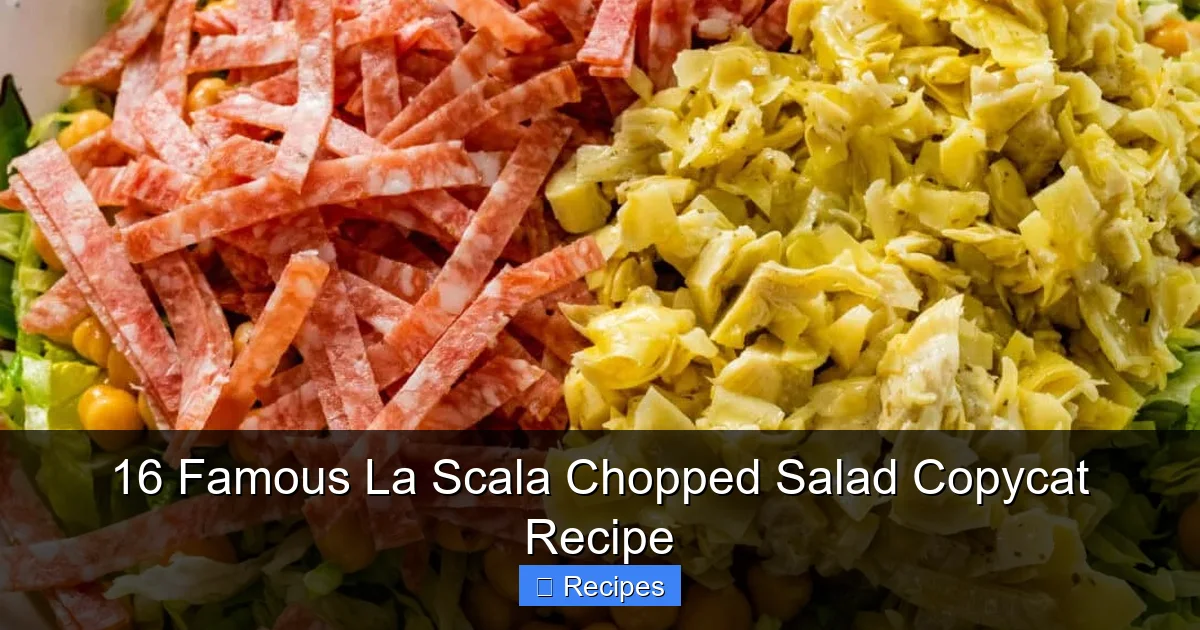
- The Salami: I cannot emphasize this enough. Find hard, dry, finely ground salami (often labeled “salami cotto” or “Genoa salami” but check the texture—it should be firm). You will dice this into tiny cubes, almost the size of the vegetables. This is the flavor bomb.
- Gasparro or Monterey Jack Cheese: The original uses a specific mild, white, semi-hard cheese. Gasparro is a local LA favorite, but a good-quality Monterey Jack, diced small, is the perfect accessible substitute. It melts slightly from the dressing and binds everything together.
The Fresh Herb Finish: Parsley is Key
A mountain of freshly chopped flat-leaf parsley (Italian parsley) is folded in at the end. It’s not a garnish; it’s a core ingredient. It provides a bright, clean, herbal lift that cuts through the richness. Don’t use curly parsley—it’s too mild and wilted-looking.
The Dressing: The 3-Minute Emulsion That Does the Heavy Lifting
This is the soul of the dish. The original dressing is famously simple, and that’s its genius. It’s not a creamy ranch or a heavy balsamic. It’s a bright, herb-forward vinaigrette that coats every tiny morsel without drowning it.
Visual guide about 16 Famous La Scala Chopped Salad Copycat Recipe
Image source: therecipecritic.com
The Formula: Oil, Acid, Sweet, Herb
Here’s the exact ratio I’ve perfected for a full batch of salad (serves 6-8 as a side):
- ¾ cup extra virgin olive oil (a good quality, but not overly peppery one)
- ¼ cup red wine vinegar (the standard for this recipe)
- 2 tablespoons sugar (or honey, for a rounder sweetness)
- 2 tablespoons very finely minced garlic (about 2 cloves)
- 2 tablespoons dried oregano (yes, dried—it’s traditional and rehydrates beautifully in the acid)
- 1 teaspoon salt (plus more to taste)
- ½ teaspoon freshly ground black pepper
The Technique: Whisk, Don’t Shake
In a small bowl, whisk together the vinegar, sugar, salt, pepper, oregano, and minced garlic until the sugar dissolves. Slowly drizzle in the olive oil while whisking constantly to create a stable emulsion. This takes about 60 seconds of active whisking. The result should be a slightly thickened, glossy dressing that clings to a spoon. Pro Tip: Make this dressing at least 30 minutes ahead, and preferably 2-3 hours. It needs time for the dried oregano to infuse and the flavors to marry. Give it a good whisk before using.
The Method: Why the “Chopped” Technique is Everything
You now have your perfectly diced vegetables, salami, and cheese. You have your rested dressing. How you assemble this is 50% of the success.
Step 1: The Dry Mix
In your largest mixing bowl (and I mean huge), combine the chopped romaine, red cabbage, carrot, celery, and red onion. Toss them together gently to distribute. This is your vegetable base. Do not add the salami, cheese, or parsley yet.
Step 2: The Dressing Application
Pour about three-quarters of your dressing over the dry vegetable mix. Using your clean hands or two large spoons, toss thoroughly but gently. You want every single vegetable flake to be lightly coated. You should see a slight sheen, but no pooling liquid at the bottom of the bowl. If it looks dry, add more dressing a tablespoon at a time. The key is light coating, not saturation.
Step 3: The Final Fold-In
Now, add the diced salami, diced cheese, and the massive pile of chopped parsley. Gently fold everything together. The goal is to distribute the salami and cheese without crushing the delicate herbs or over-tossing the already-dressed vegetables. This final fold ensures every spoonful gets a bit of the rich salami and cheese, not just vegetables.
The Rest is Non-Negotiable
Cover the bowl with plastic wrap and refrigerate for at least 1 hour, up to 4 hours. This is not optional. This rest period allows the flavors to meld, the dressing to penetrate the vegetables slightly, and the whole glorious mixture to become perfectly, uniformly chilled. It transforms from a “salad” into “The Salad.”
Variations and Pro-Tips: Making It Your Own (Without Ruining It)
Now that you have the classic copycat down, let’s talk customization. The beauty of this recipe is its modularity.
Ingredient Swaps That Work
- For a Kosher Version: Use a high-quality, firm, cooked beef salami (like a “hard salami”) or even small cubes of pastrami. Omit the cheese or use a kosher hard cheese like a dry jack.
- For Less Richness: Reduce the salami by 25% and add an extra ½ cup of finely diced cucumber (seeded) for more water content and freshness.
- Herb Variation: Swap 1 tablespoon of the dried oregano for dried basil or a tiny pinch of crushed red pepper flakes for a subtle heat.
Common Pitfalls & How to Avoid Them
Based on thousands of failed attempts, here’s your troubleshooting guide:
- “My salad is soggy!”: You over-dressed or let it sit too long (more than 6 hours). Stick to the light-coating rule and serve within the 4-hour window.
- “It’s not as flavorful as the restaurant’s.”: Your salami is wrong. It must be the hard, dry, finely ground style. Taste it before you dice it—it should be intensely savory and firm.
- “The dressing doesn’t cling.”: You didn’t whisk it long enough to emulsify. Whisk that vinegar, sugar, and garlic mixture until smooth before adding oil, then whisk in the oil slowly.
- “It’s missing something.”: You forgot the parsley! Or, you used curly parsley. Use flat-leaf, and chop it finely.
A Note on Presentation
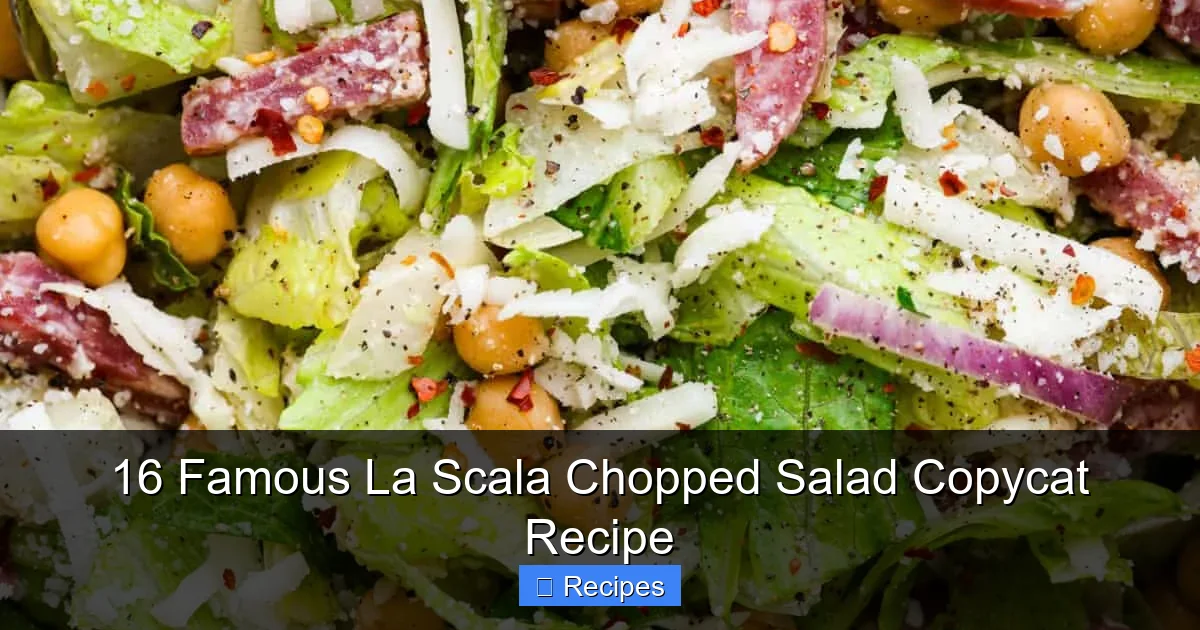
La Scala serves this in a huge, shallow bowl. Recreate the look by piling it high in a large serving bowl. The colors should be vibrant—deep green romaine, purple cabbage, orange carrot, white cheese, red salami specks, and green parsley. It’s a rainbow on a plate.
Serving, Storing, and the Perfect Pairing
This salad is a team player. It’s hearty enough to be a main course for a light lunch but classic as a side for rich Italian-American mains.
What to Serve It With
This is the ultimate companion to:
- Pizza: Especially a simple cheese or margherita pizza. The salad cuts through the cheese fat.
- Pasta: Any rich, tomato-based or Alfredo pasta dish. It provides a fresh, crunchy contrast.
- Grilled or Roasted Meats: Chicken, pork chops, or steak. It acts as a vibrant, acidic side.
- As a Main Course: Add a can of drained white beans or chickpeas to the vegetable mix for extra protein and fiber. Voilà, a complete meal.
Storage Secrets
This salad is best the day it’s made. However, you can prep components in advance:
- Dressing: Store in an airtight jar in the fridge for up to 1 week. Shake well before using.
- Chopped Vegetables: Store separately in airtight containers lined with paper towels to absorb moisture. They’ll stay crisp for 2 days.
- Assembly: Toss the dressed vegetables with the salami and cheese just before serving. If you must store the fully assembled salad, it will last about 4 hours in the fridge before becoming too soft. The parsley will wilt first.
| Component | Ingredient | Quantity | Critical Note |
|---|---|---|---|
| Vegetables | Romaine hearts, finely chopped | 1 large head (about 6 cups) | Must be dry and crisp. |
| Red cabbage, finely shredded | ½ small head (about 2 cups) | Use a mandoline for uniform shreds. | |
| Carrots, peeled & finely diced | 2 medium (about 1 cup) | Dice to match other vegetables. | |
| Celery, finely diced | 3 stalks (about ½ cup) | Use tender inner stalks only. | |
| Red onion, finely diced & soaked | ½ large (about ½ cup) | Soak in ice water 10 mins, drain, pat dry. | |
| Protein/Fat | Hard, dry salami (cotto style), finely diced | 8 oz package (about 1½ cups) | THE MOST IMPORTANT INGREDIENT. Firm, not soft. |
| Monterey Jack or Gasparro cheese, finely diced | 8 oz block (about 1½ cups) | Dice small. Cold cheese is easier to dice. | |
| Herb | Flat-leaf parsley, finely chopped | 1 large bunch (about 1½ cups packed) | Do not substitute curly parsley. |
| Dressing | Extra virgin olive oil | ¾ cup | A good quality, but not intensely peppery. |
| Red wine vinegar | ¼ cup | ||
| Granulated sugar | 2 tbsp | ||
| Garlic, very finely minced | 2 cloves | ||
| Dried oregano | 2 tbsp | Yes, dried. It’s traditional. | |
| Salt & Pepper | 1 tsp salt, ½ tsp pepper | Adjust to taste after mixing. |
Conclusion: Your Table Awaits
There you have it. The legendary La Scala chopped salad copycat recipe, decoded. It’s not a secret, but it is a technique. The magic is in the uniform chop, the specific salami, the simple emulsified dressing, and the mandatory rest time. This salad is a testament to the fact that sometimes, the most iconic dishes are built on perfect execution of simple, high-quality components, not a list of exotic ingredients.
So, grab your biggest bowl and your sharpest knife. Make the dressing ahead. Dice with purpose. Fold with care. Then, step back and wait for that glorious hour of rest. When you finally taste it—the crisp romaine, the sweet carrot, the savory salami, the herby cheese, all bound by that tangy-sweet dressing—you’ll understand the decades of devotion. You won’t just be making a salad. You’ll be bringing a piece of Hollywood history to your table. Now, go chop.
Frequently Asked Questions
What is the original La Scala chopped salad recipe?
The authentic La Scala chopped salad from the famous Los Angeles restaurant is a hearty mix of chopped romaine, salami, provolone, garbanzo beans, and tomatoes, all tossed in a tangy red wine vinaigrette. This copycat version replicates the exact ingredient list and dressing to capture its iconic flavor.
How do I make an authentic La Scala chopped salad?
To make it authentic, chop all ingredients uniformly and toss them gently with the dressing just before serving. The key is using high-quality salami, provolone cheese, and a robust red wine vinaigrette, just like the original at La Scala in Beverly Hills.
Can I substitute ingredients in this La Scala chopped salad copycat?
While you can substitute the salami with pepperoni or the provolone with mozzarella, the classic flavor profile relies on those specific ingredients. For a vegetarian version, omit the salami and add roasted peppers or extra garbanzo beans.
What dressing is used in the famous La Scala salad?
The signature dressing is a simple yet bold red wine vinaigrette made with red wine vinegar, olive oil, garlic, dried oregano, and a touch of sugar. It’s crucial to whisk it well and dress the salad lightly to keep the chopped vegetables crisp.
How long can I store this La Scala chopped salad copycat?
For best results, store the chopped vegetables, meats, cheese, and dressing separately in airtight containers. Assemble the salad just before eating to prevent sogginess; the components will keep for 3-4 days in the refrigerator.
What should I serve with a La Scala chopped salad?
This substantial salad is a complete meal on its own but pairs wonderfully with crusty bread, grilled chicken, or a simple soup. It’s perfect for potlucks, picnics, or as a make-ahead side for grilled meats.