Cleaning your Nexgrill griddle doesn’t have to be a chore. Follow our simple, no‑fuss routine to remove grease, food residue, and rust, and you’ll extend the life of your grill while keeping every meal tasting great. From daily wipes to deep seasonal cleans, we’ve got you covered.
Key Takeaways
- Daily maintenance matters: A quick scrape and oil after each use prevents buildup.
- Right tools, right results: Use a stainless‑steel scraper, grill brush, and non‑abrasive pads.
- Natural cleaners work: Baking soda, vinegar, and mild dish soap are safe and effective.
- Season your griddle: Light oiling after cleaning creates a natural non‑stick surface.
- Deep clean twice a year: A thorough scrub removes stubborn carbon and rust.
- Protect during storage: Cover the griddle and keep it dry to avoid corrosion.
- Safety first: Always let the griddle cool and disconnect the gas before cleaning.
📑 Table of Contents
- Introduction: Why a Clean Nexgrill Griddle Is a Game‑Changer
- 1. Gather the Right Tools and Supplies
- 2. Daily Quick‑Clean Routine (After Every Cookout)
- 3. Weekly Deep Clean: Tackling Grease and Light Carbon
- 4. Seasonal Deep Clean: Removing Heavy Carbon and Rust
- 5. Troubleshooting Common Issues
- 6. Long‑Term Care and Storage Tips
- Conclusion: Keep Your Nexgrill Griddle Ready for Every Sizzle
Introduction: Why a Clean Nexgrill Griddle Is a Game‑Changer
Imagine firing up your Nexgrill on a sunny weekend, only to find the cooking surface sticky, grimy, and full of old food bits. Not only does that ruin the flavor of your burgers, but it also shortens the life of the griddle. A clean griddle cooks evenly, prevents flare‑ups, and keeps your food tasting pure.
Fortunately, caring for a Nexgrill griddle is easier than you think. With a few household items and a routine that fits any schedule, you can keep the surface gleaming and ready for the next sear. This guide walks you through daily, weekly, and seasonal cleaning steps, plus troubleshooting tips for common problems like rust and stubborn carbon buildup.
1. Gather the Right Tools and Supplies
Before you start, make sure you have everything you need. Using the correct tools protects the griddle’s finish and speeds up the job.

Visual guide about How to Clean Nexgrill Griddle
Image source: thekitchenix.com
Essential Tools
- Stainless‑steel scraper: A flat, thin blade designed for griddles. Avoid heavy cast‑iron scrapers that can gouge the surface.
- Non‑abrasive sponge or soft‑bristle brush: Perfect for removing grease without scratching.
- Grill brush with brass or stainless‑steel bristles: Ideal for cleaning the burners and grill grates.
- Heat‑resistant gloves: Protect your hands when the griddle is hot.
- Spray bottle: Fill with a mix of water and a few drops of dish soap.
Cleaning Solutions
- Baking soda paste: Mix ½ cup baking soda with a few teaspoons of water. It cuts through carbon without harsh chemicals.
- White vinegar: Dilute 1:1 with water to dissolve light rust and grease.
- Vegetable oil or flaxseed oil: Use after cleaning to season the griddle.
- Mild dish soap: For routine wipes; avoid strong degreasers that can strip the seasoning.
2. Daily Quick‑Clean Routine (After Every Cookout)
Doing a short clean after each use keeps buildup at bay and saves you from a massive scrubbing session later.
Visual guide about How to Clean Nexgrill Griddle
Image source: thekitchenix.com
Step‑by‑Step Daily Clean
- Turn off and cool: Shut off the gas, close the lid, and let the griddle cool for about 10‑15 minutes. It should be warm, not scalding.
- Scrape the surface: Hold the stainless‑steel scraper at a 45‑degree angle and push leftover bits toward the edge. Work quickly while the metal is still warm; food releases more easily.
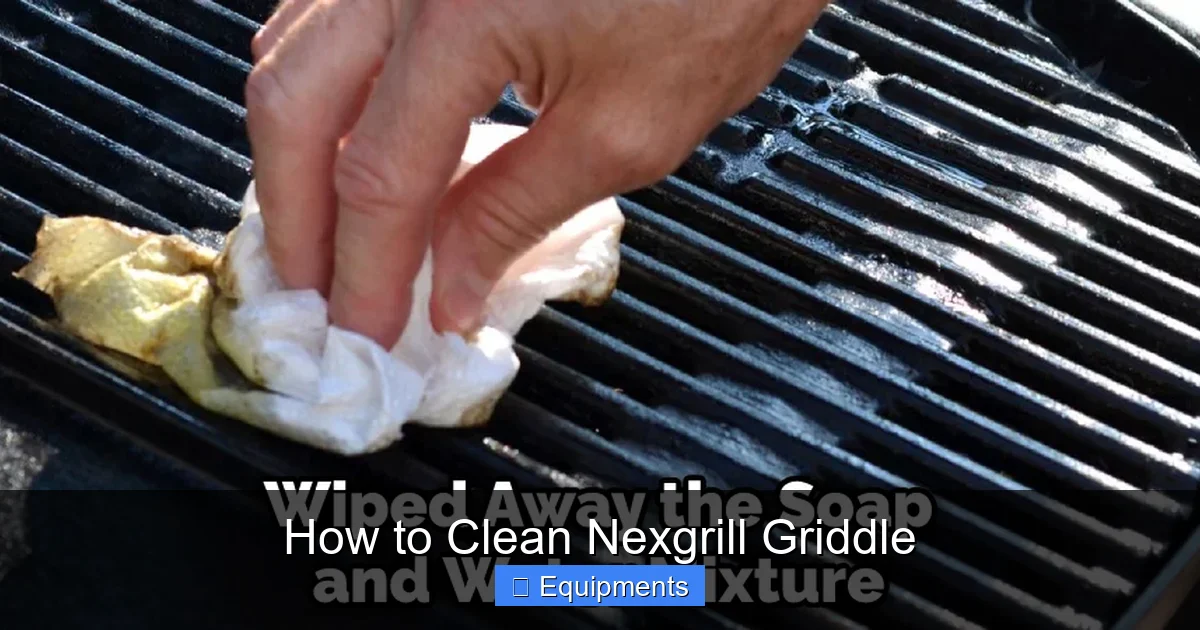
- Wipe with a damp sponge: Spray the sponge with the soapy water solution, then wipe the entire surface. Rinse the sponge and go over it again with clean water.
- Dry thoroughly: Use a clean cloth or paper towel to remove all moisture. Water left on the surface can cause rust.
- Lightly oil the griddle: Pour a teaspoon of vegetable oil onto the warm surface and spread it with a paper towel. This restores the non‑stick layer and protects against rust.
Why This Routine Works
Warm metal softens cooked-on residue, making the scraper’s job easier. A quick oiling step re‑creates the protective seasoning that prevents food from sticking and shields the steel from oxidation.
3. Weekly Deep Clean: Tackling Grease and Light Carbon
If you grill several times a week, a weekly deep clean keeps the griddle looking like new and ensures even heating.

Visual guide about How to Clean Nexgrill Griddle
Image source: thekitchenix.com
Preparing the Griddle
- Turn off the gas and disconnect the propane tank for safety.
- Remove any removable parts (burner caps, drip pans) and set them aside.
- Heat the griddle on high for 5‑7 minutes. This loosens stubborn grease.
Cleaning Process
- Scrape again: With the griddle still warm, use the scraper to remove the loosened debris.
- Apply baking soda paste: Spread a thin layer over the entire surface. Let it sit for 5‑10 minutes; the mild alkalinity breaks down carbon.
- Scrub with a soft brush: Use a non‑abrasive brush to work the paste into the metal. You’ll see the grime lift.
- Rinse and wipe: Spray the surface with clean water, wipe with a damp sponge, and repeat until no baking soda residue remains.
- Dry and season: Dry thoroughly, then oil the griddle as described in the daily routine.
- Clean removable parts: Scrub burner caps and drip pans with warm soapy water, rinse, dry, and reassemble.
Tips for Best Results
- Never use steel wool; it can scratch the steel and create rust‑prone spots.
- If the paste foams, that’s normal – it means it’s reacting with the grease.
- Work in a well‑ventilated area; the smell of heated oil can be strong.
4. Seasonal Deep Clean: Removing Heavy Carbon and Rust
Twice a year—once in spring before the grilling season and once in fall after heavy use—you’ll want a thorough overhaul.
Step‑by‑Step Seasonal Clean
- Disconnect and disassemble: Turn off the gas, disconnect the tank, and remove all removable components.
- Heat the griddle high: Bring it to maximum heat for 10‑12 minutes. This burns off most carbon.
- Cool slightly and apply vinegar: When the surface is warm (not hot), spray a 1:1 vinegar‑water mix. Let it sit 5 minutes; the acid helps dissolve rust spots.
- Scrub with a heavy‑duty brush: Use a brass‑bristle brush to scrub the entire surface. For stubborn rust, apply a paste of baking soda and water, let sit, then scrub.
- Rinse thoroughly: Rinse with plenty of water, wiping with a clean sponge until no residue remains.
- Dry immediately: Use a dry cloth or paper towels to remove every drop of water. Any lingering moisture will cause rust.
- Season the griddle: Heat the griddle on medium, then coat with a thin layer of high‑smoke‑point oil (flaxseed oil works best). Let the oil polymerize for 20‑30 minutes, then wipe off excess.
- Reassemble and test: Put the burners and drip pans back, reconnect the propane, and run a short test fire to ensure everything works.
How to Prevent Future Rust
- Store the grill with the lid closed and a breathable cover.
- After each season, apply a light coat of oil even if you don’t plan to use the grill immediately.
- Keep the grill in a dry, sheltered area; humidity accelerates rust.
5. Troubleshooting Common Issues
Problem: Food Sticks Even After Seasoning
Usually this means the seasoning layer was removed during cleaning. Re‑season by heating the griddle, applying a thin coat of oil, and letting it polymerize. Repeat 2‑3 times for a solid non‑stick surface.
Problem: Persistent Carbon Stains
Use a stronger solution of equal parts vinegar and water, let it sit, then scrub with a brass brush. For extreme cases, a commercial grill cleaner labeled safe for stainless steel can be used sparingly.
Problem: Rust Spots Appear
Light rust can be removed with a baking soda paste and gentle scrubbing. After removal, immediately dry and re‑oil the area. For deeper rust, use fine steel wool (grade 0000) very gently, then season.
Problem: Burner Flames Flicker After Cleaning
Check that the burner ports are free of debris. Use a thin wire or a pipe cleaner to clear any blockage. Re‑attach the burner and test.
6. Long‑Term Care and Storage Tips
Cover and Shelter
A high‑quality, breathable grill cover protects against dust, rain, and UV rays while allowing moisture to escape. Avoid plastic sheeting that traps condensation.
Winter Storage
If you live in a region with freezing winters, consider moving the Nexgrill to a garage or shed. Disconnect the propane tank, turn the control knobs to the “off” position, and perform a final light oiling before covering.
Regular Inspections
Every month, glance over the griddle for signs of rust, loose bolts, or gas leaks. Tighten any loose screws and replace worn-out parts promptly.
Cleaning the Exterior
The grill’s outer panels can be wiped with a mild soapy cloth. Avoid abrasive cleaners that could damage the paint or stainless finish.
Conclusion: Keep Your Nexgrill Griddle Ready for Every Sizzle
Cleaning a Nexgrill griddle is less about big, infrequent chores and more about small, consistent habits. By following the daily scrape‑and‑oil routine, a weekly baking‑soda scrub, and a seasonal deep clean, you’ll enjoy even heat, perfect sears, and a griddle that lasts for years. Remember to use the right tools, protect the surface with oil, and store the grill in a dry place. With these simple steps, every BBQ will taste better, and your Nexgrill will stay the star of the backyard.
Frequently Asked Questions
How often should I oil my Nexgrill griddle?
Lightly oil the surface after each cleaning session—daily after cooking and after any deep clean—to maintain a protective seasoning layer.
Can I use steel wool to remove rust?
Yes, but only fine‑grade (0000) steel wool and only on small rust spots. Scrub gently, rinse, dry, and re‑season immediately to prevent further corrosion.
Is it safe to use commercial grill cleaners?
Most commercial cleaners are safe if labeled for stainless steel, but they can strip the seasoning. Use them sparingly and always re‑season the griddle afterward.
Do I need to disconnect the propane tank for every cleaning?
Yes. Disconnecting the tank eliminates any risk of accidental ignition while you’re using water, vinegar, or other liquids on a warm surface.
What oil is best for seasoning the griddle?
High smoke‑point oils like flaxseed, canola, or grapeseed work best. Flaxseed oil creates a durable polymerized layer that resists sticking.
How can I prevent my griddle from rusting during storage?
Keep the griddle dry, apply a thin coat of oil before covering, store it in a sheltered area, and use a breathable cover to allow moisture to escape.
