Need to reset your Cove dishwasher? Follow our simple, step‑by‑step guide to clear error codes, reboot the control board, and get your machine back to peak performance. We cover everything from basic button combos to deep resets for stubborn issues.
Key Takeaways
- Simple button reset: Most minor glitches clear with a 3‑minute power cycle.
- Error‑code reset: Learn the exact sequence for each common Cove code.
- Deep reset procedure: When a simple reset fails, a full power‑off and control‑board reset restores functionality.
- Preventive maintenance: Regular cleaning of filters and spray arms reduces the need for resets.
- Safety first: Always disconnect power before inspecting internal components.
- When to call a technician: Persistent problems after a deep reset may indicate a hardware fault.
- Warranty considerations: Reset steps won’t void the Cove warranty when done correctly.
📑 Table of Contents
- Introduction: Why a Reset Might Be Needed
- 1. Understanding the Cove Control Panel
- 2. The Quick Reset: 3‑Minute Power Cycle
- 3. Resetting Specific Error Codes
- 4. The Deep Reset: Full Power‑Off & Control Board Reboot
- 5. Preventive Maintenance to Minimize Resets
- 6. When to Call a Professional
- Conclusion: Keep Your Cove Running Smoothly
Introduction: Why a Reset Might Be Needed
Imagine you’ve just loaded a load of dishes, pressed “Start,” and the dishwasher flashes an error code. It’s frustrating, right? Most Cove dishwasher owners face this moment at least once. The good news is that many of these hiccups are not hardware failures—they’re simple software glitches that a reset can fix.
In this guide we’ll walk you through every reset method a Cove dishwasher offers, from the quick button press to the full power‑cycle deep reset. We’ll also explain why resets work, what each error code means, and how you can keep your dishwasher from needing a reset in the first place.
1. Understanding the Cove Control Panel
What the Lights and Buttons Do
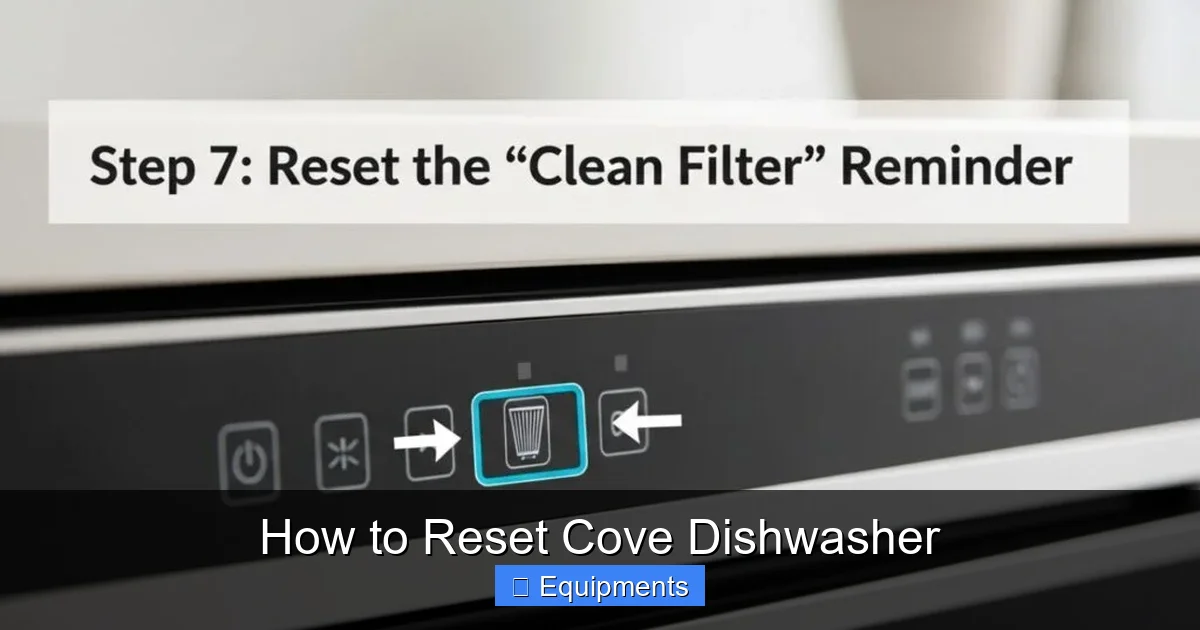
The Cove dishwasher uses a digital control board with a few key buttons: Power, Start/Pause, Cycle Select, and a small “Reset” or “Clear” icon on some models. The display panel shows cycle progress and, when something goes wrong, an error code (e.g., “E1,” “E2,” “F4”).
Visual guide about How to Reset Cove Dishwasher
Image source: homezille.com
How the Control Board Communicates
Inside the dishwasher, a micro‑processor monitors sensors (water level, temperature, door latch). If a sensor reports an out‑of‑range value, the board halts the cycle and lights up an error code. Resetting clears the stored error and lets the board re‑check the sensors.
2. The Quick Reset: 3‑Minute Power Cycle
When to Use It
The quickest fix works for most minor glitches—like a momentary power surge or a door that didn’t close fully. If the dishwasher stopped mid‑cycle and the display is frozen, try this first.
Visual guide about How to Reset Cove Dishwasher
Image source: dishwasherusa.com
Step‑by‑Step Instructions
- Step 1: Press the Power button to turn the dishwasher off.
- Step 2: Open the dishwasher door and wait 30 seconds.
- Step 3: Close the door, press the Power button again, and wait another 30 seconds.
- Step 4: After a total of 3 minutes, press the Start/Pause button to begin a new cycle.
If the dishwasher runs normally, the issue was a temporary software hiccup. No further action is needed.
3. Resetting Specific Error Codes
Common Cove Error Codes and Their Meanings
- E1 – Water Fill Error: The machine didn’t detect enough water.
- E2 – Drain Error: Water isn’t draining properly.
- E3 – Temperature Sensor Error: The sensor is reading out of range.
- F4 – Door Latch Error: The door isn’t fully closed or the latch is faulty.
Code‑Specific Reset Procedures
For each code, Cove recommends a short reset sequence before moving to deeper troubleshooting.
Visual guide about How to Reset Cove Dishwasher
Image source: dishwasherusa.com
E1 – Water Fill Reset
- Turn off power at the wall outlet or circuit breaker.
- Wait 2 minutes, then turn power back on.
- Press Start/Pause and select a “Rinse” cycle.
- If the error returns, check the water supply valve and inlet hose for kinks.
E2 – Drain Reset
- Turn off the dishwasher and pull the plug.
- Locate the drain hose (usually behind the unit).
- Remove any visible blockage and re‑attach.
- Restore power and run a short “Quick Wash” cycle.
E3 – Temperature Sensor Reset
- Power off the machine.
- Press and hold the Start/Pause button for 5 seconds.
- Release the button, turn power back on, and start a hot wash.
F4 – Door Latch Reset
- Open and close the door firmly three times.
- Press the Reset/Clear icon (if present) for 3 seconds.
- Run a “Self‑Clean” cycle to verify the latch engages.
4. The Deep Reset: Full Power‑Off & Control Board Reboot
Why a Deep Reset May Be Needed
If the quick reset and code‑specific steps don’t solve the problem, the control board may have stored a persistent fault. A deep reset clears the board’s memory, similar to rebooting a computer.
Deep Reset Procedure
- Turn off the circuit breaker: Locate the breaker labeled “Dishwasher” and flip it off.
- Unplug the unit: If your model has a plug, pull it from the outlet. Otherwise, leave the breaker off.
- Wait 10 minutes: This allows capacitors to discharge fully.
- Restore power: Flip the breaker back on and plug the dishwasher in.
- Press and hold the Start/Pause button for 10 seconds: This forces the control board to run its self‑diagnostic routine.
- Select a cycle and start: Choose a normal wash. The dishwasher should run without displaying an error.
After a deep reset, you may notice the dishwasher runs a short “pre‑wash” to recalibrate sensors. That’s normal and a sign the reset succeeded.
5. Preventive Maintenance to Minimize Resets
Cleaning the Filter and Spray Arms
Food particles can clog the filter and spray arms, causing water‑flow errors that trigger resets. Clean them monthly:
- Remove the lower rack.
- Take out the filter basket and rinse under warm water.
- Detach the spray arms (they usually twist off) and soak in a vinegar solution for 15 minutes.
- Rinse and reinstall.
Checking Water Supply and Drainage
Low water pressure or a partially blocked drain hose can generate E1 or E2 codes. Verify that the inlet valve is fully open and that the drain hose slopes at least 2 inches downward toward the sink.
Door Latch Inspection
Every few months, gently wiggle the door while it’s closed. If you feel any looseness, the latch may need tightening or replacement. A secure latch prevents F4 errors and unnecessary resets.
6. When to Call a Professional
Signs That a Reset Isn’t Enough
If you’ve tried the quick, code‑specific, and deep resets and the dishwasher still displays an error, it’s time to involve a technician. Common red flags include:
- Repeated error codes after multiple resets.
- Strange noises (grinding, buzzing) during cycles.
- Water leakage from the base.
- Burnt smell from the motor or heating element.
Choosing the Right Service
Look for a repair service that specializes in Cove appliances. Verify that they are certified, offer a warranty on parts, and can provide an estimate before starting work.
Warranty Tips
Most Cove dishwashers come with a 1‑year parts and labor warranty, extendable to 3 years with registration. Keep your purchase receipt and note the date you performed any resets—this documentation can help if a claim is needed.
Conclusion: Keep Your Cove Running Smoothly
Resetting a Cove dishwasher is often the fastest way to clear error codes and get back to clean dishes. By following the quick reset, code‑specific steps, and deep reset procedures outlined above, you’ll handle most issues without a service call. Pair these resets with regular maintenance—clean filters, check hoses, and inspect the door latch—and your dishwasher will stay reliable for years.
Remember, safety always comes first. Disconnect power before any internal inspection, and never force parts that feel stuck. With a little know‑how, you’ll feel confident tackling minor glitches and keeping your kitchen humming.
Frequently Asked Questions
How do I perform a quick reset on my Cove dishwasher?
Turn off the Power button, wait 30 seconds, close the door, turn Power back on, wait another 30 seconds, then press Start/Pause. The cycle should resume.
What does the “E1” error code mean?
E1 indicates a water‑fill problem—usually low water pressure or a blocked inlet valve. Try the specific reset steps and check the supply hose.
Can a deep reset damage my dishwasher?
No. A deep reset simply powers the unit down completely and clears the control board’s memory. It is safe when you follow the steps and keep the power off for the recommended time.
How often should I clean the filter and spray arms?
Cleaning them once a month is ideal. This prevents clogs that cause error codes and reduces the need for resets.
My dishwasher still shows an error after a deep reset. What next?
If the error persists, it may be a hardware issue such as a faulty sensor or motor. Contact a qualified Cove service technician for diagnosis.
Will resetting the dishwasher void the warranty?
No. Performing the manufacturer‑approved reset procedures does not affect the warranty, as long as you do not tamper with internal components.