You absolutely can achieve perfect slow-cooked results without a dedicated appliance. Your existing kitchen equipment—especially a heavy Dutch oven or a cast iron pot—is more than capable of replicating the magic of low, slow cooking. The key is understanding how to control and maintain a gentle, consistent heat source, whether on the stovetop or in your oven. This guide transforms your everyday cookware into a powerful slow-cooking tool.
Key Takeaways
- Your Dutch oven is the ultimate slow cooker substitute: Its heavy, heat-retaining construction and tight-fitting lid create the perfect self-basting environment for tender results on the stovetop or in the oven.
- Master the “simmer” on the stovetop: The goal is a bare, steady simmer—tiny bubbles just breaking the surface—not a rolling boil. Use a heat diffuser if your stove runs hot.
- Oven temperature is key: Your oven’s “low” setting (usually 200°F/93°C) is ideal. Always verify with an oven thermometer, as many ovens run hotter or cooler than their dial indicates.
- Liquid management differs: Stovetop and oven methods often require less initial liquid than a slow cooker because there is less evaporation through the vented lid. Check and add hot liquid if needed.
- Cast iron excels for smaller batches: A enameled or well-seasoned cast iron Dutch oven is perfect for stews, braises, and smaller cuts of meat, offering superior heat distribution.
- Never use certain cookware on direct heat: Standard ceramic slow cooker inserts, glass baking dishes, and non-enameled stoneware can shatter from thermal shock if placed on a stovetop burner.
- Searing first is non-negotiable for best flavor: Always brown meats and vegetables on the stovetop before adding liquid and beginning the long cook. This builds the foundational flavor (the Maillard reaction) that a slow cooker can’t achieve on its own.
📑 Table of Contents
- The Magic of Low and Slow: It’s a Technique, Not a Gadget
- Your Dutch Oven: The All-Star Substitute
- Cast Iron’s Other Champions: Skillets and Braisers
- The Unlikely Heroes: Clay Pots and Ceramic Bakeware
- Mastering the Stovetop-Only Method (No Oven)
- Troubleshooting and Pro Tips for Success
- Conclusion: Embrace the Freedom of Technique
The Magic of Low and Slow: It’s a Technique, Not a Gadget
Let’s clear the air right away: the term “slow cooker” is a brand name that has become a generic term for a specific appliance. But the cooking technique of slow cooking—applying gentle, prolonged heat to tough cuts of meat and hearty vegetables to break down connective tissue into silky gelatin and meld flavors—has been around for centuries. Long before the electric appliance was plugged in, our ancestors used clay pots over hearths, cast iron cauldrons over coals, and covered casseroles in the embers of a fire.
This means the method is absolutely portable to your existing kitchen. The core principle is controlled, low-temperature cooking over many hours. Your slow cooker does this with a simple, set-and-forget electric element. You, with your stovetop and oven, have even more control and, often, superior results because you can achieve better browning and more precise temperature management. The journey to learning how to slow cook without a slow cooker starts with shifting your mindset from “appliance-dependent” to “technique-focused.” You are not missing a tool; you are simply using different, often better, tools you already own.
Your Dutch Oven: The All-Star Substitute
If you own one piece of cookware that can flawlessly replace a slow cooker, it’s a good-quality Dutch oven. This heavy-walled pot, typically made of cast iron and coated in enamel, is engineered for exactly this job. Its massive thermal mass absorbs heat slowly and evenly, then radiates it consistently back into the food. The tight-fitting lid traps steam and condensation, continuously basting the food from above. This creates a perfect, self-contained miniature environment for braising and stewing.
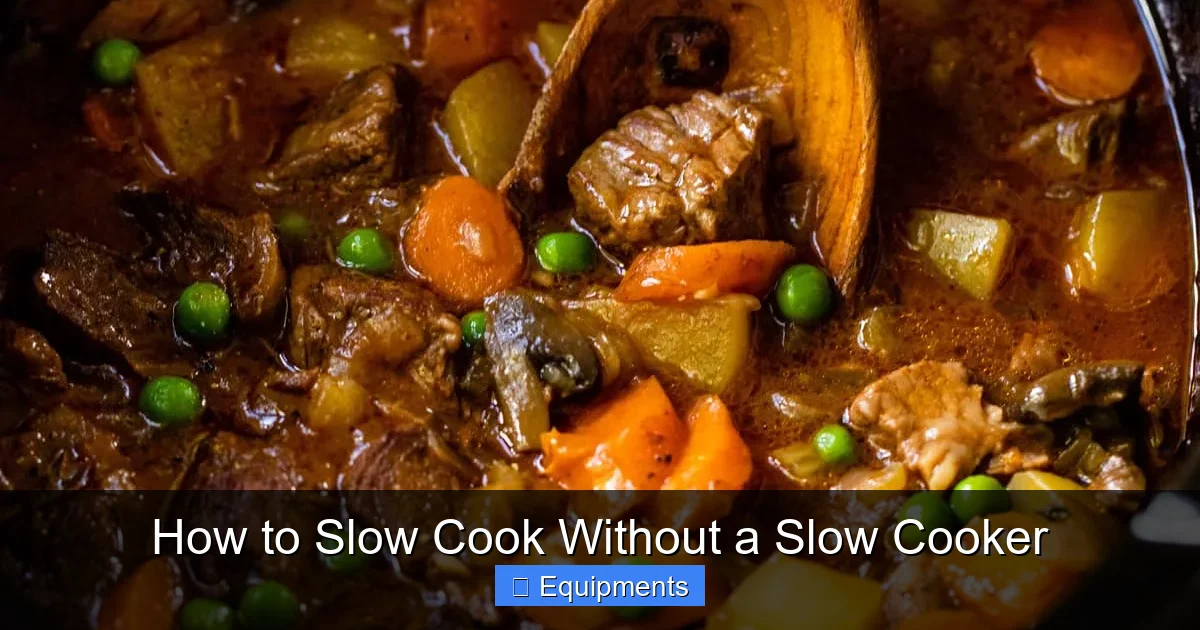
Visual guide about How to Slow Cook Without a Slow Cooker
Image source: skinnytaste.com
Choosing the Right Dutch Oven
For successful slow cooking, size matters. A 5-7 quart Dutch oven is the sweet spot for most family-sized stews and braises. It should be large enough that your ingredients are not crowded, which would cause steaming instead of proper braising, but not so large that the liquid evaporates too quickly. Enameled cast iron is ideal because it’s non-reactive (so you can cook acidic tomatoes and wine without issue) and easy to clean. A well-seasoned raw cast iron Dutch oven works wonderfully too, but requires more maintenance and is best for less acidic dishes.
The Stovetop Method: The Gentle Simmer
This is the most direct analog to a slow cooker’s function. After searing your ingredients, you add your liquid (broth, wine, water, tomatoes), bring it to a gentle simmer, then reduce the heat to the lowest possible setting that maintains that simmer.
- What “simmer” really means: Look for small, steady bubbles breaking the surface occasionally. A rolling boil is your enemy—it will toughen meat and evaporate liquid too fast. If your stove’s lowest setting is still too vigorous, use a heat diffuser (a metal plate that sits between the burner and pot) to further disperse the heat.
- Lid management: Keep the lid on tight for the majority of the cooking time to retain heat and moisture. For the last 30-60 minutes, you can partially uncover the lid if you want to thicken a sauce or reduce a gravy.
- Time adjustments: Stovetop heat can vary wildly between burners. A recipe for a 6-hour slow cooker setting might take 3-4 hours on a low simmer on your stove. Start checking for tenderness at the 2.5-hour mark for smaller cuts, and 3.5 hours for larger ones.
The Oven Method: Unbeatable Evenness
The oven is arguably the best environment for slow cooking without a slow cooker. It provides ambient, surround heat that eliminates hot spots, which can sometimes occur on a stovetop. The temperature is also incredibly stable.
- Setting the temperature: Preheat your oven to 200°F to 250°F (93°C to 121°C). The lower end (200°F) is for ultra-long, overnight-style cooks (8+ hours). The higher end (250°F) is for standard 4-6 hour cooks. Crucially, use an oven thermometer. Many home ovens are inaccurate, and a setting of “200°F” may actually be 180°F or 225°F, drastically changing your cook time.
- The process: After searing and assembling your dish in your Dutch oven on the stovetop, bring the liquid to a simmer on the burner. Then, transfer the entire covered pot directly into the preheated oven. Do not preheat the empty pot in the oven, as this can cause thermal shock. Let it cook undisturbed. The oven’s dry heat combined with the pot’s moisture creates a superb braising environment.
- Advantages: No need to monitor a simmer. No risk of a burner being turned up accidentally. Perfect, even heat. This is the most hands-off method outside of an actual slow cooker.
Cast Iron’s Other Champions: Skillets and Braisers
You don’t need a full Dutch oven to succeed. A large, heavy cast iron skillet with a lid or a cast iron braiser (a shallow, wide Dutch oven) are excellent for smaller batches or flatter cuts of meat like short ribs or pork shoulder steaks.
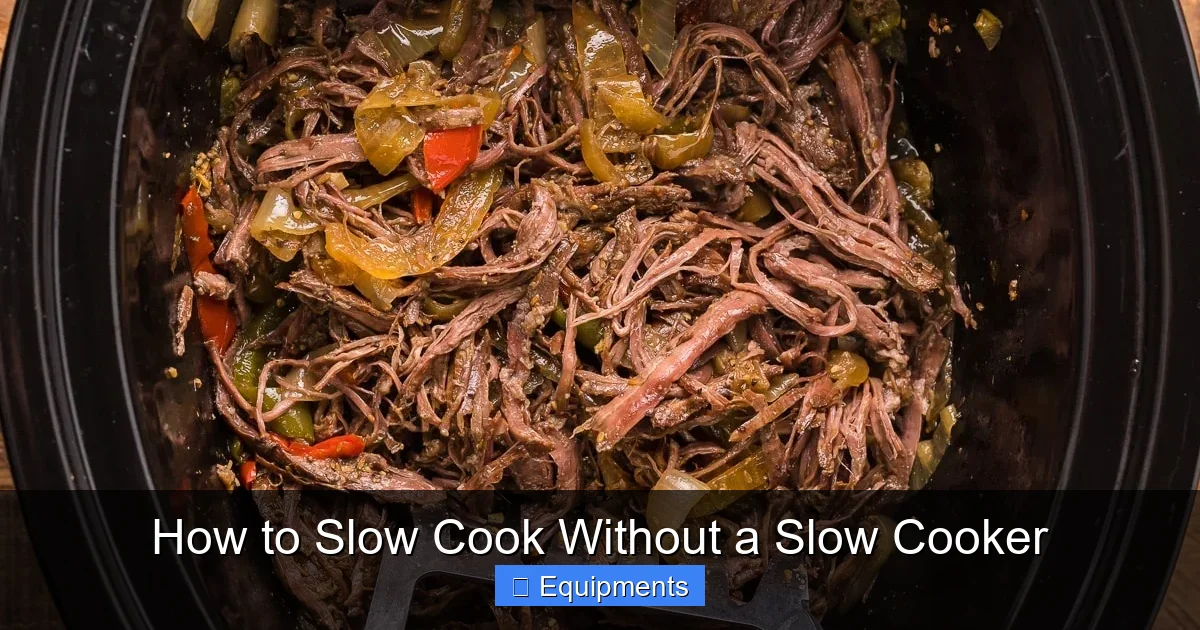
Visual guide about How to Slow Cook Without a Slow Cooker
Image source: themagicalslowcooker.com
Adapting for Shallow Pans
The main consideration with a shallower pan is evaporation. With less volume of liquid and more surface area exposed, the cooking liquid will reduce faster.
- Compensate with more liquid: Start with about 25-50% more liquid than a deep pot recipe calls for.
- Monitor more frequently: Check every 60-90 minutes to ensure the liquid hasn’t cooked down to the point of burning. If it’s getting low, add hot liquid (cold liquid will shock the pot and extend cook time).
- Ideal dishes: These pans are perfect for “frenched” lamb racks braised in red wine, a batch of coq au vin, or a single large pork shank. The wide surface allows for more evaporation and concentration of flavors in the final sauce.
The Unlikely Heroes: Clay Pots and Ceramic Bakeware
This is where we tread carefully. Traditional clay pots (like a Mexican cazuela or a French terrine) and stoneware baking dishes are fantastic for slow, gentle cooking because they are poor conductors of heat. They heat up slowly and cool down slowly, providing very even, gentle warmth. However, they have one critical weakness: thermal shock. They cannot go from stovetop to oven or from fridge to oven directly.
The Safe, Approved Method for Clay and Ceramic
To use these vessels for slow cooking safely, you must treat them as purely oven-bound tools.
- Step 1: Sear on the side. Brown your meat and vegetables in a separate skillet (preferably cast iron). This builds the crucial flavor foundation.
- Step 2: Assemble in the cold clay/ceramic dish. Transfer the seared ingredients to your room-temperature clay pot. Add your cold liquid and any other ingredients.
- Step 3: Low and slow in the oven. Place the cold dish into a cold oven, then set the temperature to 250°F (121°C). This gradual heating is essential to prevent cracking. Let the oven and dish heat up together. Cook for the desired time (usually 4-6 hours). The results are incredibly tender and moist.
- NEVER do this: Do not place a clay pot on a stovetop flame or electric coil. Do not pour hot liquid into a cold clay pot. Do not take a hot clay pot from the oven and set it on a cold surface.
Mastering the Stovetop-Only Method (No Oven)
What if you don’t have an oven or it’s broken? You can still slow cook entirely on the stovetop, but it requires the most active management. The technique is essentially a prolonged braise.
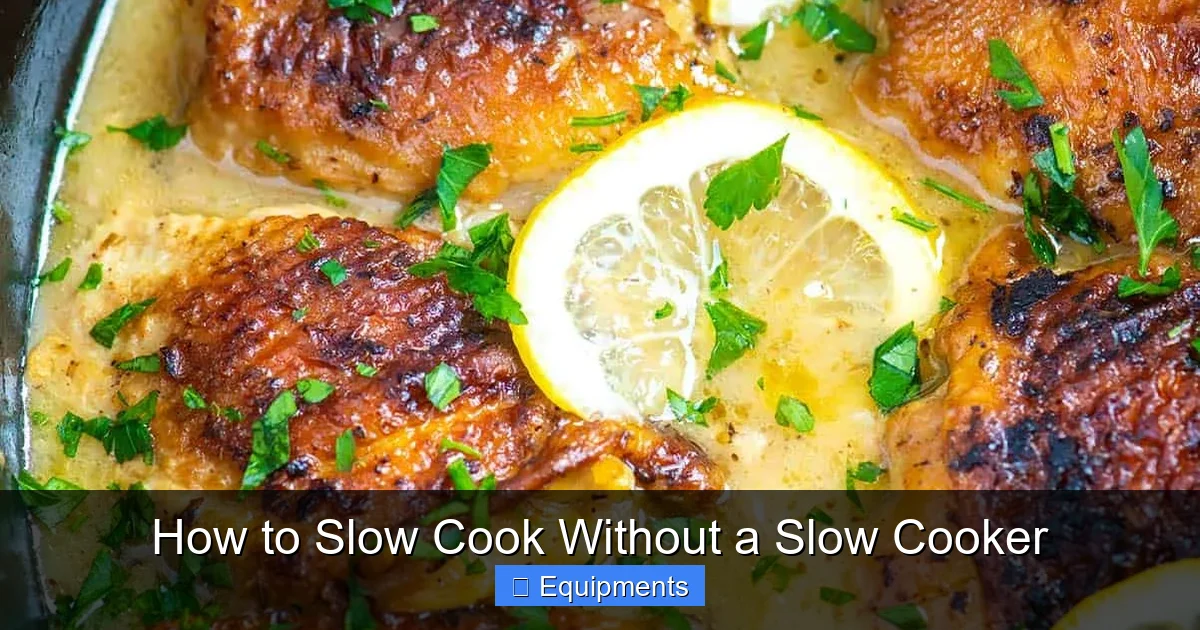
Visual guide about How to Slow Cook Without a Slow Cooker
Image source: inspiredtaste.net
Step-by-Step Stovetop Braising
- Sear aggressively. Get a deep, dark crust on all sides of your meat in a little oil over medium-high heat. This is where the flavor lives. Remove and set aside.
- Sweat aromatics. In the same fat, cook onions, carrots, celery, garlic, etc., until softened but not browned.
- Deglaze. Pour in a cup of wine, beer, or broth, scraping the browned bits (fond) from the bottom of the pot with a wooden spoon. This dissolves the flavor.
- Add liquid and meat. Return the meat to the pot. Add enough *additional* hot liquid to come about 1/3 to 1/2 way up the side of the meat (not covering it completely). Bring to a bare simmer.
- Reduce to the lowest possible heat. This is the most important step. You want the tiniest bubbles. Cover tightly with the lid.
- Check and turn periodically. Every 45-60 minutes, carefully lift the lid, turn the meat over (if possible), and check the liquid level. Add a splash of hot water or broth if it’s getting too low. The goal is to maintain a constant, gentle cooking environment.
Expected Cook Times: For a 3-4 lb pork shoulder or beef chuck roast, plan for 3.5 to 4.5 hours on the stovetop. The meat should be fork-tender and pull apart easily. The sauce will reduce significantly, so you may need to add more liquid than you would in an oven method.
Troubleshooting and Pro Tips for Success
Slow cooking without the appliance is straightforward, but a few common pitfalls can derail your dish. Here’s how to avoid them and ensure perfect results every time.
“My meat is still tough after 4 hours!”
This means the connective tissue hasn’t fully broken down. The solution is more time and lower heat. Tough cuts need patience. If using the stovetop, ensure your heat is low enough. If using the oven, verify the actual temperature with your thermometer. It’s better to cook longer at a slightly lower temp than to rush it at a higher temp, which will just make the meat dry and stringy.
“My sauce is too thin / too thick.”
Thickening: With the lid off, simmer the sauce on the stovetop (or in the oven if your Dutch oven is stovetop-safe) to reduce it to your desired consistency. Thinning: Add a little hot broth or water. Remember, sauces thicken as they cool, so judge consistency when the dish is hot but not boiling.
“I don’t have a Dutch oven. Can I use a regular pot?”
You can, but with caveats. A thin, inexpensive stainless steel or aluminum pot will have hot spots and lose heat quickly when you lift the lid. It’s not ideal. If you must use one, use a flame tamer or heat diffuser on your burner to create more even, gentle heat. Expect to check it more frequently for sticking or scorching. A heavy, multi-ply (clad) stainless steel pot with an aluminum or copper core is a much better substitute.
The Golden Rule: S.E.A.R. First
I cannot emphasize this enough. Searing is not optional. It is the step that creates the deep, complex, savory flavor that defines a great braise. A slow cooker alone cannot brown food. This is your advantage. Take the extra 10 minutes to get a serious crust on your meat. Your final dish will be in a different flavor league.
Conclusion: Embrace the Freedom of Technique
Learning how to slow cook without a slow cooker doesn’t feel like a compromise; it feels like an upgrade. You gain precise control over the browning stage, you can use the superior heat distribution of your oven, and you eliminate the need for a single-purpose appliance that takes up precious cabinet space. Your Dutch oven, that timeless workhorse, is waiting to become your new favorite slow-cooking vessel. By mastering the simple principles of low heat, a tight seal, and patient time, you unlock a world of incredibly flavorful, fall-apart-tender meals. The next time a recipe calls for a slow cooker, look at your stovetop and oven with new confidence. You have the tools. You have the technique. Now go make something amazing.
Frequently Asked Questions
Can I use a pressure cooker (Instant Pot) as a slow cooker?
No. A pressure cooker uses high pressure and steam to cook food very quickly. The “slow cook” function on some multi-cookers is a low-temperature setting, but it often runs hotter (around 190°F) than a dedicated slow cooker and lacks the same moisture retention. Results can be drier. For true slow cooking, stick with the stovetop or oven methods described.
What about using a rice cooker or multicooker?
Most rice cookers and basic multicookers do not have a “keep warm” or low-temperature setting that is low enough for proper slow cooking (they typically stay above 200°F). They are designed to bring liquids to a boil and then switch to a warm setting, which is not suitable for the long, gentle cook required. It’s not a recommended method.
How do I convert a slow cooker recipe to the stovetop or oven?
For stovetop: After searing, use about 25% less liquid, as there’s less evaporation through a tight-fitting stovetop lid vs. a vented slow cooker lid. Simmer on lowest heat for roughly half the slow cooker time, then check for tenderness. For oven: Use a 200°F-250°F oven. Liquid amounts are similar to the stovetop method. Cook time is also roughly half the slow cooker’s “Low” setting time. Always check for doneness earlier than the converted time suggests.
Can I put my ceramic slow cooker insert on the stove?
Absolutely not. Standard ceramic or stoneware inserts for electric slow cookers are designed for low, moist heat only. Placing them directly on a stovetop burner (gas or electric) will almost certainly cause thermal shock, leading to cracks or a violent shatter. They are for use in the appliance base only.
What’s the best cut of meat for stovetop/oven slow cooking?
The same cuts that excel in a slow cooker are perfect here: tough, well-marbled, connective-tissue-rich cuts. Look for chuck roast, brisket, pork shoulder (Boston butt), short ribs, shank, and lamb shoulder. These cuts become succulent and fork-tender after 3-6 hours of low, slow cooking. Lean cuts like pork tenderloin or chicken breast will become dry and are not suitable for this method.
My oven doesn’t go below 250°F. Can I still slow cook?
Yes, but you must be more vigilant. At 250°F, cooking times will be shorter than at 200°F—closer to the half-time of a slow cooker’s “Low” setting. Check for tenderness 1-1.5 hours earlier than you would at 200°F. You may also need to add a bit more liquid initially and ensure your pot has a very tight seal to prevent excessive moisture loss at the higher temperature. Using a water bath (placing your covered pot in a larger pan with hot water) can help create a more humid, gentle oven environment.
Pingback: How to Cook Pork Tenderloin - kitchenandhouseware.com