The KitchenAid K400 blender is a premium, high-performance countertop workhorse. It combines legendary KitchenAid design with serious power, featuring a robust 1.5-horsepower motor and unique Intelli-Speed Blend Control that automatically adjusts speed for perfect results. Its sturdy glass jar, intuitive controls, and included tamper make it exceptionally versatile, handling everything from silky smooth soups and nut butters to frozen drinks with ease. While it’s a significant investment and has a larger footprint, its exceptional build quality, quiet operation for its class, and consistent performance justify the cost for serious home cooks who value durability and results.
Key Takeaways
- Serious Power & Smart Control: The 1.5-horsepower motor with Intelli-Speed Blend Control delivers consistent, efficient blending by automatically adjusting speed, eliminating the guesswork for perfect textures every time.
- Iconic, Durable Design: It features the quintessential KitchenAid aesthetic with a die-cast metal base, a heavy-duty 56-ounce BPA-free glass jar, and a robust construction built to last for years.
- User-Friendly & Intuitive: The simple rotary speed dial with pulse function and clear presets (Ice Crush, Smoothie, Soup, etc.) make it accessible for beginners while offering precision for enthusiasts.
- Effortless Cleaning: The self-cleaning cycle and dishwasher-safe jar, lid, and blade assembly significantly reduce post-blending cleanup hassle, a major perk for daily use.
- Remarkably Versatile: From crushing ice and making hot soups to grinding dry ingredients and whipping cream, its power and included tamper allow it to tackle a far wider range of tasks than standard blenders.
- Quieter Than Expected: For a blender with this much power, it operates at a relatively low decibel level, making it less disruptive in an open kitchen layout.
- Premium Price, Premium Value: It sits at a higher price point, but the combination of power, durability, brand heritage, and consistent results offers long-term value for frequent cooks.
📑 Table of Contents
- The KitchenAid K400: More Than Just a Pretty Face
- Design & Build Quality: A Testament to KitchenAid’s Heritage
- Performance & Power: The Intelli-Speed Blend Control in Action
- Controls & Interface: Simplicity Meets Intelligence
- Cleaning & Maintenance: A Breeze, Thanks to Smart Design
- Versatility & Real-World Use Cases: Is It Worth the Counter Space?
- Comparison & Value: How Does It Stack Up?
- Final Verdict: Who Is the KitchenAid K400 For?
The KitchenAid K400: More Than Just a Pretty Face
Let’s be honest. When you think of KitchenAid, you probably picture that gorgeous, iconic stand mixer in a rainbow of colors gracing countless kitchen countertops. It’s a symbol of baking passion and quality. But what about their blenders? The KitchenAid K400 blender aims to bring that same mix of heritage design and serious performance to the blending world. It’s not just an accessory; it’s positioned as a primary workhorse. In this comprehensive KitchenAid K400 blender review, we’re going beyond the sleek curves to see if this premium appliance truly delivers on its promises of power, precision, and versatility. Is it the ultimate blending solution for your kitchen, or is it style over substance? We’ve put it through its paces with everything from morning smoothies to tough nut butters to find out.
First Impressions: Unboxing and Setup
Taking the K400 out of the box is an experience in itself. The weight is immediately noticeable—this thing is solid. The die-cast metal base feels substantial and stable, a clear indicator it’s built to withstand daily use without walking across the counter. The glass jar is heavy, thick, and feels premium, not like the flimsy plastic you might find on budget models. Assembly is frustratingly simple: place the jar on the base, lock the blade assembly into the jar, and snap the lid on with its sealed gasket. The included tamper, a crucial tool for thick mixes, slots neatly into the lid. Within minutes, you’re ready to go. The initial setup reinforces the feeling that you’ve invested in a tool built for the long haul.
Design & Build Quality: A Testament to KitchenAid’s Heritage
The KitchenAid K400 doesn’t just borrow the brand’s look; it fully embraces it. This is a blender designed to be seen, not hidden in a cupboard. Its design language is consistent with the stand mixer family, available in a wide array of classic and seasonal colors to match your other appliances or make a statement.

Visual guide about Kitchenaid K400 Blender Review
Image source: blenderspro.com
Materials and Construction
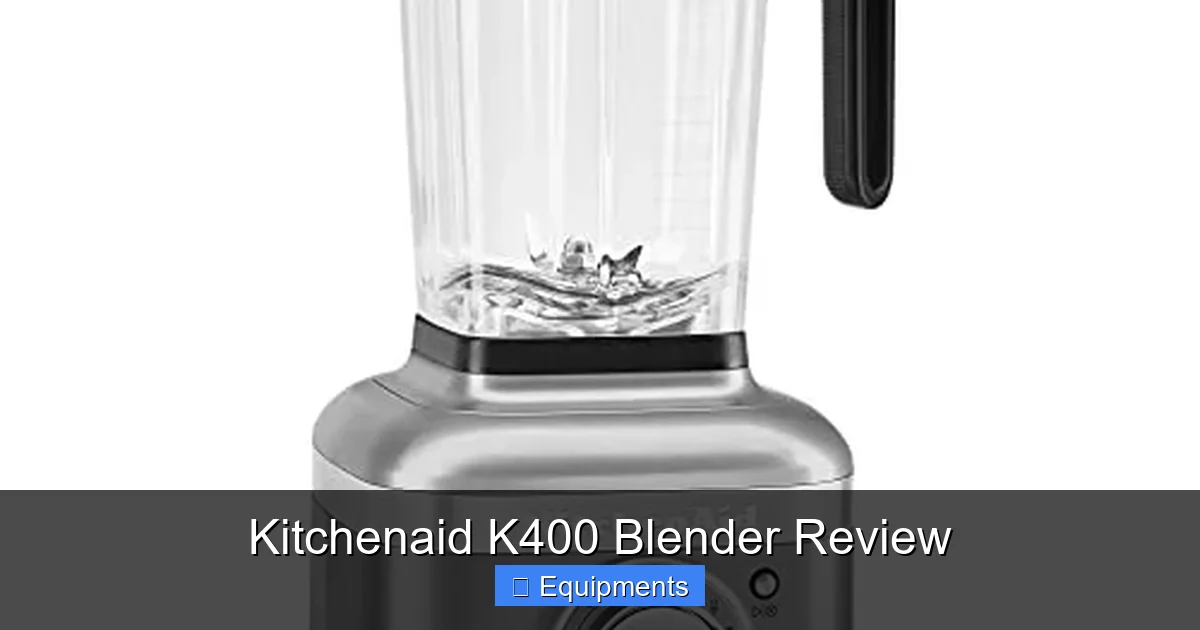
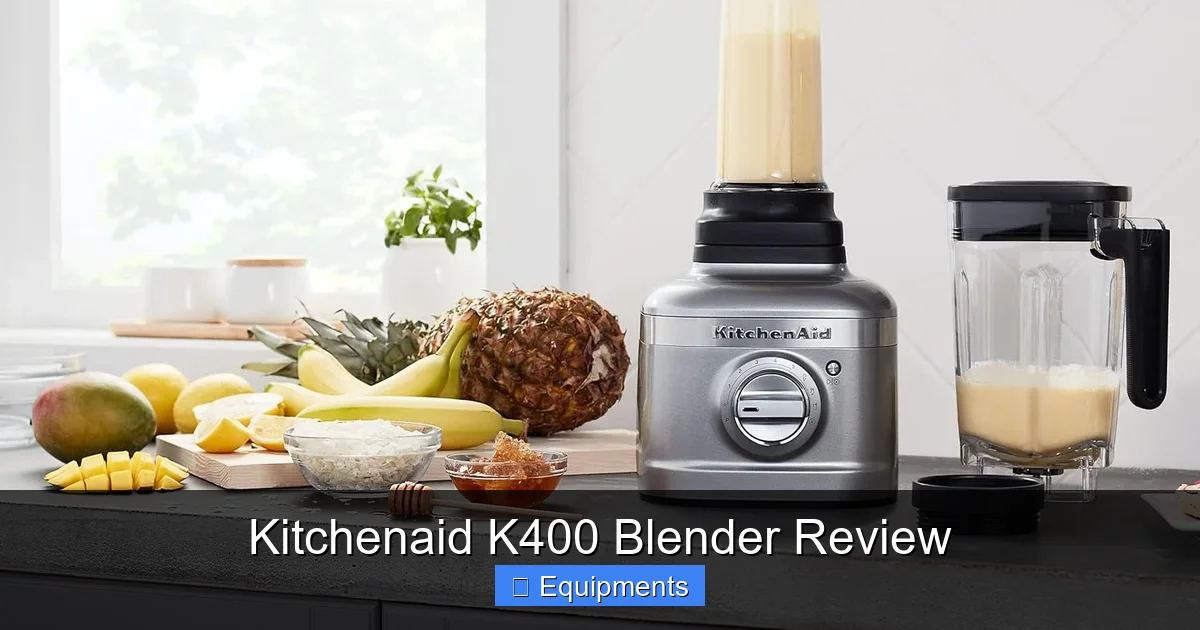
The foundation is a die-cast metal base, which provides a low center of gravity and prevents vibration. It’s anchored by four suction-cup feet that keep it firmly planted, even when crushing a full pitcher of ice. The control panel is a sleek, integrated panel on the front with a rotary dial and five preset buttons. It’s smooth, easy to wipe clean, and has a premium feel. The star of the show is the 56-ounce (1.6 L) BPA-free glass jar. Glass is heavier than plastic, but it has huge advantages: it doesn’t scratch, it won’t absorb odors or stains from vibrant ingredients like beets or turmeric, and it doesn’t warp under hot liquids. The jar sits on a rubber gasket for a secure, leak-proof seal. The three-blade, stainless steel assembly is sturdy and fixed, which is standard for high-performance blenders.
Ergonomics and Footprint
This is a large blender. The jar is tall and wide, and the base is substantial. It demands significant counter space. If you have a small kitchen with limited real estate, this is a crucial consideration. However, its heft is a trade-off for stability. You won’t be pushing it around. The lid has a removable plug in the center, which is where you insert the tamper. The tamper itself is a well-designed, long plastic tool with a flat bottom, perfect for pushing ingredients down toward the blades without stopping the blender (a critical safety feature—the blades only spin when the lid is securely locked). The overall design is not just about aesthetics; every element, from the weight distribution to the tamper design, speaks to purposeful engineering for effective blending.
Performance & Power: The Intelli-Speed Blend Control in Action
This is where the KitchenAid K400 blender aims to separate itself from the pack. Its headline spec is a 1.5-peak horsepower motor. But more interesting is the proprietary Intelli-Speed Blend Control. This system uses a sensor to monitor the load on the motor and automatically adjusts the speed in real-time to maintain optimal blending performance. In theory, this means you don’t have to babysit the blender, starting slow and ramping up. You select your preset or speed, and the blender does the thinking.
Visual guide about Kitchenaid K400 Blender Review
Image source: m.media-amazon.com
Crushing Ice and Frozen Ingredients
We started with the “Ice Crush” preset, loading the jar with a full container of ice cubes. The result was impressively uniform, snow-like crushed ice in about 25 seconds. No large chunks were left behind. The motor didn’t strain; it simply powered through. This is a key test for any blender’s raw power, and the K400 passes with flying colors. We also made frozen fruit smoothies from a solid block of berries and banana. The preset for “Smoothie” worked perfectly, pulsing and ramping to create a thick, creamy, and smooth consistency without any icy bits. The tamper was useful here to help incorporate the last stubborn bits of frozen fruit without stopping the machine.
Making Hot Soups and Silky Sauces
The ability to make hot soup directly in the blender jar is a major selling point for high-powered models. We followed a standard recipe for carrot ginger soup, with cooked, cooled carrots and ginger blended on the “Soup” preset. The friction from the blades heated the soup to a steaming, serving temperature in under 90 seconds. The texture was velvety smooth and restaurant-quality. The glass jar handled the heat transition without issue. We also tested emulsified sauces like mayonnaise and aioli. The “Smoothie” preset, with its gradual speed increase, created a perfect, stable emulsion quickly. The consistency was consistently smooth, with no separation.
Tackling Tough Tasks: Nut Butters and Dry Grinding
This is the real test of a blender’s mettle. Can it turn whole nuts into butter without overheating or stalling? We processed a full jar of raw almonds. The K400 required a bit of patience—we used the pulse function initially to break the nuts down, then let it run on a medium-high speed (around 6-7 on the dial). The motor stayed cool, and after a few minutes of processing (with occasional scraping of the sides), we had smooth, runny almond butter. It’s not quite as fast as a dedicated food processor, but it did the job without complaint. For dry grinding, like making oat flour or spice blends, the results were fine and even. The key is not overloading the jar and using the pulse to start. The Intelli-Speed system did seem to modulate the power effectively during these heavy-duty tasks, preventing the motor from bogging down completely.
Controls & Interface: Simplicity Meets Intelligence
The control system on the KitchenAid K400 is a standout feature for its ease of use. It’s designed to be intuitive for anyone, from the novice to the experienced cook.
Visual guide about Kitchenaid K400 Blender Review
Image source: productexplorerhub.com
The Rotary Dial and Preset Buttons
The main interface is a large, comfortable rotary dial that controls the variable speed from 1 (stir) to 10 (liquefy). Around this dial are five illuminated preset buttons: Ice Crush, Smoothie, Soup, Clean, and Dips & Dressings. This is the core of the user-friendly experience. Want a smoothie? Press “Smoothie.” The blender starts, ramps up to the optimal speed for that task, runs for a pre-set time (usually 45-60 seconds), and then stops automatically. You don’t need to watch it or adjust anything. The “Clean” preset is a fantastic convenience—just add warm water and a drop of dish soap, select “Clean,” and the blender agitates the contents for 60 seconds, doing most of the work for you.
Pulse Function and Variable Speed
For more control, the dial also has a dedicated Pulse position. This gives you short bursts of power, perfect for chopping, folding in ingredients, or getting that last bit of mixture moving without over-processing. The variable speed (1-10) is smooth and responsive. Lower speeds are great for stirring, chopping soft fruits, or starting a thick mix before ramping up. The dial has a satisfying, solid click as you turn it. The entire interface is spill-resistant and easy to wipe down, a practical touch for a kitchen workhorse.
Cleaning & Maintenance: A Breeze, Thanks to Smart Design
For many, the post-blending cleanup is the biggest deterrent to using a blender regularly. The KitchenAid K400 addresses this head-on with several thoughtful features.
The Self-Cleaning Cycle
The “Clean” preset is a game-changer. After blending, you simply empty any remaining contents, add about 12 ounces of warm water and a drop of mild dish soap, secure the lid, and press the “Clean” button. The blender runs for 60 seconds, with the blades spinning at a high speed to agitate and scrub the inside of the jar. After it finishes, you just rinse the jar and lid. For most everyday smoothies and shakes, this is all you need. It’s incredibly effective at removing residue from the sides and bottom.
Dishwasher-Safe Components
When you need a deeper clean or want to put everything in the dishwasher, you’re covered. The glass jar, lid, sealing gasket, and the blade assembly are all officially dishwasher-safe (top rack recommended). This is a major perk. We ran all these parts through multiple dishwasher cycles, and they emerged clean, undamaged, and with no warping or clouding of the glass. The only component that needs handwashing is the motor base—just wipe it with a damp cloth. The simplicity of this process means you’re far more likely to use the blender daily without dread.
Versatility & Real-World Use Cases: Is It Worth the Counter Space?
A blender’s true value is determined by how many kitchen tasks it can replace. The KitchenAid K400 aims to be a multi-purpose tool, and in practice, it comes remarkably close.
Beyond Smoothies: A True All-in-One
We used it for:
- Frozen Drinks & Margaritas: The “Ice Crush” preset pulverizes ice perfectly for slushy cocktails.
- Baby Food: Making small batches of purees is effortless, yielding a perfectly smooth texture.
- Batter: Pancake and waffle batter came out smooth and lump-free.
- Whipped Cream: Using the “Smoothie” preset on low speed with cream and sugar produced stable, fluffy whipped cream.
- Cheese Sauce: Blended a homemade cheese sauce to a flawless, velvety consistency.
- Hummus & Dips: The “Dips & Dressings” preset handled chickpeas and tahini for smooth hummus. The tamper was essential here.
- Nut & Seed Butters: As mentioned, it works, though it requires patience and scraping.
The included tamper is the key to this versatility. It allows you to process thick, dry, or stuck ingredients safely while the blender is running, which is impossible on most models without stopping and scraping.
Limitations to Consider
It’s not perfect for every single job. Because the blade assembly is fixed (not extractable), getting the last bit of thick nut butter or dough out requires a spatula. It’s also not a substitute for a food processor when it comes to shredding, slicing, or kneading dough. For very small batches (e.g., a single serving of dressing), the wide jar can be inefficient—ingredients may not reach the blades effectively. But for its core purpose—blending, pureeing, crushing, and emulsifying—its range is exceptional.
Comparison & Value: How Does It Stack Up?
The premium blender market is competitive. How does the KitchenAid K400 compare to other popular high-end options like the Vitamix 5200 or the Blendtec Designer series?
Vs. Vitamix 5200
The Vitamix is often considered the gold standard for power and durability, with a slightly more powerful motor (2.0 peak HP) and a variable speed dial with more granular control. Its container is also narrower, which creates a stronger vortex for smoother blends, especially with small batches. However, the Vitamix lacks the convenient presets and the self-cleaning cycle of the K400. It’s also typically louder. The K400 offers a more user-friendly, preset-driven experience with comparable (though slightly lower) power and a quieter operation, wrapped in a more traditionally “kitchen-appliance” aesthetic.
Vs. Blendtec Designer
Blendtec models are known for their sheer power and innovative, wide, flat jar design that eliminates the need for a tamper in many cases. They have very similar preset programs. The K400’s glass jar is a significant differentiator—Blendtec uses Tritan plastic, which is durable but can scratch and stain over time. The K400’s glass feels more premium and hygienic. The Blendtec can be slightly louder. The choice often comes down to jar preference (glass vs. plastic) and brand loyalty.
Is the K400 Worth the Price?
The KitchenAid K400 blender is not a budget appliance. It’s a significant investment. Its value lies in its combination of factors: the iconic, durable design you’ll want to leave out; the powerful, smart motor that delivers consistent results with minimal input; the ultra-convenient presets and self-clean cycle; and the versatility to handle dozens of tasks. If you blend daily—for smoothies, soups, sauces, or cocktails—and you want a reliable, powerful, and beautiful tool that will last a decade, the price is justified. It replaces the need for a separate food processor for many tasks and eliminates the frustration of under-powered blenders. For the casual user who only makes a smoothie once a month, it’s overkill. But for the home chef who views their kitchen as the heart of the home and wants a do-it-all powerhouse, the K400 is an excellent, value-packed choice.
Final Verdict: Who Is the KitchenAid K400 For?
After extensive testing, the KitchenAid K400 blender emerges as a top-tier performer that successfully marries iconic design with formidable blending power. Its Intelli-Speed Blend Control genuinely simplifies the blending process, taking the guesswork out of achieving perfect textures. The build quality is exceptional, from the heavy metal base to the premium glass jar. The user interface is the most intuitive in its class, and the self-cleaning cycle is a daily convenience that cannot be overstated.
This is not the absolute most powerful blender on the market, but it has more than enough power for 99% of home cooking tasks. It excels at its core functions: crushing ice, making silky smooth soups and smoothies, and whipping up dips and dressings. Its ability to handle nut butters and dry grinding solidifies its versatility.
You should buy the KitchenAid K400 if: You are a frequent home cook who values durability and performance, you want a blender that looks as good as it works, you appreciate convenience features like presets and self-cleaning, and you need a versatile tool for a wide range of recipes. You are investing in a long-term kitchen centerpiece.
You might look elsewhere if: Your counter space is extremely limited, your budget is tight, you require the absolute maximum power for commercial-level nut butter production (where a Vitamix might edge it out), or you primarily need a small-batch processor for chopping and slicing.
Ultimately, the KitchenAid K400 blender lives up to its premium reputation. It’s a beautifully engineered, powerful, and incredibly user-friendly appliance that earns its place on the counter. For those ready to make that investment, it delivers a blending experience that is both effortlessly simple and remarkably capable.
Frequently Asked Questions
Is the KitchenAid K400 blender loud?
For a blender with a 1.5 HP motor, it is relatively quiet. It has a deep, steady sound rather than a high-pitched whine. It’s not silent, but it’s not as disruptive as many blenders in its power class, making it more pleasant to use in an open-plan kitchen.
Can I blend hot liquids in the K400?
Yes, absolutely. The BPA-free glass jar is perfectly safe for hot liquids. The “Soup” preset is specifically designed for this, using the friction from the blades to heat ingredients to a serving temperature. Just always start with a lower speed and use the lid’s sealed plug to avoid steam bursts.
What is the warranty on the KitchenAid K400?
KitchenAid offers a limited warranty of 1 year from the date of purchase for the K400 blender, covering defects in materials and workmanship. It’s advisable to register your product online with KitchenAid for warranty support.
Can I use my old KitchenAid blender jars or attachments on the K400 base?
No. The K400 has a specific jar and blade assembly design that is not compatible with older KitchenAid blender models or their attachments. The jar locking mechanism and electrical connections are unique to this model line.
Can it grind dry ingredients like grains or spices?
Yes, it can effectively grind dry ingredients like oats into flour, coffee beans, or whole spices. For best results, use the pulse function in short bursts and avoid overfilling the jar. It’s not a dedicated burr grinder, but it handles small-batch dry grinding very well.
Is the K400 suitable for professional or commercial use?
No. The K400 is designed and warranted for residential, household use only. While it is powerful and durable, it does not meet the rigorous demands, duty cycles, or certification requirements for commercial food service environments. For commercial use, look for blenders specifically rated for that purpose.