Cooking a pork roast at 375°F typically takes 20-30 minutes per pound, but the ONLY reliable way to ensure perfection is by using a meat thermometer to hit an internal temperature of 145°F (medium-rare) to 160°F (well-done). In 2026, the best tip is to invest in a fast, accurate instant-read thermometer and understand how your specific oven and the roast’s size/shape affect cooking time. Let it rest for at least 10 minutes before slicing to lock in juices.
Key Takeaways
- Thermometer Over Time: Always cook to temperature (145°F-160°F), not by the clock. A quality instant-read thermometer is the single most important tool.
- General Rule of Thumb: Plan for 20-30 minutes per pound at 375°F for a boneless roast, and 25-35 minutes per pound for a bone-in roast.
- Rest is Mandatory: Let the roast rest, tented with foil, for 10-20 minutes. This allows juices to redistribute, preventing a dry final product.
- Equipment Matters: A convection oven will cook 15-25% faster. Use a heavy, rimmed baking sheet or roasting pan for even heat distribution.
- Size & Shape are Key: A long, thin roast cooks faster than a compact, round one of the same weight. Adjust time based on shape, not just pounds.
- Seasoning & Prep: Pat the roast completely dry and season generously. A simple rub of salt, pepper, garlic, and herbs creates a flavorful crust that protects the meat.
- 2026 Forward Tip: Consider a smart oven with precision temperature probes or a leave-in digital thermometer for hands-off monitoring and perfect doneness.
📑 Table of Contents
Why 375°F is the Sweet Spot for Pork Roast
So, you’ve got a beautiful pork roast—maybe a loin, a shoulder, or a tenderloin—and you’re ready to transform it into a stunning centerpiece. You set your oven to 375°F. It’s a classic temperature, and for excellent reason. But here’s the first and most crucial truth we need to establish in 2026: the question isn’t just “how long?” It’s “how long for *this specific roast* in *my specific oven* to reach *my desired level of doneness*?”
Cooking at 375°F hits that ideal balance. It’s hot enough to create a gorgeous, caramelized crust (the Maillard reaction in action!) that locks in flavor and moisture, but not so aggressively hot that the outer layers burn before the center cooks through. It’s a steady, reliable heat that works beautifully for most standard pork roasts, from a 2-pound tenderloin to a 5-pound shoulder. This temperature gives you control, predictability, and a lower risk of a dry, overcooked interior compared to blazing 425°F or slower 325°F methods. But control requires the right tools and knowledge.
The Golden Rule: Temperature Trumps Time
Let’s say it again, because it’s that important: time is a guideline, temperature is the law. Your oven might run hot or cold. Your roast might be denser or have more fat marbling. The starting temperature of the meat (chilled vs. room temp) matters. Relying solely on time is a gamble. The only way to guarantee a juicy, safe, and perfectly cooked pork roast is with an accurate meat thermometer.
The USDA updated its safe cooking guidelines for whole cuts of pork (like roasts and chops) years ago, and this is the cornerstone of modern pork preparation. The safe minimum internal temperature is 145°F, followed by a 3-minute rest. This yields a pink, juicy, medium-rare roast. Many people prefer their pork cooked to 155°F-160°F for a more traditional, fully cooked white appearance with still-acceptable juiciness. Your target is personal, but you must measure it.
Decoding Pork Roast Cuts: Your Timing Map
Not all pork roasts are created equal. The cut dictates the ideal cooking method and, yes, the approximate timing at 375°F. Understanding your meat is step one.
Visual guide about How Long to Cook Pork Roast in Oven at 375? Good Tips in 2026
Image source: allrecipesbeginner.com
The Lean & Tender Trio: Loin, Tenderloin, and Sirloin
These are the premium, lean cuts from the back of the pig. They are tender but have less fat, making them prone to drying out if overcooked. They are best cooked to 145°F-150°F for maximum juiciness.
- Pork Loin Roast (Boneless): A large, rectangular cut. At 375°F, estimate 25-30 minutes per pound. A 3-pound roast would take roughly 75-90 minutes. Use a thermometer!
- Pork Tenderloin: Small, thin, and very lean. It cooks quickly! Plan for 20-25 minutes per pound. A 1-pound tenderloin might be done in 20-25 minutes total. Do not blink, or it can go from perfect to dry fast.
- Pork Sirloin Roast: Similar to loin but often a bit more flavorful. Timing is close to the loin, about 25-30 minutes per pound.
2026 Pro-Tip: For these lean cuts, consider a two-stage method: sear it hard in a hot skillet on all sides first (2-3 minutes per side), then transfer to the 375°F oven. This builds a robust crust and reduces overall oven time, further protecting the interior.
The Flavorful & Forgiving Cuts: Shoulder and Butt
These cuts (often called “Boston Butt” or “Pork Shoulder”) are well-marbled with fat and connective tissue. They are ideal for slow cooking to break down collagen into gelatin, resulting in fall-apart, succulent meat. They are very forgiving on temperature.
- Pork Shoulder/Butt Roast (Boneless or Bone-in): At 375°F, you’re speeding up the traditional low-and-slow method. Expect 30-45 minutes per pound to reach an internal temperature of 195°F-205°F for pulled pork. A 5-pound bone-in shoulder could take 3-4 hours. The fat bastes the meat from within, making it nearly impossible to dry out at these higher temperatures.
2026 Pro-Tip: Use a dry rub with a bit of sugar (brown sugar, maple syrup) 1-2 hours before cooking. The sugar will caramelize beautifully at 375°F, creating a flavorful “bark” on the exterior that contrasts with the melt-in-your-mouth interior.
Essential Equipment for 2026 and Beyond
Your tools are just as important as the recipe. In 2026, we’re seeing a shift towards precision and connectivity in the kitchen. Here’s your essential kit for pork roast success.
Visual guide about How Long to Cook Pork Roast in Oven at 375? Good Tips in 2026
Image source: allrecipesbeginner.com
The Non-Negotiable: The Instant-Read Thermometer
This is your kitchen copilot. Forget old-style dial thermometers that are slow and inaccurate. Invest in a digital instant-read thermometer from a reputable brand (Thermapen, ThermoPop, etc.). They give a reading in 2-4 seconds. You’ll use it for this roast and for every protein, baked good, and oil temperature check thereafter. It’s the best $20-$100 you’ll spend on cooking.
The Oven: Understanding Your Weapon
Know your oven. Is it conventional or convection? Convection ovens have a fan that circulates hot air, cooking food faster and more evenly. If using convection at 375°F, reduce cooking time by about 15-25% or lower the temperature to 350°F to achieve the same result. Always check the temperature earlier than the estimated time. An oven thermometer is a cheap way to verify if your oven’s dial setting matches the actual internal temperature.
The Vessel: Roasting Pan vs. Baking Sheet
Use a heavy, sturdy rimmed baking sheet (a half-sheet pan) or a roasting pan. The key is having a rim to catch drippings. For lean roasts, you can elevate the meat on a rack set in the pan to promote air circulation and more even cooking. For fatty shoulder roasts, cooking directly in the pan allows the fat to baste the meat. Avoid flimsy, thin pans that can warp and cause hot spots.
The Step-by-Step Process: From Fridge to Feast
Let’s walk through the entire process, integrating our timing knowledge and equipment tips.
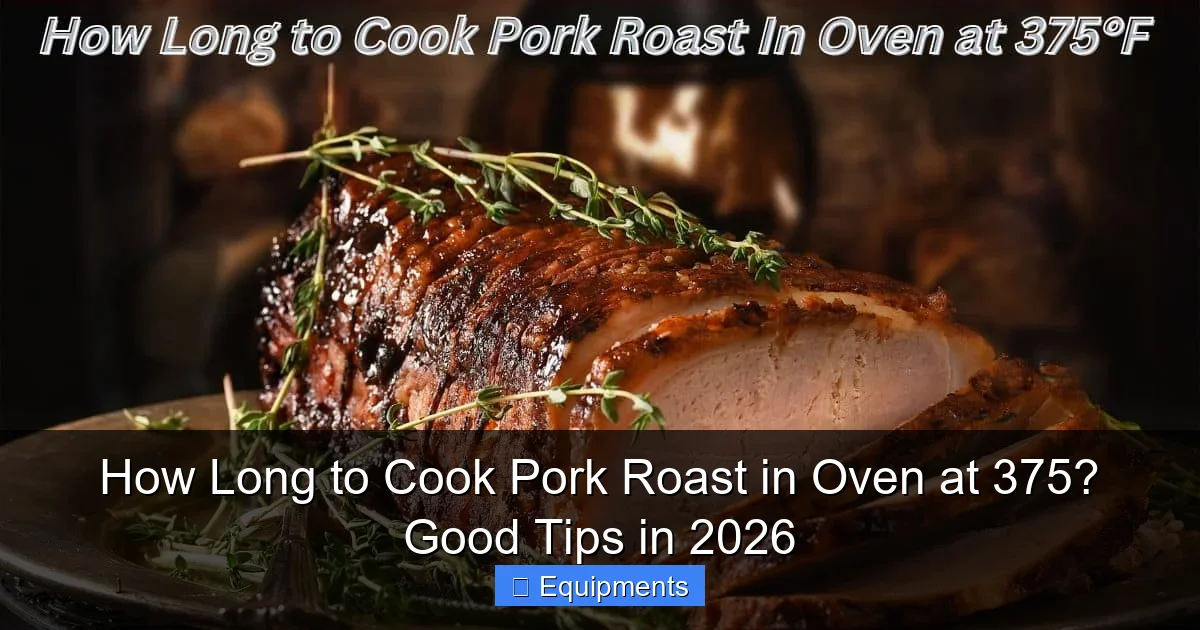
Visual guide about How Long to Cook Pork Roast in Oven at 375? Good Tips in 2026
Image source: cookroomkitchen.com
1. Prep & Season (30 Minutes Before)
Take the roast out of the refrigerator 30-60 minutes before cooking. This brings it closer to room temperature, promoting more even cooking. Pat it completely dry with paper towels—this is critical for a good sear and crust. Season generously with salt and pepper, and any other herbs or spices (garlic powder, rosemary, thyme, paprika). If you have time, a dry brine (salting and refrigerating uncovered for a few hours) works wonders for flavor and texture.
2. Sear for Success (Optional but Recommended)
Heat 1-2 tablespoons of high-smoke-point oil (avocado, canola) in a heavy skillet (cast iron is perfect) over medium-high heat until shimmering. Sear the roast on all sides until deeply browned, about 2-3 minutes per side. This step builds flavor and gives the roast a head start on crust formation. Transfer the seared roast directly to your preheated 375°F oven.
3. Roast & Monitor
Place the roast in the center of your preheated 375°F oven. Insert the probe of your leave-in thermometer (if you have one) into the thickest part, avoiding bone or fat. If using an instant-read, you’ll check it periodically starting around the 75% mark of your estimated time.
Estimated Total Times at 375°F:
- Pork Tenderloin (1-2 lbs): 20-35 minutes total.
- Boneless Pork Loin (2-4 lbs): 50-120 minutes.
- Bone-in Pork Loin/Rack (3-5 lbs): 90-150 minutes.
- Pork Shoulder/Butt (4-8 lbs): 120-240+ minutes (for pulled pork texture).
Remember: These are STARTING points. Your roast is done when the thermometer reads your target temperature (145°F for medium-rare, 160°F for well-done, 200°F for shreddable shoulder).
4. The Sacred Rest (10-20 Minutes)
This is non-negotiable. As soon as the roast hits temperature, remove it from the oven. Transfer it to a cutting board or platter, tent it loosely with foil, and let it rest for at least 10 minutes (for tenderloins/loins) or 20-30 minutes (for large shoulders). During this time, the aggressive heat relaxes, and the juices that were forced to the center by the heat redistribute throughout the meat. If you slice immediately, all those precious juices will run out onto the board. Trust the rest.
5. Slice & Serve
For loin and tenderloin, slice against the grain into ½-inch thick medallions. For shoulder, use two forks to pull the meat apart. Serve immediately with pan juices or a made-from-scratch gravy.
2026 Forward: Smart Tips & Common Pitfalls
Let’s future-proof your pork roasting skills with advanced strategies and warnings about classic mistakes.
Future-Proofing: Smart Ovens & Connected Cooking
By 2026, Wi-Fi and Bluetooth-enabled ovens with built-in temperature probes will be more common. These allow you to set a target internal temperature and walk away. The oven will automatically switch to a “warm” setting or notify you when the roast is perfectly done. This is the ultimate “set it and forget it” for pork roast. Look for models from major brands that integrate with smart home systems. A leave-in digital thermometer that connects to your phone via an app is a more affordable, retrofit option that provides the same hands-off monitoring.
The #1 Mistake: Skipping the Thermometer
We’ve said it, but it bears repeating. Guessing leads to dry, disappointing pork. A $15 instant-read thermometer eliminates this variable entirely. It’s not a luxury; it’s a necessity for consistent results.
Pitfall: Cooking Cold Meat
Putting a fridge-cold roast directly into a hot oven guarantees uneven cooking—the exterior will be overdone by the time the center reaches temperature. That 30-60 minute rest on the counter makes a measurable difference.
Pitfall: Overcrowding the Pan
If you’re cooking multiple items or a very large roast, ensure there’s at least 1-2 inches of space between the meat and any other items on the pan. Airflow is crucial for even browning and cooking. If things are too tight, things steam instead of roast.
Flavor Boost: Deglaze the Pan
After removing the roast and while it’s resting, place the roasting pan on the stovetop over medium heat. Add a splash of wine, broth, or even water, and scrape up the browned bits (fond) from the bottom. Let this reduce slightly, then whisk in butter for a quick, incredible pan sauce that captures the essence of your roast.
Conclusion: Confidence in Every Slice
Cooking a perfect pork roast at 375°F is a straightforward process once you internalize the core principles: know your cut, use a thermometer, respect the rest, and understand your equipment. The approximate times—20-30 minutes per pound for lean cuts, 30-45 for fatty shoulders—are useful starting points for meal planning, but they are not the final authority. Your meat thermometer is.
Embrace the tools of 2026 and beyond. A good thermometer is an investment in never serving dry pork again. Whether you’re making an elegant pork loin with herb rub for a Sunday dinner or a massive pork shoulder for a backyard barbecue, the method is the same. Set your oven to 375°F, prep your roast with care, monitor its internal temperature, and let it rest. You will be rewarded with a juicy, flavorful, beautifully cooked pork roast that will have everyone asking for your secret. The secret, of course, is simple: cook it to temperature, not to time.
Frequently Asked Questions
What is the safest internal temperature for pork roast?
The USDA states that whole cuts of pork are safe to eat at 145°F with a 3-minute rest. This yields a pink, juicy roast. For well-done, cook to 160°F. For pulled pork from a shoulder, you’ll want 195°F-205°F to melt the connective tissue.
Should I cover the pork roast while it cooks?
Generally, no. Cooking uncovered at 375°F promotes browning and crust development. If you notice the surface browning too quickly before the center is done, you can tent it loosely with foil for the remainder of the cooking time.
How do I know if my pork roast is done without a thermometer?
While a thermometer is strongly recommended, visual and tactile cues exist. Fully cooked pork will have clear or very faintly pink juices when pierced. The meat should feel firm but not hard. However, these methods are unreliable and often lead to overcooked, dry meat. A thermometer is the only sure way.
Can I cook a frozen pork roast in the oven at 375°F?
It’s not ideal, as it leads to uneven cooking (frozen center, overcooked exterior). For food safety and quality, it’s best to fully thaw the roast in the refrigerator 24-48 hours before cooking. If you must cook from frozen, add 50% more cooking time and use a thermometer to ensure safe and even doneness throughout.
What’s the difference between cooking a bone-in and boneless pork roast?
A bone-in roast will take longer to cook (add about 10-15 minutes per pound) because the bone absorbs heat and insulates the meat around it. However, many argue bone-in adds more flavor and can help protect the meat from drying out. Always account for the bone when checking temperature by inserting the thermometer into the thickest part of the *meat*, not touching the bone.
My roast is browning too fast on the outside but is still raw inside. What should I do?
This is a common issue, often from an oven running hot or a very lean, thin roast. The solution is to lower the oven temperature to 325°F and continue cooking. This allows the interior to catch up without burning the exterior. This is another reason why using a thermometer from the start is so valuable—it prevents this problem by letting you cook at the right pace for your specific roast.
Pingback: How Long to Cook Prime Rib Chart - kitchenandhouseware.com
Pingback: Pork Tenderloin in Oven - kitchenandhouseware.com
Pingback: Pork Shoulder Roasting Time Chart - kitchenandhouseware.com
Pingback: Pork Tenderloin - kitchenandhouseware.com
Pingback: Slow Cooker Pork Roast - kitchenandhouseware.com
Pingback: How to Cook a Boneless Pork Loin Roast - kitchenandhouseware.com